
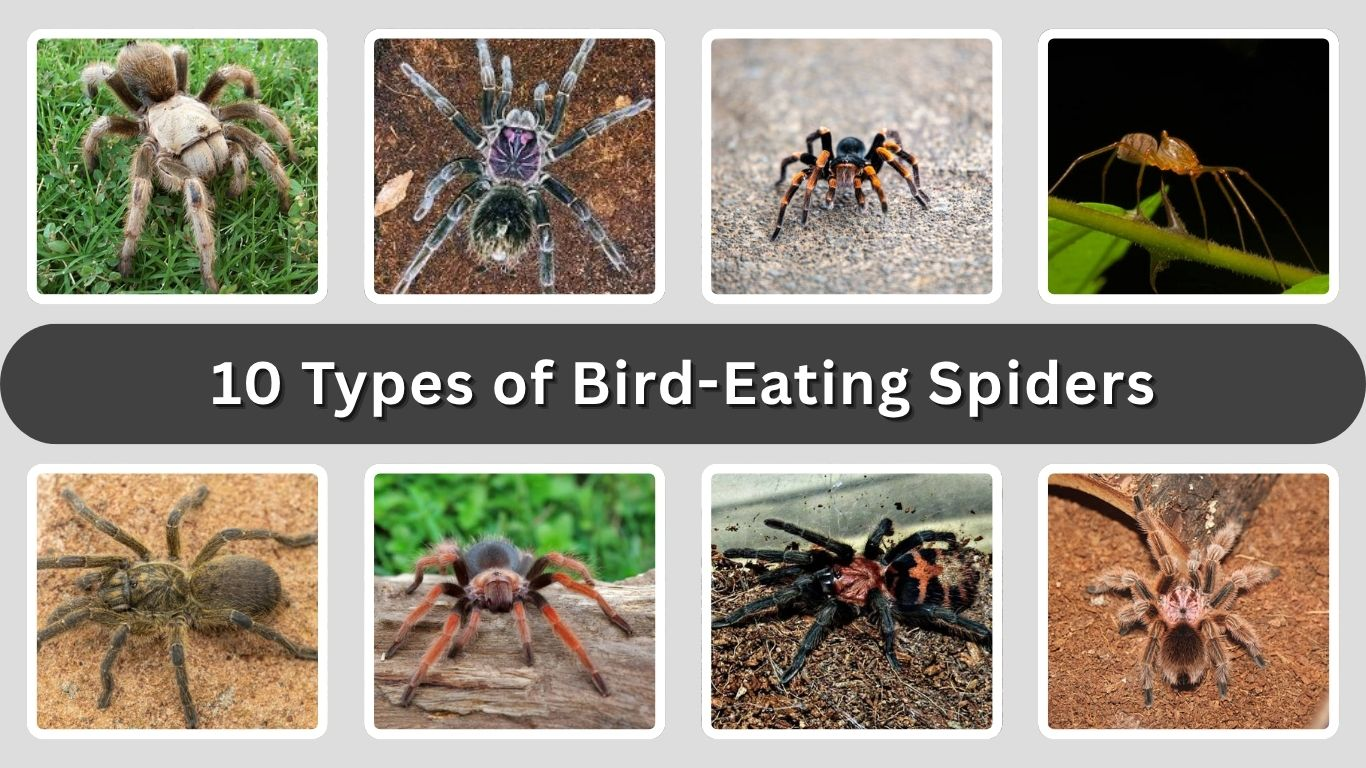
Bird-eating spiders are among the largest and most powerful arachnids in the world. Despite their intimidating name, most of these spiders rarely eat birds and instead feed on insects, amphibians, and small animals. Their name comes from rare observations and their ability to tackle relatively large prey.
In this list, you’ll explore 10 fascinating types of bird-eating spiders, each known for its size, strength, and unique characteristics. From massive rainforest dwellers to fast-moving hunters, these spiders showcase the incredible diversity and adaptability of the tarantula world.
1. Goliath Birdeater

The Goliath Birdeater is the largest spider in the world by mass and one of the most powerful members of the tarantula family. Native to the rainforests of South America, it is famous for its size, strength, and ability to prey on small animals, including birds on rare occasions.
Identification
- Massive body reaching up to 30 cm (12 inches) leg span
- Brown to dark brown coloration with thick hairy legs
- Large fangs capable of piercing skin
- Heavy, bulky appearance compared to other spiders
Habitat
This species is commonly found in the Amazon rainforest across countries like Brazil, Venezuela, and Guyana. It prefers humid environments and lives in deep burrows on the forest floor. These burrows help maintain moisture and provide protection from predators.
Behavior
The Goliath Birdeater is mostly nocturnal and spends much of its time inside its burrow. It hunts by ambush, waiting for prey to pass nearby before striking quickly. Despite its size, it usually avoids confrontation and will only act defensively when threatened.
Interesting Facts
Although called a “birdeater,” it rarely eats birds. Its diet mainly consists of insects, frogs, and small rodents. When threatened, it can release irritating hairs from its body as a defense mechanism, which can cause discomfort to predators and humans.
2. Brazilian Salmon Pink Birdeater

The Brazilian Salmon Pink Birdeater is one of the largest tarantulas in the world, known for its impressive size and soft pinkish coloration. Native to Brazil, it is a fast-growing species often admired for its beauty and active nature.
Identification
- Large body with a leg span up to 25 cm (10 inches)
- Brown body with noticeable salmon-pink hairs
- Long, sturdy legs with a slightly lighter tone
- Thick, hairy appearance typical of tarantulas
Habitat
This spider is found in the tropical regions of Brazil, where it inhabits forest floors and burrows. It prefers warm and humid conditions, often taking shelter under logs, rocks, or in self-dug tunnels that provide safety and moisture.
Behavior
Unlike many tarantulas, this species is more active and grows quickly. It is a ground-dwelling spider that hunts insects and small animals. While it is not usually aggressive, it can be defensive and may display threat postures when disturbed.
Interesting Facts
The salmon-pink coloration becomes more noticeable after molting. This spider is also known for its rapid growth rate compared to other tarantulas. Despite its intimidating size, its venom is relatively mild and not considered dangerous to humans.
3. Pinkfoot Goliath Tarantula

The Pinkfoot Goliath Tarantula is a large and striking spider known for its subtle pink coloration on its feet combined with a powerful build. Native to South America, it is closely related to other giant tarantulas and shares their impressive size and strength.
Identification
- Large body with pinkish tones on the feet
- Dark brown to black overall coloration
- Thick, hairy legs and robust body
- Impressive leg span similar to other Goliath species
Habitat
This species is found in tropical rainforests, particularly in regions of Brazil and surrounding areas. It prefers humid environments and typically lives in burrows on the forest floor. These burrows provide protection and help maintain necessary moisture levels.
Behavior
The Pinkfoot Goliath Tarantula is mostly nocturnal and spends the day hidden in its burrow. It hunts by ambush, capturing insects, amphibians, and small animals. While generally reclusive, it can become defensive if disturbed.
Interesting Facts
Despite its name, it rarely eats birds and primarily feeds on ground-dwelling prey. Its pink feet become more noticeable under certain lighting conditions, giving it a unique and attractive appearance among large tarantulas.
4. Venezuelan Sun Tiger Tarantula

The Venezuelan Sun Tiger Tarantula is a fast and visually striking species known for its bold orange patterns and occasional subtle purple sheen. Native to Venezuela, it is admired for both its appearance and agility.
Identification
- Dark body with bright orange striping
- Subtle purple tint visible under certain lighting
- Long, slender legs adapted for climbing
- Medium to large size with high contrast patterns
Habitat
This spider inhabits tropical forests in Venezuela, where it prefers arboreal environments. It is often found in tree hollows, bark crevices, or abandoned nests. Warm temperatures and high humidity are essential for its survival.
Behavior
The Venezuelan Sun Tiger is extremely fast and alert. It prefers to escape quickly rather than confront threats, but it can become defensive if cornered. It hunts at night, using speed and precision to capture prey.
Interesting Facts
This species is considered one of the faster tarantulas, making it more suitable for experienced keepers. Its striking coloration helps it stand out, while its speed makes it one of the more challenging spiders to observe closely.
5. Colombian Giant Redleg

The Colombian Giant Redleg is a large and impressive tarantula known for its dark body contrasted by reddish hairs on its legs. Native to Colombia, this species is admired for its size, strength, and subtle yet striking coloration.
Identification
- Dark brown to black body with reddish leg hairs
- Large, heavy build with thick legs
- Covered in dense, bristly hairs
- Medium to large leg span with noticeable color contrast
Habitat
This spider is found in tropical regions of Colombia, where it lives on the forest floor. It prefers humid environments and typically creates burrows or hides under logs and rocks. These shelters provide protection and stable moisture levels.
Behavior
The Colombian Giant Redleg is mostly nocturnal and spends much of its time hidden during the day. It hunts by ambush, feeding on insects and small animals. While generally calm, it can become defensive if disturbed.
Interesting Facts
This species is known for flicking urticating hairs as a defense mechanism, which can irritate skin and eyes. Despite its intimidating appearance, it usually avoids confrontation and prefers to stay hidden.
6. King Baboon Spider

The King Baboon Spider is a powerful and ground-dwelling tarantula known for its large size and striking reddish-brown coloration. Native to East Africa, it is one of the largest spiders on the continent and is well known for its defensive nature.
Identification
- Reddish-brown to rust-colored body
- Thick, muscular legs and heavy build
- Large size with strong fangs
- Covered in coarse hairs
Habitat
This species is found in dry regions of East Africa, including Kenya and Tanzania. It lives in deep burrows that can reach several feet underground. These burrows help protect it from extreme temperatures and predators.
Behavior
The King Baboon Spider is highly defensive and will stand its ground if threatened. It produces a distinct hissing sound by rubbing its legs together. It hunts at night, feeding on insects and small animals near its burrow.
Interesting Facts
Unlike many tarantulas, this species does not rely on urticating hairs for defense. Instead, it uses its size, strength, and intimidating behavior. Its burrows can be quite extensive, making it a skilled digger in its natural habitat.
7. Indian Ornamental Tarantula

The Indian Ornamental Tarantula is a large and visually striking spider known for its bold patterns and impressive speed. Native to India, it belongs to the Poecilotheria genus and is often admired for its beauty as well as its agility.
Identification
- Light gray body with black and white intricate patterns
- Long, slender legs with banded markings
- Large size with an elegant appearance
- Subtle sheen visible under certain lighting
Habitat
This species is found in the forests of India, where it lives in tree hollows and bark crevices. It is arboreal, preferring elevated habitats with moderate humidity and warm temperatures.
Behavior
The Indian Ornamental Tarantula is fast, alert, and primarily nocturnal. It prefers to retreat quickly into hiding when disturbed but can become defensive if cornered. It hunts insects and small prey using speed and precision.
Interesting Facts
This spider is known for its speed, making it difficult to handle or observe closely. Its striking patterns help it blend into tree bark, providing natural camouflage in its environment.
8. Mexican Redknee Tarantula

The Mexican Redknee Tarantula is one of the most recognizable spiders, known for its black body contrasted with bright red or orange joints. Native to Mexico, it is popular among enthusiasts due to its calm nature and attractive appearance.
Identification
- Black body with bright red or orange knee joints
- Thick, hairy legs and sturdy build
- Medium to large size
- Distinct color contrast making it easy to identify
Habitat
This species inhabits dry scrublands and forests in Mexico. It lives in burrows dug into the ground or uses natural shelters like rocks and logs. The environment is typically warm with lower humidity compared to rainforest species.
Behavior
The Mexican Redknee is known for its calm and slow-moving nature. It spends much of its time resting and comes out mainly to hunt insects. When threatened, it may flick hairs as a defense rather than attack.
Interesting Facts
This tarantula can live for decades, especially females, making it one of the longest-living spider species. Its bright knee coloration serves as a warning to potential predators, helping it avoid danger.
9. Amazon Blue Bloom Tarantula

The Amazon Blue Bloom Tarantula is a visually captivating spider known for its deep blue tones that can shimmer under light. Native to the Amazon rainforest, this species is admired for its unique coloration and strong, ground-dwelling presence.
Identification
- Dark body with noticeable blue or bluish-purple sheen
- Thick, hairy legs with a robust build
- Medium to large size
- Color appears more vibrant under lighting
Habitat
This tarantula is found in the Amazon Basin, where it inhabits dense, humid rainforests. It prefers living on the forest floor, often in burrows or beneath logs and leaf litter. High humidity and warm temperatures are essential for its survival.
Behavior
The Amazon Blue Bloom Tarantula is mostly nocturnal and spends its day hidden in its shelter. It hunts by ambush, feeding on insects and small animals. While generally reclusive, it may act defensively if disturbed.
Interesting Facts
Its blue coloration is caused by microscopic structures reflecting light rather than pigment. This gives it a shimmering “bloom” effect that changes depending on the viewing angle, making it especially striking.
10. Giant Blonde Tarantula

The Giant Blonde Tarantula, also known as the Desert Blonde, is a large North American spider recognized for its light golden coloration and impressive size. It is one of the most common large tarantulas found in the United States.
Identification
- Light brown to blonde body coloration
- Large size with a wide leg span
- Thick, hairy body and legs
- Subtle golden sheen under sunlight
Habitat
This species is found in arid regions of the southwestern United States. It lives in burrows dug into dry soil, often in deserts or scrublands. These burrows help regulate temperature and provide protection.
Behavior
The Giant Blonde Tarantula is generally calm and slow-moving. It spends most of its time in its burrow and emerges at night to hunt insects. When threatened, it may flick hairs as a defense rather than bite.
Interesting Facts
During mating season, males can often be seen wandering across roads in search of females. Despite their size, they are not dangerous to humans and are known for their relatively docile nature.
FAQs
Do bird-eating spiders really eat birds?
Despite their name, bird-eating spiders rarely prey on birds. Their diet mainly consists of insects, frogs, lizards, and small rodents. The name originated from early observations and their ability to capture relatively large prey, not from regular bird consumption.
Are bird-eating spiders dangerous to humans?
Most bird-eating spiders are not dangerous to humans. While they can bite if provoked, their venom is usually mild and not life-threatening. However, their bite can be painful, and they may use defensive behaviors like flicking irritating hairs.
Where are bird-eating spiders commonly found?
These spiders are mostly found in tropical and subtropical regions such as South America, Africa, and parts of Asia. They thrive in warm environments like rainforests, deserts, and scrublands depending on the species.
How big can bird-eating spiders get?
Some species, like the Goliath Birdeater, can reach a leg span of up to 30 cm (12 inches), making them among the largest spiders in the world. Their large size helps them capture bigger prey compared to smaller spiders.
Do bird-eating spiders make good pets?
Certain species can be kept as pets, but they are better suited for experienced keepers. Some are calm, while others are fast or defensive. Proper care, handling, and habitat setup are essential to ensure their well-being and safety.
