
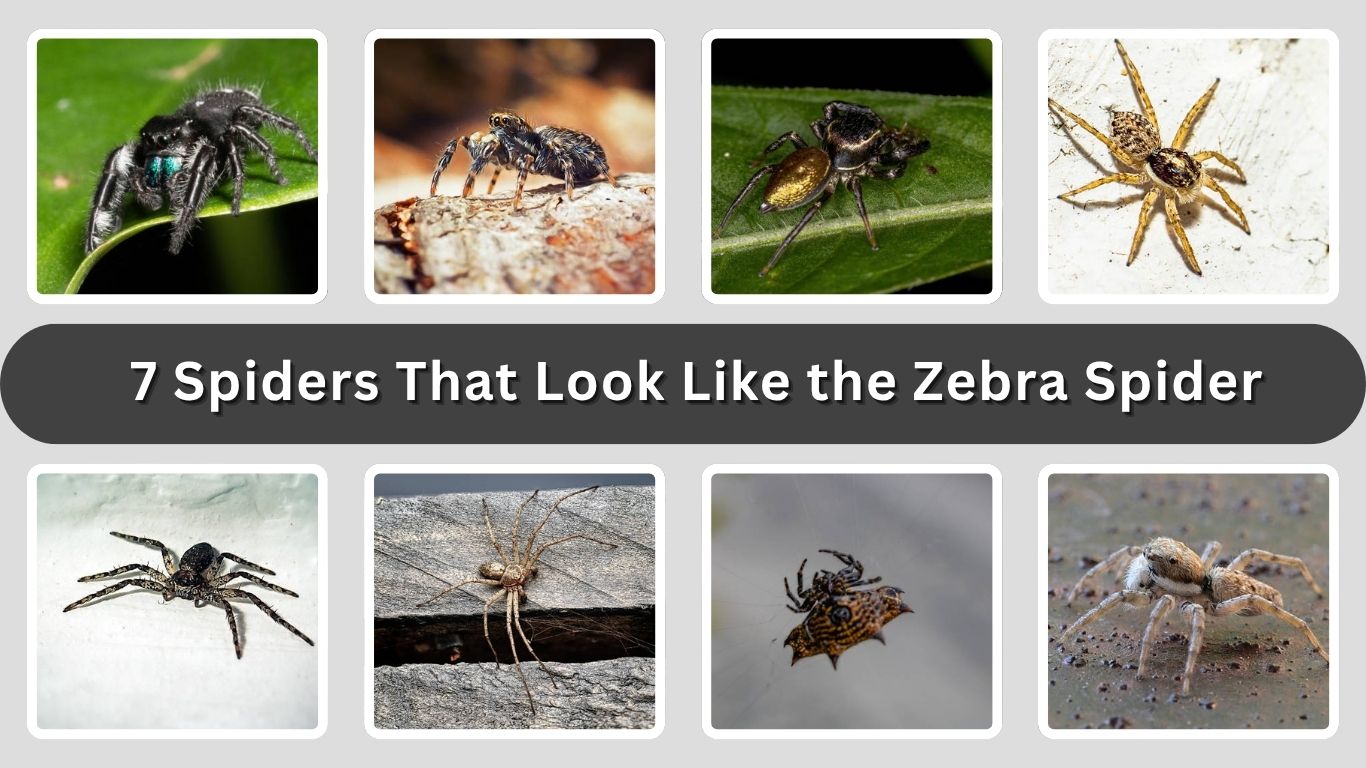
Zebra Spiders are small, black-and-white jumping spiders known for their striped appearance and active behavior. However, several other spider species share similar patterns, body shapes, and movements, making them easy to confuse with the Zebra Spider. This guide highlights seven spiders that closely resemble the Zebra Spider, helping you identify their key differences and better understand their habits and habitats.
1. Bold Jumping Spider

The Bold Jumping Spider is a common species that closely resembles the Zebra Spider due to its compact body, black coloration, and noticeable white markings. It is widely found in North America and is known for its curious behavior and excellent vision.
Identification
- Black body with distinct white or orange spots on the abdomen
- Compact, fuzzy appearance
- Large front-facing eyes
- Medium size for a jumping spider (about 8–15 mm)
Habitat
Bold Jumping Spiders are commonly found on walls, fences, tree trunks, and around buildings. They prefer sunny areas where they can easily spot and stalk prey.
Behavior
These spiders are active during the day and rely on their sharp vision to hunt. They are curious and may turn to look at movement. They are harmless and rarely bite unless threatened.
Diet
They feed on small insects such as flies, mosquitoes, and other tiny arthropods. Their jumping ability allows them to catch prey with precision.
2. Regal Jumping Spider

The Regal Jumping Spider is one of the largest and most striking jumping spiders, often resembling the Zebra Spider with its bold patterns and compact body. It is commonly found in the southeastern United States.
Identification
- Black body with white spots or markings on the abdomen
- Males often have more distinct black-and-white contrast
- Females may show gray, tan, or orange tones
- Large size for a jumping spider (up to 18 mm)
Habitat
Regal Jumping Spiders are found in gardens, walls, fences, and vegetation. They prefer warm, sunny environments where they can actively hunt during the day.
Behavior
These spiders are active hunters with excellent eyesight. They are curious and may observe movement, even appearing to “watch” humans. They are non-aggressive and rarely bite.
Diet
They feed on a variety of insects, including flies, moths, and small beetles. Their strong jumping ability helps them capture prey efficiently.
3. Twin-Flagged Jumping Spider

The Twin-Flagged Jumping Spider is a small, patterned spider that can resemble the Zebra Spider due to its contrasting markings and compact body shape. It is less commonly noticed but shares similar features and behavior.
Identification
- Small black or dark brown body with pale or white markings
- Distinctive patterned abdomen, sometimes with flag-like shapes
- Compact and slightly fuzzy appearance
- Size typically around 4–8 mm
Habitat
This spider is often found on tree bark, walls, and outdoor surfaces. It prefers sunny spots where it can easily detect movement and hunt for prey.
Behavior
Like other jumping spiders, it is active during the day and relies on excellent vision. It stalks prey carefully before making quick, precise jumps. It is harmless and avoids human contact.
Diet
The Twin-Flagged Jumping Spider feeds on small insects such as flies and gnats. Its hunting style allows it to catch prey without using a web.
4. Adanson’s House Jumper

Adanson’s House Jumper is a small jumping spider that closely resembles the Zebra Spider due to its striped appearance and compact body. It is commonly found around buildings and human structures.
Identification
- Black body with white or light gray banding
- Compact, slightly hairy appearance
- Prominent front-facing eyes
- Small size, usually around 4–6 mm
Habitat
This spider is commonly found on walls, ceilings, windows, and exterior building surfaces. It prefers warm areas and is frequently seen in urban and residential environments.
Behavior
Adanson’s House Jumper is active during the day and uses its sharp vision to hunt. It is quick and alert, often moving in short bursts. It is harmless and rarely bites.
Diet
It feeds on small insects such as flies, ants, and mosquitoes. Its active hunting helps control minor pest populations around homes.
5. Gray Wall Jumping Spider

The Gray Wall Jumping Spider resembles the Zebra Spider with its muted striped pattern and compact body. It is commonly seen on walls and outdoor surfaces where it blends in well with its surroundings.
Identification
- Gray or brown body with subtle light and dark striping
- Flattened, compact shape
- Large front-facing eyes typical of jumping spiders
- Small to medium size (about 6–10 mm)
Habitat
Gray Wall Jumping Spiders are often found on walls, fences, tree bark, and rocky surfaces. They prefer areas where their coloration helps them stay camouflaged.
Behavior
These spiders are active during the day and rely on vision to hunt. They move quickly and may pause to observe movement. They are harmless and avoid human interaction.
Diet
They feed on small insects such as flies, ants, and other tiny arthropods. Their ability to jump allows them to catch prey efficiently without using webs.
6. Bronze Jumping Spider

The Bronze Jumping Spider is a small, agile species that can resemble the Zebra Spider due to its body shape and subtle striping. Its metallic tones and compact build make it a close visual match.
Identification
- Bronze, brown, or dark-colored body with faint light markings
- Slightly shiny or metallic appearance
- Compact, fuzzy body structure
- Small size, typically 4–7 mm
Habitat
Bronze Jumping Spiders are commonly found on tree bark, fences, walls, and garden plants. They prefer sunny areas where they can easily spot prey.
Behavior
These spiders are active during the day and rely on excellent vision to hunt. They move in quick bursts and use precise jumps to capture prey. They are harmless to humans.
Diet
They feed on small insects such as flies, gnats, and ants. Their hunting style makes them effective predators in gardens and outdoor spaces.
7. Tan Jumping Spider

The Tan Jumping Spider is a small, light-colored spider that can resemble the Zebra Spider due to its body shape and subtle striping. It is commonly found in outdoor environments and around homes.
Identification
- Light tan or pale brown body with faint darker markings
- Compact, slightly hairy appearance
- Large front-facing eyes
- Small size, typically 5–8 mm
Habitat
Tan Jumping Spiders are often found on walls, fences, tree trunks, and vegetation. They prefer warm, sunny areas where they can actively hunt during the day.
Behavior
These spiders are active hunters and rely on their excellent vision. They move quickly and may pause to observe movement. They are non-aggressive and rarely bite.
Diet
They feed on small insects such as flies, mosquitoes, and ants. Their jumping ability allows them to catch prey efficiently without using webs.
FAQs
What spiders look most similar to the Zebra Spider?
Several jumping spiders closely resemble the Zebra Spider, especially species like the Bold Jumping Spider and Regal Jumping Spider. They share similar black-and-white patterns, compact bodies, and large front-facing eyes, which can make identification tricky without closer inspection.
Are spiders that look like Zebra Spiders dangerous?
Most spiders that resemble Zebra Spiders are harmless to humans. They are not aggressive and rarely bite. Even if a bite occurs, it is usually mild and not medically significant, making them generally safe to have around.
How can I tell a Zebra Spider apart from similar species?
You can distinguish them by examining patterns, size, and markings. Zebra Spiders have distinct black-and-white stripes, while similar species may have spots, different color tones, or larger body sizes. Behavior and habitat can also provide clues.
Where are these similar spiders commonly found?
Spiders that look like Zebra Spiders are commonly found on walls, fences, tree trunks, and around homes. They prefer sunny areas where they can hunt during the day and are often seen in gardens and urban environments.
Do these spiders build webs like other spiders?
Most of these spiders, especially jumping spiders, do not build webs to catch prey. Instead, they actively hunt using their excellent vision and jumping ability, though they may use silk for shelter or safety lines.
