
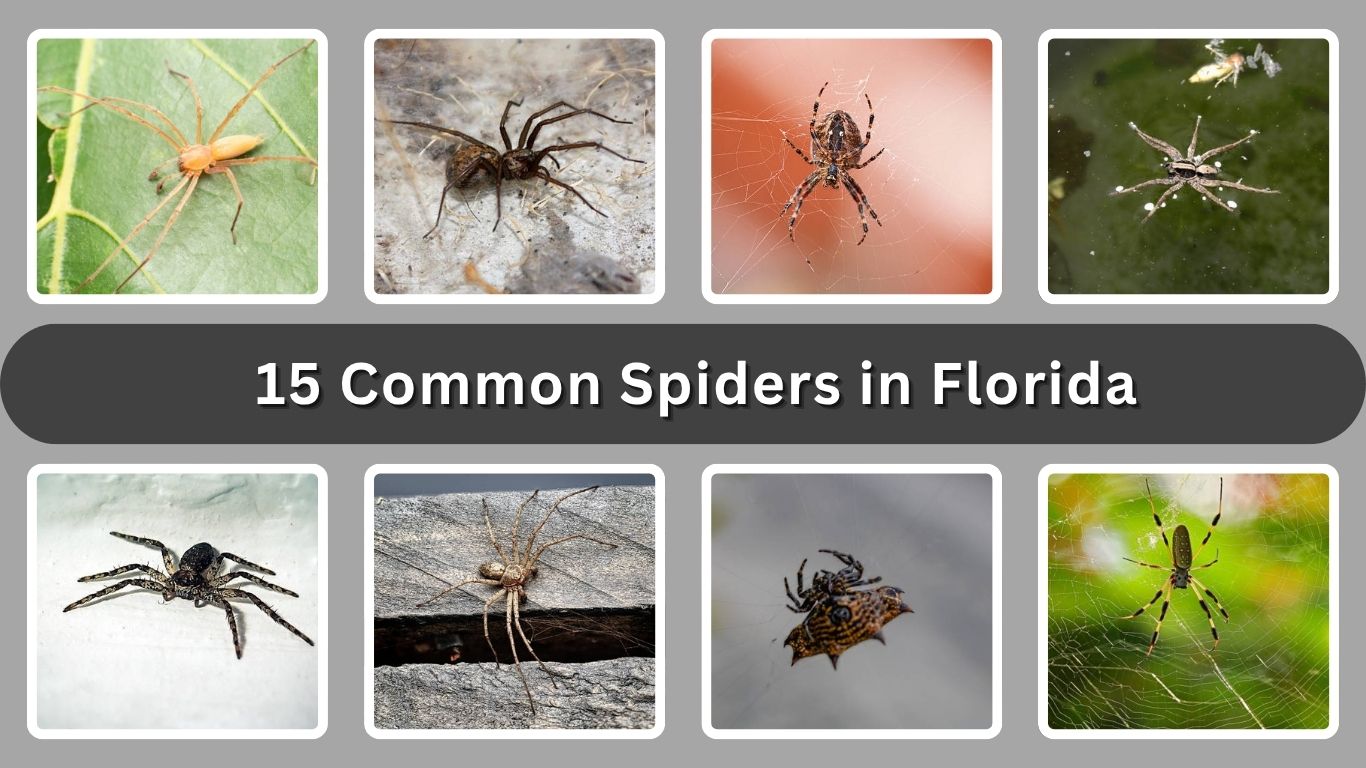
Florida is home to a wide variety of spider species, ranging from small indoor dwellers to large outdoor web-builders. While many people fear spiders, most of them are harmless and actually play an important role in controlling insect populations. This guide highlights 15 common spiders found in Florida, helping you identify them and understand their behavior, habitat, and benefits.
1. Southern House Spider

A common indoor spider in Florida, the Southern House Spider is often mistaken for more dangerous species but is generally harmless. It prefers quiet, undisturbed areas and is frequently found in homes, sheds, and garages.
Identification
- Males are brown or gray with long, slender legs
- Females are darker, often charcoal or black, with a more robust body
- Typically about 1–2 inches in leg span
- Males resemble the brown recluse but lack its distinctive violin marking
Habitat
The Southern House Spider commonly lives in dark, secluded spaces such as basements, attics, closets, and window crevices. Outdoors, it can be found under bark, in woodpiles, or around structures where it can build its web.
Behavior
This spider is non-aggressive and rarely bites. Males tend to wander in search of mates, which is why they are often seen indoors. Females stay in their webs, waiting for prey to get trapped.
Diet
It primarily feeds on insects such as flies, beetles, and cockroaches. By controlling pest populations, the Southern House Spider can actually be beneficial in and around homes.
2. Brown Recluse Spider

The Brown Recluse Spider is one of the most well-known spiders in the United States due to its potentially harmful bite. Although it is less common in Florida compared to other regions, it is still occasionally found indoors in quiet, undisturbed areas.
Identification
- Light to medium brown body with a darker violin-shaped marking on the back
- Six eyes arranged in pairs (unlike most spiders, which have eight eyes)
- Long, thin legs without noticeable spines
- Body size typically about 6–12 mm (¼–½ inch), with a larger leg span
Habitat
Brown Recluse Spiders prefer dry, secluded environments. Indoors, they are often found in closets, storage boxes, attics, basements, and behind furniture. Outdoors, they may live under rocks, logs, or debris where they remain hidden during the day.
Behavior
This spider is shy and avoids human contact. It is mostly active at night and hunts rather than relying on webs to catch prey. Bites are rare and usually occur only when the spider is accidentally pressed against the skin.
Diet
The Brown Recluse feeds on small insects such as ants, crickets, and other soft-bodied pests. It plays a role in controlling insect populations, though caution is advised due to its venom.
3. Black Widow Spider

The Black Widow Spider is one of the most recognizable and medically significant spiders in Florida. Known for its shiny black body and distinctive red marking, it prefers hidden outdoor spaces and is generally non-aggressive unless disturbed.
Identification
- Glossy black body with a red hourglass marking on the underside of the abdomen
- Females are larger (about 1.5 inches with leg span), males are smaller and lighter
- Long, slender legs
- Round, bulbous abdomen
Habitat
Black Widows are commonly found in dark, sheltered areas such as woodpiles, garages, sheds, fences, and outdoor furniture. They prefer locations close to the ground where they can build irregular, tangled webs.
Behavior
This spider is not aggressive and will usually retreat when threatened. Bites occur mainly when the spider is accidentally disturbed. It remains in its web most of the time, waiting for prey rather than actively hunting.
Diet
Black Widows feed on insects like flies, beetles, and caterpillars. They may also consume other spiders. Their strong venom helps immobilize prey quickly.
4. Wolf Spider

Wolf Spiders are large, fast-moving hunters commonly found throughout Florida. Unlike many spiders, they do not rely on webs to catch prey and are often seen roaming on the ground, especially at night.
Identification
- Brown, gray, or black with striped or mottled patterns
- Hairy body with a robust build
- Typically 1–2 inches in size including leg span
- Large eyes arranged in three rows, giving excellent vision
Habitat
Wolf Spiders live in a wide range of environments including lawns, gardens, forests, and sometimes indoors. They often hide under rocks, leaves, or in burrows during the day and become active at night.
Behavior
These spiders are active hunters and rely on speed and stealth to catch prey. They are generally harmless to humans and rarely bite unless provoked. Females are known for carrying egg sacs and even their young on their backs.
Diet
Wolf Spiders feed on insects such as crickets, ants, grasshoppers, and other small invertebrates. Their hunting behavior makes them beneficial for controlling pest populations.
5. Jumping Spider

Jumping Spiders are small, active hunters known for their excellent vision and quick movements. They are very common in Florida and are often seen on walls, plants, and windowsills during the day.
Identification
- Small, compact body usually 4–10 mm in size
- Short legs with a sturdy, fuzzy appearance
- Large front-facing eyes giving a “cute” look
- Colors vary: black, brown, gray, or even brightly patterned
Habitat
Jumping Spiders are found both indoors and outdoors. They prefer sunny areas like windows, walls, gardens, and fences where they can easily spot prey. They do not build webs for catching food.
Behavior
These spiders are active during the day and rely on their vision to hunt. They stalk and then leap onto prey with precision. They are curious but harmless to humans and rarely bite.
Diet
Jumping Spiders feed on small insects such as flies, mosquitoes, and ants. Their active hunting helps reduce pest populations in homes and gardens.
6. Orb-Weaver Spider

Orb-Weaver Spiders are well known for their large, circular webs often seen in gardens and wooded areas. They are harmless and play an important role in controlling flying insect populations.
Identification
- Rounded abdomen with varying colors (yellow, orange, brown, or black)
- Medium to large size depending on species
- Long legs often with banded patterns
- Known for creating symmetrical, wheel-shaped webs
Habitat
Orb-Weavers are commonly found in gardens, forests, and around homes where there is space to build large webs. They often rebuild their webs daily, especially at night.
Behavior
These spiders are non-aggressive and usually remain in the center of their webs waiting for prey. They are most active during the evening and night and will retreat if disturbed.
Diet
Orb-Weavers feed mainly on flying insects such as mosquitoes, moths, and flies. Their webs are highly effective at trapping prey, making them beneficial for natural pest control.
7. Banana Spider

The Banana Spider, also known as the Golden Silk Orb-Weaver, is one of the largest and most striking spiders in Florida. It is famous for its golden-colored web and impressive size, often seen in gardens and wooded areas.
Identification
- Large body with females reaching up to 3 inches in leg span
- Bright yellow and black patterned abdomen
- Long, slender legs often with orange or reddish tones
- Produces strong, golden-colored silk
Habitat
Banana Spiders are commonly found in forests, gardens, and along trails. They build large webs between trees, shrubs, and structures, often at head height, which can surprise people walking through vegetation.
Behavior
These spiders are non-aggressive and usually remain in their webs. They rarely bite unless directly handled. Females stay on the web, while males are much smaller and stay nearby.
Diet
They feed on flying insects such as flies, mosquitoes, and even small grasshoppers. Their strong web allows them to capture larger prey than many other spiders.
8. Golden Silk Orb-Weaver

The Golden Silk Orb-Weaver is closely related to the Banana Spider and is known for its beautifully woven golden webs. It is commonly seen in Florida’s warm, humid environments.
Identification
- Large spider with elongated abdomen
- Yellow and black coloration with distinct patterns
- Extremely long legs, especially in females
- Web silk appears golden in sunlight
Habitat
This spider prefers wooded areas, gardens, and places with tall vegetation. It builds large, durable webs suspended between trees or structures where insects frequently fly.
Behavior
Golden Silk Orb-Weavers are calm and non-aggressive. They spend most of their time sitting in the center of their web. If disturbed, they may drop or move away rather than attack.
Diet
They primarily eat flying insects such as moths, flies, and beetles. Their strong webs make them highly effective predators, helping maintain ecological balance.
9. Spiny-Backed Orb-Weaver

The Spiny-Backed Orb-Weaver is a small but eye-catching spider commonly found in Florida. Its bright colors and unique spiked abdomen make it easy to identify in gardens and wooded areas.
Identification
- Small, flat body with six prominent spines on the abdomen
- Bright colors such as white, yellow, orange, or red with black spots
- Short legs compared to other orb-weavers
- Typically less than 1 cm in size
Habitat
This spider is often found in gardens, forests, and around homes where vegetation is present. It builds small orb-shaped webs between branches, shrubs, or structures in sunny locations.
Behavior
Spiny-Backed Orb-Weavers are non-aggressive and remain in their webs most of the time. They are active during the day and rarely leave their webs unless disturbed.
Diet
They feed on small flying insects such as flies and mosquitoes. Despite their small size, they are effective at catching prey in their webs.
10. Cellar Spider

Cellar Spiders, often called “daddy longlegs spiders,” are very common in Florida homes. They are harmless and frequently found in corners, basements, and ceilings.
Identification
- Very long, thin legs compared to a small, oval body
- Pale gray, tan, or light brown color
- Body length is small, but leg span can be quite large
- Delicate appearance with a fragile structure
Habitat
Cellar Spiders prefer dark, damp areas such as basements, garages, bathrooms, and crawl spaces. They build loose, irregular webs in corners and undisturbed areas indoors.
Behavior
These spiders are non-aggressive and often vibrate rapidly in their webs when disturbed. They stay in one location for long periods and are commonly seen hanging upside down in their webs.
Diet
Cellar Spiders feed on small insects and even other spiders. They help control indoor pests, making them beneficial despite their somewhat spooky appearance.
11. Crab Spider

Crab Spiders are unique ambush predators commonly found in Florida. They are named for their crab-like appearance and sideways movement. These spiders do not build webs to catch prey.
Identification
- Flattened body with legs that extend sideways
- Colors vary: white, yellow, green, or pink, often matching flowers
- Front two pairs of legs are longer and stronger
- Small to medium size, usually under 1 cm
Habitat
Crab Spiders are commonly found on flowers, plants, and shrubs in gardens and fields. They blend into their surroundings, making them difficult to spot while waiting for prey.
Behavior
These spiders are ambush hunters, remaining still until prey comes close. They do not spin webs for hunting. They are harmless to humans and rarely bite unless handled.
Diet
Crab Spiders feed on pollinators such as bees, butterflies, and flies. They grab prey quickly using their strong front legs and inject venom to immobilize it.
12. Fishing Spider

Fishing Spiders are large, semi-aquatic spiders often found near water in Florida. They are known for their ability to walk on water and even catch small fish.
Identification
- Large body with long legs, often reaching 3 inches in span
- Brown or gray coloration with light and dark markings
- Legs may have banded patterns
- Strong, agile build
Habitat
Fishing Spiders live near ponds, lakes, marshes, and streams. They are often seen on the surface of the water or on nearby vegetation, docks, and rocks.
Behavior
These spiders are active hunters and do not rely on webs. They can run across water and dive below the surface to escape predators. They are generally non-aggressive toward humans.
Diet
Fishing Spiders feed on aquatic and land prey such as insects, tadpoles, and small fish. Their ability to sense vibrations on water helps them detect and capture prey effectively.
13. Garden Spider

Garden Spiders are large, colorful orb-weavers commonly found in Florida landscapes. They are known for their striking appearance and the zigzag pattern often seen in the center of their webs.
Identification
- Black and yellow patterned abdomen
- Long legs with banded markings
- Females are large, often over 1 inch in body length
- Builds a web with a distinctive zigzag (stabilimentum)
Habitat
Garden Spiders are typically found in gardens, yards, and along the edges of wooded areas. They build large, circular webs between plants, fences, and structures where flying insects are abundant.
Behavior
These spiders are non-aggressive and usually stay in the center of their webs. They are most active during late summer and fall. When disturbed, they may drop from the web or remain still.
Diet
Garden Spiders feed on flying insects such as grasshoppers, flies, and beetles. Their webs are strong and effective, allowing them to capture relatively large prey.
14. Hobo Spider

The Hobo Spider is a funnel-weaving spider that is less common in Florida but may occasionally be reported. It is often confused with other brown spiders due to its similar appearance.
Identification
- Brown body with subtle darker markings on the abdomen
- Medium size with a leg span of about 1–2 inches
- Hairy legs without distinct banding
- Lacks bright or distinctive color patterns
Habitat
Hobo Spiders prefer ground-level habitats such as woodpiles, cracks, and basements. They build funnel-shaped webs in sheltered areas where they can quickly retreat.
Behavior
These spiders are fast-moving and tend to stay hidden in their funnel webs. They are not aggressive and typically avoid human contact. Encounters indoors are uncommon in Florida.
Diet
Hobo Spiders feed on insects that wander into their funnel webs, such as ants, beetles, and other small arthropods. They rely on vibrations to detect trapped prey.
15. Sac Spider

Sac Spiders are small, pale-colored spiders commonly found in Florida homes and gardens. They are active hunters and are often noticed indoors, especially at night.
Identification
- Light yellow, cream, or pale green body
- Small size, typically about 5–10 mm
- Long, slender legs
- Slightly darker mouthparts compared to the body
Habitat
Sac Spiders are found both indoors and outdoors. Inside homes, they are often seen on walls and ceilings. Outdoors, they live on plants, leaves, and under bark, creating small silk sacs for resting.
Behavior
These spiders are nocturnal hunters and do not rely on webs to catch prey. They wander at night in search of food and rest during the day inside their silk sacs. They are generally not aggressive but may bite if disturbed.
Diet
Sac Spiders feed on small insects such as flies, ants, and other soft-bodied pests. Their hunting behavior helps control insect populations in homes and gardens.
