
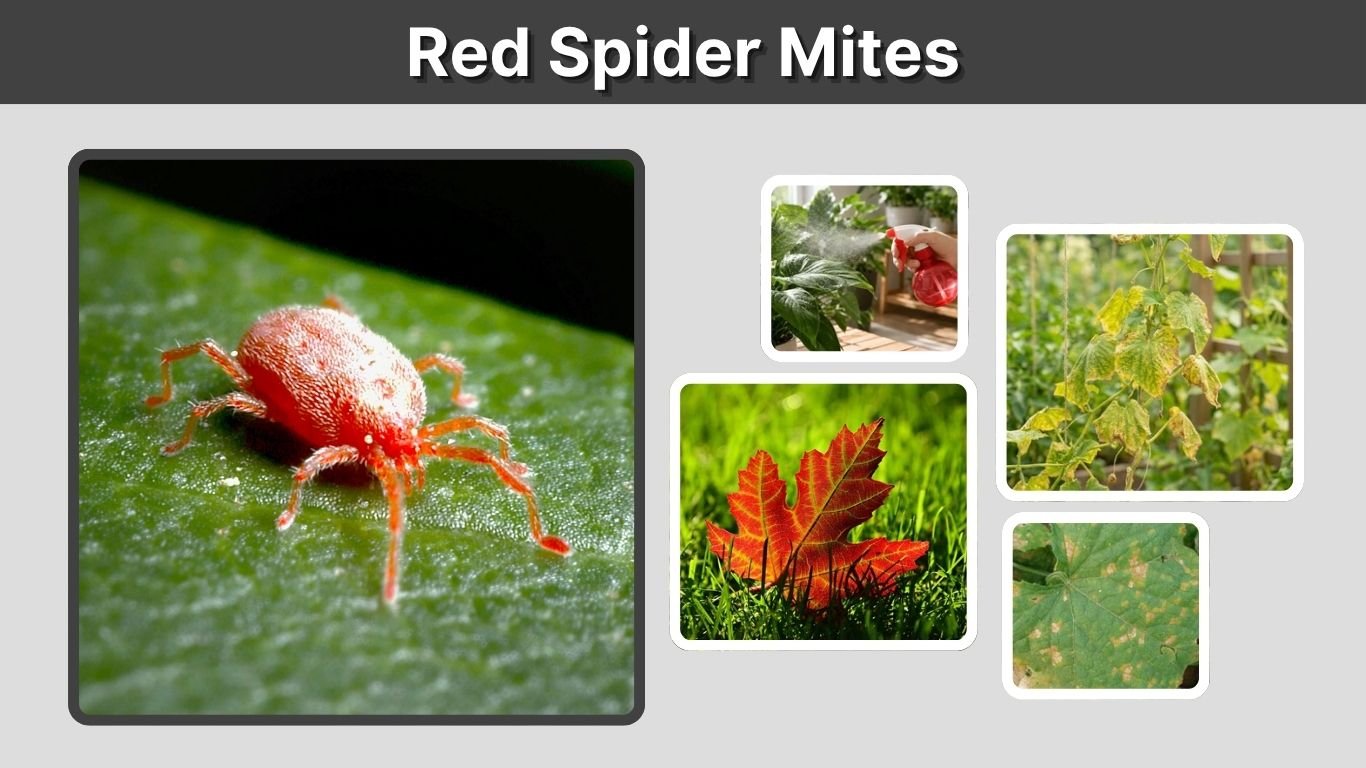
Red spider mites are tiny plant-feeding arachnids that can quickly become serious pests on vegetables, fruit trees, ornamentals, and houseplants. They are especially troublesome during warm, dry conditions, when populations can multiply rapidly and cause stippled leaves, bronzing, yellowing, webbing, and premature leaf drop. Because several mite species may appear red, correct identification matters before treatment. This guide explains what red spider mites look like, their life cycle and plant damage, plus effective control methods using water, neem oil, insecticidal products, and beneficial predators.
What Is a Red Spider Mite?
“Red spider mite” is a general name rather than one precise species in every situation. Gardeners may use it for reddish forms of web-spinning spider mites, while European red mite, citrus red mite, and other species are distinct pests. All are mites rather than insects and belong to the arachnid group. Proper identification helps determine the most suitable control strategy.
What Does a Red Spider Mite Look Like?
Most spider mites are extremely small and may look like moving red, orange, greenish, or brown dots without magnification. Adult spider mites have eight legs and oval bodies, while newly hatched larvae have six legs. A 10× hand lens makes identification much easier. Many web-spinning species live primarily on the undersides of leaves.
The European red mite, Panonychus ulmi, is bright red and is especially important on apples, pears, and stone fruits. Adult females are tiny—roughly around 1/64 to 1/20 inch depending on how they are measured—and have distinctive pale hairs on their bodies.
Red Spider Mites vs. Other Tiny Red Mites
Not every little red mite on a wall, patio, or plant is a damaging spider mite. Clover mites, for example, are reddish plant feeders that often crawl onto walls and windows. They have unusually long front legs, do not bite people, and may leave reddish stains when crushed. Predatory mites may also appear reddish and are beneficial because they feed on pest mites.
Red Spider Mite Damage and Symptoms
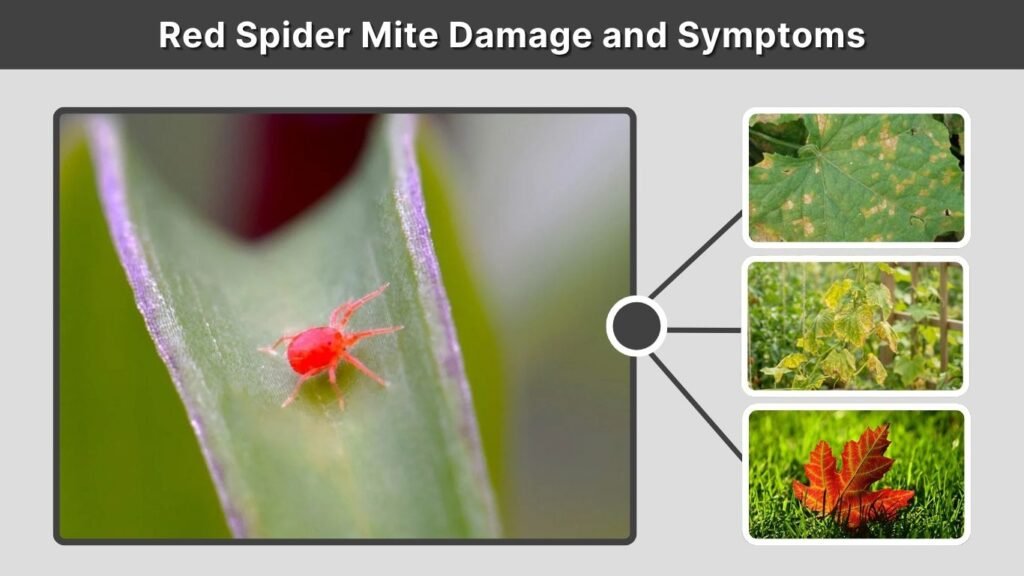
Red spider mites pierce plant cells and remove their contents. Early damage can be easy to overlook because individual feeding marks are extremely small. As populations increase, however, leaves can lose healthy green coloration and the plant may become noticeably weakened. Hot, dusty conditions and drought stress often make damage worse.
Common Signs of an Infestation
Look for:
- Tiny white or yellow dots across leaves
- Mottled or stippled foliage
- Bronze, reddish, or yellow leaves
- Fine silk webbing between leaves and stems
- Mites and eggs underneath leaves
- Drying or premature leaf drop
- Reduced plant vigor during heavy infestations
Dense webbing generally indicates that the population has already become substantial. A simple identification test is to hold white paper beneath an affected leaf and tap the foliage. Tiny moving dots on the paper may be spider mites.
Red Spider Mites on Tomatoes and Other Plants
Tomatoes, cucumbers, beans, roses, strawberries, houseplants, ornamentals, and numerous other plants can support spider mites. Twospotted spider mites are particularly common on vegetables including tomatoes and cucumbers. Fruit trees may also suffer from species such as European red mite.
On tomatoes, inspect the undersides of leaves when you first notice pale stippling. Severe feeding can reduce healthy leaf area, eventually causing bronzing, drying, and leaf loss.
Red Spider Mite Eggs and Life Cycle
Spider mite populations can develop surprisingly quickly. Their life cycle includes egg, six-legged larva, nymphal stages, and eight-legged adult. Eggs of common web-spinning mites are tiny and generally spherical. European red mite overwintering eggs are distinctly red and may be found around bark, twigs, cracks, and bud scales on fruit trees.
Why Infestations Spread So Quickly
Warm conditions can dramatically accelerate development. Under favorable temperatures, some spider mites can complete a generation in less than a week, while twospotted spider mites commonly build large populations during hot, dry summer weather. Plant water stress and dusty conditions can make outbreaks more severe.
This is why a few tiny mites can turn into visible webbing and widespread leaf damage surprisingly quickly.
How to Get Rid of Red Spider Mites
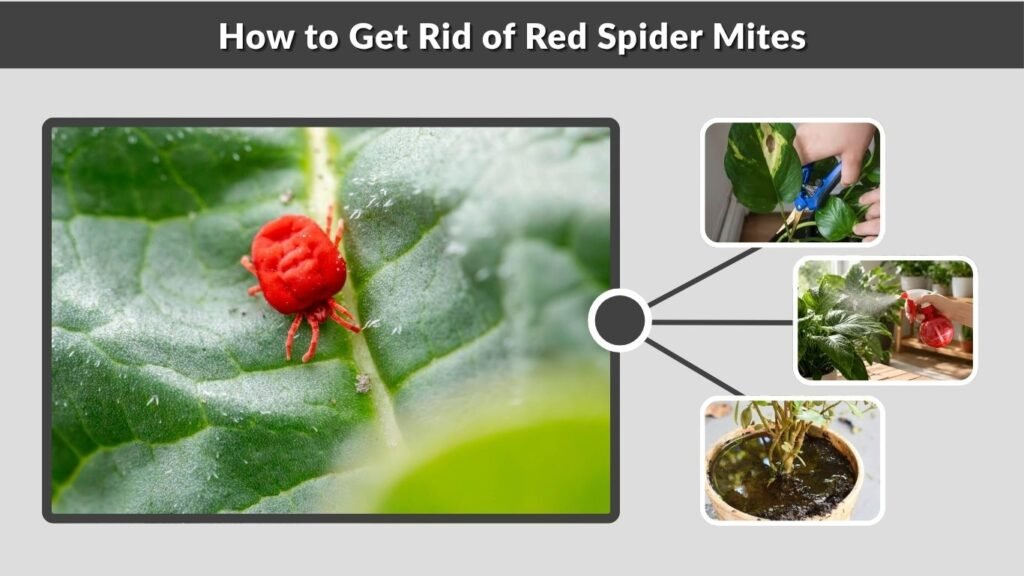
Successful red spider mite control works best when treatment starts early. An integrated approach is usually more effective than immediately reaching for a broad-spectrum insecticide, since some pesticides kill beneficial predators and can actually contribute to later spider mite outbreaks.
Red Spider Mite Control Step by Step
- Isolate badly infested houseplants where practical.
- Remove severely damaged leaves.
- Spray leaf undersides firmly with water.
- Keep plants adequately watered without overwatering.
- Reduce dusty conditions around outdoor plants.
- Recheck leaves every few days.
- Use insecticidal soap or horticultural oil if physical control is insufficient.
- Protect predatory mites and other beneficial insects.
Regular water sprays can physically knock mites and webbing from smaller plants. Coverage underneath the foliage is particularly important because this is where colonies commonly develop.
Does Neem Oil Kill Red Spider Mites?
Neem-based horticultural products can help manage spider mites when used correctly. Neem oil works best when the spray reaches the mites directly, so thorough coverage of the leaf undersides is important. Repeat treatment may be necessary because contact products may not eliminate every mite and egg in a single application.
Do not apply oils to severely water-stressed plants or during very hot conditions. UC IPM recommends checking the product label and testing sensitive plants before treating the entire plant because oils can sometimes injure foliage.
What Insecticide Kills Red Spider Mites?
Spider mites are arachnids, so ordinary insecticides are not automatically good mite treatments. For home gardens, insecticidal soaps and horticultural oils are commonly recommended first. Some broad-spectrum insecticides, including certain pyrethroids and organophosphates, may kill natural predators and lead to larger spider mite populations.
For severe infestations, products specifically labeled as miticides or acaricides may be appropriate. Always select a product labeled for both the target plant and mite, especially when treating edible crops, and follow its application interval and harvest restrictions.
Biological Control for Red Spider Mites
Predatory mites can provide excellent biological control. Phytoseiulus persimilis, for example, actively consumes spider mite eggs and mobile stages, while other predatory mites also help suppress populations. Avoiding unnecessary broad-spectrum pesticide use helps these natural enemies survive.
Biological control can be particularly useful in greenhouses, houseplant collections, and protected growing environments.
Do Red Spider Mites Bite Humans?
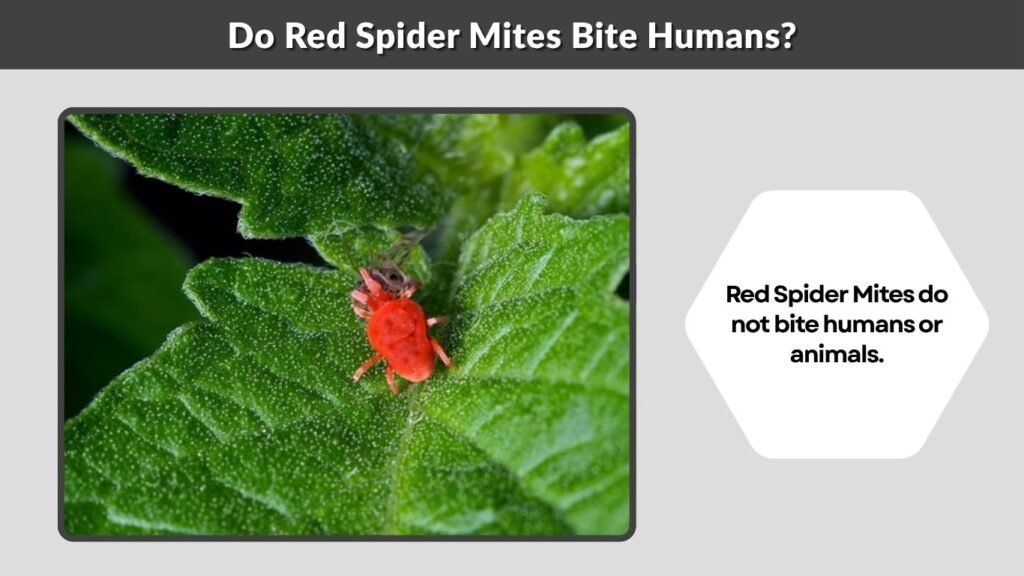
Plant-feeding spider mites are adapted to piercing plant cells rather than feeding on people. If a person develops itchy red skin lesions after being outdoors, another organism may be responsible rather than the spider mites damaging nearby plants. Chiggers, for example, are mites associated with intensely itchy skin reactions after exposure to grassy or weedy areas.
Similarly, tiny red clover mites sometimes enter houses, but extension specialists note that they do not bite humans or animals.
How to Prevent Red Spider Mite Infestations
Prevention mainly involves maintaining healthy plants and detecting mites early. Spider mite problems are often worse on drought-stressed plants and in dusty, hot locations.
Check leaf undersides regularly during warm weather, provide appropriate irrigation, wash dusty foliage when suitable, quarantine newly purchased houseplants, and avoid excessive use of broad-spectrum insecticides. Maintaining beneficial predator populations provides another important layer of long-term protection.
FAQs
1. What is the best way to kill red spider mites?
Begin with strong water sprays and improved plant care. If mites remain, insecticidal soap, horticultural oil, or a properly labeled neem product can provide additional control. Severe infestations may require a labeled miticide.
2. Does neem oil work on red spider mites?
Yes. Neem oil can help control spider mites, but good spray coverage is essential. Apply according to the label and avoid treating heat- or drought-stressed plants.
3. What do red spider mite eggs look like?
Egg appearance varies by species. Common web-spinning spider mite eggs are tiny and spherical, while overwintering European red mite eggs are bright red and have a small stalk-like projection.
4. Can red spider mites kill plants?
Heavy infestations can seriously weaken plants. Severe feeding causes bronzing, yellowing, webbing, leaf drop, and sometimes death of sensitive annual plants.
5. How do I control red spider mites on tomatoes?
Inspect leaf undersides, wash mites off with water, keep tomatoes adequately irrigated, remove badly damaged foliage, and use a labeled insecticidal soap, horticultural oil, or appropriate mite-control product if populations continue increasing. Avoid unnecessary broad-spectrum insecticides that can destroy mite predators.
