

Mouse spiders are large, burrowing spiders best known for their strong fangs and venomous bites. Native mainly to Australia, these spiders are often confused with dangerous funnel-web spiders because they share similar physical traits and venom properties. Despite their intimidating appearance, mouse spiders are usually shy and spend most of their lives underground. Public interest in these spiders has increased because of viral images, bite reports, and confusion with other species worldwide. This guide explains mouse spider identification, habitat, venom, behavior, and the risks associated with their bites.
What Is a Mouse Spider?
The mouse spider belongs to the genus Missulena, a group of burrowing spiders found primarily in Australia. These spiders are part of the Actinopodidae family and are closely related to trapdoor spiders. Mouse spiders are recognized for their glossy bodies, thick legs, and powerful downward-pointing fangs.
Why Is It Called a Mouse Spider?
The name “mouse spider” is believed to come from the spider’s burrowing behavior. Early observers thought the underground tunnels resembled the burrows created by mice. Contrary to internet myths, mouse spiders do not regularly hunt or eat mice.
Most species spend much of their lives inside underground burrows lined with silk. They emerge mainly during humid weather or mating season when males wander in search of females.
Mouse Spider Identification
Mouse spiders have a distinctive appearance that separates them from many common household spiders.
Key identification features include:
- Thick glossy black or brown body
- Large downward-facing fangs
- Short strong legs
- Smooth rounded abdomen
- Slow but powerful movement
Male mouse spiders are often more colorful than females. Some species display bright red jaws or heads, especially the famous red-headed mouse spider found in Australia.
Male Mouse Spider vs Female Mouse Spider
Male and female mouse spiders differ noticeably in both appearance and behavior. Males are smaller, more colorful, and more frequently seen because they wander during mating season. Females remain underground for most of their lives and are rarely encountered.
Female mouse spiders are usually darker and larger, with heavier bodies designed for burrowing. Males often possess brighter markings that help identify their species.
Mouse Spider Habitat and Distribution
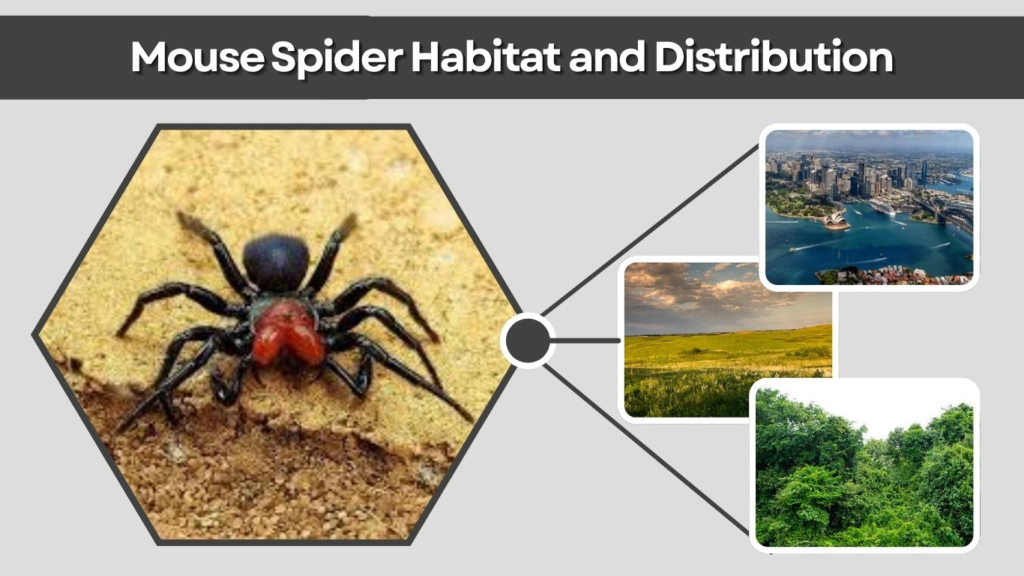
Mouse spiders thrive in warm regions with loose soil suitable for burrowing. Most species occur in Australia, although similar-looking spiders in other countries are often incorrectly labeled as mouse spiders.
Where Do Mouse Spiders Live?
These spiders prefer forests, grasslands, scrublands, and suburban gardens where the ground allows stable burrow construction. Their tunnels can extend deep underground and provide protection from predators and extreme temperatures.
Mouse spiders spend daylight hours inside their burrows and become more active during cooler or wetter conditions.
Mouse Spider Australia Distribution
Australia contains the highest diversity of mouse spider species. Different species occupy eastern and western parts of the country depending on climate and soil conditions.
Common Australian regions include:
- New South Wales
- Western Australia
- Queensland
- South Australia
- Victoria
Some species are adapted to dry inland habitats, while others prefer humid coastal environments.
Mouse Spider Hole and Burrows
Mouse spider burrows are carefully constructed underground shelters. The entrance may remain open or lightly covered with silk and soil depending on the species.
These burrows serve several important purposes:
- Protection from predators
- Temperature regulation
- Safe egg development
- Shelter during dry conditions
- Ambush points for hunting prey
Females may remain inside the same burrow for many years unless environmental conditions force relocation.
Mouse Spider Bite and Venom
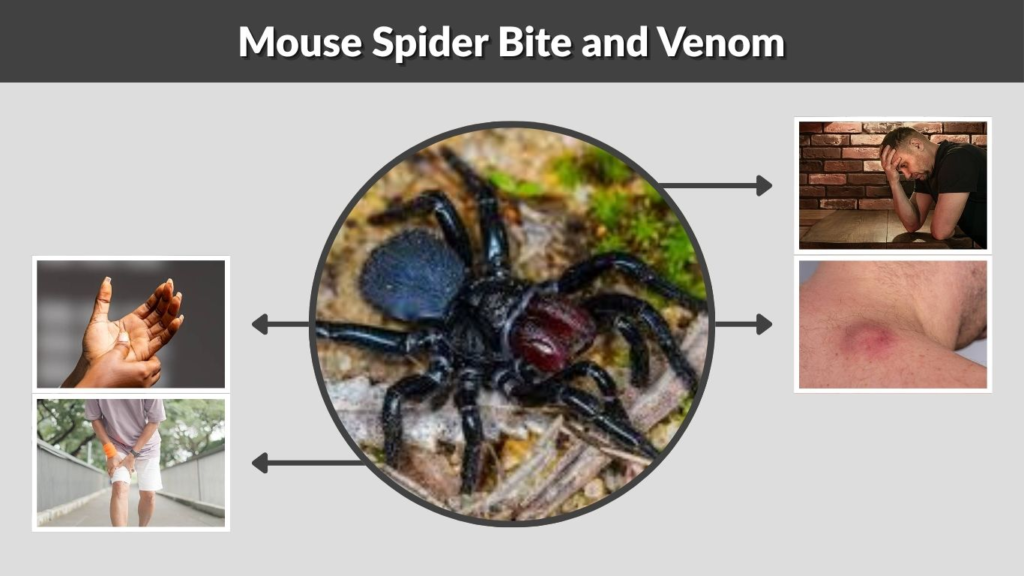
Mouse spider bites are uncommon but medically important because the venom can produce serious symptoms. Their venom shares similarities with the toxins found in funnel-web spiders, although severe reactions remain relatively rare.
Mouse Spider Venom
Mouse spider venom contains neurotoxins that affect the nervous system. Scientists consider some species potentially dangerous to humans, especially the eastern mouse spider.
Despite their venom potency, many bites result in only mild symptoms because spiders sometimes deliver dry bites without injecting significant venom.
Mouse Spider Bite Symptoms
Symptoms can vary depending on the amount of venom injected and the victim’s health condition. Medical attention is recommended for all suspected mouse spider bites because reactions may worsen over time.
Common bite symptoms include:
- Intense local pain
- Swelling and redness
- Tingling sensations
- Sweating
- Muscle weakness
Severe symptoms may resemble funnel-web spider envenomation, which is why doctors often treat serious cases with funnel-web antivenom when necessary.
Can a Mouse Spider Kill You?
Fatalities from mouse spider bites are extremely rare, especially with modern medical care. However, the spiders should still be treated with caution because of their powerful venom and large fangs.
Children and individuals with allergies or medical conditions may face higher risks if bitten. Immediate medical treatment significantly improves recovery outcomes and reduces the chance of complications.
Mouse Spider vs Funnel-Web Spider
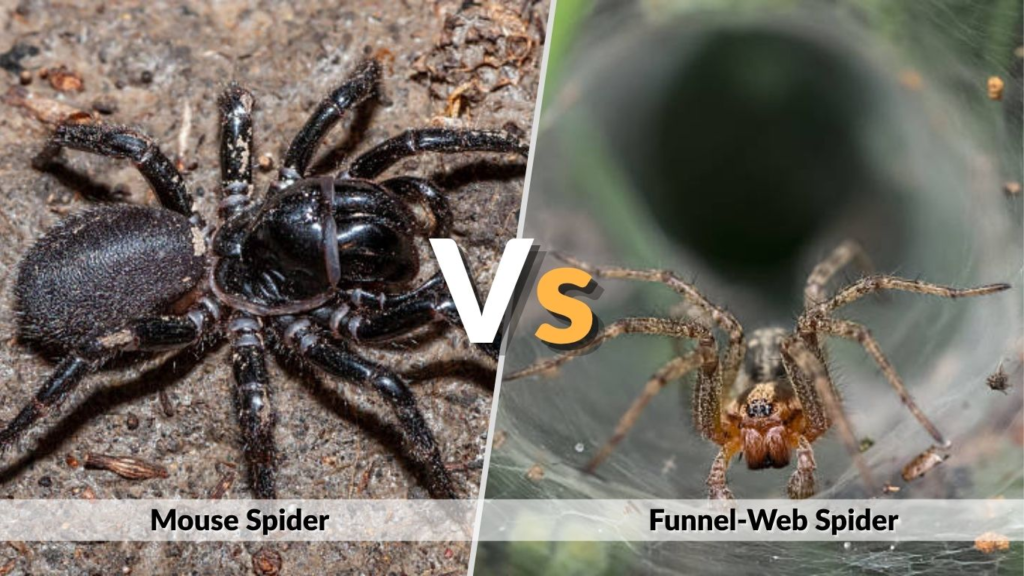
Mouse spiders are frequently mistaken for funnel-web spiders because both species possess shiny bodies, large fangs, and dangerous venom. However, important differences exist between them.
Difference Between Mouse Spider and Funnel-Web
Although they appear similar, funnel-web spiders usually have longer spinnerets and different body proportions. Mouse spiders also tend to have thicker bodies and less aggressive behavior.
Important differences include:
- Funnel-web spiders build silk funnel entrances
- Mouse spiders create deeper burrows
- Funnel-web spiders are generally more aggressive
- Mouse spiders often have brighter male coloration
- Funnel-web venom is considered more dangerous overall
Because identification can be difficult, people should avoid handling either species and contact professionals if a dangerous spider is discovered indoors.
Mouse Spider Behavior and Hunting
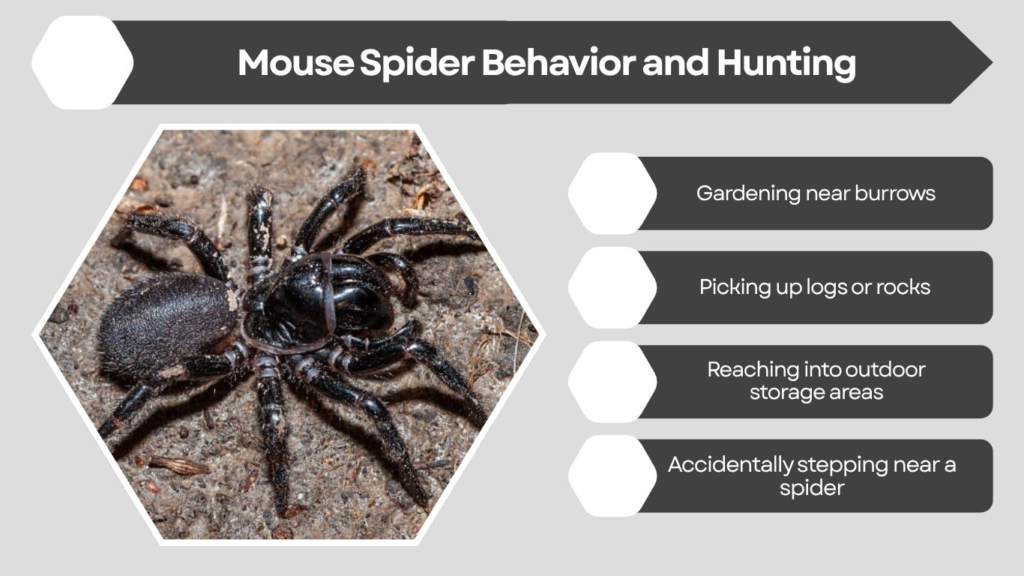
Mouse spiders are ambush predators that rely on patience rather than speed to catch prey. They usually remain hidden near the entrance of their burrows until insects or other small animals move close enough for attack.
Mouse Spider Hunting Behavior
These spiders feed mainly on insects, beetles, small lizards, and other invertebrates. Their strong fangs help them overpower prey quickly before venom immobilizes the victim.
Mouse spiders are mostly nocturnal and become more active after rainfall or during humid weather. Males often wander long distances while searching for mates, which increases the chance of human encounters.
Mouse Spider Aggression
Although their appearance seems intimidating, mouse spiders are not naturally aggressive toward humans. Most bites occur when a spider is accidentally touched, trapped, or disturbed near its burrow.
Situations that commonly lead to defensive bites include:
- Gardening near burrows
- Picking up logs or rocks
- Reaching into outdoor storage areas
- Accidentally stepping near a spider
- Attempting to handle the spider
When threatened, mouse spiders raise their front legs and expose their fangs as a warning display before biting.
Can Spiders Eat Mice?
Internet videos and viral photographs often show spiders dragging or eating mice, leading many people to believe all large spiders can hunt rodents. In reality, only certain large spider species are capable of catching small mammals.
Spider Eating Mouse Facts
Large spiders such as tarantulas, huntsman spiders, and giant orb-weavers have occasionally been documented feeding on mice. These events are unusual but possible when the spider is large enough and the prey is vulnerable.
Mouse spiders themselves rarely hunt rodents despite their name. Their normal diet consists mainly of insects and smaller prey items found near their burrows.
Huntsman Spider Carrying Mouse
Australia has produced several famous images showing huntsman spiders dragging mice across walls or ceilings. These incidents usually involve very large huntsman spiders overpowering weak or trapped rodents.
The behavior is rare and often exaggerated online, but some giant spiders are capable of killing small vertebrates under certain conditions.
Can a Spider Eat a Mouse?
Only a few spider species possess the size, venom, and strength necessary to consume a mouse. Even among large spiders, rodent predation is uncommon because mice can fight back aggressively.
Spiders capable of eating mice typically share these traits:
- Large body size
- Strong venom
- Powerful fangs
- Fast attack speed
- Ability to overpower struggling prey
Most common household spiders pose no threat to rodents or humans.
Mouse Spider in Different Countries
The true mouse spider is native mainly to Australia, but many unrelated spiders worldwide are incorrectly identified as mouse spiders because of similar appearances.
Mouse Spider USA and United States
There are no native Australian mouse spiders living naturally in the United States. Reports from Oregon, Texas, Colorado, and Washington usually involve harmless local spiders that resemble mouse spiders.
Wolf spiders, trapdoor spiders, and certain ground spiders are commonly mistaken for mouse spiders in North America.
Mouse Spider UK and Ireland
The United Kingdom and Ireland do not have native Missulena mouse spiders. Sightings in these regions generally involve harmless black spiders or burrowing species with similar body shapes.
Because true mouse spiders prefer warmer Australian climates, established populations outside Australia are extremely unlikely.
Mouse Spider California and Washington State
California and Washington contain several large ground-dwelling spiders that can resemble mouse spiders at first glance. Misidentifications frequently occur online when people compare local spiders with Australian species.
Professional identification is recommended whenever a potentially dangerous spider is discovered.
Mouse Spider Facts
Mouse spiders remain fascinating because of their unusual appearance, underground lifestyle, and medically important venom.
Interesting Facts About Mouse Spiders
Several characteristics make mouse spiders unique among burrowing arachnids.
- Some species survive underground for many years
- Male mouse spiders wander during mating season
- Their venom resembles funnel-web spider venom
- Bright red jaws appear in certain males
- Females spend most of their lives in burrows
Scientists continue studying mouse spider venom because it shares similarities with toxins produced by more dangerous Australian spiders.
FAQs
Are mouse spiders dangerous?
Mouse spiders possess venom that can cause serious symptoms, although severe cases are rare. Medical attention is recommended after any suspected bite.
Where are mouse spiders found?
True mouse spiders are native mainly to Australia, especially regions with loose soil suitable for burrowing.
How big is a mouse spider?
Most mouse spiders grow between 1 and 1.5 inches long, although leg span and body size vary by species and sex.
What does a mouse spider eat?
Mouse spiders mainly eat insects, beetles, small lizards, and other invertebrates found near their underground burrows.
What is the difference between a mouse spider and a funnel-web spider?
Funnel-web spiders are generally more aggressive and build silk funnel-shaped entrances, while mouse spiders create deeper burrows and often display brighter male coloration.
