
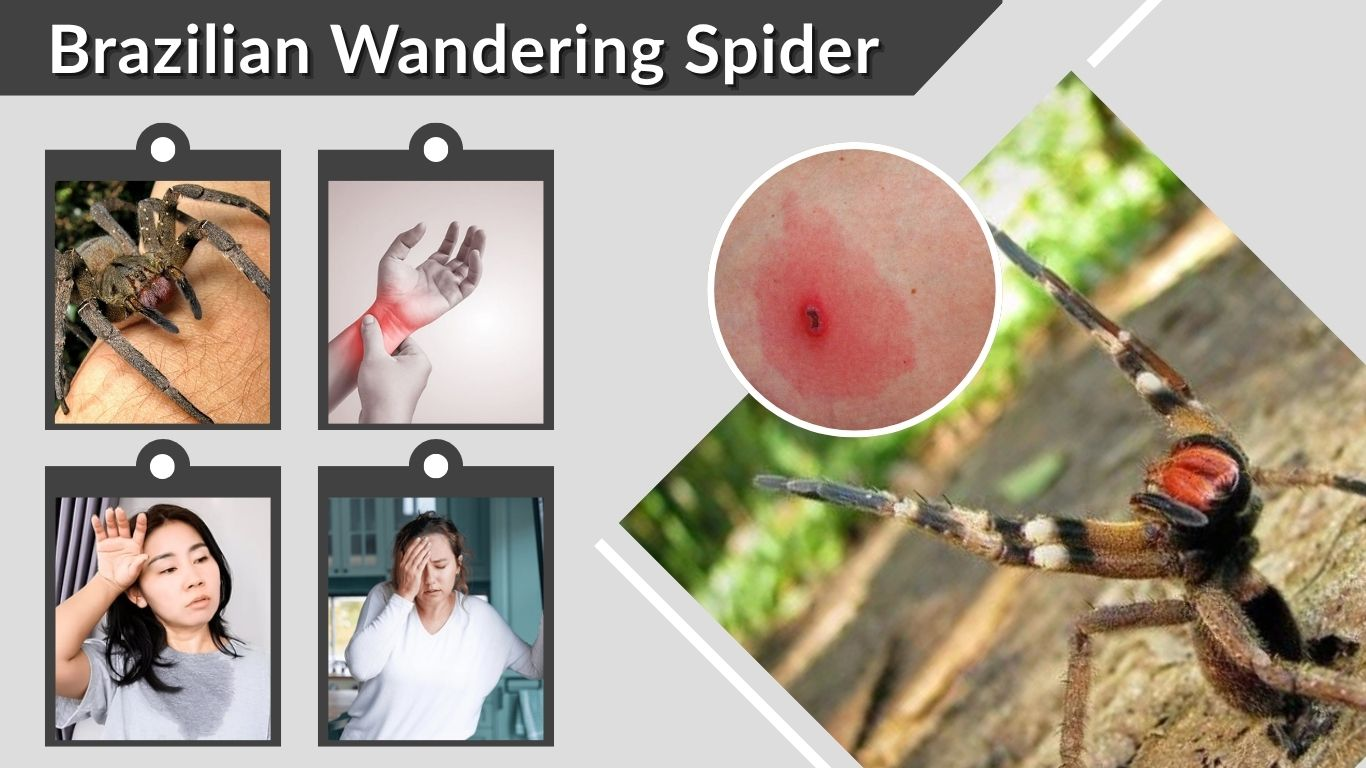
The Brazilian wandering spider is widely known as one of the most venomous spiders in the world. Belonging to the Phoneutria genus, this aggressive hunter is feared for its painful bite and powerful neurotoxic venom. Unlike web-building spiders, it actively roams forest floors and urban areas at night searching for prey. The species is commonly associated with banana shipments, which has helped spread its global reputation. This guide explores Brazilian wandering spider identification, habitat, venom effects, size, and the dangers its bite can pose to humans.
What Is the Brazilian Wandering Spider?
The Brazilian wandering spider is a fast-moving venomous spider native to South and Central America. It gets its name from its wandering hunting style because it does not rely on webs to capture prey. Instead, the spider actively searches for insects, reptiles, and small animals during nighttime hours.
Brazilian Wandering Spider Scientific Classification
The Brazilian wandering spider belongs to the genus Phoneutria, which contains several species known for medically significant venom. These spiders are part of the Ctenidae family, commonly referred to as wandering spiders.
The word Phoneutria comes from Greek and means “murderess,” reflecting the spider’s dangerous reputation. Despite its fearsome name, fatalities are uncommon today because of modern medical treatment and antivenom availability.
Why Is It Called a Wandering Spider?
Unlike orb-weaving spiders that remain in webs, the Brazilian wandering spider constantly moves around searching for food. During the day, it hides in dark and humid locations such as logs, banana plants, rocks, and even inside homes.
At night, the spider becomes highly active and hunts using speed and venom rather than traps. This roaming behavior increases the likelihood of accidental encounters with humans.
Brazilian Wandering Spider Identification
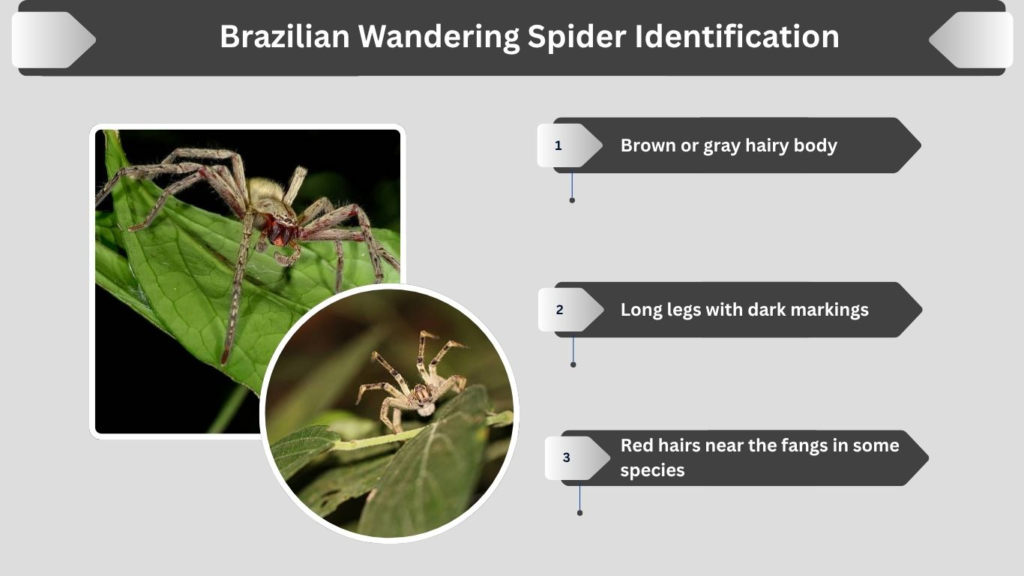
Correct identification is important because several harmless spiders are often confused with the Brazilian wandering spider.
Key identification features include:
- Brown or gray hairy body
- Long legs with dark markings
- Red hairs near the fangs in some species
- Fast movement and defensive posture
- Eight eyes arranged in three rows
When threatened, the spider raises its front legs and exposes its fangs in a defensive display. This posture is considered one of its most recognizable traits.
Brazilian Wandering Spider Habitat and Distribution
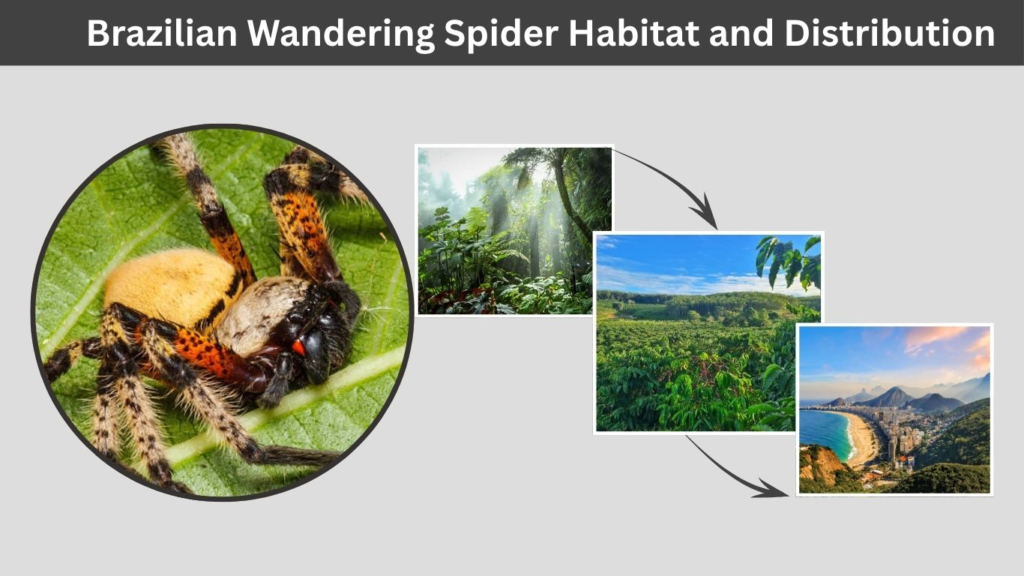
The Brazilian wandering spider naturally lives in tropical regions with warm temperatures and high humidity. It is commonly found in rainforests, plantations, and rural environments where prey is abundant.
Where Does the Brazilian Wandering Spider Live?
Most species are native to Brazil, although wandering spiders are also found in Costa Rica, Colombia, Venezuela, Peru, and other South American countries. They often inhabit forest floors where they can easily hide beneath leaves and debris.
Some species occasionally enter urban areas and homes while searching for shelter or food. Their adaptability allows them to survive in both natural and human-modified environments.
Brazilian Wandering Spider in Bananas
The spider became internationally famous because individuals are sometimes discovered in banana shipments. Banana plantations provide warm and sheltered hiding places, making transportation accidents possible.
Reports of spiders appearing in grocery stores or shipping containers have occurred in several countries, including the United Kingdom and Canada. However, confirmed cases remain relatively rare.
Brazilian Wandering Spider Location
These spiders prefer environments with darkness and moisture. Common hiding places include:
- Banana plants and fruit crates
- Fallen logs and leaf litter
- Wood piles and storage sheds
- Shoes, clothing, and boxes
- Corners of homes and garages
Because they hide during daylight hours, accidental contact often happens when people disturb their resting spots.
Brazilian Wandering Spider Size and Appearance
The Brazilian wandering spider is considered large compared to many common household spiders. Its size and defensive behavior contribute heavily to its frightening reputation.
How Big Is a Brazilian Wandering Spider?
Adult Brazilian wandering spiders can reach a leg span of approximately 5 to 7 inches. Their bodies are smaller than tarantulas, but their long legs make them appear much larger.
Females are generally larger and heavier than males. Their agile movement and quick reactions make them highly effective nocturnal predators.
Brazilian Wandering Spider Eyes and Fangs
The spider has eight eyes positioned in multiple rows, which helps it detect movement in low-light conditions. Its fangs are strong enough to penetrate human skin and inject venom efficiently.
Some species display reddish hairs around the mouthparts, especially when assuming a defensive stance. These warning displays are intended to scare away predators before the spider resorts to biting.
Brazilian Wandering Spider Venom
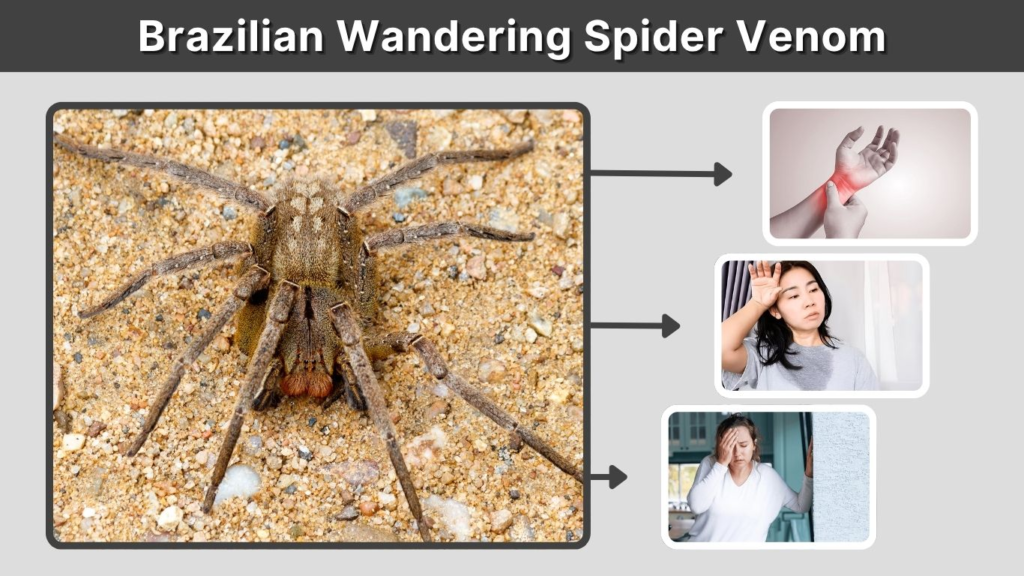
The venom of the Brazilian wandering spider contains potent neurotoxins that affect the nervous system. Scientists study this venom extensively because of its medical significance and unique chemical compounds.
Brazilian Wandering Spider Venom Effects
The venom primarily targets nerves and muscles, producing intense pain and a variety of physical symptoms. Severe reactions are more likely in children, elderly individuals, and people with weakened immune systems.
Common venom effects include:
- Severe burning pain
- Sweating and chills
- Elevated heart rate
- Muscle spasms
- Nausea and dizziness
Most bites are defensive rather than predatory. The spider usually bites when trapped, threatened, or accidentally touched.
Brazilian Wandering Spider Erection Effect
One of the most widely discussed venom effects is priapism, a prolonged and painful erection that has been documented in some male bite victims. This occurs because certain venom toxins affect blood circulation and nerve signaling.
Although this symptom has gained attention online, it is considered relatively rare compared to pain and neurological symptoms. Researchers have also studied venom compounds for possible medical applications related to blood flow disorders.
Brazilian Wandering Spider Bite
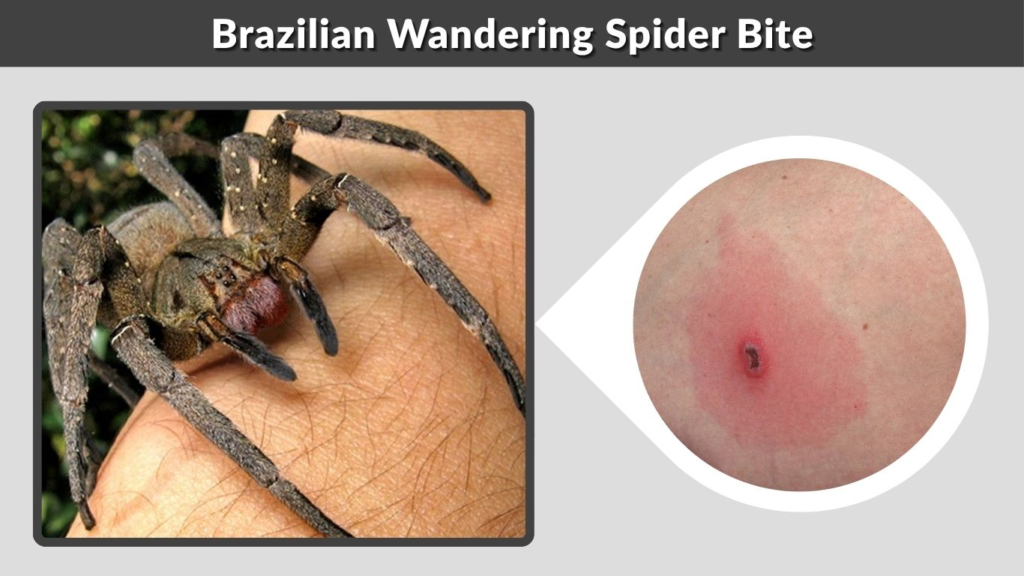
The bite of a Brazilian wandering spider is extremely painful and should always be treated as a medical emergency. Quick treatment greatly improves recovery outcomes and reduces the risk of severe complications.
Brazilian Wandering Spider Bite Symptoms
Symptoms may appear within minutes after a bite and can vary depending on venom quantity and the victim’s health condition.
Common symptoms include:
- Intense localized pain
- Swelling and redness
- Increased sweating
- Breathing difficulty
- Irregular heartbeat
Children face a higher risk of severe complications because of their smaller body size. Immediate medical attention is strongly recommended for all suspected bites.
Brazilian Wandering Spider Bite Treatment
Medical treatment for a Brazilian wandering spider bite focuses on controlling pain, monitoring vital signs, and preventing severe complications. Most victims recover successfully when they receive prompt medical attention.
Brazilian Wandering Spider Antivenom
Antivenom is available in regions where these spiders are common. Doctors usually reserve antivenom for moderate or severe envenomation cases involving dangerous symptoms such as breathing problems or severe neurological effects.
Medical professionals may also provide supportive treatments to stabilize the patient and reduce discomfort. Common treatments include:
- Pain medication
- Heart and breathing monitoring
- Intravenous fluids
- Muscle spasm control
- Antivenom in severe cases
Because symptoms can worsen rapidly, anyone bitten by a suspected Brazilian wandering spider should seek emergency medical care immediately.
Can a Brazilian Wandering Spider Kill You?
Although the Brazilian wandering spider is highly venomous, fatalities are uncommon today due to improved medical care and faster access to treatment. Severe bites are more dangerous for children, elderly individuals, and people with existing health conditions.
Historically, untreated bites sometimes caused death through respiratory failure or cardiovascular complications. Modern antivenom and emergency care have significantly lowered mortality rates.
Brazilian Wandering Spider Behavior
The Brazilian wandering spider is known for defensive aggression and active hunting behavior. Unlike passive spiders that rely on webs, this species depends on speed, awareness, and venom to survive.
Brazilian Wandering Spider Defensive Position
When threatened, the spider lifts its front legs and exposes its fangs in a warning display. This posture signals that the spider feels cornered and may attack if the threat continues.
The defensive stance often includes side-to-side movements and rapid reactions. Many encounters end without a bite because the spider prefers to scare away predators before using venom.
Brazilian Wandering Spider Aggressive Behavior
These spiders have a reputation for aggression because they react quickly when disturbed. However, they do not actively hunt humans. Most bites occur when a person accidentally touches or traps the spider.
Common situations leading to bites include:
- Putting on shoes containing hidden spiders
- Handling banana shipments
- Reaching into dark storage areas
- Disturbing logs or debris
- Attempting to capture the spider
Their wandering habits increase the likelihood of accidental contact in both rural and urban settings.
Brazilian Wandering Spider vs Other Spiders
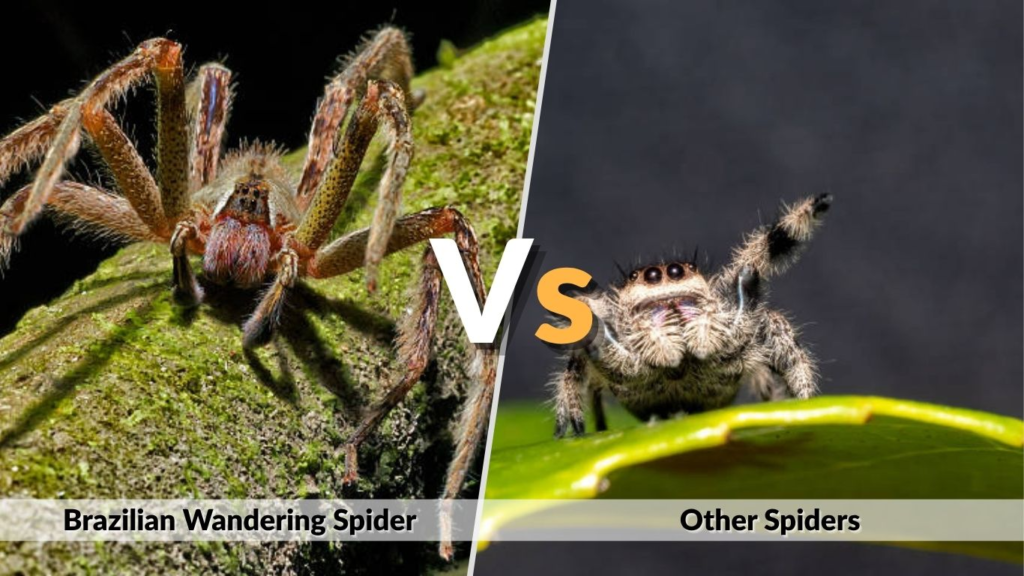
The Brazilian wandering spider is often compared with other dangerous spider species because of its venom potency and intimidating appearance.
Banana Spider vs Brazilian Wandering Spider
Many people mistakenly use the term “banana spider” for several different species. True Brazilian wandering spiders are sometimes found in banana shipments, but harmless golden silk orb-weavers are also commonly called banana spiders.
The Brazilian wandering spider differs by having stronger venom, faster movement, and a more defensive nature.
Wolf Spider vs Brazilian Wandering Spider
Wolf spiders resemble wandering spiders because both are active hunters instead of web builders. However, wolf spiders are generally less dangerous to humans and possess far weaker venom.
Brazilian wandering spiders also display a more dramatic defensive posture and larger fangs compared to wolf spiders.
Brazilian Wandering Spider vs Sydney Funnel-Web
The Sydney funnel-web spider is another highly venomous species often compared with the Brazilian wandering spider. Both spiders can cause severe medical emergencies, but their venom compositions differ significantly.
The funnel-web spider is considered more likely to deliver life-threatening bites, while the Brazilian wandering spider is more widely associated with painful neurotoxic symptoms and defensive encounters.
Brazilian Wandering Spider Reproduction
Brazilian wandering spiders reproduce through egg sacs that protect developing spiderlings. Female spiders guard their eggs carefully until the young hatch.
Brazilian Wandering Spider Eggs
Females lay eggs inside silk sacs hidden in protected areas such as leaf litter or sheltered crevices. Environmental warmth and humidity help support successful development.
After hatching, spiderlings disperse quickly and begin hunting small prey independently. Survival rates vary depending on predators and environmental conditions.
Brazilian Wandering Spider and Babies
Young wandering spiders resemble miniature adults and gradually develop stronger venom as they mature. Juveniles molt several times before reaching adulthood.
Mother spiders may remain near egg sacs for protection during early development stages. This defensive behavior helps reduce predation risks.
Brazilian Wandering Spider Facts
The Brazilian wandering spider remains one of the world’s most fascinating arachnids because of its dangerous venom and unusual behavior.
Interesting Facts About the Brazilian Wandering Spider
Several traits make this species unique among venomous spiders.
- One of the fastest hunting spiders
- Does not rely on webs for prey capture
- Venom contains medically studied compounds
- Frequently associated with banana shipments
- Uses a dramatic defensive display
Scientists continue studying the spider’s venom for potential pharmaceutical uses, especially compounds affecting blood circulation and nerve function.
FAQs
How big is a Brazilian wandering spider?
Adult Brazilian wandering spiders can reach a leg span of around 5 to 7 inches, making them appear much larger than common house spiders.
Is the Brazilian wandering spider deadly?
The spider possesses highly dangerous venom, but deaths are rare today because of modern medical treatment and antivenom availability.
Where is the Brazilian wandering spider found?
It is mainly found in South and Central America, especially Brazil, Costa Rica, Colombia, and surrounding tropical regions.
Why are Brazilian wandering spiders found in bananas?
They often hide in banana plants and shipping crates because these areas provide warmth, darkness, and protection during transportation.
What should you do if bitten by a Brazilian wandering spider?
Seek emergency medical attention immediately. Avoid panic, keep the bite area still, and follow healthcare instructions while waiting for treatment.
