
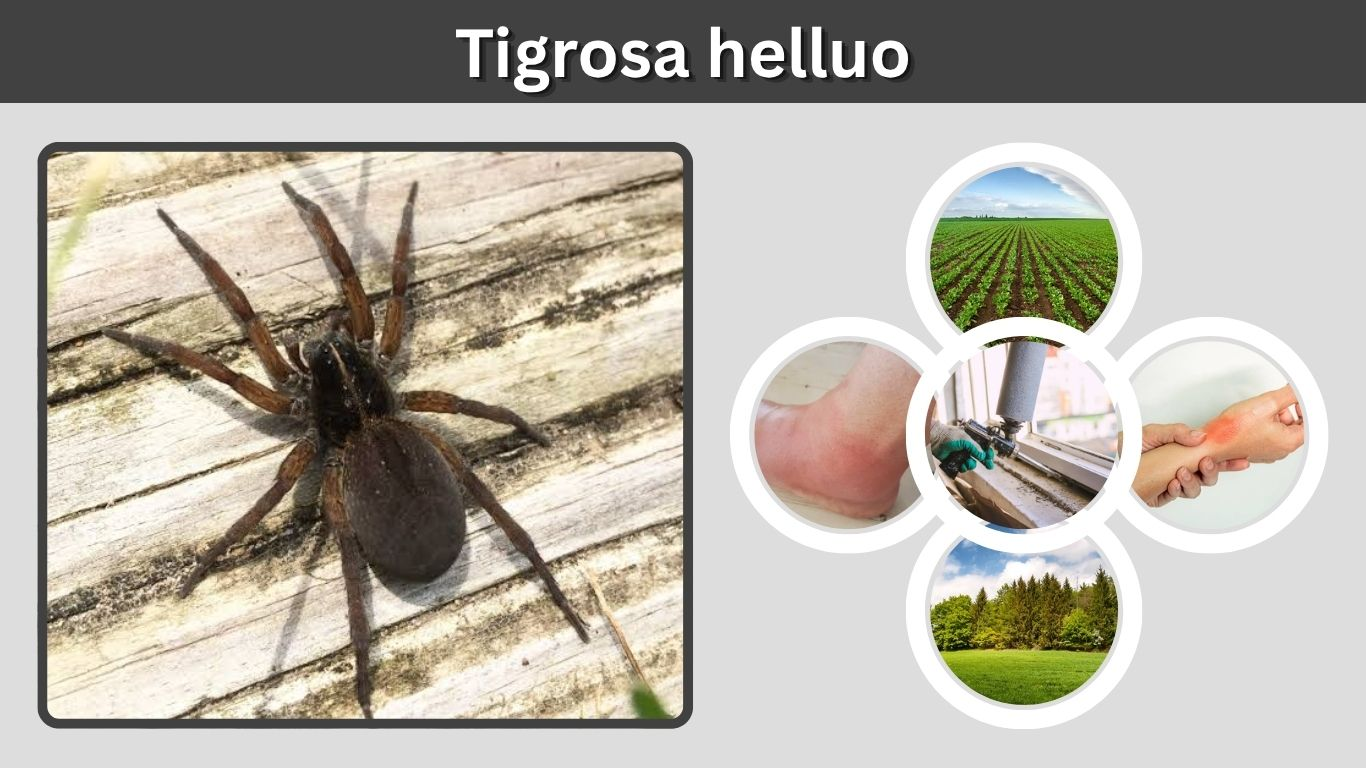
Tigrosa helluo is a large wolf spider often noticed because of its bold brown coloring, strong legs, and fast movement. Many people search for it after finding a big brown spider in a basement, garden, field, or near water. Although it may look intimidating, Tigrosa helluo is not considered dangerous to most people. Like other wolf spiders, it hunts on the ground instead of catching prey in webs and usually avoids humans when left alone.
What Is Tigrosa helluo?
Tigrosa helluo is a species of wolf spider in the family Lycosidae. It was once grouped with other large wolf spiders, so older sources may use different names or compare it with Hogna species. Today, it is commonly placed in the genus Tigrosa.
This spider is often called a wolf spider rather than by a widely used common name. Some people may refer to it as a large brown wolf spider or field wolf spider, but the scientific name Tigrosa helluo is the most accurate label.
Tigrosa helluo Common Name
Unlike spiders such as the Carolina wolf spider or rabid wolf spider, Tigrosa helluo does not have one famous common name used everywhere. In many guides, it is simply listed as Tigrosa helluo or a wolf spider.
Common Names People May Use
- Tigrosa helluo wolf spider
- Large brown wolf spider
- Field wolf spider
- Brown wolf spider
- Large house wolf spider
Because common names can be confusing, the scientific name is best when identifying this spider.
Tigrosa helluo Identification
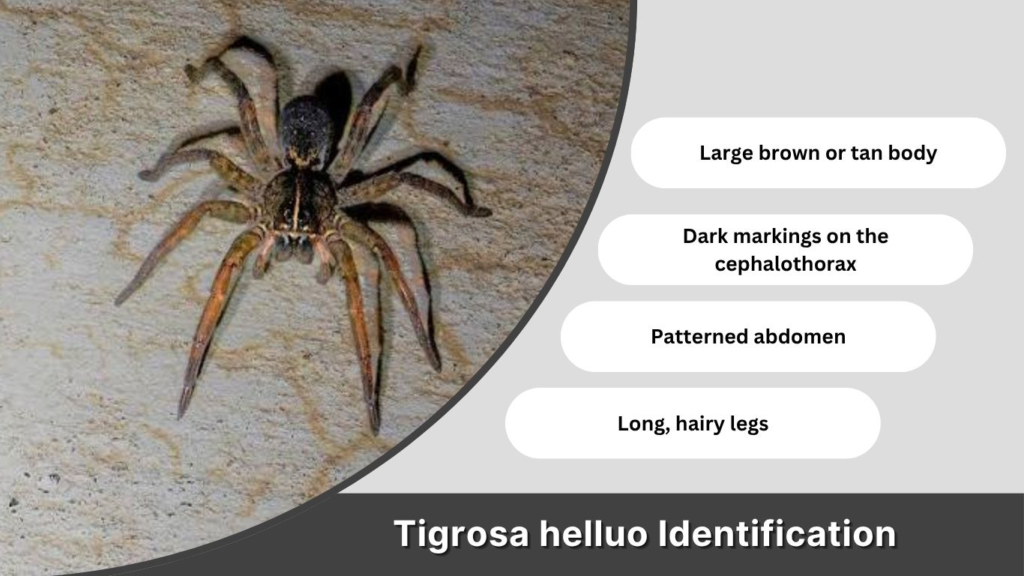
Tigrosa helluo is usually brown, tan, or yellowish-brown with darker markings. It has a strong body, long legs, and the typical wolf spider eye pattern. Its size and fast movement often make it look scarier than it really is.
Key Identification Features
- Large brown or tan body
- Dark markings on the cephalothorax
- Patterned abdomen
- Long, hairy legs
- Fast ground-running behavior
- Large forward-facing eyes
- Does not build a sticky prey-catching web
- Females may carry egg sacs
A clear photo from above can help with identification. For some wolf spiders, underside markings may also help, which is why people search for “ventral Tigrosa helluo.”
Tigrosa helluo Size
Tigrosa helluo is a medium to large wolf spider. Females are usually larger and heavier-bodied than males. Males may appear leggier and slimmer.
| Type | General Appearance | Notes |
|---|---|---|
| Male Tigrosa helluo | Slimmer body, longer-looking legs | Often wanders more |
| Female Tigrosa helluo | Larger, heavier body | May carry egg sac |
| Large adult | Looks bigger with legs spread | Often mistaken for dangerous spiders |
When people ask about Tigrosa helluo size, they are often reacting to the spider’s full leg span rather than body length. Wolf spiders can look much bigger when they run across a floor or wall.
Tigrosa helluo Female
Female Tigrosa helluo spiders are usually more robust than males. They may be found near sheltered areas, leaf litter, grass, fields, or edges of buildings. Like other wolf spiders, females can carry an egg sac attached to their spinnerets.
After the spiderlings hatch, they may climb onto the mother’s back for a short time. This behavior is one of the most recognizable traits of wolf spiders.
Tigrosa helluo Male
Male Tigrosa helluo spiders are generally slimmer and may be seen wandering in search of females. Because males move around more, they may enter garages, basements, or homes by accident.
A male Tigrosa helluo can bite if handled or trapped, but it is not more dangerous than the female. The best approach is to avoid touching it and move it outside safely if needed.
Is Tigrosa helluo Poisonous?
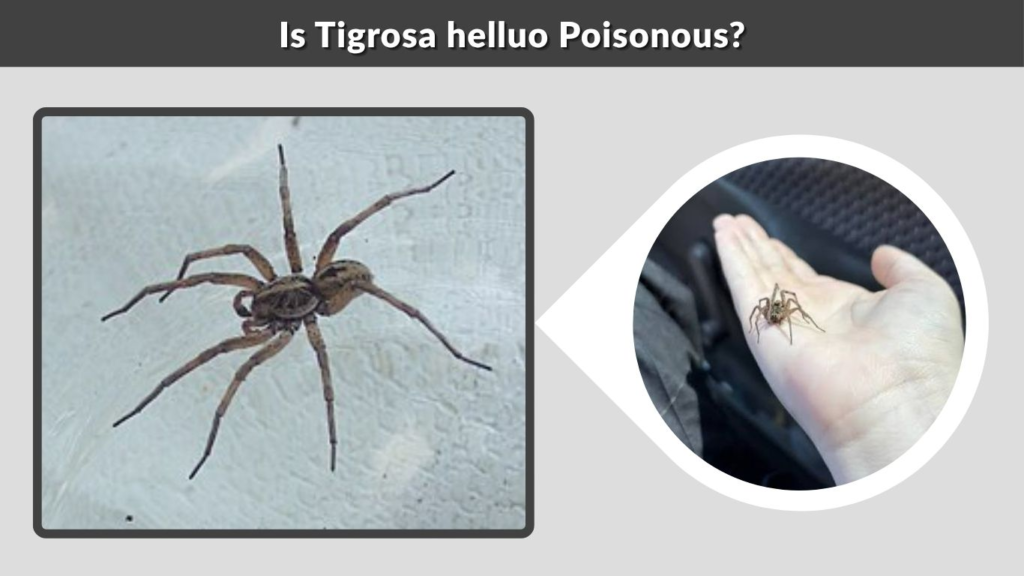
Tigrosa helluo is venomous, not poisonous. This difference is important. A venomous spider injects venom through a bite, while a poisonous animal is harmful when touched or eaten.
Tigrosa helluo uses venom to subdue insects and other small prey. Its venom is not considered medically significant for most people. A bite may hurt, but it is usually not dangerous unless someone has an allergic reaction or the bite becomes infected.
Is Tigrosa helluo Dangerous?
Tigrosa helluo is not considered dangerous to most humans. It may look large and alarming, but it is not aggressive. Like most wolf spiders, it prefers running away instead of biting.
A bite is possible if the spider is pressed against skin, trapped in clothing, or picked up. However, most encounters end with the spider fleeing.
Tigrosa helluo Bite
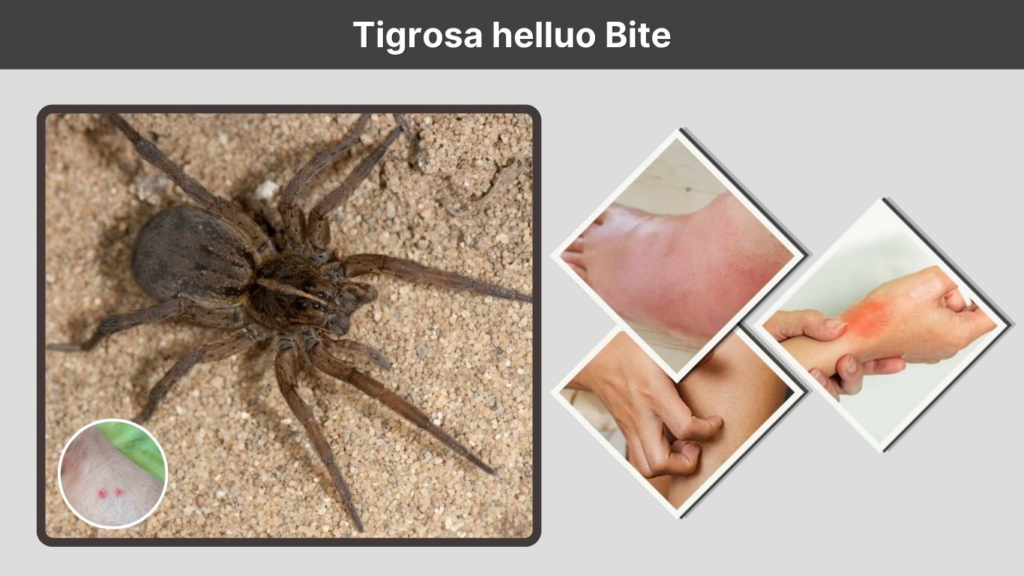
A Tigrosa helluo bite may cause mild local symptoms. It is usually compared to a small bee sting or minor insect bite. Serious reactions are uncommon.
Possible Bite Symptoms
- Quick stinging pain
- Redness
- Mild swelling
- Itching
- Tenderness
- Small puncture marks
- Slight warmth around the bite area
Wash the bite with soap and water, apply a cold compress, and monitor the area. Seek medical help if swelling spreads, pain becomes severe, breathing problems occur, or the bite shows signs of infection.
Tigrosa helluo Habitat
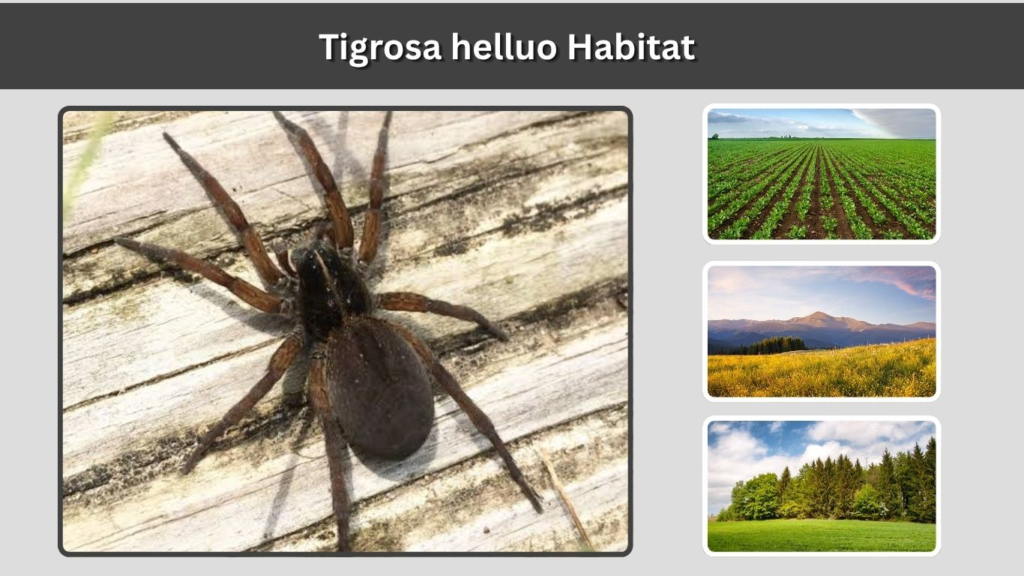
Tigrosa helluo is usually found in ground-level habitats where it can hunt insects and hide during the day. It may live in natural areas as well as around homes.
Common Habitats
- Fields
- Meadows
- Gardens
- Leaf litter
- Grasslands
- Forest edges
- Wet or damp areas
- Around stones and logs
- Basements and garages
- Around foundations and sheds
It may be more noticeable at night when it comes out to hunt. A flashlight can sometimes reveal wolf spider eyes shining in grass or leaf litter.
Tigrosa helluo Range
Searches for Tigrosa helluo often include places such as Ohio, Illinois, Nebraska, Maine, Quebec, West Virginia, and other regions. This spider is reported across parts of North America, especially in areas with suitable ground cover and moisture.
Common Location Searches
| Search Term | Search Intent |
|---|---|
| Tigrosa helluo Ohio spiders | Local identification |
| Tigrosa helluo Illinois | Regional sighting |
| Tigrosa helluo Nebraska spiders | Range question |
| Tigrosa helluo Maine | Northern sighting |
| Tigrosa helluo Quebec | Canada-related search |
| Tigrosa helluo West Virginia | Local wolf spider ID |
Not every large brown spider in these areas is Tigrosa helluo. Other wolf spiders, fishing spiders, and grass spiders can look similar.
Tigrosa helluo Web
Tigrosa helluo can produce silk, but it does not spin a web to catch prey. It is an active hunting spider. This means it runs after insects or ambushes them on the ground.
It may use silk for shelter, egg sacs, or protected resting spots, but if you see a large spider sitting in a neat web, it is probably not Tigrosa helluo.
Tigrosa helluo vs Dolomedes vittatus
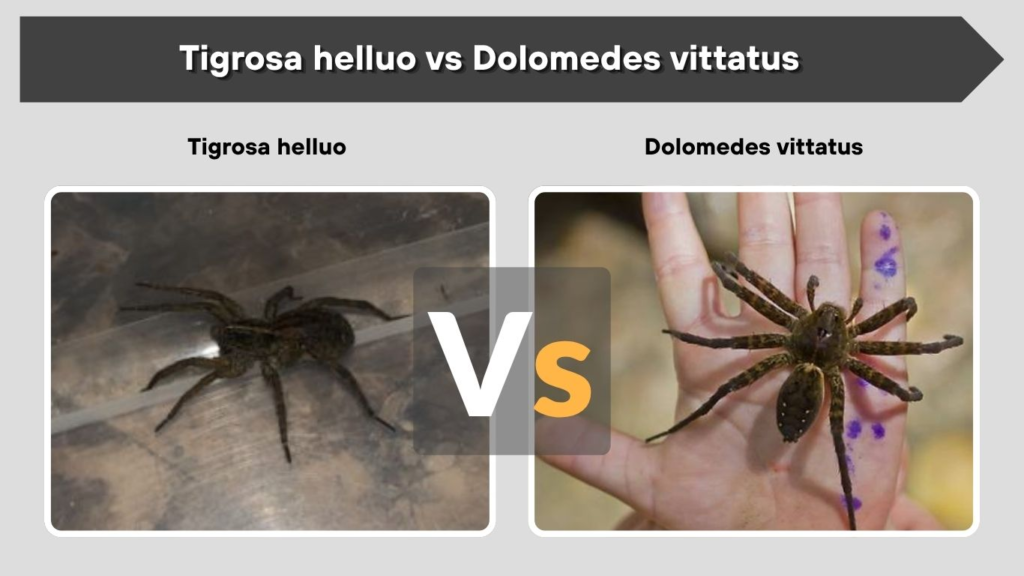
Many people compare Tigrosa helluo with Dolomedes vittatus, a fishing spider. Both can be large, brown, and found around homes or damp areas. However, they belong to different spider families.
| Feature | Tigrosa helluo | Dolomedes vittatus |
|---|---|---|
| Spider type | Wolf spider | Fishing spider |
| Family | Lycosidae | Pisauridae |
| Hunting style | Runs on ground | Often near water or vertical surfaces |
| Web use | No prey-catching web | No classic prey-catching web |
| Body shape | Stocky wolf spider look | Often flatter and leggier |
| Habitat | Fields, grass, leaf litter | Near water, trees, walls, docks |
Fishing spiders often have a flatter posture and may be found on walls, trees, or near water. Wolf spiders are more commonly seen running on the ground.
Tigrosa helluo vs Hogna
Tigrosa helluo is sometimes compared with Hogna wolf spiders because both groups include large ground-hunting spiders. Older classifications and casual identifications can also create confusion.
| Feature | Tigrosa helluo | Hogna Species |
|---|---|---|
| Group | Wolf spider | Wolf spider |
| Size | Medium to large | Often large |
| Common confusion | Large brown wolf spiders | Carolina wolf spider and relatives |
| Identification | Markings and structure matter | Species-level ID can be difficult |
For accurate identification, look at body pattern, eye arrangement, location, size, and clear photos. In many cases, expert confirmation may be needed.
Tigrosa helluo as a Pet
Some people search for Tigrosa helluo as a pet, but it is not a common beginner spider. Wolf spiders are fast, nervous, and not meant for handling. They may hide often and can escape quickly.
If kept temporarily for observation, it needs a secure container, ventilation, substrate, hiding spots, and small live insects. However, most wild wolf spiders are better left outside where they help control pests.
How to Remove Tigrosa helluo From a House
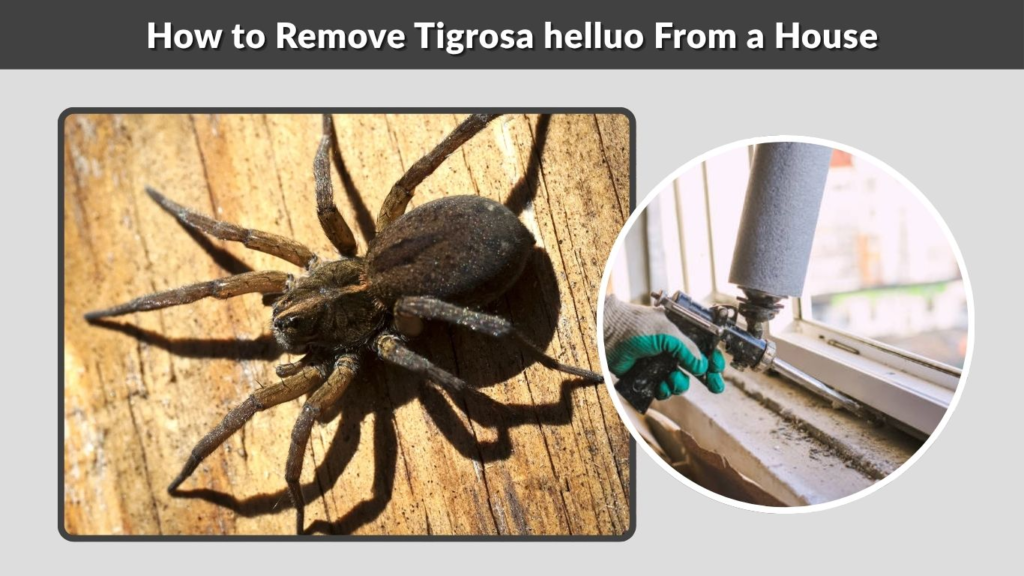
If you find Tigrosa helluo indoors, you do not need to panic. It likely entered by accident.
Safe Removal Tips
- Place a cup or container over the spider.
- Slide stiff paper underneath.
- Carry it outside gently.
- Release it away from doors and windows.
- Seal cracks and gaps around the home.
- Reduce clutter where spiders hide.
- Keep outdoor insects under control.
Avoid picking it up with bare hands.
FAQs
Is Tigrosa helluo poisonous?
Tigrosa helluo is venomous, not poisonous. It uses venom to catch prey, but its venom is not considered dangerous to most people. A bite may cause mild pain, redness, or swelling.
What is the common name of Tigrosa helluo?
Tigrosa helluo does not have one widely used common name. It is usually called a wolf spider, large brown wolf spider, or simply Tigrosa helluo.
How big is Tigrosa helluo?
Tigrosa helluo is a medium to large wolf spider. Females are usually larger and heavier than males, while males are slimmer and more likely to wander.
Does Tigrosa helluo make webs?
It can produce silk, but it does not make sticky webs to catch prey. Tigrosa helluo is an active hunting spider that chases insects on the ground.
Is Tigrosa helluo dangerous?
No, Tigrosa helluo is not considered dangerous to most people. It may bite if trapped or handled, but most bites cause only mild local symptoms.
