
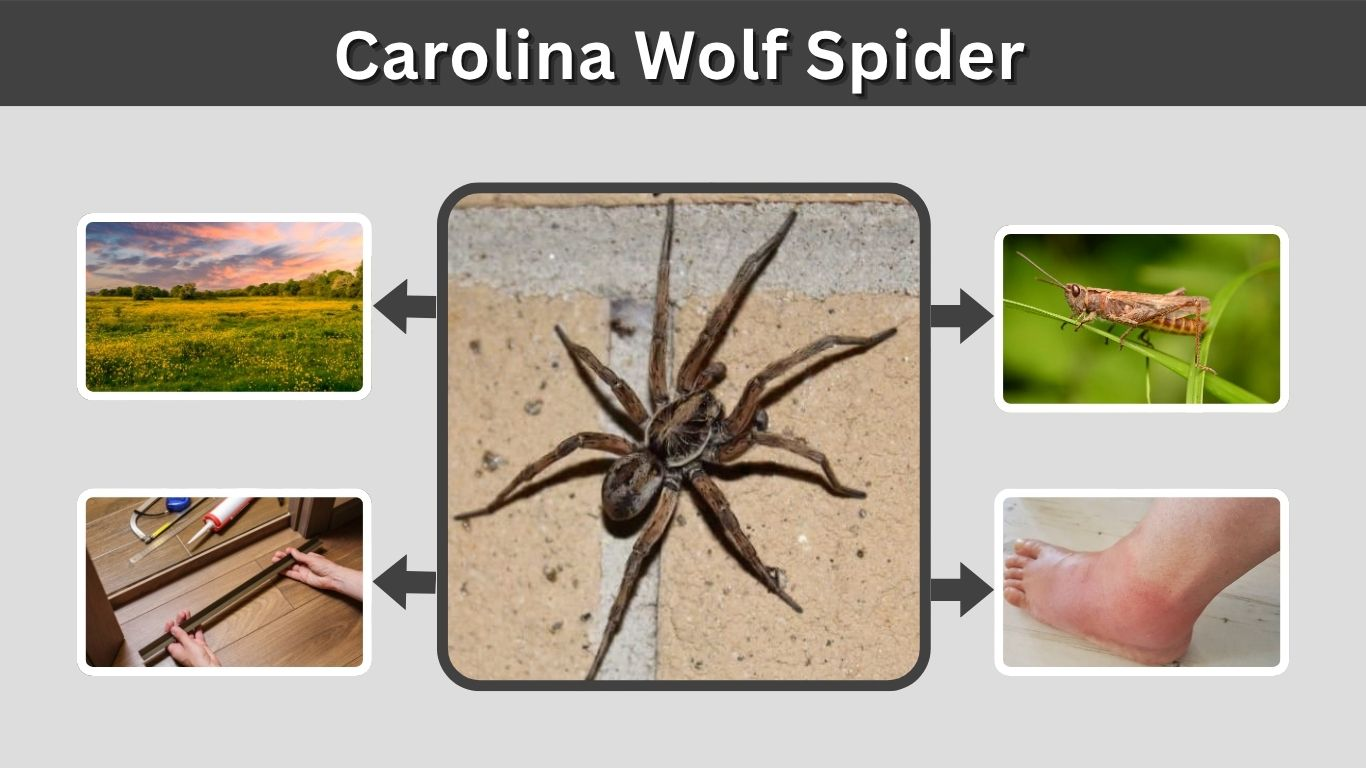
The Carolina wolf spider is one of the most searched wolf spiders in the United States, especially in North Carolina and South Carolina. Known scientifically as Hogna carolinensis, this large hunting spider often gets attention because of its size, dark markings, and fast movement. Although it may look scary, the Carolina wolf spider is not considered dangerous to most people. It plays an important role in controlling insects and usually avoids humans whenever possible.
What Is a Carolina Wolf Spider?
The Carolina wolf spider is a large species of wolf spider in the family Lycosidae. It is often called the giant Carolina wolf spider because it is commonly recognized as the largest wolf spider in North America. Females are usually larger than males, and their strong legs help them chase and ambush prey instead of trapping insects in webs.
Unlike many house spiders, Carolina wolf spiders do not spin sticky webs to catch food. They are active hunters that rely on speed, camouflage, and excellent eyesight. They may live in burrows, under rocks, in grassy areas, or around dry, open ground.
Carolina Wolf Spider Identification
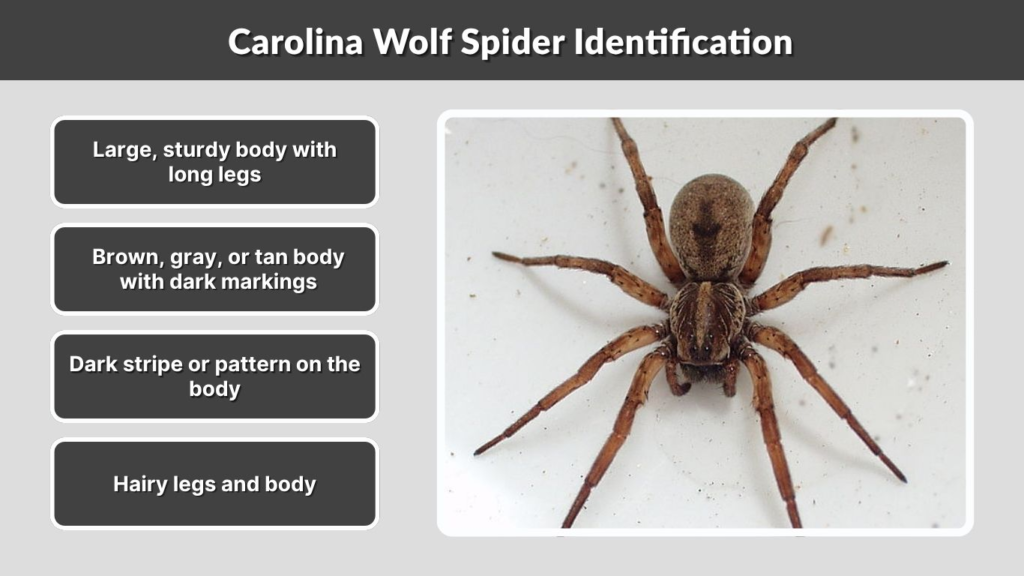
Carolina wolf spiders are usually brown, gray, or mottled with darker markings. Their colors help them blend into soil, leaves, mulch, and grass. At first glance, people may mistake them for tarantulas because they are large, hairy, and thick-bodied.
Key Identification Features
- Large, sturdy body with long legs
- Brown, gray, or tan body with dark markings
- Dark stripe or pattern on the body
- Hairy legs and body
- Female often larger and heavier than male
- Eyes reflect light at night
- Does not build a web to catch prey
- Often found running on the ground or near burrows
A helpful clue is the eye pattern. Wolf spiders have strong eyesight, and their eyes can shine when a flashlight is pointed toward them at night.
Carolina Wolf Spider Size
Carolina wolf spider size is one of the main reasons people search for this species. Adult females are usually about 22–35 mm in body length, while males are often around 18–20 mm. With legs spread out, a large female can appear much bigger.
Size Comparison
| Spider | Approximate Body Size | Notes |
|---|---|---|
| Male Carolina wolf spider | 18–20 mm | Smaller and slimmer |
| Female Carolina wolf spider | 22–35 mm | Larger and heavier |
| Large wolf spider with legs spread | Up to several inches across | Looks bigger than body length |
The phrase “giant Carolina wolf spider” usually refers to a large adult female. However, even large ones are not tarantulas.
Carolina Wolf Spider Male vs Female
Male and female Carolina wolf spiders can look different in size and shape. Females are usually larger, thicker, and more noticeable. Males are often slimmer and may wander more during mating season.
Main Differences
| Feature | Male Carolina Wolf Spider | Female Carolina Wolf Spider |
|---|---|---|
| Size | Smaller | Larger |
| Body shape | Slimmer | Heavier and wider |
| Behavior | Often wanders for mates | Often stays near shelter or burrow |
| Egg sac | Does not carry eggs | Carries egg sac attached to spinnerets |
Female wolf spiders are also known for carrying their egg sacs. After spiderlings hatch, they may ride on the mother’s back for a short time.
Carolina Wolf Spider Habitat
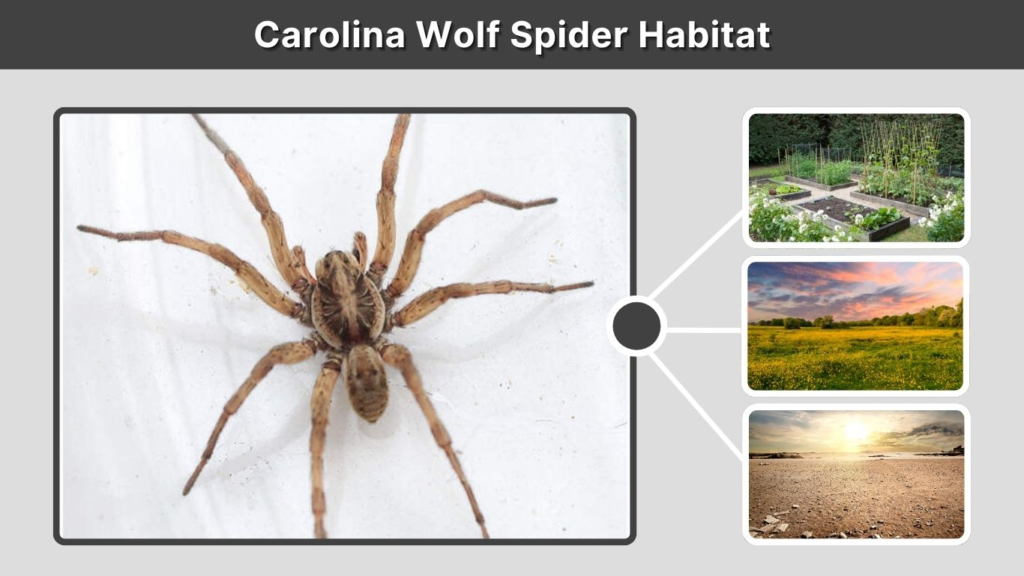
Carolina wolf spiders live in many habitats, including forests, grasslands, deserts, gardens, yards, and open fields. They are ground-dwelling spiders that prefer places where they can hide during the day and hunt at night.
They may be found in:
- Lawns and gardens
- Mulch beds
- Wood piles
- Fields and meadows
- Sandy or dry soil
- Under stones, logs, or debris
- Around sheds, garages, and patios
Some Carolina wolf spiders use burrows for shelter. These burrows help protect them from predators, extreme temperatures, and dry conditions.
Carolina Wolf Spider Range
The Carolina wolf spider is found across a wide part of North America. Despite its name, it is not limited to North Carolina or South Carolina. Reports and observations occur in many states, including areas of the Southeast, Midwest, Great Plains, Southwest, and other regions. iNaturalist also describes it as a wolf spider widely regarded as the largest North American wolf spider.
Common Search Locations
| Search Term | Meaning |
|---|---|
| North Carolina wolf spider | People looking for wolf spiders in NC |
| South Carolina wolf spider | People looking for wolf spiders in SC |
| Carolina wolf spider Texas | Reports or curiosity from Texas |
| Carolina wolf spider Colorado | Searches from western states |
| Carolina wolf spider Arizona | Searches from dry habitats |
| Carolina wolf spider Ohio | Searches from Midwest areas |
It is also the official state spider of South Carolina, which makes it especially popular in searches related to that state.
Are Carolina Wolf Spiders Poisonous or Venomous?
Carolina wolf spiders are venomous, but they are not considered poisonous. Venomous means they inject venom through a bite, usually to subdue prey. Poisonous means something is harmful when touched or eaten.
Their venom is mainly used to catch insects and other small prey. For humans, a bite is usually not medically serious unless someone has an unusual reaction. Penn State Extension notes that wolf spider bites are generally not dangerous but can cause local pain, redness, or swelling.
Carolina Wolf Spider Bite
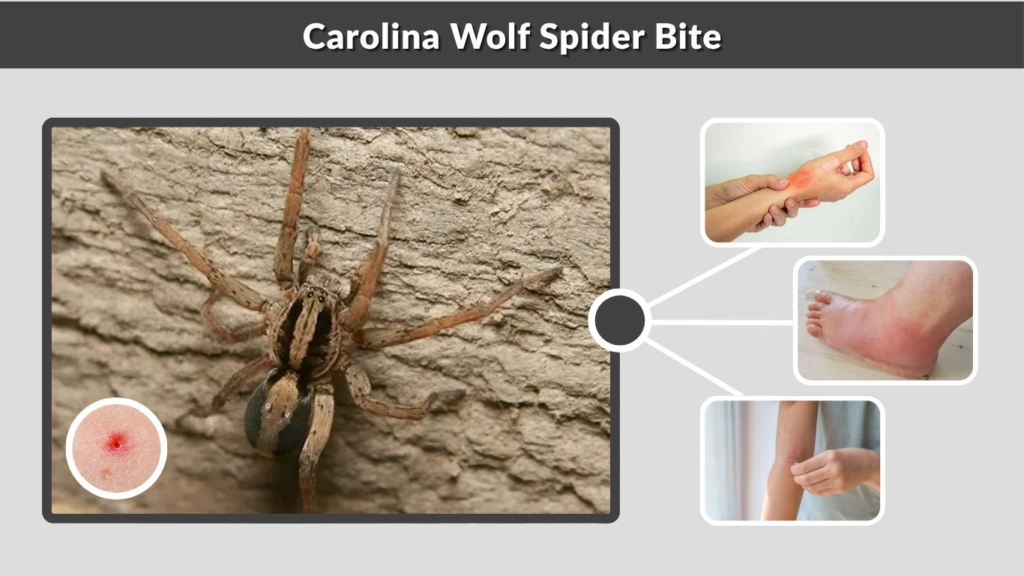
A Carolina wolf spider bite may happen if the spider is trapped, handled, or pressed against skin. These spiders usually prefer escape over biting. Most bites are mild compared with bites from medically significant spiders.
Possible Bite Symptoms
- Sharp pain at the bite site
- Redness
- Mild swelling
- Itching or irritation
- Tenderness
- Rare allergic reaction
Clean the bite area with soap and water, apply a cold compress, and avoid scratching. Seek medical help if symptoms become severe, spread quickly, or include fever, dizziness, breathing trouble, or signs of infection.
Is the Carolina Wolf Spider Dangerous?
The Carolina wolf spider is not considered dangerous to most people. Its size can be intimidating, but it is not aggressive toward humans. Most encounters happen when one wanders into a garage, basement, porch, or yard.
These spiders are actually beneficial because they eat insects and other small arthropods. The University of California Agriculture and Natural Resources notes that wolf spiders help control harmful insects naturally.
Carolina Wolf Spider Web
A common question is whether Carolina wolf spiders make webs. They can produce silk, but they do not build sticky capture webs like orb-weavers or cobweb spiders. Instead, they hunt on foot.
They may use silk for:
- Lining burrows
- Protecting egg sacs
- Making shelter areas
- Helping spiderlings disperse
So, if you see a large spider sitting in the center of a classic web, it is probably not a Carolina wolf spider.
What Do Carolina Wolf Spiders Eat?
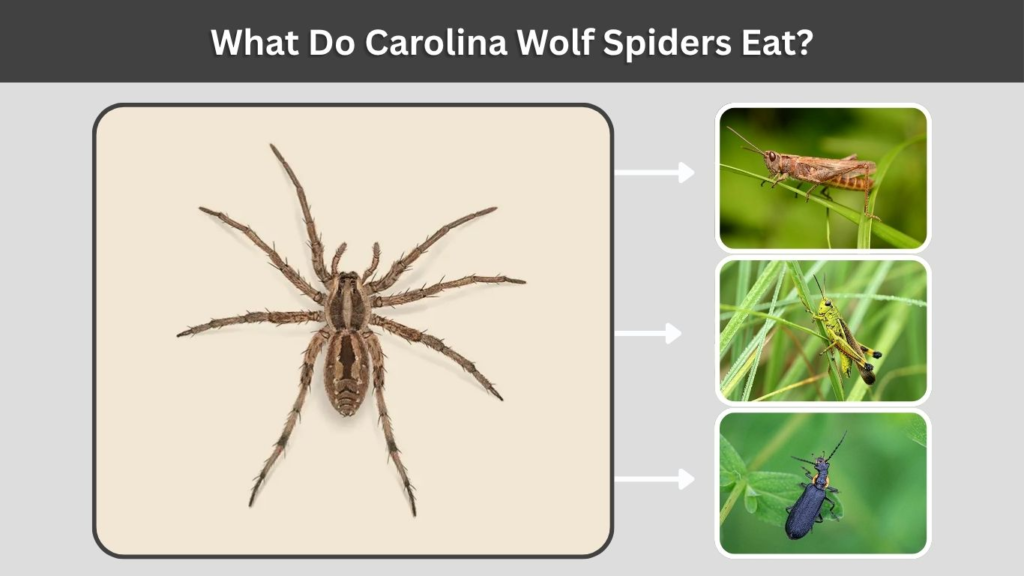
Carolina wolf spiders are carnivorous hunters. They feed on insects and other small arthropods. In yards and gardens, they may help reduce pest populations.
Common Food Sources
- Crickets
- Grasshoppers
- Beetles
- Roaches
- Moths
- Flies
- Other small spiders
- Small ground insects
They hunt mostly at night and use their speed to chase or ambush prey.
Carolina Wolf Spider Lifespan
The Carolina wolf spider lifespan can vary based on sex, climate, predators, and food availability. Females generally live longer than males. Males often mature, search for mates, and die sooner after breeding.
In protected outdoor habitats, females may survive longer because they spend more time near burrows and shelters. Young spiderlings face many risks, including birds, reptiles, wasps, and other predators.
Baby Carolina Wolf Spiders
Baby Carolina wolf spiders are tiny versions of adults. After hatching, spiderlings may climb onto the mother’s back. This behavior is common in wolf spiders and helps protect the young during their earliest stage.
As they grow, spiderlings disperse and begin hunting tiny insects. They molt several times before becoming adults.
Carolina Wolf Spider in the House
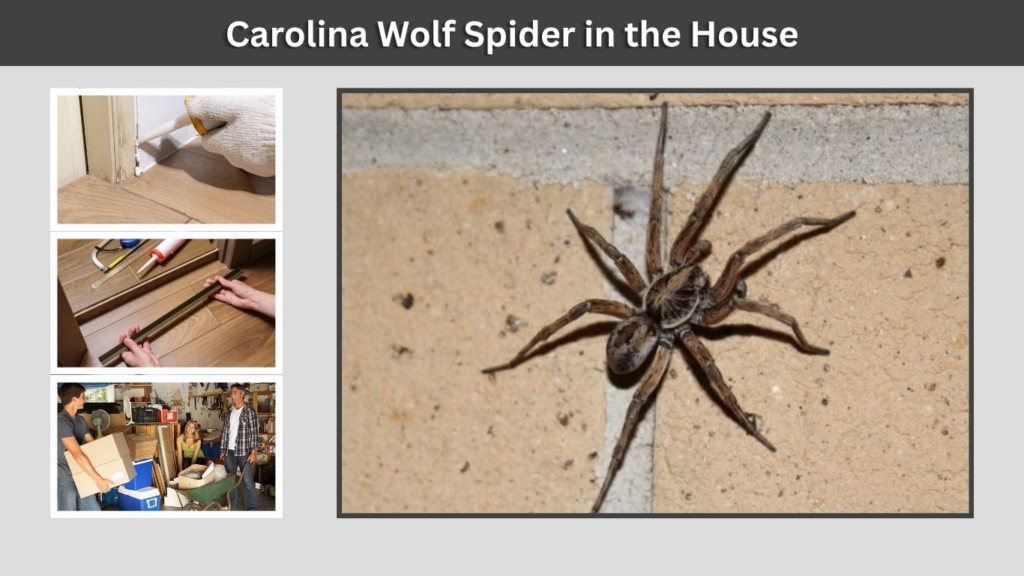
A Carolina wolf spider may enter a home by accident, especially through gaps under doors, garages, basements, or open windows. They are not trying to infest the home like ants or cockroaches. Usually, they are searching for shelter, prey, or mates.
How to Keep Them Out
- Seal cracks around doors and windows
- Install door sweeps
- Reduce clutter in garages and basements
- Remove wood piles near the house
- Keep outdoor lights off when not needed
- Reduce insects that attract spiders
- Use a cup and paper to move spiders outside
Because they are beneficial predators, outdoor relocation is often better than killing them.
Carolina Wolf Spider vs Other Wolf Spiders
“Carolina wolf spider” refers to one species, Hogna carolinensis. “Wolf spider” is a broader name for many spiders in the Lycosidae family. Not every wolf spider in North Carolina or South Carolina is a Carolina wolf spider.
Main Difference
| Feature | Carolina Wolf Spider | Other Wolf Spiders |
|---|---|---|
| Scientific name | Hogna carolinensis | Many species |
| Size | Among the largest | Small to large |
| Web use | No prey-catching web | Usually no prey-catching web |
| Habitat | Wide North American range | Depends on species |
FAQs
Are Carolina wolf spiders poisonous?
Carolina wolf spiders are venomous, not poisonous. Their venom helps them catch prey, but it is not considered dangerous to most humans. A bite may cause pain, redness, or swelling, but serious reactions are uncommon.
How big is a Carolina wolf spider?
Adult females can reach about 22–35 mm in body length, while males are usually around 18–20 mm. With legs spread out, a large female may look several inches wide, which is why people often call it a giant wolf spider.
Do Carolina wolf spiders live in North Carolina?
Yes, Carolina wolf spiders can be found in North Carolina, but they are not limited to that state. They occur across many parts of North America, including South Carolina and other regions with suitable ground habitat.
Do Carolina wolf spiders make webs?
Carolina wolf spiders produce silk, but they do not make sticky webs to catch prey. They are hunting spiders that chase or ambush insects. They may use silk for burrows, egg sacs, and shelter.
Should I kill a Carolina wolf spider?
Usually, no. Carolina wolf spiders help control insects and are not aggressive toward people. If one gets inside, you can safely move it outdoors using a cup and paper instead of killing it.
