
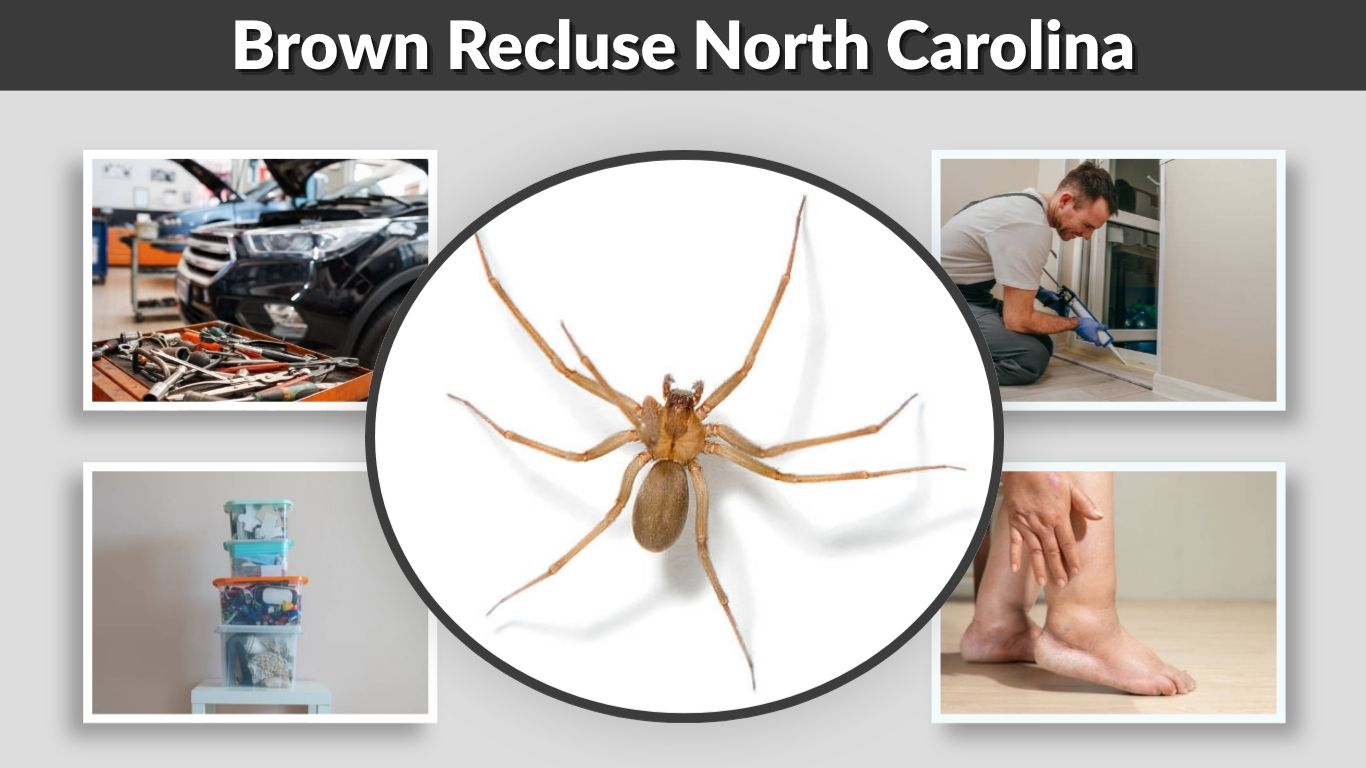
Many people search for “brown recluse North Carolina” because they want to know if this venomous spider lives in the state. The short answer is yes, brown recluse spiders can be found in North Carolina, but they are not very common. Most suspected brown recluse sightings are actually look-alike spiders, and many “spider bites” are skin infections or other insect bites. Still, North Carolina residents should know how to identify them, where they may hide, and when a bite needs medical care.
Are Brown Recluse Spiders in North Carolina?
Yes, brown recluse spiders are found in North Carolina, but they are uncommon. NC State Extension says brown recluse spiders can be found in the state, but they are “simply not very common.” It also notes that several spiders closely resemble them, which causes frequent misidentification.
Brown recluse spiders are more common in the central and south-central United States. Their main range runs from southeastern Nebraska to southwestern Ohio, south to northwestern Georgia and Texas. Occurrences outside that range are considered rare.
How Common Are Brown Recluse Spiders in North Carolina?
Brown recluse spiders are not common across most of North Carolina. They may appear in homes, storage buildings, warehouses, or transported items, but regular encounters are uncommon.
| Search Question | Best Answer |
| Are brown recluse spiders in North Carolina? | Yes, but uncommon |
| Are brown recluses native to most of NC? | No |
| Are they common in Charlotte? | No |
| Are they possible in western NC? | Yes, especially near range edge |
| Are most brown spiders brown recluse? | No |
Brown Recluse North Carolina Map and Distribution
Most brown recluse distribution maps place North Carolina near the edge of the spider’s range. NC State says distribution maps often include only the westernmost tip of North Carolina, although recluse spiders can sometimes turn up in buildings across the state.
Western North Carolina
Western North Carolina is the area most often associated with possible brown recluse presence. Even there, they are not usually considered common. A spider found in western NC may still be a wolf spider, southern house spider, nursery web spider, or another look-alike.
Central North Carolina
Central North Carolina is not a major brown recluse hotspot. In places like Raleigh, Durham, Greensboro, and Winston-Salem, suspected brown recluse spiders should be identified carefully before assuming they are true recluses.
Charlotte, North Carolina
Brown recluse spiders are possible in Charlotte, but they are not considered common. Many brown spiders found in Charlotte homes, garages, and crawl spaces are harmless look-alikes. Repeated sightings inside one building may be worth checking with a pest professional.
What Does a Brown Recluse Spider Look Like?
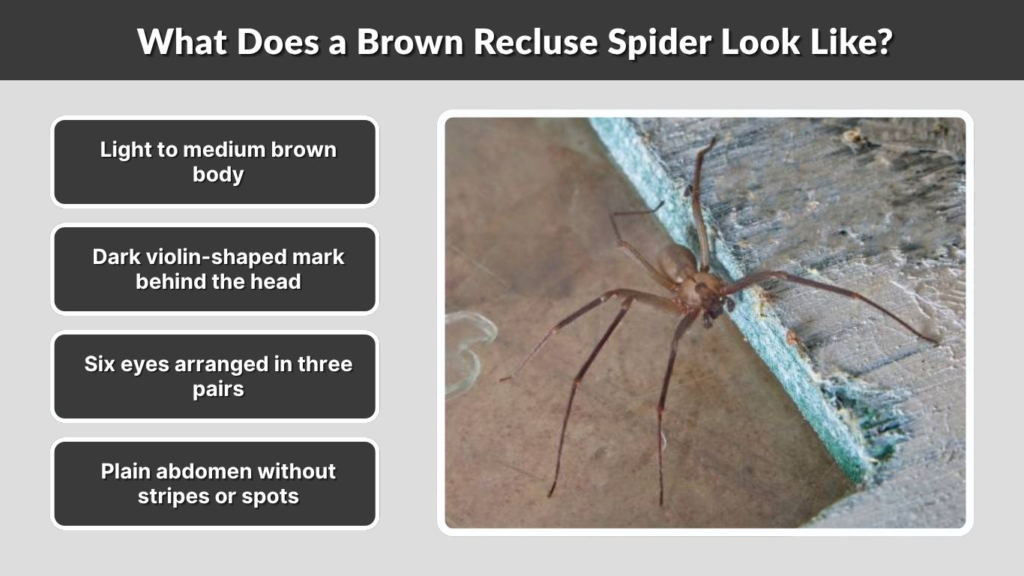
A brown recluse is usually light brown to medium brown with a plain body and long, thin legs. The most famous marking is a dark violin-shaped mark on the top front body section.
Key Identification Features
Look for:
- Light to medium brown body
- Dark violin-shaped mark behind the head
- Six eyes arranged in three pairs
- Plain abdomen without stripes or spots
- Long, smooth-looking legs
- Body about ¼ to ½ inch long
The eye pattern is important because most spiders have eight eyes. Brown recluse spiders have six eyes.
Brown Recluse Look-Alikes in North Carolina
Many North Carolina spiders look similar to brown recluse spiders. This is one reason online photos and home sightings are often unreliable.
| Look-Alike Spider | Why It Is Confused |
| Wolf spider | Brown, fast, common indoors and outdoors |
| Southern house spider | Brown body and long legs |
| Funnel weaver | Often found around homes and garages |
| Nursery web spider | Brown body and slim shape |
| Cellar spider | Long legs and indoor hiding places |
| Fishing spider | Large brown spider that alarms homeowners |
Orkin lists southern house spiders, wolf spiders, cellar spiders, hobo spiders, grass spiders, and yellow sac spiders among common brown recluse look-alikes.
Where Do Brown Recluse Spiders Hide?
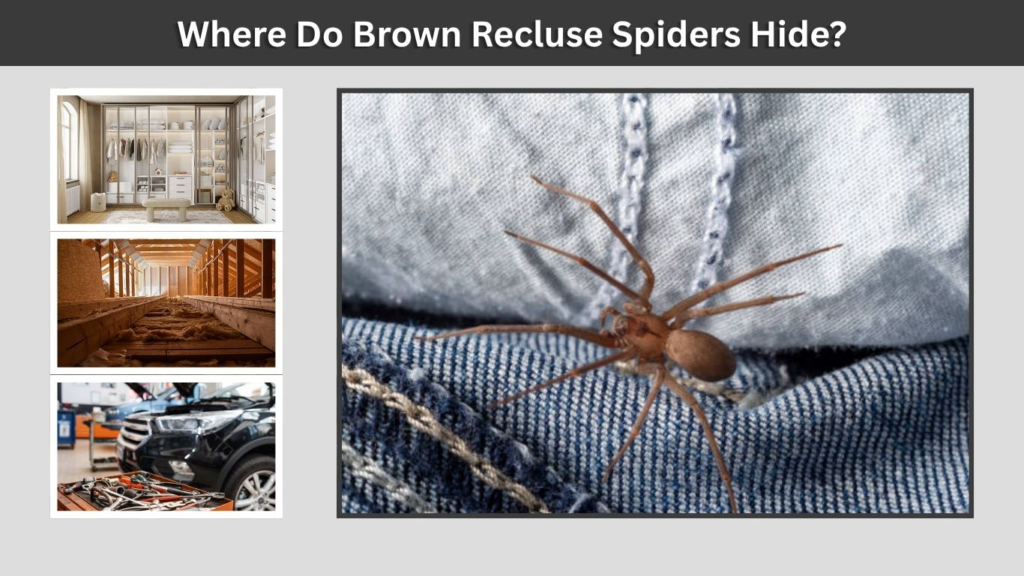
Brown recluse spiders prefer quiet, dark, dry, and undisturbed places. NC State Extension says they may hide outdoors under rocks, debris, and wood piles, and indoors in bathrooms, attics, cellars, and storage areas.
Common Indoor Hiding Places
- Closets
- Attics
- Basements
- Garages
- Storage boxes
- Shoes and boots
- Folded clothes
- Behind furniture
- Cardboard boxes
- Crawl spaces
Common Outdoor Hiding Places
- Woodpiles
- Rock piles
- Sheds
- Debris piles
- Stored lumber
- Old boards
- Outdoor clutter
Brown recluse spiders usually bite only when trapped against skin, such as inside clothing, bedding, or shoes.
Are Brown Recluse Spiders Dangerous?
Brown recluse spiders are medically important because their venom can damage skin tissue. However, they are not aggressive and usually avoid people.
Most bites heal without serious problems. Some bites may cause blistering, skin ulcers, or slow-healing wounds. Rarely, a person may develop whole-body symptoms, especially children or people with stronger reactions.
Brown Recluse Bite in North Carolina
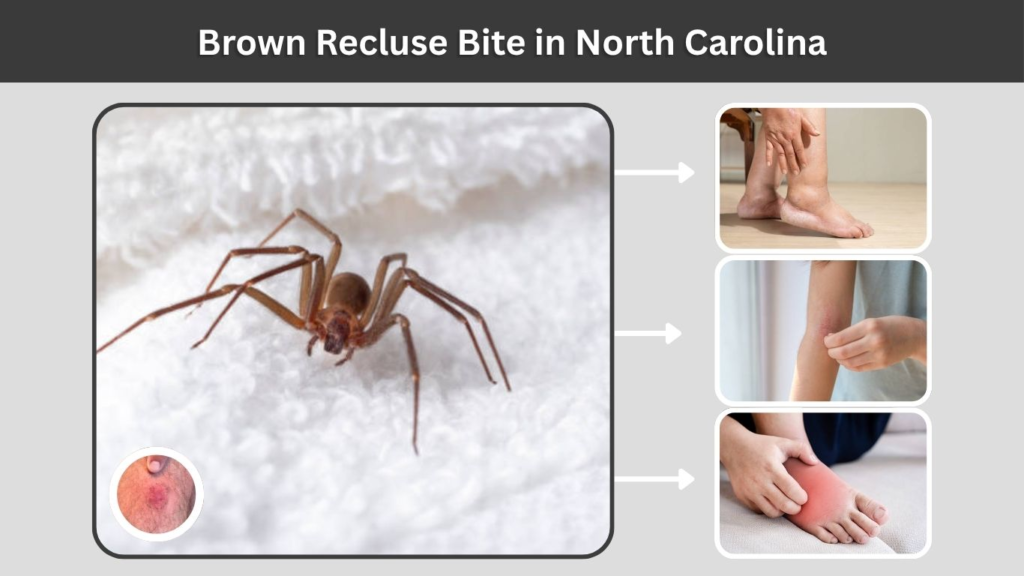
A suspected brown recluse bite in North Carolina should be taken seriously, but it should not be automatically blamed on a spider. In states where brown recluse spiders are uncommon, many “brown recluse bites” are actually infections, allergic reactions, or other insect bites.
Possible Bite Symptoms
A bite may cause:
- Redness
- Swelling
- Pain or tenderness
- Itching
- Blistering
- Bruise-like color
- Dark center
- Open sore
- Slow healing
When to See a Doctor
Get medical help if you notice:
- Worsening pain
- Spreading redness
- Fever
- Pus or drainage
- A growing open sore
- Black or dead-looking skin
- Nausea or weakness
- Dark urine
- Bite on a child or older adult
Why Brown Recluse Bites Are Often Misdiagnosed
Many skin problems look like spider bites. A painful bump, red sore, or open wound does not prove a brown recluse bite happened.
Common conditions mistaken for brown recluse bites include:
- MRSA infection
- Boils
- Skin abscesses
- Tick bites
- Bed bug bites
- Fire ant stings
- Mosquito bites
- Allergic reactions
- Skin ulcers
If no spider was seen, it is safer to call it a suspected spider bite until a medical professional checks it.
What to Do If You Find a Suspected Brown Recluse
Do not pick up the spider with bare hands. If possible, capture it safely in a jar or take clear photos from above. This can help with identification.
Safe Steps
- Keep children and pets away
- Use a jar, cup, or container
- Take a clear photo
- Avoid crushing it with your fingers
- Check nearby boxes, shoes, and stored items
- Contact pest control if you see multiple similar spiders
A single brown spider does not always mean an infestation.
How to Prevent Brown Recluse Spiders in North Carolina Homes
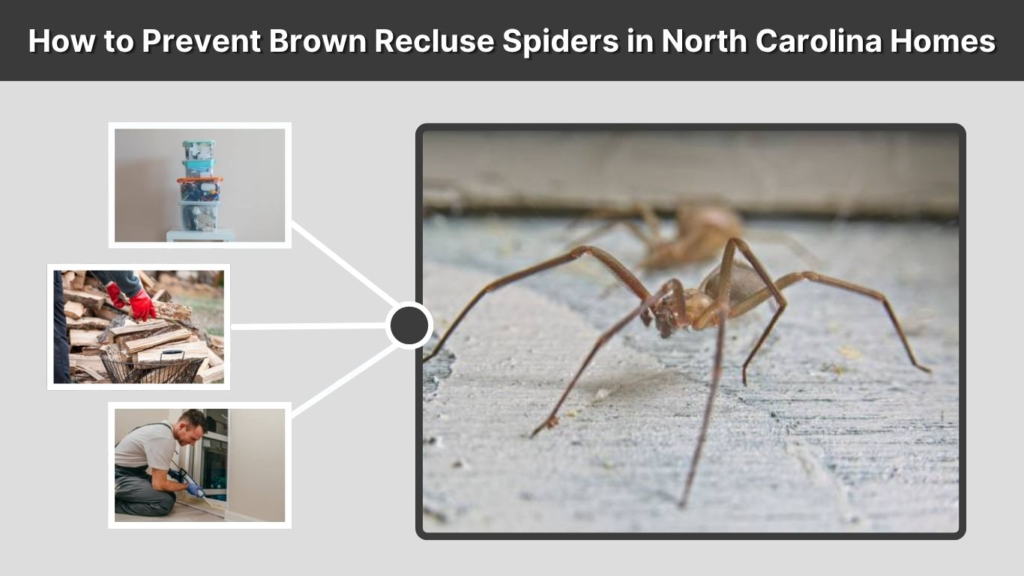
Prevention is mostly about reducing hiding places and avoiding accidental contact.
Prevention Tips
- Store items in sealed plastic bins
- Reduce clutter in garages and closets
- Shake out shoes before wearing
- Wear gloves when moving boxes or firewood
- Seal cracks around doors and windows
- Install door sweeps
- Vacuum corners and storage areas
- Keep beds away from walls
- Remove debris near the home
- Inspect used furniture before bringing it inside
Should North Carolina Residents Worry?
North Carolina residents should be aware of brown recluse spiders, but they do not need to panic. Brown recluse spiders can occur in the state, especially near the western edge or inside transported materials, but they are not common across most areas.
The best approach is to identify spiders carefully, avoid handling unknown spiders, reduce clutter, and seek medical care for serious or worsening skin wounds.
FAQs
Are brown recluse spiders in North Carolina?
Yes, brown recluse spiders can be found in North Carolina, but they are uncommon. NC State Extension says they are not very common in the state, and many suspected sightings are actually look-alike spiders.
Are brown recluse spiders common in Charlotte, North Carolina?
No, brown recluse spiders are not considered common in Charlotte. They may appear occasionally, especially in stored items or buildings, but most brown spiders around Charlotte are more likely to be harmless look-alikes.
Do brown recluse spiders live in western North Carolina?
Western North Carolina is the part of the state most often shown near the edge of the brown recluse range. Even there, brown recluse spiders are not usually common, and suspected sightings should be confirmed carefully.
What spiders in North Carolina look like brown recluse spiders?
Wolf spiders, southern house spiders, funnel weavers, cellar spiders, nursery web spiders, and fishing spiders can all be mistaken for brown recluse spiders. Many are brown and found indoors, but they are different species.
What should I do after a suspected brown recluse bite in North Carolina?
Wash the bite area with soap and water, apply a cool compress, and monitor it. See a doctor if pain worsens, redness spreads, a blister or open sore forms, or symptoms like fever, weakness, or dark urine appear.
