
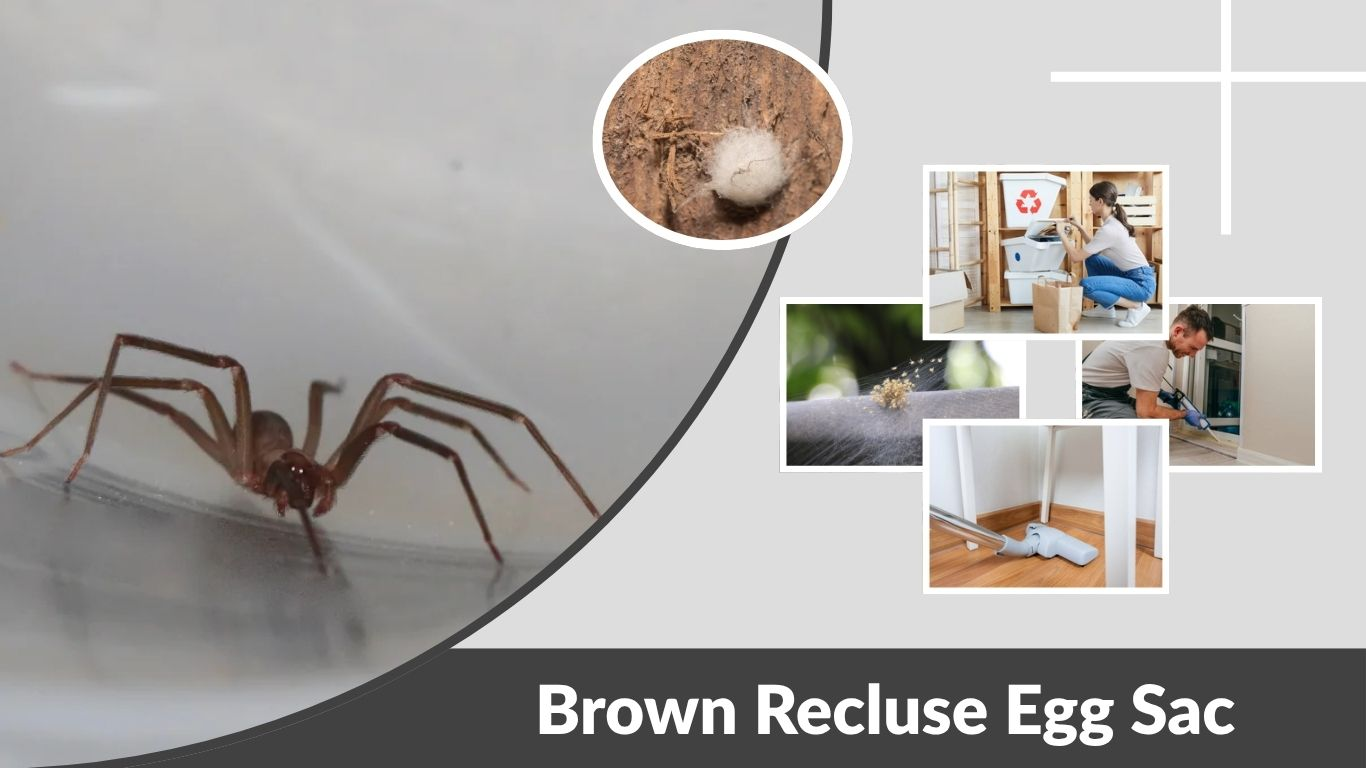
A brown recluse egg sac can be easy to miss because it is small, pale, and usually hidden in quiet spaces. If you find a white or off-white silk sac under furniture, in a box, or near stored items, you may wonder if it belongs to a brown recluse spider. This guide explains what a brown recluse egg sac looks like, how many eggs it contains, where it is found, and how to remove it safely.
What Does a Brown Recluse Egg Sac Look Like?
A brown recluse egg sac is usually small, round to slightly flattened, off-white, and made of silk. Oklahoma State University describes brown recluse egg cases as off-white, round, about 1/4 inch in diameter, and usually hidden in dark sheltered places where the spider lives.
Key Identification Features
Use several clues together, not just color. A suspected brown recluse spider egg sac may have:
- Off-white, cream, or pale gray silk
- Round, flattened, or slightly dome-like shape
- Small size, often about 1/4 to 1/3 inch wide
- Fuzzy or loosely woven silk texture
- Placement in a hidden, dry, dark area
- A female brown recluse nearby, sometimes guarding it
The University of Kentucky notes that brown recluse egg sacs are about 1/3 inch in diameter and off-white, with about 40 to 50 eggs inside.
Brown Recluse Egg Sac Size and Egg Count
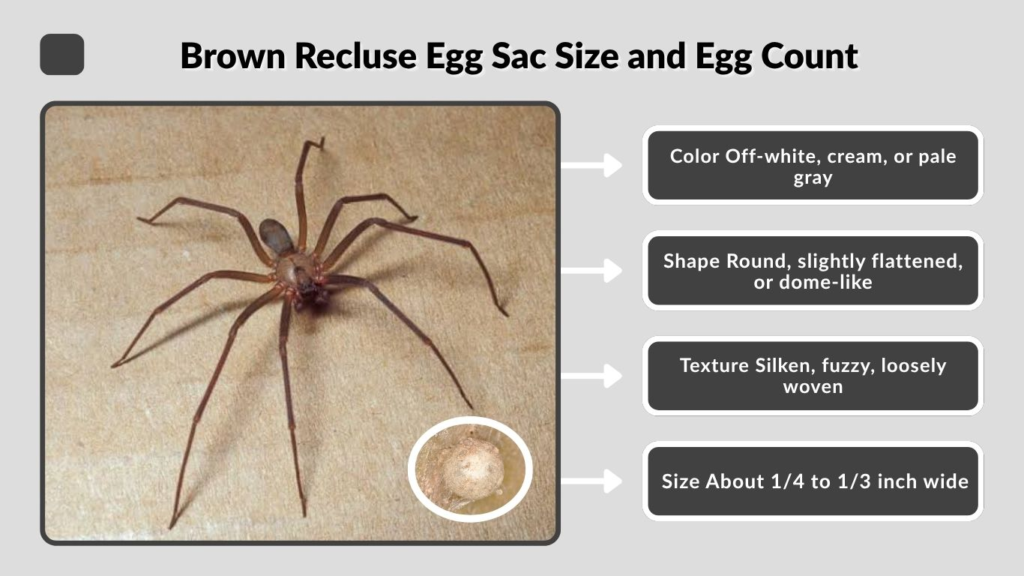
Brown recluse egg sacs are much smaller than many people expect. They are not large hanging balls like some orb-weaver egg sacs, and they are not spiky like brown widow egg sacs.
| Feature | Brown Recluse Egg Sac |
| Color | Off-white, cream, or pale gray |
| Shape | Round, slightly flattened, or dome-like |
| Texture | Silken, fuzzy, loosely woven |
| Size | About 1/4 to 1/3 inch wide |
| Egg count | Often about 40–50 eggs |
| Location | Dark, dry, sheltered spaces |
| Parent behavior | Female may guard it |
Alabama Cooperative Extension says a female brown recluse lays about 40 to 50 tiny yellow eggs inside a sticky silken sac less than one inch in diameter. It also notes that a female can produce several sacs and up to 300 eggs during summer.
Where Do Brown Recluse Spiders Put Egg Sacs?
Brown recluse spiders prefer quiet and undisturbed places. Their egg sacs are usually placed where the spider already hides, not in open webs across a doorway or window. Texas A&M AgriLife says recluse spiders form loose, irregular sheet webs used as retreats, and their loosely constructed egg sacs are attached to a surface.
Common Indoor Hiding Spots
You may find brown recluse egg sacs in:
- Closets and storage rooms
- Cardboard boxes
- Garages and sheds
- Attics and basements
- Under furniture
- Behind baseboards
- Inside wall cracks or crevices
- Near stored clothes, shoes, or linens
Around homes, Texas A&M notes that brown recluses are often found in garages, firewood piles, cluttered cellars, stored boards, closets, under furniture, behind baseboards, and in corners or crevices.
Do Brown Recluse Spiders Carry Their Egg Sacs?
Brown recluse spiders do not normally carry their egg sacs around like some other spiders. Instead, the egg sac is attached to a hidden surface. The female may stay close and guard the sac until spiderlings emerge. Alabama Cooperative Extension states that the female brown recluse guards the egg sac until the spiderlings come out.
Female Brown Recluse With Egg Sac
If you see a brown recluse near a pale silk sac, it may be a female guarding eggs. Do not touch the spider or the sac with bare hands. Brown recluse spiders are not aggressive, but they may bite if trapped against skin or handled.
Brown Recluse Egg Sac Hatching
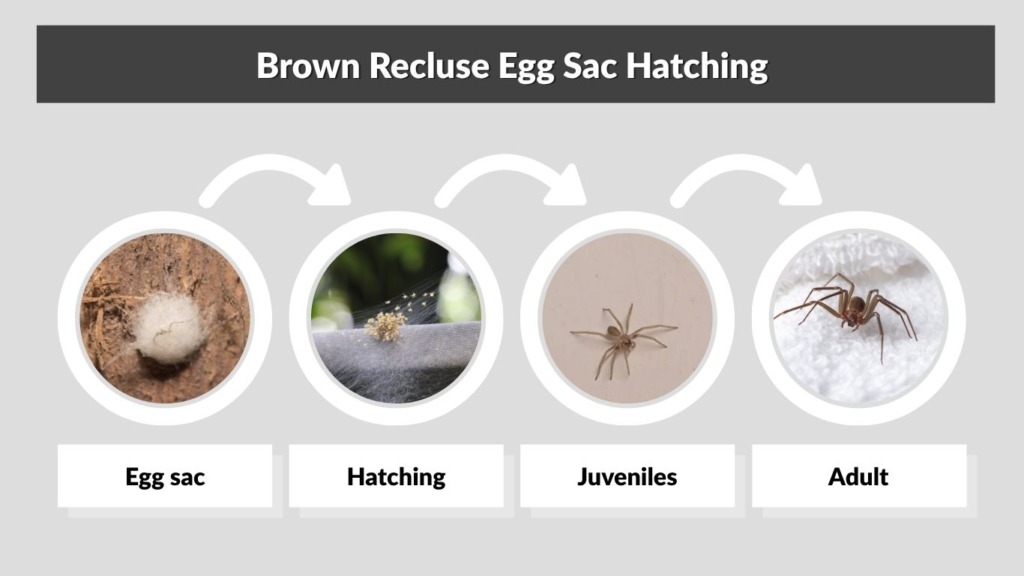
Brown recluse eggs usually hatch in about a month. Alabama Cooperative Extension says the eggs hatch in about one month, and the spiderlings molt several times before maturing.
The full development from spiderling to adult may take close to a year. Texas A&M notes that development to the adult stage may take nearly one year, and females may produce up to five egg sacs with about 50 eggs each.
Basic Life Cycle
| Stage | What Happens |
| Egg sac | Female lays eggs inside a small silk sac |
| Hatching | Spiderlings emerge after about one month |
| Spiderlings | Young spiders molt several times |
| Juveniles | They grow and spread into nearby hiding areas |
| Adults | Mature spiders reproduce and continue the cycle |
Brown Recluse Egg Sac Pictures: What to Notice
Pictures can help, but they are not always enough for identification. Many spider egg sacs are pale, round, and silky. A brown recluse egg sac is more likely if it is small, off-white, attached to a hidden surface, and found in an area where brown recluse spiders are already known to live.
Important Photo Clues
When comparing pictures, look for:
- A small off-white silken sac
- Loose silk around the sac
- Hidden placement under or behind objects
- No spiky surface
- No large hanging orb-weaver-style sac
- A nearby brown recluse spider or shed skins
The University of Kentucky notes that shed skins can help confirm a brown recluse infestation because the molted skins have a distinct outstretched appearance.
Brown Recluse Egg Sac vs Other Spider Egg Sacs
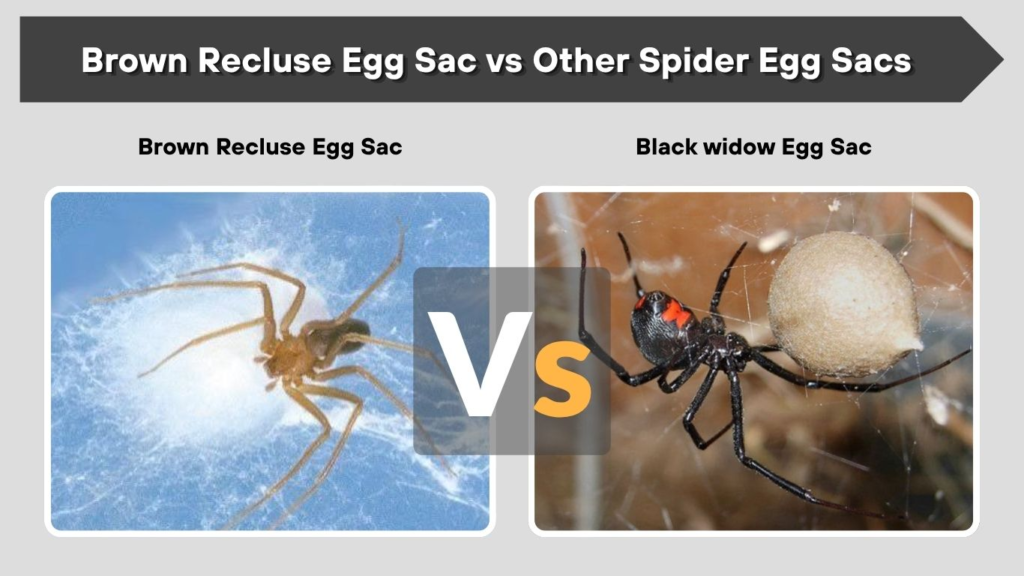
Many people mistake ordinary house spider egg sacs for brown recluse egg sacs. Identification is difficult because spider egg sacs can look similar, especially when they are white or tan.
| Egg Sac Type | Common Appearance | Key Difference |
| Brown recluse | Small, off-white, hidden, loosely woven | Usually in dry, dark retreat areas |
| Common house spider | Pale or tan, often in webbed corners | Usually near visible messy webs |
| Black widow | Tan or grayish, papery, round | Usually in a strong messy web |
| Brown widow | Tan with spiky projections | Looks prickly or burr-like |
| Orb-weaver | Larger, papery or fluffy sac | Often outside near plants or structures |
A brown recluse egg sac is not the same as a black widow egg sac. Black widow egg sacs are usually associated with the female’s strong, messy web, while brown recluse egg sacs are more hidden in dry retreat areas.
How to Remove Brown Recluse Egg Sacs Safely
If you think you found a brown recluse egg sac, avoid crushing it with your bare hand. Wear gloves and use a vacuum with a hose attachment if possible. Oklahoma State University recommends vacuuming egg sacs from under furniture and reducing clutter as part of brown recluse control.
Safe Removal Steps
Follow these steps:
- Put on gloves and long sleeves
- Keep children and pets away
- Vacuum the egg sac and surrounding webbing
- Vacuum nearby corners, cracks, and cluttered areas
- Seal and dispose of the vacuum bag or empty the canister outdoors
- Use sticky traps to monitor for more spiders
- Call pest control if you find multiple egg sacs or live recluses
Do not burn egg sacs, spray random chemicals indoors, or handle the sac directly. If there are many sacs, repeated sightings, or confirmed brown recluse spiders, professional pest control is safer than guessing.
How to Prevent Brown Recluse Egg Sacs Indoors
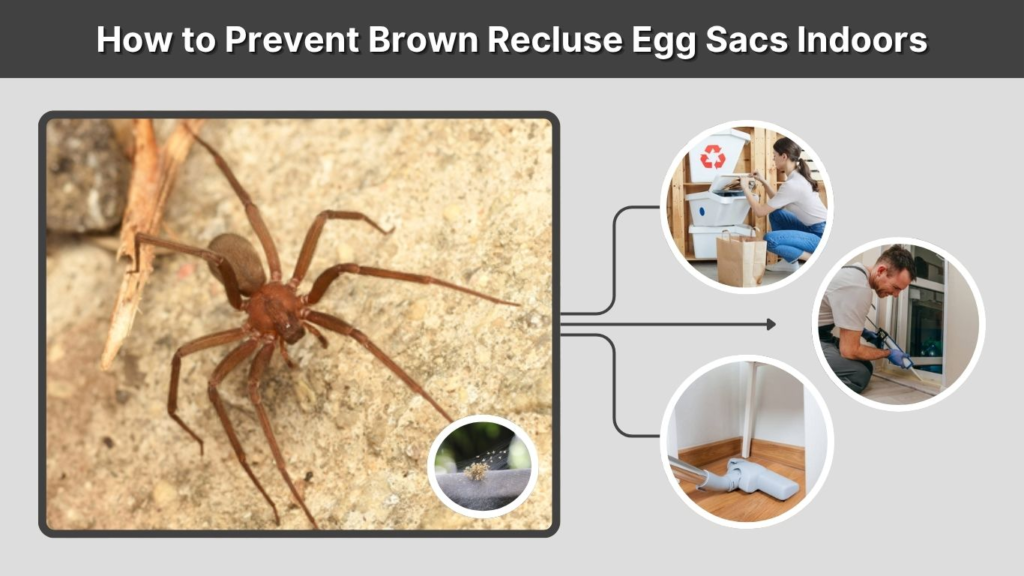
Prevention is mostly about removing hiding places. Brown recluse spiders do well in cluttered, dry, quiet areas. Texas A&M recommends sanitation, trapping, and control measures for infestations, including reducing clutter and using sticky traps to monitor activity.
Helpful prevention tips include:
- Replace cardboard boxes with sealed plastic bins
- Shake out shoes, gloves, towels, and stored clothing
- Move beds away from walls and bed skirts off the floor
- Seal cracks around doors, windows, and baseboards
- Vacuum closets, garages, and storage areas regularly
- Keep firewood and stored boards away from the house
- Use glue traps in dark corners and behind furniture
Can a Brown Recluse Egg Sac Be Dangerous?
The egg sac itself does not bite, but it can lead to many spiderlings if it hatches. Adult and juvenile brown recluse spiders can bite if trapped against skin. The CDC says brown recluse bites usually require pressure against the skin, such as when a spider is trapped in clothing or bedding, and first aid includes washing the area, applying a cold cloth or ice pack, elevating the bite area, and seeking professional care when needed.
If you are bitten while cleaning a suspected infestation, wash the area with soap and water, apply a cold compress, and contact a medical professional if pain, swelling, blistering, dark skin, fever, or other symptoms develop.
FAQs
What does a brown recluse egg sac look like?
A brown recluse egg sac is usually small, off-white, round to slightly flattened, and made of fuzzy silk. It is often hidden in dark, dry spaces such as closets, boxes, garages, basements, or under furniture.
How many eggs are in a brown recluse egg sac?
A brown recluse egg sac often contains about 40 to 50 eggs. A female can produce several egg sacs during the warmer season, depending on conditions.
Do brown recluse spiders carry their egg sacs?
No. Brown recluse spiders usually attach egg sacs to hidden surfaces. The female may guard the egg sac, but she does not carry it around like a wolf spider carries an egg sac.
How long does it take for a brown recluse egg sac to hatch?
Brown recluse eggs usually hatch in about one month. After hatching, spiderlings molt several times and may take close to a year to become adults.
How do you kill or remove brown recluse egg sacs?
The safest method is to wear gloves, vacuum the egg sac and nearby webbing, then dispose of the vacuum contents outside. If you find several egg sacs or live brown recluses, contact a pest control professional.
