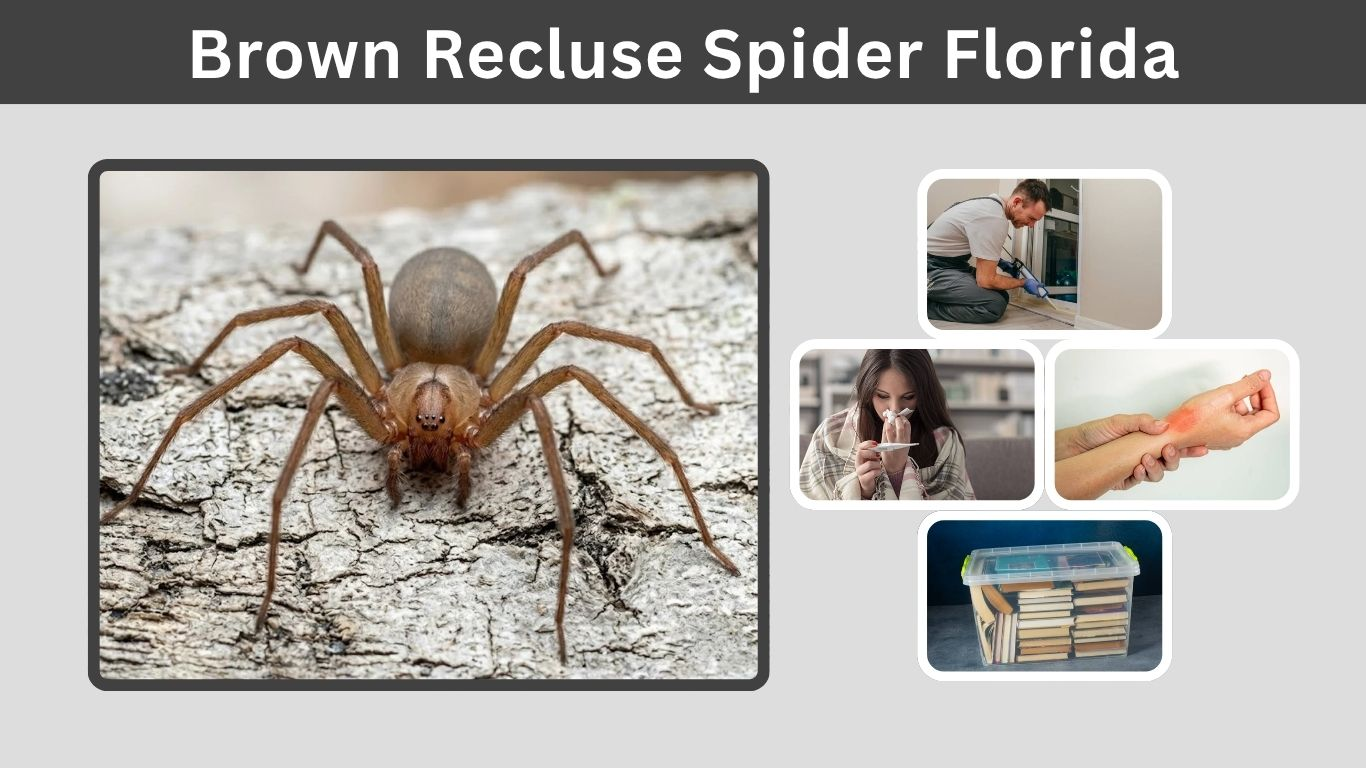
Many people search for the brown recluse spider in Florida after finding a small brown spider indoors. The short answer is: brown recluse spiders and related recluse species have been recorded in Florida, but they are not common statewide. Many suspected sightings are actually harmless look-alikes. This guide explains where recluses may occur in Florida, how to identify them, what bites look like, and what to do if you find one.
Are Brown Recluse Spiders in Florida?
Yes, but they are rare and often overreported. Florida is not considered the main natural range of the brown recluse spider. According to UF/IFAS, verified records of brown recluse and related recluse spiders in Florida have been limited, and there is no evidence of a widespread brown recluse population across the state.
The Simple Answer
Brown recluse spiders can appear in Florida, especially when moved in boxes, furniture, cargo, vehicles, or stored materials. However, finding a random brown spider in Florida does not mean it is a brown recluse.
In many cases, Florida homeowners mistake these spiders for brown recluses:
- Southern house spiders
- Wolf spiders
- Huntsman spiders
- Grass spiders
- Crevice spiders
- Spitting spiders
- Brown widow spiders
Brown Recluse Florida Range and Sightings
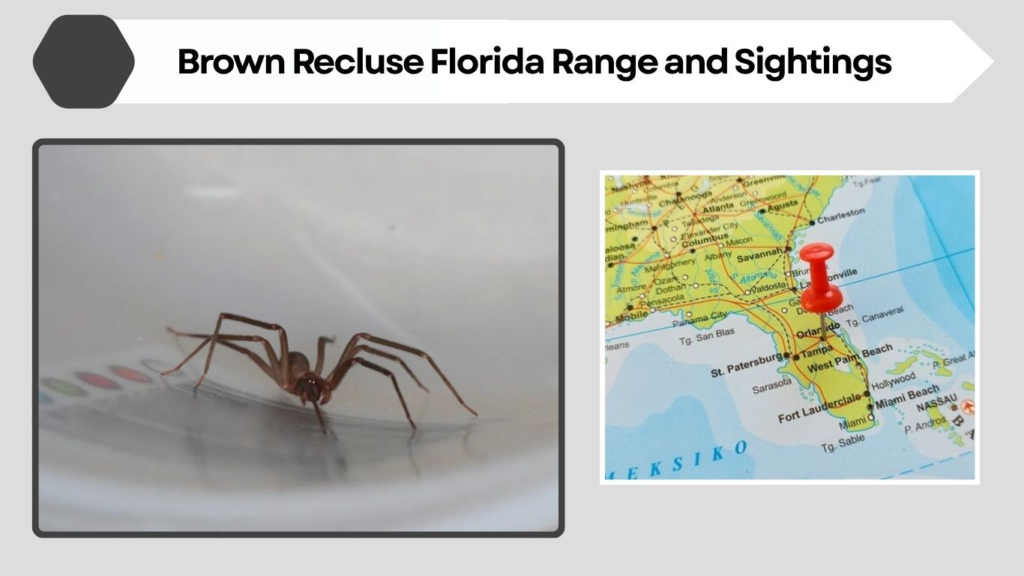
Brown recluse records in Florida are scattered and limited. UF/IFAS lists verified records of brown recluse and related recluse spiders in only a small number of Florida counties, including Alachua, Bay, Dade, Duval, Jefferson, Leon, Orange, and Osceola. UF/IFAS also notes that some of these were single specimens or isolated building infestations, not proof of a large outdoor population.
Florida Brown Recluse Map: What It Really Means
A “brown recluse Florida map” should not be read the same way as a map for states where brown recluses are naturally established. In Florida, sightings are often isolated and linked to transported items or indoor infestations.
| Florida Area | Brown Recluse Likelihood | Notes |
| North Florida | Possible but uncommon | Some verified records exist |
| Central Florida | Possible but still uncommon | Some related recluse records exist |
| South Florida | Very rare | Many reports are look-alikes |
| Florida Keys | Extremely unlikely | Most claims need expert confirmation |
| Indoor storage areas | More possible than outdoors | Boxes and clutter can hide transported spiders |
Brown Recluse vs Mediterranean Recluse in Florida
Not every recluse spider in Florida is the true brown recluse, Loxosceles reclusa. Florida has also had records of related species, especially the Mediterranean recluse, Loxosceles rufescens. UF/IFAS notes that the Mediterranean recluse has been recorded in some Florida buildings and is often transported through commerce.
Newer Florida Research
A 2026 University of South Florida report found that recluse spiders are scarce in Florida. The study investigated 220 properties with suspected infestations and found breeding populations of invasive Mediterranean recluse spiders at only 19 sites, mainly in central and north Florida.
This supports the main point: recluse spiders may exist in Florida, but they are not as common as many people believe.
What Does a Brown Recluse Spider Look Like?
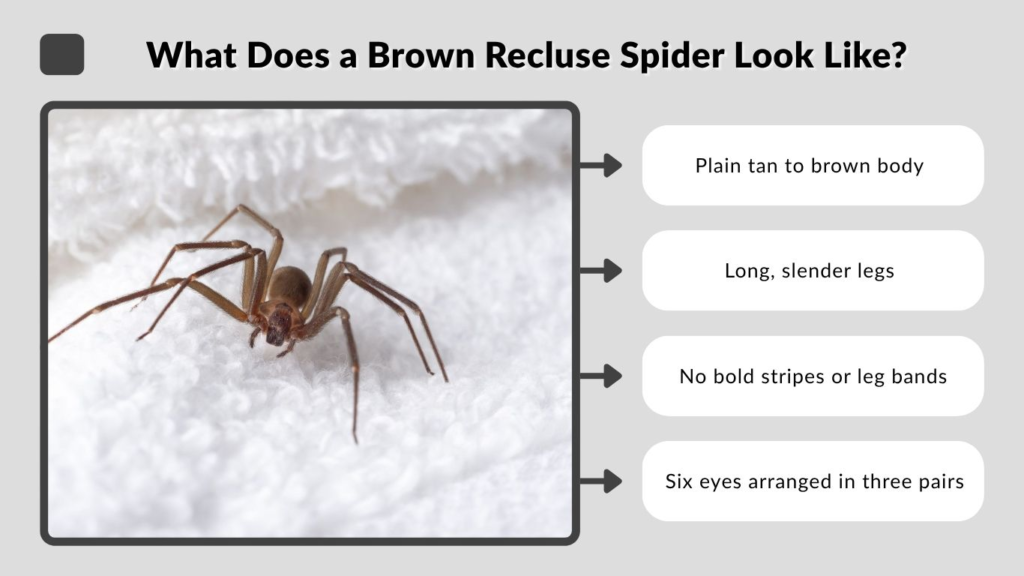
A brown recluse is usually light brown, tan, or yellowish-brown. Adults are small-bodied spiders with long, thin legs. UF/IFAS describes adult brown recluses as about 7 to 12 mm in body length, with females averaging slightly larger than males. Juveniles are usually paler.
Key Identification Features
Look for these signs together, not just one mark:
- Plain tan to brown body
- Long, slender legs
- No bold stripes or leg bands
- Dark violin-shaped mark on the cephalothorax
- Six eyes arranged in three pairs
- Reclusive behavior in dark, dry, quiet places
The six-eye pattern is one of the strongest clues. Most spiders have eight eyes, while brown recluses have six eyes in three pairs. UF/IFAS also notes that the southern house spider is often confused with the brown recluse, but it has eight eyes instead of six.
Brown Recluse Florida Size
Brown recluses are not giant spiders. Many people mistake large brown spiders for recluses, but size alone can be misleading.
| Feature | Brown Recluse |
| Body length | About 7–12 mm |
| Color | Tan, yellowish-brown, or brown |
| Legs | Long, thin, not heavily banded |
| Eyes | Six eyes in three pairs |
| Web | Irregular hidden retreat, not a neat orb web |
| Behavior | Hides in quiet, dark areas |
A large hairy spider running across a Florida garage floor is more likely to be a wolf spider or huntsman spider than a brown recluse.
Brown Recluse Look-Alikes in Florida
Florida has many brown spiders, and most are not dangerous. Misidentification is very common because brown recluses do not have bright colors or obvious patterns.
Wolf Spider Florida vs Brown Recluse
Wolf spiders are common in Florida. They are usually hairier, faster, and more patterned than brown recluses. Female wolf spiders may carry egg sacs or baby spiders, while brown recluses do not carry babies on their backs.
Southern House Spider vs Brown Recluse
Male southern house spiders are often mistaken for brown recluses. They can look brown, leggy, and reclusive. However, they have eight eyes grouped differently, and they do not have the same medical importance as true recluses.
Huntsman Spider vs Brown Recluse
Huntsman spiders can be large, flat, and brown. They may enter homes, garages, and sheds. Their size often scares people, but they are much larger and flatter than a brown recluse.
Brown Recluse Bite in Florida
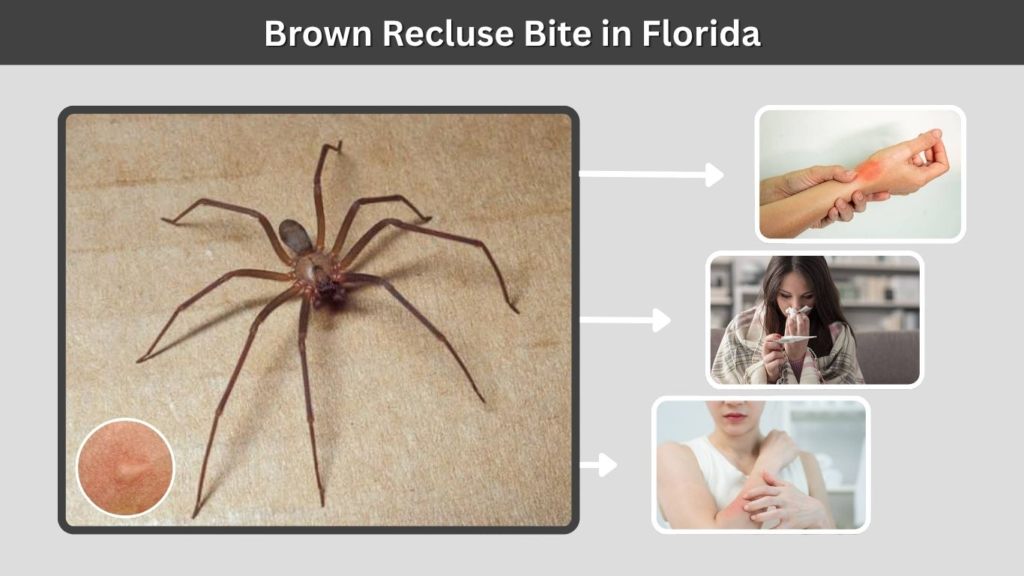
A confirmed brown recluse bite in Florida is rare. UF/IFAS notes that many alleged brown recluse bites are reported in Florida, but verified spider specimens are rarely connected to these cases.
A suspected “brown recluse bite” can also be caused by bacterial infections, other insect bites, allergic reactions, skin ulcers, or medical conditions. Poison Control explains that brown recluse bites can be difficult to diagnose unless the spider was seen, captured, and correctly identified.
Possible Bite Symptoms
A brown recluse bite may not hurt at first. Symptoms can develop over hours or days.
Possible signs include:
- Redness or swelling
- Itching or mild pain
- A blister at the bite site
- Purple or dark skin around the wound
- Open sore or ulcer
- Fever, chills, or nausea in more serious cases
Poison Control states that serious illness and death are rare, but the venom can damage surrounding tissue, and there is no antidote. Treatment focuses on wound care and preventing infection.
What to Do If You Think You Found One
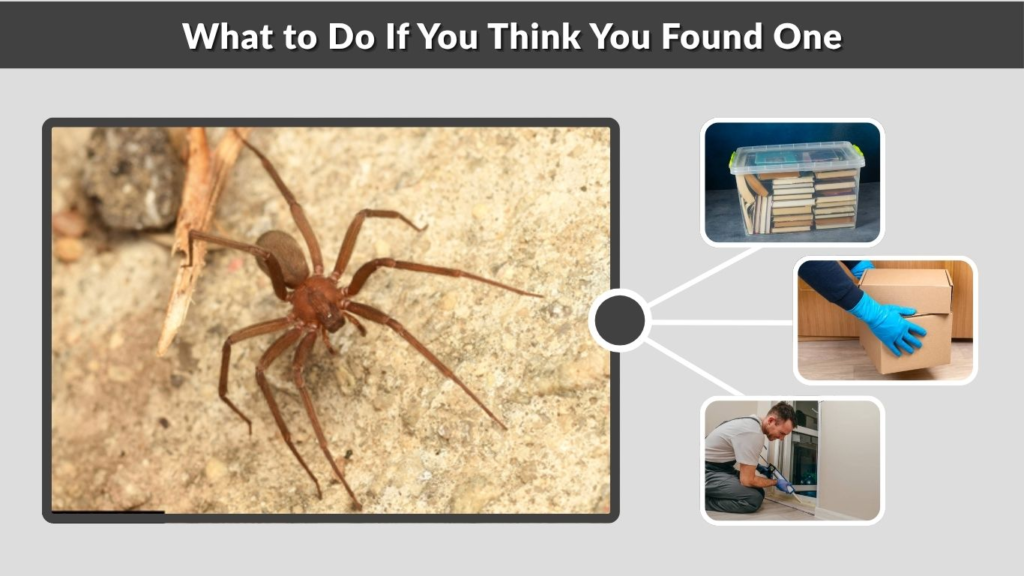
Do not handle the spider with bare hands. If possible, place a clear container over it and slide paper underneath, or take a close photo for identification. If you live in Florida and keep finding suspected recluses, contact a local extension office or pest control professional.
Prevention Tips for Florida Homes
To reduce spider hiding places:
- Store items in sealed plastic bins instead of cardboard
- Shake out shoes, gloves, clothes, and towels before use
- Reduce clutter in garages, closets, and sheds
- Move beds away from walls
- Seal cracks around doors, windows, and baseboards
- Use sticky traps to monitor spider activity
- Wear gloves when moving old boxes, lumber, or stored items
Poison Control also recommends shaking out stored clothing, shoes, boots, and gloves, reducing clutter, and using glue traps when recluse spiders are suspected.
What to Do After a Suspected Bite
Wash the area with soap and water. Apply a clean bandage and avoid scratching. A cold compress may help with pain and swelling. Do not cut the wound, squeeze it, or try to remove venom.
Get medical advice if the bite worsens, forms a blister, turns purple or black, becomes very painful, or is on a child, older adult, or person with health problems. Poison Control advises calling Poison Control at 1-800-222-1222 for suspected brown recluse bites.
FAQs
Are brown recluse spiders common in Florida?
No. Brown recluse spiders are not common across Florida. Verified records exist, but most suspected sightings are look-alikes or isolated indoor cases.
Are there brown recluse spiders in South Florida?
They are very rare in South Florida. Some related recluse records have occurred in southern counties, but widespread South Florida populations are not supported by strong evidence.
What spider is mistaken for a brown recluse in Florida?
Common look-alikes include southern house spiders, wolf spiders, huntsman spiders, grass spiders, and spitting spiders. The southern house spider is one of the most common Florida look-alikes.
Is a Florida brown recluse bite dangerous?
A true brown recluse bite can be medically important, but confirmed bites in Florida are rare. Watch for spreading pain, blistering, dark skin, fever, chills, or nausea, and seek medical advice if symptoms worsen.
How can I identify a brown recluse in Florida?
Look for a plain brown body, long thin legs, a violin-like mark, and six eyes arranged in three pairs. Because many Florida spiders look similar, expert identification is best.
