
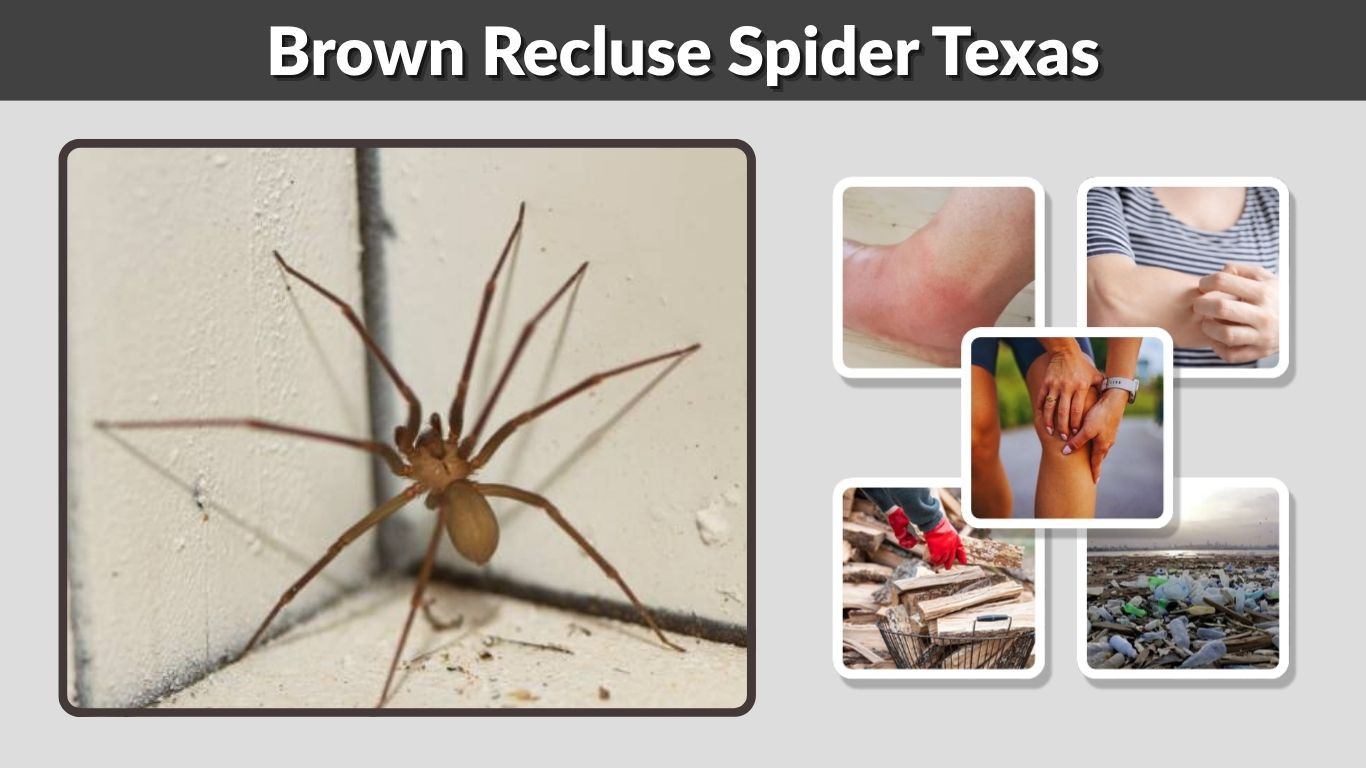
The brown recluse spider is one of the most searched spiders in Texas because it can live indoors and its bite can sometimes cause serious skin problems. However, many brown spiders in Texas are harmless look-alikes. This guide explains how common brown recluse spiders are in Texas, how to identify them, how to compare them with wolf spiders and house spiders, and what to do after a suspected bite.
Are Brown Recluse Spiders in Texas?
Yes, brown recluse spiders live in Texas. Texas A&M AgriLife describes the brown recluse as one of the most dreaded household pests in the state and notes that it often lives close to humans without incident. The spider is shy, not naturally aggressive, and is most often found in places that are rarely disturbed.
Where They Hide in Texas Homes
In Texas homes and buildings, brown recluses are most often associated with dark, dry, quiet areas. They may hide in garages, closets, attics, crawl spaces, storage rooms, boxes, and piles of old items. Outdoors, they may use undisturbed materials such as boards, rocks, firewood, and debris as shelter.
Common hiding spots include:
- Cardboard boxes in closets or attics
- Shoes, gloves, and rarely worn clothing
- Garages and storage sheds
- Crawl spaces and wall voids
- Firewood piles and lumber stacks
- Behind furniture or stored items
Brown Recluse Spider Texas Distribution
Brown recluse spiders are part of the recluse spider group, Loxosceles. A Texas A&M AgriLife publication on venomous terrestrial animals says there are five species in this genus in Texas, and all are venomous.
Texas Areas Where People Search Most
Searches often mention Austin, Central Texas, East Texas, South Texas, West Texas, and the Panhandle. Brown recluses can be found in many parts of Texas, but the chance of finding one depends heavily on habitat. A cluttered indoor storage area is usually a better place to look than an open lawn.
| Texas Search Area | What to Know |
| Central Texas | Possible in homes, garages, and storage areas |
| East Texas | Possible, especially in quiet indoor spaces |
| North Texas | Possible in houses, sheds, and attics |
| South Texas | Possible, but many sightings are look-alikes |
| West Texas/Panhandle | Recluse species may occur, but ID matters |
What Does a Texas Brown Recluse Look Like?
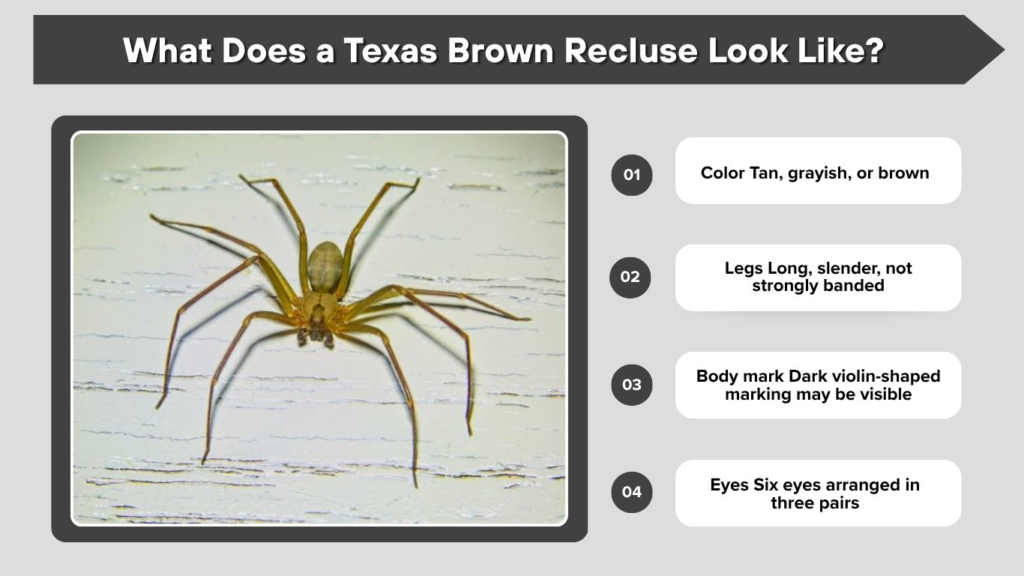
A brown recluse is usually tan, grayish-brown, or light brown. Texas A&M says it has slender, tapering legs and often has a brown violin-shaped mark on the front part of the body. However, the violin mark should not be your only identification clue.
Brown Recluse Spider Identification Chart
| Feature | Brown Recluse Spider |
| Color | Tan, grayish, or brown |
| Legs | Long, slender, not strongly banded |
| Body mark | Dark violin-shaped marking may be visible |
| Eyes | Six eyes arranged in three pairs |
| Web | Small, hidden retreat web |
| Behavior | Shy, nocturnal, hides in undisturbed areas |
| Size | Legs may spread over an area about the size of a quarter to half-dollar |
Texas A&M notes two helpful identification features: the violin-shaped marking and the semicircular paired arrangement of six eyes. Most spiders have eight eyes, so the six-eye pattern is one of the strongest clues.
Brown Recluse vs Wolf Spider in Texas
Wolf spiders are common in Texas and are often mistaken for brown recluses. They are usually larger, hairier, faster, and more patterned. Brown recluses are usually smoother-looking, plainer, and more secretive.
Quick Comparison
| Feature | Brown Recluse | Texas Wolf Spider |
| Body texture | Smooth-looking | Hairy |
| Pattern | Plain brown/tan | Striped or mottled |
| Eyes | Six eyes in three pairs | Eight eyes, often larger front eyes |
| Web use | Hidden retreat web | Does not build a capture web |
| Behavior | Hides in clutter | Hunts actively, often seen running |
| Baby carrying | Does not carry babies on back | Females may carry spiderlings |
If you see a large brown spider running across the floor, it is often a wolf spider, not a recluse. Texas A&M lists wolf spiders as relatively harmless, though their bites can cause local pain and swelling.
House Spider vs Brown Recluse in Texas
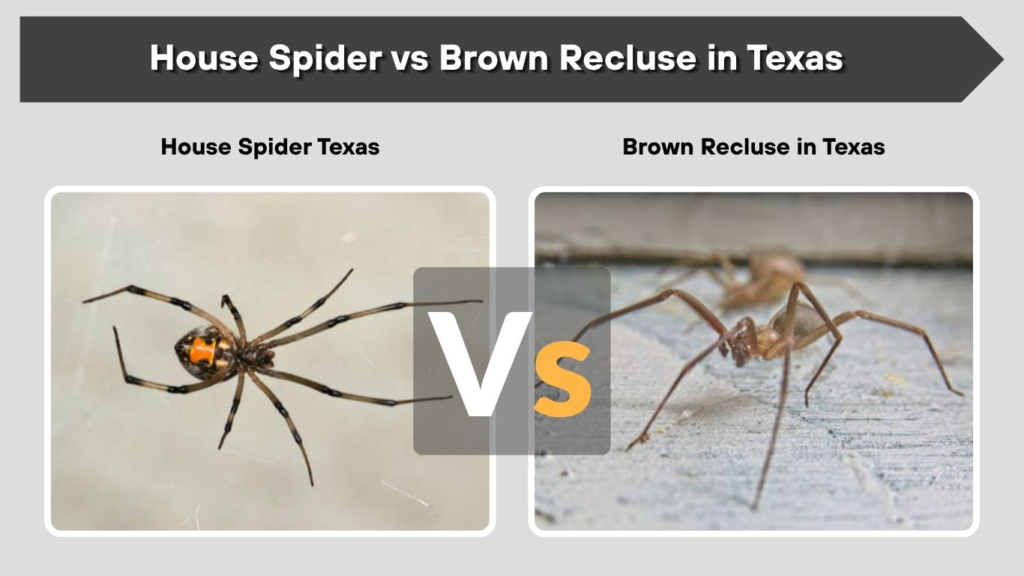
Many common house spiders are mistaken for brown recluses because they are brown and found indoors. The key difference is that many house spiders have patterned bodies, rounded abdomens, visible webs, or eight eyes. Brown recluses are plainer, flatter-looking in the front body region, and more likely to hide in dry, quiet spaces. Texas A&M describes recluse spiders as nocturnal hunters that spin small webs mainly as retreats or shelters.
Brown Recluse Spider Bite in Texas
A brown recluse bite can be medically important, but the spider does not bite people for no reason. The CDC says a brown recluse cannot bite without counterpressure, such as when it is accidentally trapped against skin. This is why bites often happen when a spider is hidden in clothing, shoes, bedding, or stored items.
Brown Recluse Bite Symptoms
A bite may be painless at first. Cleveland Clinic says brown recluse bite reactions can range from mild irritation to a more dangerous reaction, and symptoms may include pain, swelling, bruising, blistering, and more severe symptoms such as fever, dizziness, vomiting, chills, or restlessness.
Possible symptoms include:
- Redness or itching
- Local pain or burning
- Swelling or bruising
- White blister or purple discoloration
- Open sore or ulcer in severe cases
- Fever, chills, nausea, or dizziness
The CDC notes that brown recluse venom can cause a severe skin lesion by destroying tissue, and such lesions require professional medical attention.
Brown Recluse Bite Stages
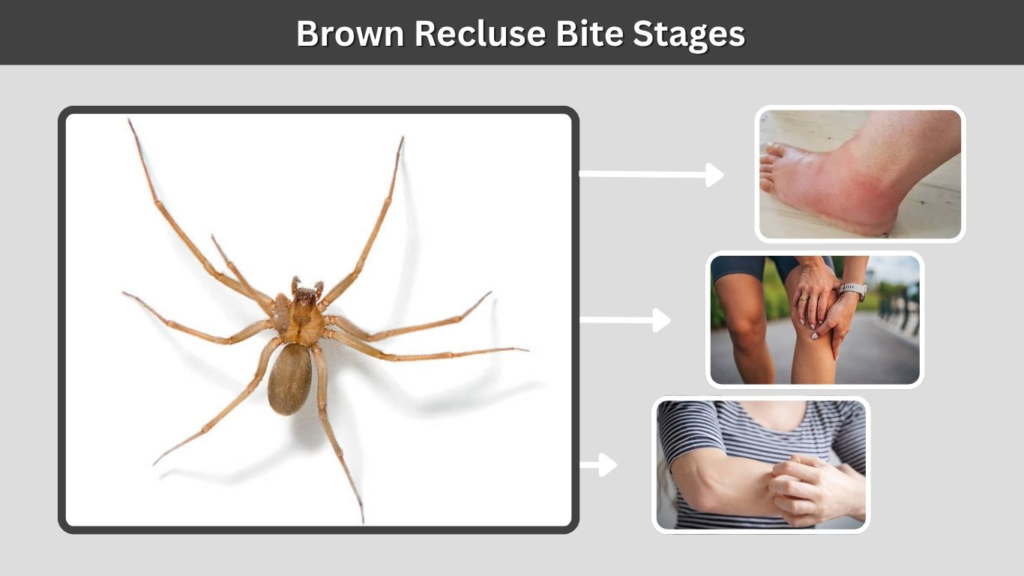
Not every bite follows the same pattern, and many suspected “spider bites” are actually caused by other insects, infections, or skin conditions. Mayo Clinic explains that spider bites can be mistaken for other red, painful, or swollen skin sores, including bites from other insects and skin infections.
General Bite Timeline
| Time After Bite | Possible Change |
| First few hours | Little pain, mild redness, itching, or burning |
| 3–8 hours | Area may become sensitive, red, or painful |
| 3–5 days | Blister or ulcer may appear in more serious cases |
| 7–14 days | Severe wounds may break down into an open sore |
| Several weeks | Mild bites may heal; severe wounds may take longer |
Cleveland Clinic describes the area becoming sensitive and red within about three to eight hours, possible ulcer development after several days if venom spreads, and skin breakdown in severe cases after seven to 14 days.
What to Do After a Suspected Bite
Wash the area with soap and water, apply a cool compress, and elevate the area if possible. Mayo Clinic recommends cleaning the wound, applying a cool compress, elevating the affected area, using over-the-counter pain relief when needed, and watching for worsening or infection.
Get medical help quickly if the wound grows, turns dark purple or black, forms an open sore, drains cloudy fluid, becomes very painful, or comes with fever, chills, dizziness, vomiting, or trouble breathing. Cleveland Clinic advises immediate medical attention for severe symptoms.
How to Prevent Brown Recluse Spiders in Texas Homes
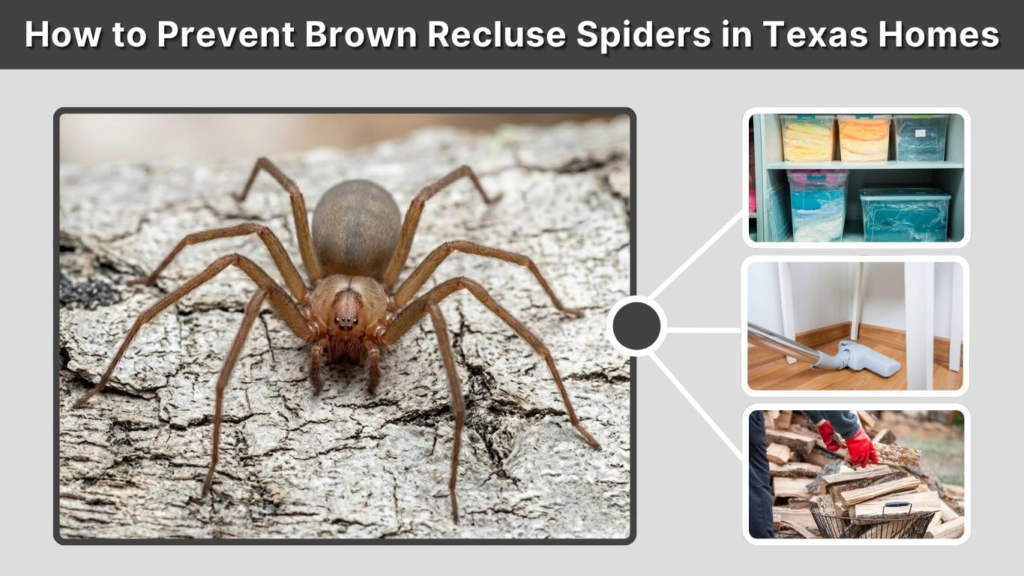
Texas A&M recommends a combination of sanitation, trapping, and professional pest control for serious infestations. Sticky cards can help monitor spider activity, and clutter removal is important because brown recluses are often found around stored boxes in closets and attics.
Helpful prevention steps:
- Reduce clutter in closets, garages, and attics
- Store items in sealed plastic bins instead of open boxes
- Shake out shoes, gloves, towels, and stored clothing
- Wear gloves when moving firewood or old boxes
- Seal gaps around doors, windows, and baseboards
- Vacuum behind furniture and along walls
- Use sticky traps in quiet areas
- Call pest control for repeated sightings
FAQs
Are brown recluse spiders common in Texas?
Yes, brown recluse spiders are established in Texas, but not every brown spider is a brown recluse. Many Texas sightings are wolf spiders, house spiders, or other harmless brown spiders.
What does a brown recluse spider look like in Texas?
It is usually tan, grayish, or brown with long slender legs, a possible violin-shaped mark, and six eyes arranged in three pairs. The eye pattern is more reliable than color alone.
Is a brown recluse bite in Texas dangerous?
It can be dangerous in some cases, especially if the bite develops a blister, purple skin, an ulcer, fever, chills, dizziness, or infection. Mild bites may heal with basic care, but worsening symptoms need medical attention.
What is the difference between a Texas wolf spider and a brown recluse?
A wolf spider is usually hairier, larger, faster, and more patterned. A brown recluse is smoother-looking, plainer, more secretive, and has six eyes instead of eight.
Should I kill every brown spider I find in Texas?
No. Many brown spiders are harmless and help control insects. If you suspect a brown recluse infestation, use sticky traps, reduce clutter, and contact a pest control professional for proper identification and control.
