
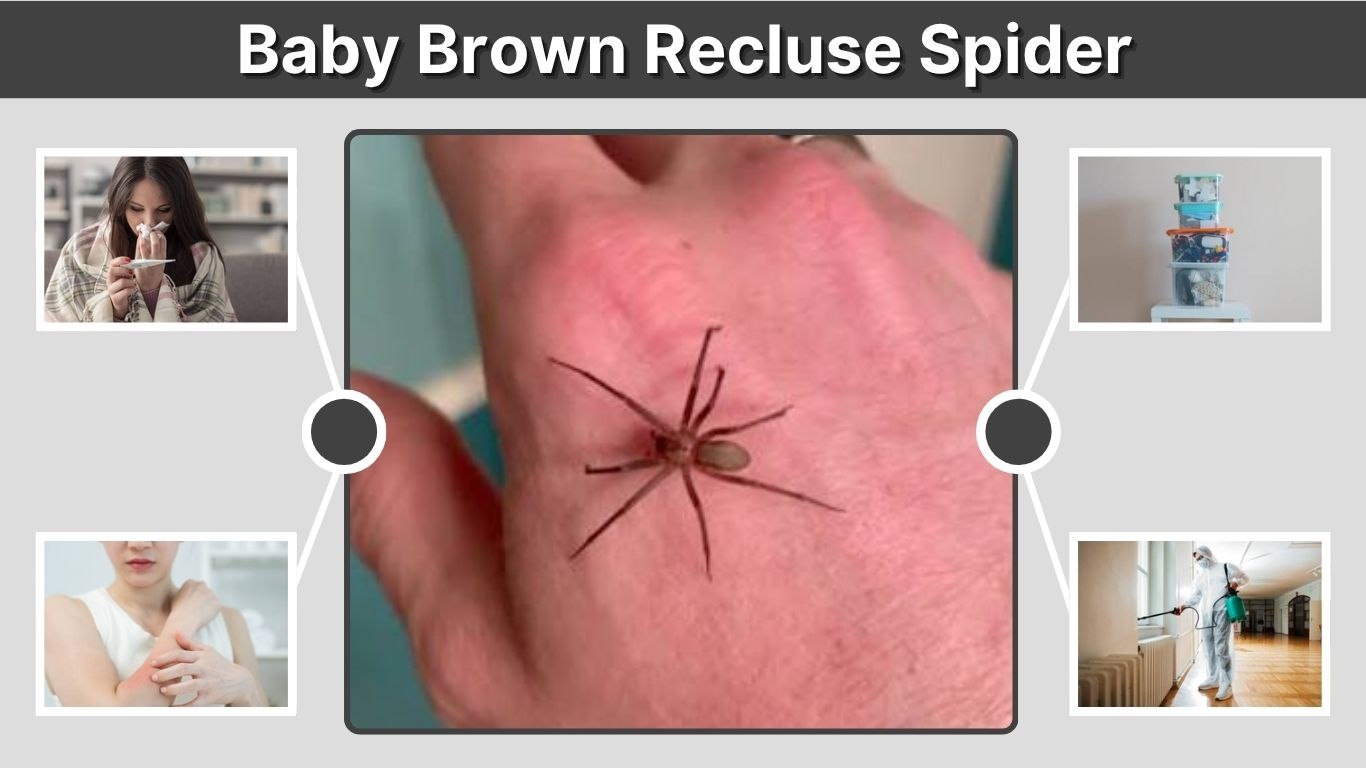
A baby brown recluse spider can be difficult to identify because young spiders are tiny, pale, and often lack strong markings. Many small brown spiders found in homes are harmless look-alikes, but brown recluse spiderlings do exist where the species is established. This guide explains what baby brown recluses look like, how to tell them from similar spiders, whether they can bite, and what to do if you find one indoors.
What Is a Baby Brown Recluse?
A baby brown recluse is a young spiderling of the brown recluse spider, Loxosceles reclusa. Brown recluses are known for hiding in quiet, dry, undisturbed spaces such as boxes, closets, basements, attics, wall cracks, and storage areas. Michigan State University notes that in buildings they prefer warm, dry locations with small hiding crevices.
Female brown recluses lay eggs inside small silk egg sacs. Oklahoma State University says a brown recluse egg sac may contain about 40 to 50 eggs, and females can produce one to five egg sacs in a lifetime.
Baby Brown Recluse vs Adult Brown Recluse
Baby brown recluses are simply smaller, younger versions of adults. They grow through molts before reaching maturity. Young ones may appear lighter tan, yellowish-brown, or nearly translucent after hatching. The famous “violin” marking may be faint or hard to see in spiderlings, so it should not be the only feature used for identification.
What Does a Baby Brown Recluse Look Like?
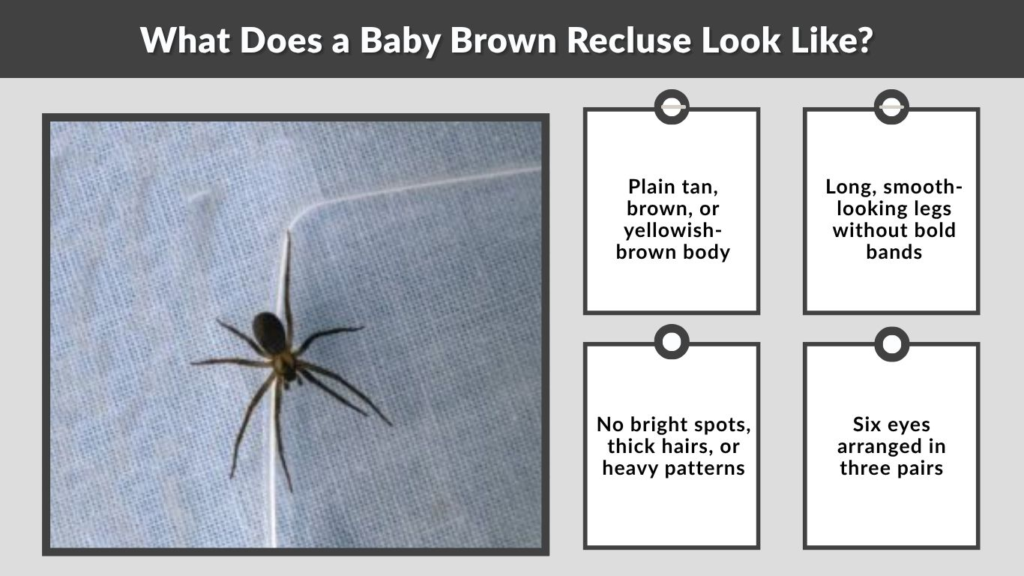
A baby brown recluse usually has a plain tan to light-brown body, long thin legs, and no obvious stripes, bands, or bright patterns. It may look delicate compared with a wolf spider or house spider. However, many small brown spiders look similar, so identification should focus on several features together.
Key Identification Clues
Look for these features:
- Plain tan, brown, or yellowish-brown body
- Long, smooth-looking legs without bold bands
- No bright spots, thick hairs, or heavy patterns
- Six eyes arranged in three pairs
- Possible faint violin-shaped mark behind the head
- Reclusive behavior in dark, dry, hidden areas
Colorado State University Extension explains that the quickest way to positively identify a recluse spider is by the eye pattern: three pairs of eyes instead of the eight eyes seen in many other spiders.
Baby Brown Recluse Size Chart
| Stage | General Appearance | Identification Difficulty |
| Newly hatched spiderling | Very tiny, pale, delicate | Very hard to identify |
| Young juvenile | Light tan or yellowish-brown | Hard to identify without magnification |
| Older juvenile | More adult-like shape | Easier, but still often confused |
| Adult | Brown body, longer legs, clearer markings | Easier if eye pattern is visible |
Are Baby Brown Recluse Spiders Dangerous?
Baby brown recluse spiders are venomous, not poisonous. “Venomous” means they can inject venom through a bite. “Poisonous” means something is harmful when touched or eaten.
Yes, a baby brown recluse can bite if it is pressed against the skin, trapped in clothing, or handled. However, brown recluses are not aggressive spiders. They usually hide and avoid people. Most bites happen when a spider is accidentally squeezed.
Can a Baby Brown Recluse Bite Kill You?
A baby brown recluse bite is very unlikely to kill a healthy adult, but any suspected bite should be watched carefully. Children, older adults, and people with health problems may need faster medical attention if symptoms worsen. Poison Control says brown recluse venom can cause serious wounds and poisoning, although not every bite becomes severe.
Baby Brown Recluse Bite Symptoms
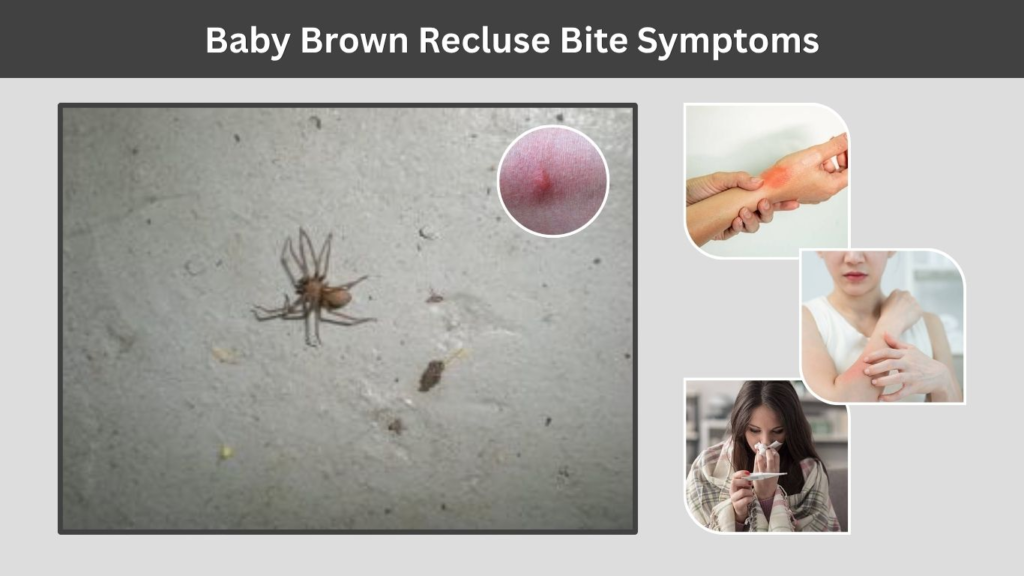
A brown recluse bite may not hurt much at first. Symptoms can change over several hours. Some bites remain mild, while others may develop redness, swelling, blistering, pain, or skin discoloration.
| Symptom Type | Possible Signs |
| Mild local reaction | Redness, itching, swelling, tenderness |
| Worsening skin reaction | Blister, purple center, open sore, spreading pain |
| Serious reaction | Fever, chills, nausea, dizziness, rash, weakness |
| Emergency signs | Trouble breathing, seizure, collapse, extreme illness |
The Illinois Department of Public Health notes that if skin necrosis occurs, it usually develops within four days, and systemic symptoms are rare but may include fever, nausea, and cramps. Cleveland Clinic also lists severe symptoms such as rash, fever, dizziness, vomiting, chills, and restlessness, and advises seeking medical attention for severe symptoms.
What to Do If You Think It Bit You
Wash the bite area with soap and water, apply a cold pack wrapped in cloth, and keep the area clean. Do not cut the bite, squeeze it, or apply harsh chemicals. If possible, safely capture or photograph the spider for identification.
Contact Poison Control or a doctor if the bite is on a child, symptoms spread, pain becomes severe, or you see fever, vomiting, dizziness, purple skin, blistering, or signs of infection. Poison Control advises calling 911 if the person collapses, has a seizure, has trouble breathing, or cannot be awakened.
Baby Brown Recluse Look-Alikes
Many “baby brown recluse” sightings are actually other spiders. Common look-alikes include baby wolf spiders, house spiders, grass spiders, hobo spiders, cellar spiders, and yellow sac spiders.
Baby Wolf Spider vs Baby Brown Recluse
Baby wolf spiders often look hairier and more patterned than brown recluses. Wolf spiders may also move quickly in open areas. Brown recluses are usually plainer, smoother-looking, and more likely to hide in dark, quiet spaces.
House Spider vs Baby Brown Recluse
Small house spiders may have rounded abdomens, web-building habits, or mottled markings. A brown recluse usually does not make a neat web in the open. It hides in messy, irregular silk retreats in undisturbed places.
Do Brown Recluses Carry Babies on Their Back?
No, brown recluses do not carry babies on their back. That behavior is common in wolf spiders. If you see a spider carrying many tiny spiderlings on its back, it is much more likely to be a wolf spider than a brown recluse.
Female brown recluses guard egg sacs until spiderlings emerge, but they do not transport the babies on their back. Alabama Cooperative Extension notes that the female guards the egg sac until spiderlings emerge.
Baby Brown Recluse in the House
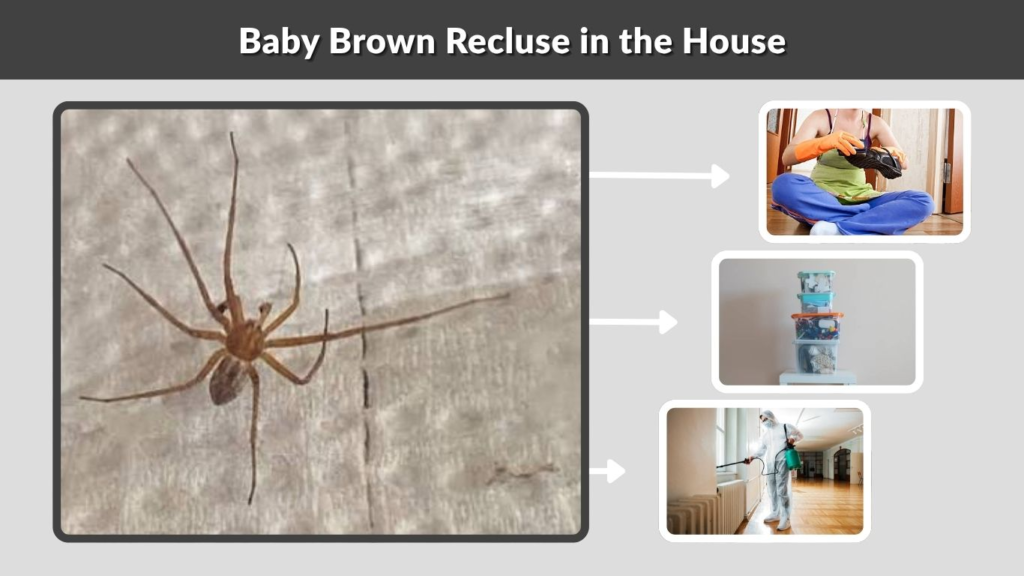
Finding one possible baby brown recluse may mean there are hidden egg sacs or adults nearby, especially if you live inside the brown recluse range. Check dark storage areas, cardboard boxes, shoes, closets, basements, and behind furniture.
To reduce risk:
- Shake out shoes, gloves, towels, and clothes before use
- Store items in sealed plastic bins instead of cardboard
- Reduce clutter in closets, garages, and basements
- Move beds away from walls and bed skirts off the floor
- Seal cracks, gaps, and entry points
- Use sticky traps to monitor spider activity
- Call pest control if you find several suspected recluses
FAQs
What does a baby brown recluse spider look like?
A baby brown recluse is usually tiny, pale tan to light brown, and plain-looking. It may have long thin legs and a faint violin mark, but the eye pattern is more reliable than the violin marking.
Can baby brown recluse spiders bite?
Yes, baby brown recluse spiders can bite, but they usually bite only when trapped or pressed against skin. They are shy spiders and prefer hiding over attacking.
Are baby brown recluse spiders poisonous?
They are venomous, not poisonous. Their venom can cause skin injury in some cases, but many suspected bites are caused by other insects, infections, or spider look-alikes.
How many babies do brown recluse spiders have?
A brown recluse egg sac often contains about 40 to 50 eggs. A female may produce several egg sacs during her lifetime, depending on conditions.
Do baby brown recluses have a violin mark?
Some older juveniles may show a faint violin-shaped mark, but very young spiderlings may not show it clearly. The six-eye pattern in three pairs is a better identification clue.
