
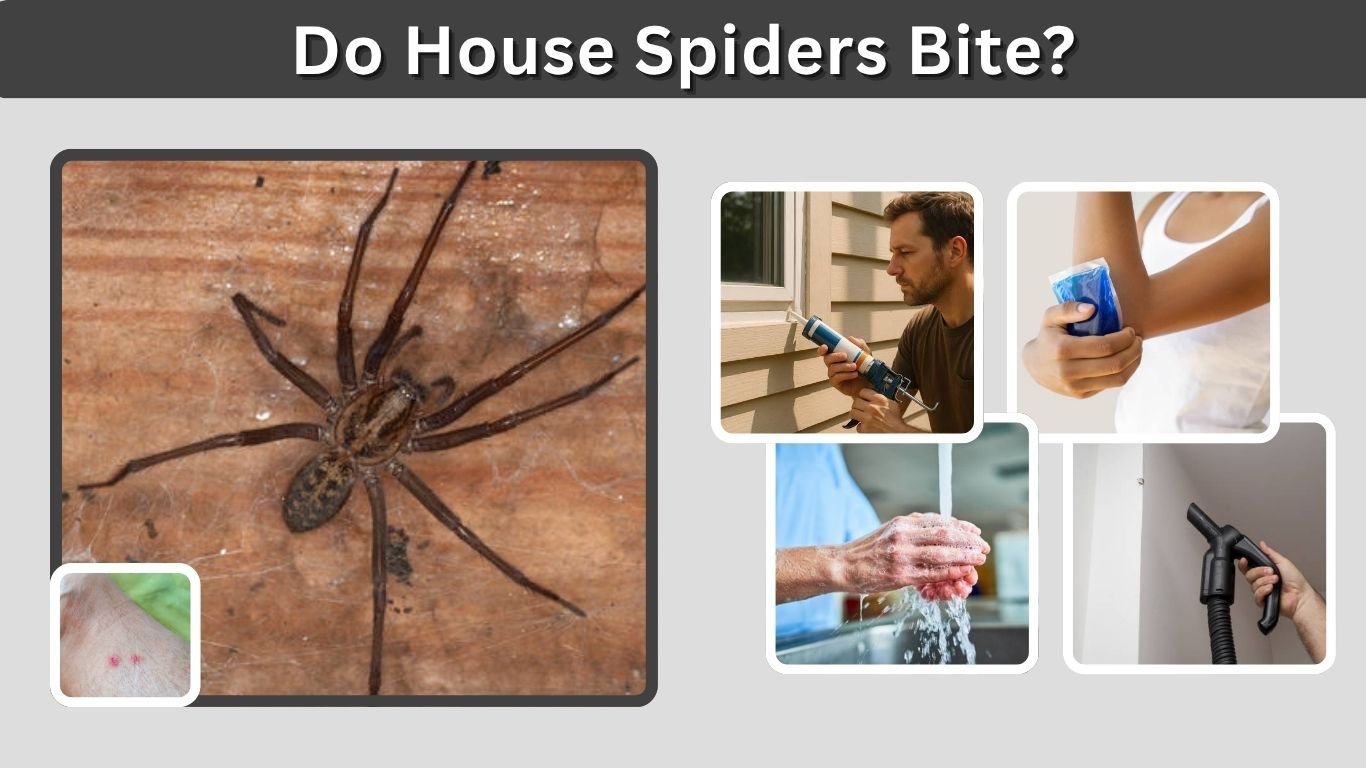
House spiders are common visitors in bedrooms, bathrooms, kitchens, and basements, but do house spiders bite humans? The answer is yes, although bites from most common household species are rare and usually harmless. Spiders generally prefer hiding or escaping rather than biting people. However, they may bite when trapped, squeezed, or accidentally handled. Understanding which house spiders can bite, what their bites look like, and how to prevent encounters can help you stay safe without unnecessary worry.
Do House Spiders Bite Humans?
Yes, house spiders can bite humans, but most species rarely do so. Nearly all spiders possess venom to capture insects, yet relatively few produce bites that cause significant medical problems in people.
Common house spiders usually avoid human contact. They typically retreat into corners, webs, or cracks when disturbed.
Most confirmed bites from ordinary house spiders cause mild discomfort, although symptoms depend on the species and individual reaction.
The presence of spiders indoors does not automatically mean residents are at risk of being bitten. In fact, many household spiders help control populations of flies, mosquitoes, and other insects.
Why Do House Spiders Bite People?
House spiders generally bite in self-defense rather than aggression. Unlike mosquitoes, spiders do not feed on human blood and have no reason to seek people as prey.
Accidental contact is the most common situation associated with bites.
For example, a spider hiding inside clothing or bedding may bite if pressed against the skin. Similarly, grabbing a spider with bare hands may provoke a defensive reaction.
Even larger species usually attempt to escape before biting. Avoiding direct handling significantly reduces the likelihood of an encounter.
Do Different Types of House Spiders Bite?
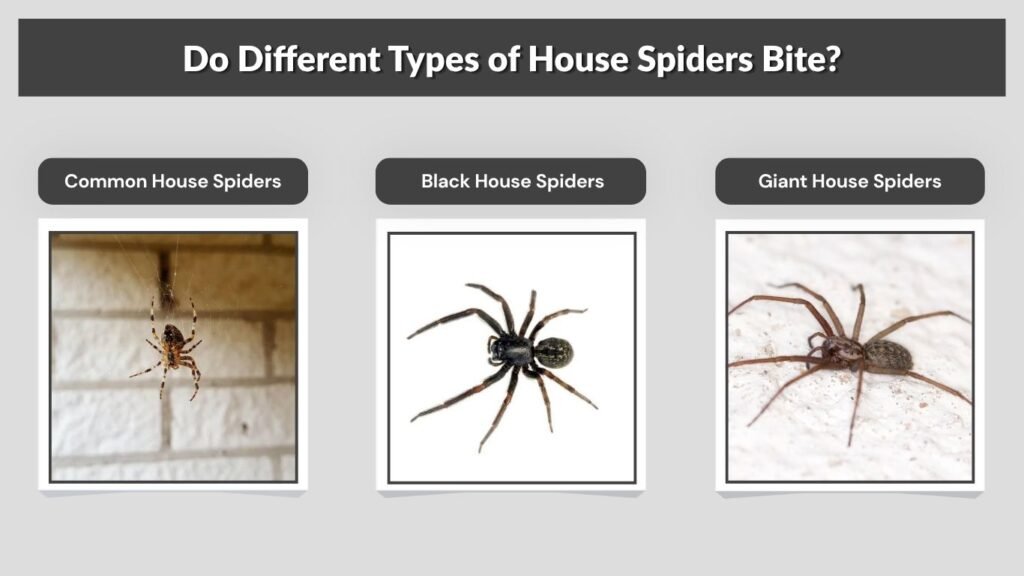
Different types of house spiders have different biting abilities and behaviors. Some species have small fangs and rarely penetrate human skin, while others can deliver noticeable but generally mild bites.
Understanding the common species found indoors helps explain their potential risks.
1. Do Common House Spiders Bite?
The common or American house spider (Parasteatoda tepidariorum) is frequently found in corners, basements, garages, and window frames.
These small, brownish spiders construct irregular cobwebs to capture insects.
Although they can bite, confirmed bites are uncommon, and the species is not considered medically significant.
Common house spiders generally remain inside their webs and retreat when disturbed. Their presence usually creates more concern about cobwebs than actual bite risks.
2. Do Black House Spiders Bite?
The black house spider (Badumna insignis) is particularly common around Australian buildings. It has a dark, robust body and constructs lacy webs around windows and crevices.
Black house spiders can bite, although they are generally timid.
A confirmed bite may cause localized pain and swelling. Occasionally, nausea, sweating, or dizziness may occur.
Despite their intimidating appearance, black house spiders do not normally pose a serious medical threat.
3. Do Giant House Spiders Bite?
Giant house spiders (Eratigena species) are particularly familiar in homes across the United Kingdom and parts of Europe.
These large, long-legged spiders often appear on floors during late summer and autumn.
Giant house spiders can bite defensively, but bites are very uncommon. They are not considered medically dangerous.
Their considerable size and rapid movements frequently make them appear more threatening than they actually are.
4. Do Southern House Spiders Bite?
Southern house spiders (Kukulcania hibernalis) are common in warmer American states, including Florida and Georgia.
Females often have dark, velvety bodies and inhabit sheltered crevices around buildings.
They can bite when threatened, but reported cases are unusual.
A bite may cause temporary pain or swelling, although the species is not known to deliver medically dangerous bites.
5. Do Jumping Spiders Bite?
Jumping spiders are small, active hunters commonly seen on windowsills, walls, and ceilings.
They have prominent eyes and move through quick jumps rather than capturing prey in webs.
Jumping spiders can bite when restrained, but they rarely do so.
Their bites generally produce mild, temporary discomfort. These spiders are usually harmless and help reduce small insect populations indoors.
6. Do Yellow Sac Spiders Bite?
Yellow sac spiders (Cheiracanthium species) have pale yellow, cream, or light brown bodies. They may hide near ceilings, wall corners, and household furnishings.
Unlike many web-building spiders, they actively hunt insects.
Yellow sac spiders can bite defensively, sometimes causing burning pain, redness, and swelling.
Their bites are usually not medically serious, although persistent or worsening symptoms should be evaluated by a healthcare professional.
Do House Spiders Bite at Night?
House spiders can bite at night, but bites during sleep are uncommon.
Many spider species become more active after dark because they hunt insects or search for mates.
However, nighttime activity does not mean they intentionally approach sleeping humans.
A spider might bite if accidentally trapped against someone’s skin while they sleep, but it is not seeking a blood meal.
Unexplained red marks discovered in the morning are often blamed on spiders without evidence. Bed bugs, fleas, mosquitoes, and certain skin conditions can produce similar reactions.
Seeing a spider nearby does not confirm that it caused a bite.
What Do House Spider Bites Look Like?
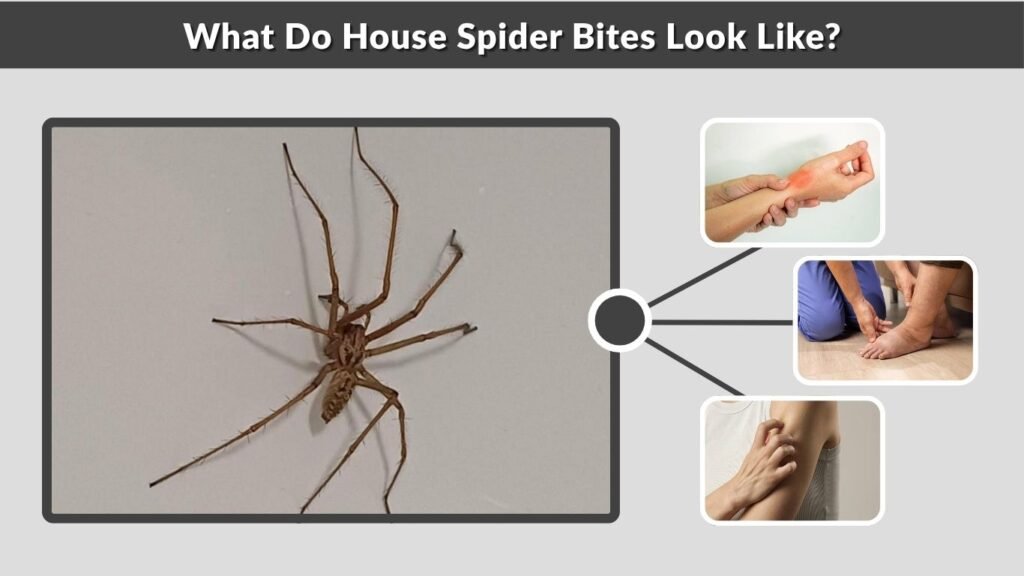
A bite from a common household spider may resemble a small insect bite. Its appearance varies depending on the species and the person’s reaction.
Possible symptoms include:
- Mild redness around the affected area.
- A small, raised bump or localized swelling.
- Temporary itching, stinging, or burning.
- Minor tenderness or discomfort.
- Occasionally, visible puncture marks.
However, these symptoms are not unique to spider bites.
Two visible puncture marks are not a reliable way to identify a spider bite. A confirmed identification generally requires observing the bite and identifying the spider.
Are House Spider Bites Dangerous?
Most ordinary house spider bites are not dangerous. Symptoms usually remain localized and improve with basic care.
Nevertheless, certain spiders that may enter homes can produce serious reactions.
Black widow bites can cause significant pain, muscle cramping, and sweating. Brown recluse bites may occasionally cause worsening skin injury or systemic illness.
These species should not be confused with typical harmless household spiders.
Seek urgent medical attention after a suspected medically significant spider bite, or if severe pain, breathing difficulties, spreading skin changes, or other serious symptoms develop.
How to Treat a House Spider Bite
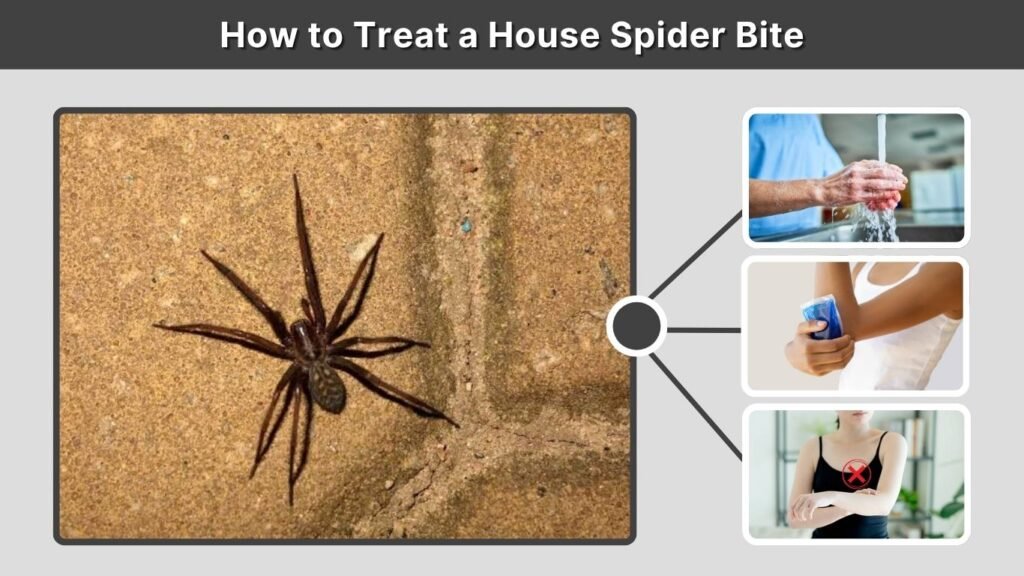
Most mild spider bites can be managed with simple first aid. However, proper treatment depends on the symptoms and whether a dangerous species may be involved.
Follow these steps:
- Clean the area: Gently wash the suspected bite with soap and water.
- Apply a cold compress: Use a cold pack wrapped in cloth for short periods to reduce discomfort.
- Avoid scratching: Scratching may damage the skin and increase infection risk.
- Manage discomfort: Consider an appropriate over-the-counter pain reliever if needed.
- Monitor symptoms: Watch for increasing redness, swelling, pain, fever, or other unusual changes.
Seek medical evaluation if symptoms worsen, the skin develops a spreading wound, or the spider may have been medically dangerous.
Difficulty breathing or swallowing requires emergency care.
How to Prevent House Spider Bites
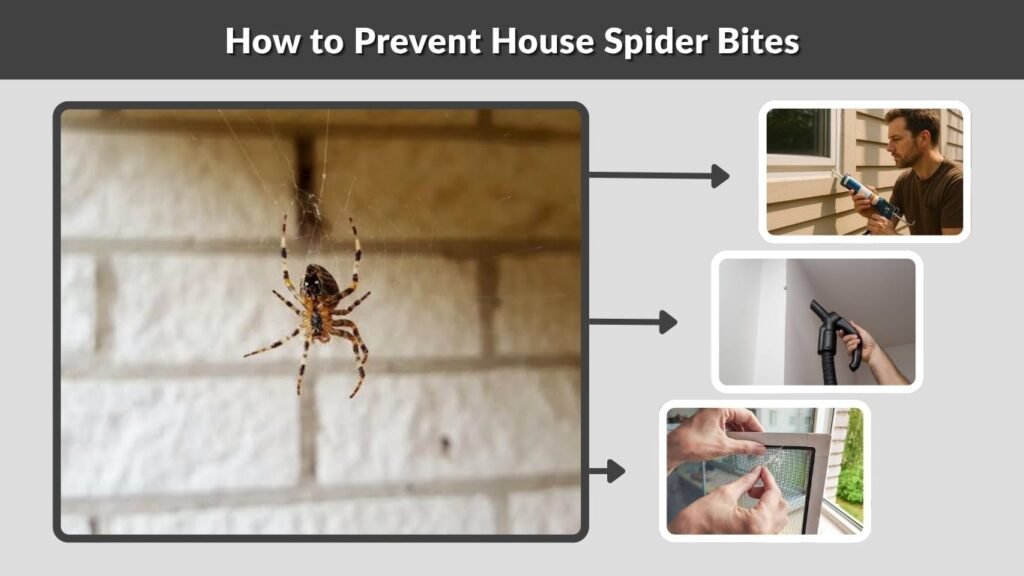
Preventing unwanted spider encounters is usually easier than treating bites.
Simple household maintenance can reduce the likelihood of spiders entering living spaces or hiding in frequently used belongings.
- Seal gaps around doors, windows, and foundations.
- Regularly vacuum corners, furniture, and storage areas.
- Shake out clothing, shoes, and gloves stored in garages or sheds.
- Avoid reaching blindly into dark spaces.
- Reduce unnecessary clutter around beds and closets.
- Repair damaged window screens and reduce indoor insect activity.
When relocating a harmless spider, use a container and paper instead of bare hands.
FAQs
1. Do House Spiders Bite You in Your Sleep?
House spiders occasionally bite when trapped against sleeping people, but this is unusual. Unexplained nighttime skin marks may have other causes, including bed bugs, fleas, or irritation.
2. Do Small House Spiders Bite?
Some small house spiders can bite, although many rarely penetrate human skin. Small size does not guarantee that a spider is harmless, so proper identification matters.
3. Do House Spider Bites Hurt?
A house spider bite may cause a mild pinching, stinging, or burning sensation. Pain varies by species, and some bites produce little noticeable discomfort.
4. Do House Spiders Bite Dogs or Cats?
House spiders may bite pets defensively if trapped or attacked. Most common species pose little danger, but suspected bites from medically significant spiders require prompt veterinary advice.
5. Do House Spiders Bite More Than Once?
A spider may bite more than once during a defensive encounter, but repeated bites are unusual. Multiple unexplained marks are more likely to have another cause and should not automatically be attributed to spiders.
