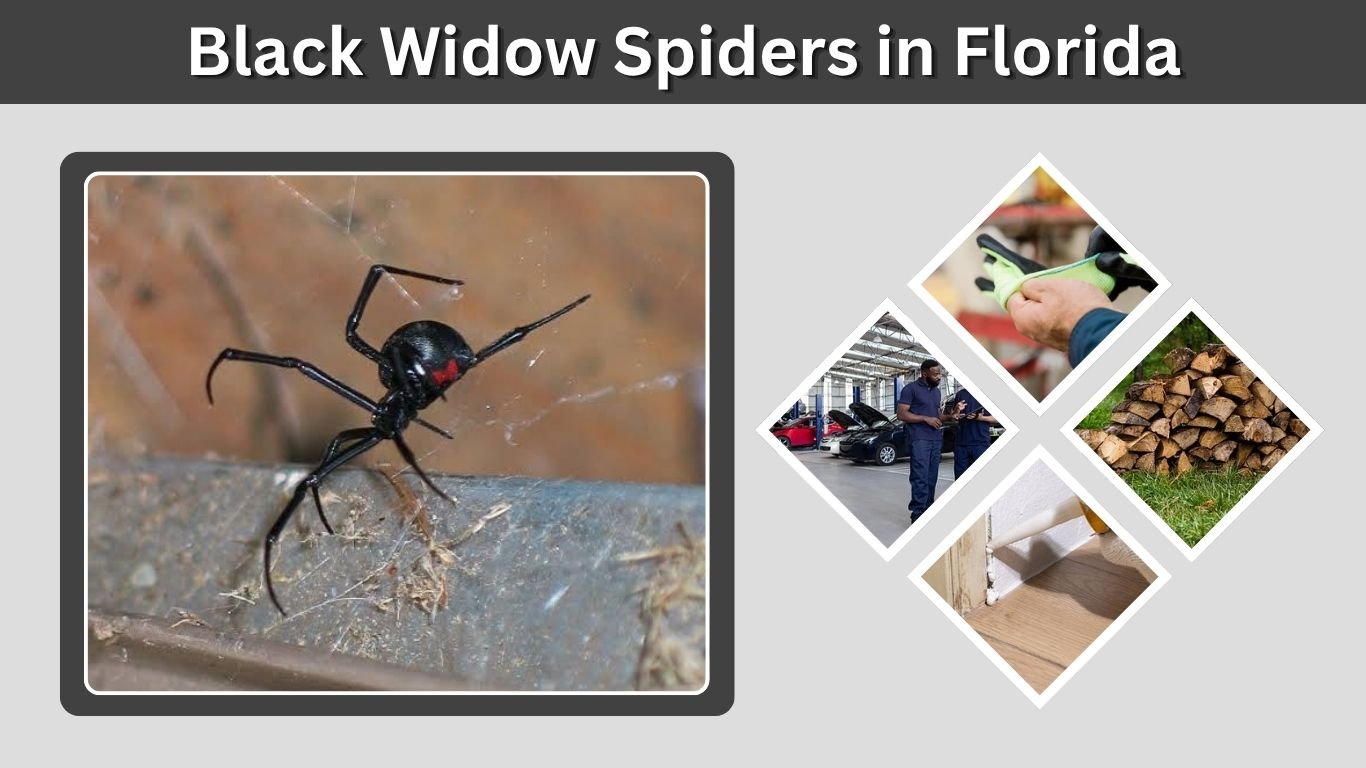
Black widow spiders live throughout Florida, from northern woodlands to suburban neighborhoods in the southern part of the state. The southern black widow is especially widespread, while the northern black widow also occurs in Florida. These spiders favor quiet, sheltered spaces such as woodpiles, sheds, garages, and garden debris. Florida also has two related widow species: the native red widow and introduced brown widow. Knowing which widows inhabit Florida, what they look like, and where they hide can help residents avoid accidental encounters with these venomous spiders.
Are There Black Widow Spiders in Florida?
Yes, black widow spiders are native to Florida and occur in different habitats throughout the state. Florida’s warm temperatures, abundant insects, and sheltered environments provide suitable conditions for their survival.
Two true black widow species inhabit Florida: the southern black widow (Latrodectus mactans) and northern black widow (Latrodectus variolus).
Florida also supports red widow and brown widow spiders, which belong to the same genus but are separate species.
These spiders usually avoid human contact and remain hidden inside irregular webs. Most encounters happen when someone accidentally disturbs an occupied hiding place.
Types of Black Widow and Widow Spiders in Florida
Florida has four recognized widow spider species. Although they share certain characteristics, their appearance, habitat preferences, and geographic distribution differ.
Four Widow Spider Species Found in Florida
- Southern Black Widow (Latrodectus mactans): The most widespread native widow species in Florida. Adult females generally have shiny black bodies with a bright red hourglass marking underneath their abdomens.
- Northern Black Widow (Latrodectus variolus): Occurs in Florida, particularly in northern areas. Females often have a red hourglass divided into two separate markings, although patterns vary.
- Red Widow (Latrodectus bishopi): A distinctive native species with reddish-orange legs and a dark abdomen featuring colorful markings. It primarily inhabits Florida’s scrub habitats.
- Brown Widow (Latrodectus geometricus): An introduced species commonly found around buildings. It typically has a brown or mottled body, an orange hourglass, and distinctive spiky egg sacs.
The southern and northern black widows are the two species most directly associated with searches for black widow spiders in Florida.
Where Are Black Widow Spiders Found in Florida?
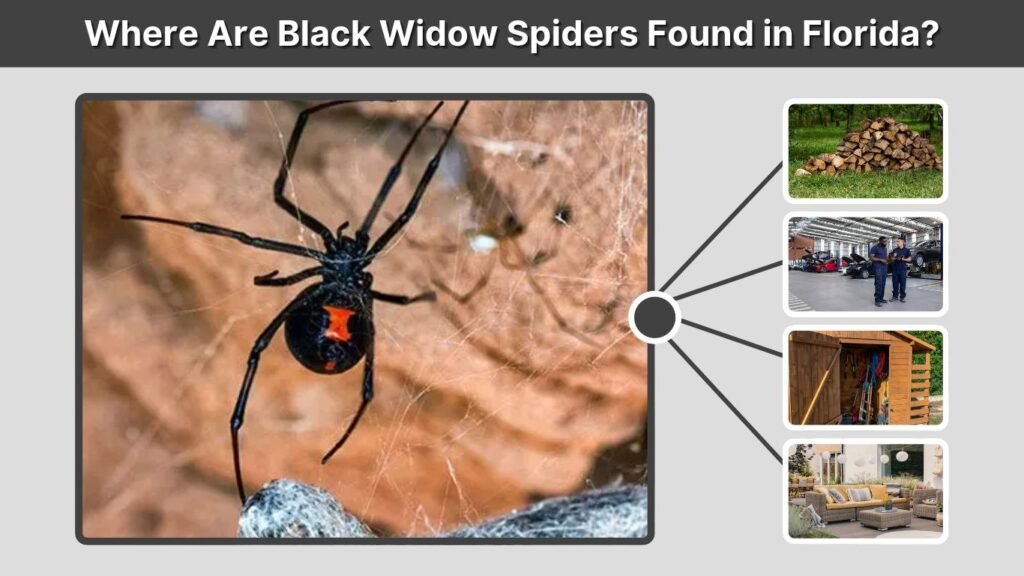
Black widow spiders inhabit natural and residential environments across Florida. They prefer protected locations where they can build webs and catch insects without frequent disturbance.
Their habitat often includes dark spaces near the ground, although some widow species also establish webs around elevated structures.
Common Black Widow Spider Habitats in Florida
- Woodpiles: Gaps between logs provide dark hiding spaces and attract insects.
- Garages: Undisturbed corners and stored equipment offer suitable shelter.
- Garden Areas: Flowerpots, retaining walls, and landscaping materials provide hiding places.
- Storage Sheds: Rarely used buildings offer protected environments for web construction.
- Rock Crevices: Natural openings provide shelter from predators and changing weather.
- Outdoor Furniture: Spaces beneath tables, chairs, and benches can support spider webs.
- Building Foundations: Cracks and covered spaces around structures provide secluded retreats.
Black widows generally remain near their webs and are more active at night.
Black Widow Spiders in Central Florida
Central Florida provides suitable habitats for black widow spiders because of its warm climate, developed neighborhoods, and abundant vegetation.
Southern black widows occur in the region and may inhabit gardens, woodpiles, storage buildings, and protected spaces around houses.
Areas surrounding Orlando, Ocala, Lakeland, and other Central Florida communities contain environments where these spiders may establish webs.
Are Black Widows Found in Northern and Southern Florida?
Northern Florida supports both southern and northern black widows. They occupy wooded areas, outdoor structures, and secluded ground-level shelters.
Southern Florida also has suitable habitats for southern black widows, including suburban yards, gardens, and storage areas.
However, spider abundance varies locally. Not every neighborhood or property contains black widow populations.
Are Black Widow Spiders Common in Florida?
Black widow spiders are well established in Florida, and the southern black widow is the most common of the state’s native widow species.
However, this does not mean they are frequently seen inside homes. Black widows prefer relatively undisturbed locations where their webs remain protected.
Florida’s warm climate allows widow spiders to remain active for much of the year. Their activity may increase during favorable weather when insects are plentiful.
Brown widows are also frequently encountered around buildings and may be mistaken for black widows because of their similar body shapes and red or orange underside markings.
How to Identify Black Widow Spiders in Florida
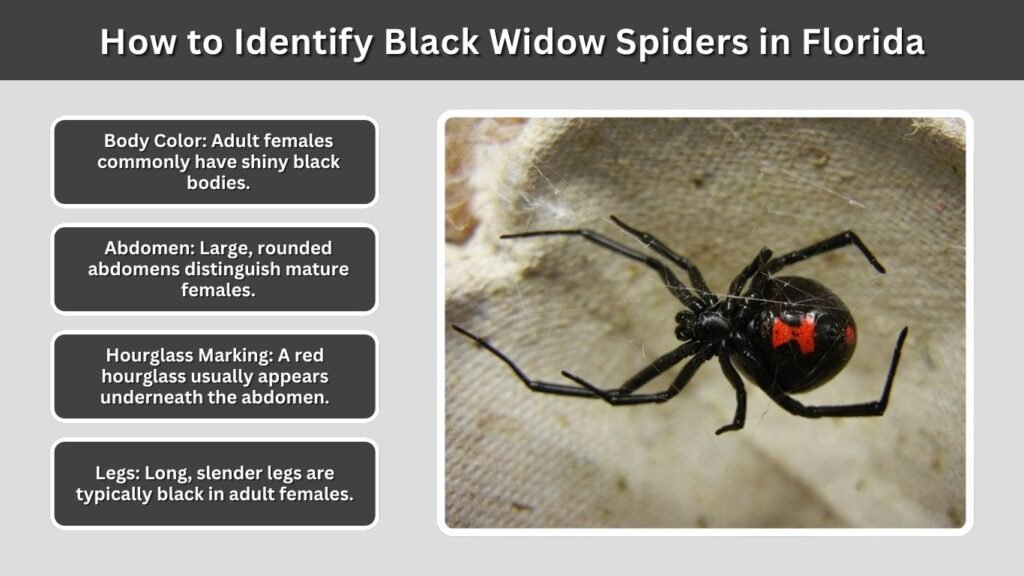
Identifying black widow spiders requires examining their body shape, coloration, markings, and web characteristics.
Adult female southern black widows are especially recognizable, although immature spiders and males look different.
Physical Characteristics of Florida Black Widows
- Body Color: Adult females commonly have shiny black bodies.
- Abdomen: Large, rounded abdomens distinguish mature females.
- Hourglass Marking: A red hourglass usually appears underneath the abdomen.
- Legs: Long, slender legs are typically black in adult females.
- Body Size: Adult female southern black widows measure approximately half an inch in body length.
- Web Structure: Their webs are irregular, tangled, and usually built in sheltered locations.
Young black widows may display lighter colors, stripes, or additional markings. Therefore, not every black widow resembles the familiar glossy black adult female.
Are Black Widow Spiders in Florida Dangerous?
Black widow spiders possess medically significant venom. Their bites can cause substantial pain and symptoms affecting muscles and other parts of the body.
However, black widows are generally shy and do not actively pursue humans. Bites usually happen when spiders become trapped against the skin.
Symptoms of a Black Widow Spider Bite
A bite may initially cause localized pain, redness, or swelling. More significant symptoms can develop within the following hours.
These may include muscle cramps, abdominal pain, sweating, nausea, and generalized discomfort.
Some bites cause relatively mild symptoms, while others require medical treatment. Severe complications are uncommon, but prompt attention is important.
If a black widow bite is suspected, wash the area with soap and water, apply a wrapped cold compress, and seek medical advice promptly. Severe pain, breathing difficulties, or other serious symptoms require emergency care.
How to Prevent Black Widow Spiders Around Florida Homes
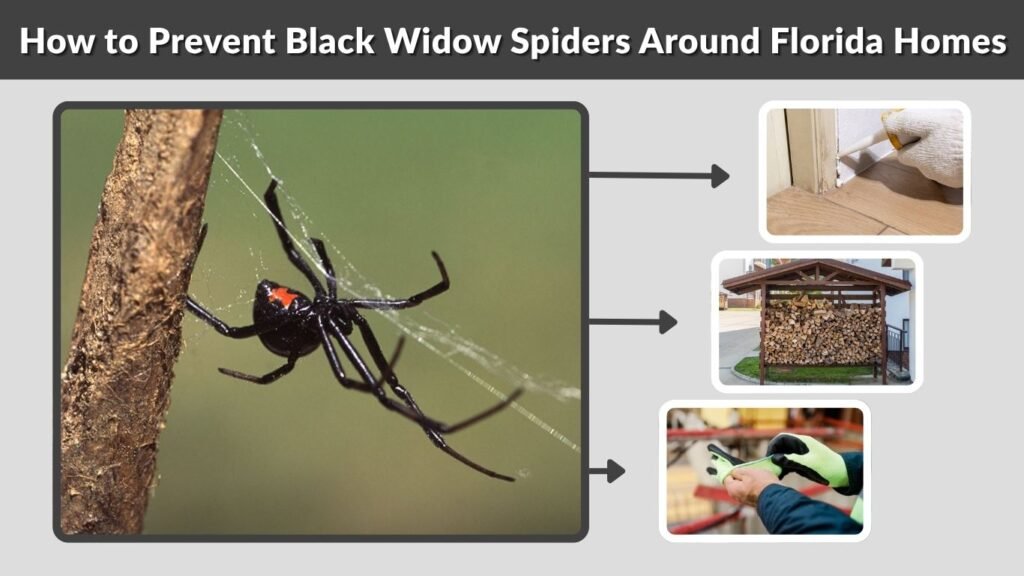
Black widow spiders often establish webs around homes when sheltered hiding places and insects are available.
Regular cleaning and outdoor maintenance can reduce suitable habitats and lower the chances of accidental contact.
Black Widow Spider Prevention Tips
- Remove Clutter: Keep garages, sheds, and storage areas organized.
- Move Firewood: Store wood away from walls and frequently used entrances.
- Seal Openings: Repair gaps around foundations, windows, and doors.
- Inspect Outdoor Furniture: Check beneath chairs, tables, and stored equipment before moving them.
- Wear Gloves: Protect your hands when handling firewood, garden materials, or outdoor storage items.
- Remove Unused Materials: Clear unnecessary boards, containers, and debris from the yard.
- Control Insects: Reduce insect activity around buildings by managing outdoor lighting and maintaining clean surroundings.
Avoid reaching into dark spaces without checking them first. Professional pest control may be appropriate when widow spiders repeatedly appear in frequently used areas.
FAQs
1. Do Black Widow Spiders Live in Florida?
Yes, black widow spiders live in Florida. Both southern and northern black widow species occur in the state. They usually inhabit sheltered outdoor environments, including woodpiles, gardens, garages, sheds, and protected spaces beneath structures.
2. Are Black Widow Spiders Common in Florida?
Black widow spiders are established throughout Florida, particularly the southern black widow. However, they are not necessarily common inside houses because they prefer quiet, undisturbed locations. Their abundance depends on local environmental conditions and suitable shelter.
3. Are Black Widow Spiders Found in Central Florida?
Yes, black widow spiders occur in Central Florida, including areas around Orlando and surrounding communities. They may establish webs in gardens, storage sheds, garages, woodpiles, and other protected spaces where insects are available.
4. What Do Black Widow Spiders Look Like in Florida?
Adult female southern black widows usually have glossy black bodies, rounded abdomens, slender legs, and red hourglass markings underneath. Northern black widows have similar features, although their markings may appear separated or vary between individuals.
5. Are Black Widow Spider Bites Deadly in Florida?
Black widow bites can cause severe pain and muscle cramping, but deaths are extremely rare with modern medical care. Anyone experiencing a suspected bite should seek medical guidance, particularly if severe pain, abdominal cramping, or widespread symptoms develop.
