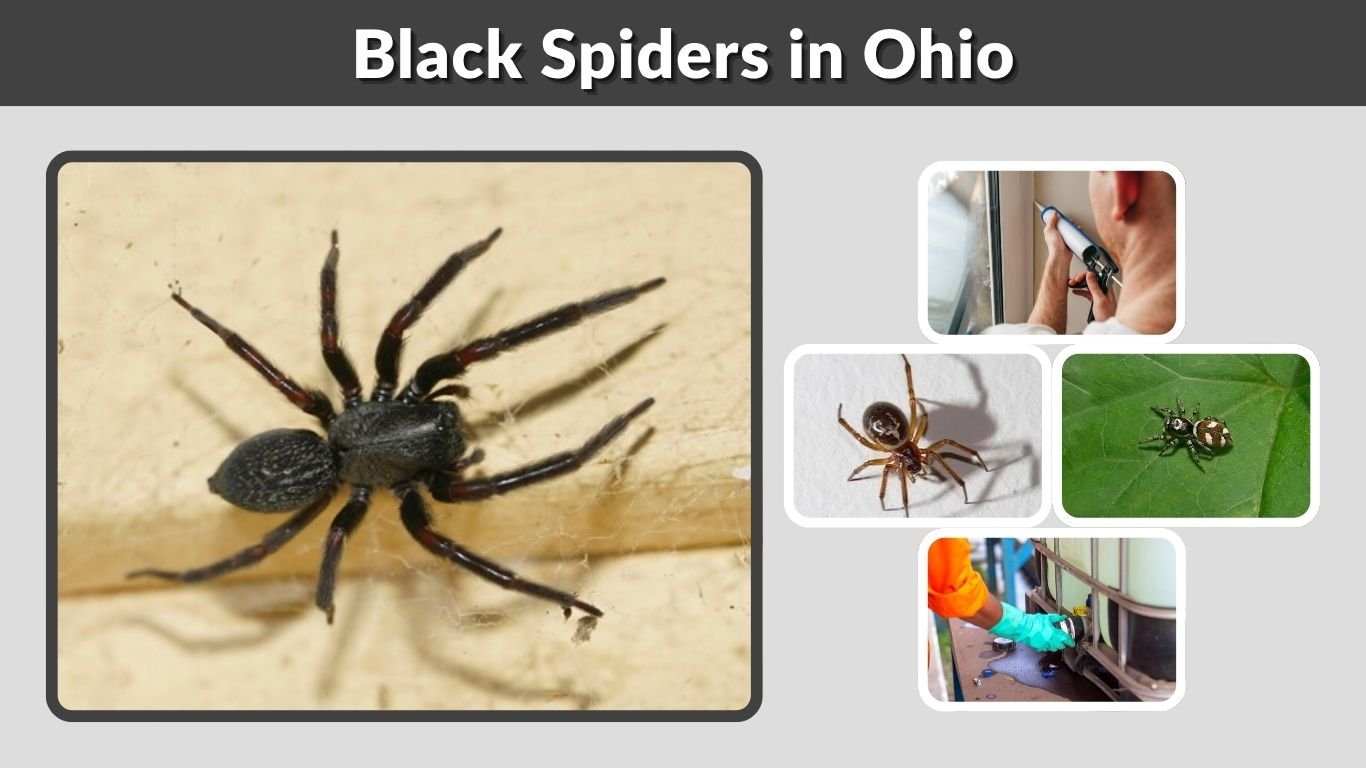
Black spiders in Ohio include several fascinating species found in homes, gardens, forests, and outdoor structures. Some are small, fuzzy jumping spiders, while others are large, dark-colored hunters or web-building spiders. Common examples include bold jumping spiders, eastern parson spiders, wolf spiders, and black widows. Although most black spiders in Ohio are harmless to humans, certain species require caution because of their venomous bites. Understanding their appearance, markings, habitats, and behavior helps homeowners identify different black spiders and distinguish dangerous species from harmless lookalikes.
What Types of Black Spiders Are Found in Ohio?
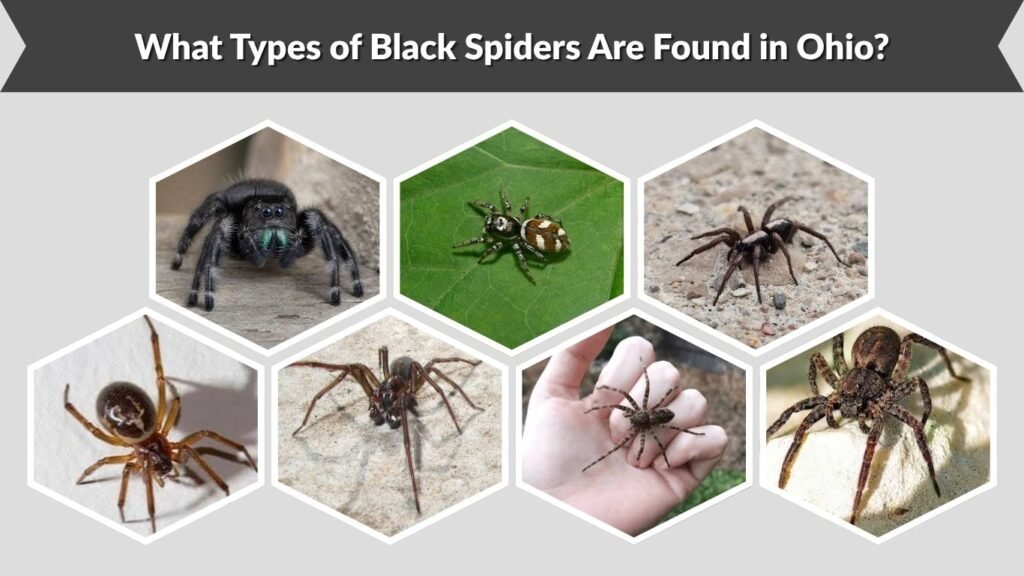
Ohio supports numerous spider species with black or dark-colored bodies. Some display white stripes, red markings, yellow patterns, or fuzzy hairs that make identification easier. Others appear completely black, especially under poor lighting. The following nine types represent recognizable spiders found throughout different parts of Ohio, including species that occasionally enter homes.
1. Bold Jumping Spider (Phidippus audax)
The bold jumping spider is one of the most recognizable small black spiders in Ohio. It has a compact, hairy body with three white or orange spots on its abdomen. Its mouthparts often display metallic green or blue coloration.
These spiders commonly appear around windows, walls, fences, and gardens. Instead of building capture webs, they actively hunt insects using excellent eyesight and powerful jumping abilities. Their bites are uncommon and generally not medically significant.
2. Zebra Jumping Spider (Salticus scenicus)
Zebra jumping spiders are tiny black-and-white spiders frequently spotted on sunny walls, fences, and outdoor furniture.
Their bodies feature distinctive white stripes against a dark background, resembling a zebra’s pattern. These spiders move quickly and jump between surfaces while hunting small insects.
They rarely bite humans and are considered harmless household visitors.
3. Eastern Parson Spider (Herpyllus ecclesiasticus)
Eastern parson spiders have dark brown or black bodies with a distinctive white marking running along the abdomen.
They are fast-moving ground hunters commonly discovered in basements, garages, bedrooms, and beneath furniture.
Unlike web-building spiders, parson spiders actively search for insects at night. Their bites can cause temporary discomfort but are generally not medically dangerous.
4. False Black Widow (Steatoda borealis)
The false black widow is a dark-colored cobweb spider commonly found around Ohio homes and outbuildings.
It has a rounded abdomen that can appear almost black, although its actual coloration is often purplish brown. Some individuals display pale abdominal markings.
False widows resemble genuine black widows but lack the distinctive red hourglass underneath the abdomen. Their bites are not generally considered medically significant.
5. Black Lace-Weaver (Amaurobius ferox)
The black lace-weaver is a dark spider with a robust body and relatively short, sturdy legs.
Its abdomen often features faint, lighter markings, while its overall appearance ranges from dark brown to nearly black.
These spiders build irregular, woolly-looking webs in sheltered cracks, stone walls, foundations, and other protected locations. They occasionally enter buildings but generally avoid humans.
6. Dark Fishing Spider (Dolomedes tenebrosus)
Dark fishing spiders are among the larger spiders encountered in Ohio. Their wide leg spans and dark, mottled bodies can make them appear intimidating.
They commonly inhabit wooded environments, tree trunks, exterior walls, and structures near vegetation.
Despite their name, dark fishing spiders are not restricted to water. They hunt insects and other small animals without relying on traditional capture webs.
7. Dark-Colored Wolf Spiders (Family Lycosidae)
Wolf spiders are large, hairy ground hunters commonly encountered in Ohio lawns, gardens, basements, and garages.
Most display brown, gray, or blackish markings rather than completely black coloration. Their powerful legs allow them to run quickly while pursuing prey.
Female wolf spiders sometimes carry egg sacs attached to their spinnerets. Although they may bite defensively, serious medical complications are uncommon.
8. Black and Yellow Garden Spider (Argiope aurantia)
The black and yellow garden spider is a striking orb-weaver frequently found in Ohio gardens and grassy areas.
Its large abdomen features vivid yellow patches against a black background, while its long legs display alternating dark and lighter sections.
These spiders construct large circular webs between plants and shrubs. They help control flying insects and rarely pose problems for homeowners.
9. Black Widow Spider (Latrodectus Species)
Black widow spiders are the most medically significant black spiders naturally found in Ohio.
Adult females usually have shiny black bodies with distinctive red or reddish-orange markings underneath their rounded abdomens.
Unlike active hunting spiders, black widows construct irregular tangled webs in sheltered locations. They generally avoid confrontation, but their bites can cause serious symptoms requiring medical attention.
Are There Black Widow Spiders in Ohio?
Yes, both northern and southern black widow spiders occur in Ohio. However, they are less common than many harmless black spiders and are reported more frequently in the southern portions of the state.
They prefer quiet, sheltered environments where their webs remain undisturbed. Understanding the differences between these species can make identification easier.
Northern Black Widow
The northern black widow (Latrodectus variolus) often displays a red hourglass marking divided into two separate sections.
Some females also have red markings along the upper abdomen. They may inhabit woodland edges, rocks, logs, and protected outdoor structures.
Southern Black Widow
The southern black widow (Latrodectus mactans) typically has a connected red hourglass marking beneath its abdomen.
This species prefers sheltered areas, including woodpiles, barns, sheds, and abandoned buildings. Its bite can cause significant pain and muscle cramping.
How to Identify Black Spiders in Ohio
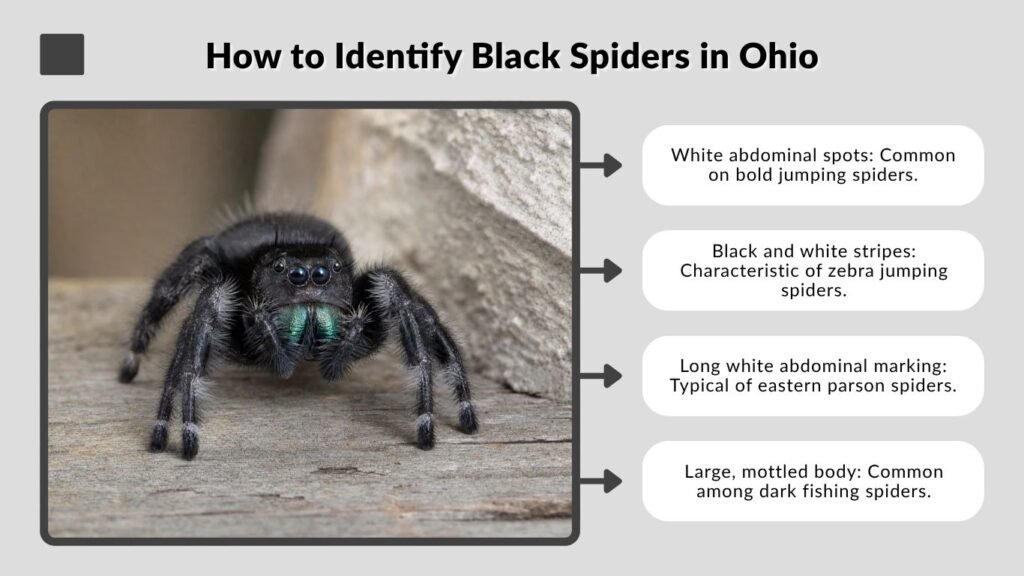
Identifying a black spider requires examining more than its body color. Different species can share similar appearances, especially when viewed from a distance. Body shape, markings, behavior, and web structure provide more reliable clues.
Important Identification Features
- White abdominal spots: Common on bold jumping spiders.
- Black and white stripes: Characteristic of zebra jumping spiders.
- Long white abdominal marking: Typical of eastern parson spiders.
- Red hourglass underneath: Important identifying feature of adult female black widows.
- Large, mottled body: Common among dark fishing spiders.
- Black and yellow abdomen: Distinctive feature of yellow garden spiders.
Color alone cannot confirm a spider’s identity. Avoid handling unidentified spiders while examining their markings.
Where Do Black Spiders Live in Ohio?
Black spiders occupy numerous habitats throughout Ohio, from wooded areas and wetlands to suburban gardens and residential buildings.
Different species prefer different environments depending on their hunting methods, shelter requirements, and available prey.
Common Places to Find Black Spiders
- Basements: Parson spiders and other ground hunters may enter while searching for prey.
- Garages and sheds: Sheltered spaces attract cobweb spiders and occasional black widows.
- Gardens: Jumping spiders and orb-weavers hunt among plants and flowers.
- Woodpiles: Protected crevices provide hiding places for several dark spider species.
- Exterior walls: Jumping spiders and fishing spiders frequently appear around buildings.
- Forests: Wolf spiders and fishing spiders inhabit leaf litter, logs, and tree trunks.
Most encounters occur when spiders wander into buildings or establish webs near human activity.
Are Black Spiders in Ohio Poisonous?
Most black spiders in Ohio are not medically dangerous to humans. Nearly all spiders possess venom for capturing prey, but only a small number have venom capable of causing serious symptoms.
Black widows deserve particular attention because their venom affects the nervous system. Other dark spiders, including jumping spiders and wolf spiders, generally cause only localized reactions when bites occur.
Symptoms of a Black Widow Spider Bite
- Pain or irritation around the bite.
- Severe muscle cramps or spasms.
- Abdominal, chest, or back pain.
- Sweating, nausea, or vomiting.
- Weakness or other systemic symptoms.
Anyone with a suspected black widow bite should seek prompt medical advice. Severe pain, difficulty breathing, or widespread symptoms require emergency medical evaluation.
How to Prevent Black Spiders in Your House
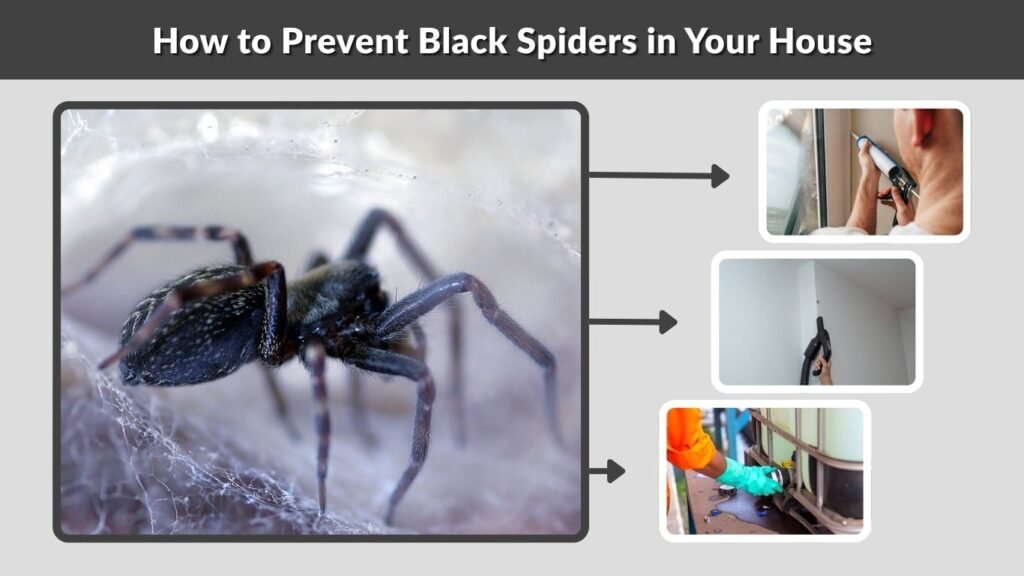
Preventing unwanted spiders begins with reducing insects, removing sheltered hiding places, and sealing building openings.
Although most spiders are beneficial predators, homeowners can limit indoor encounters through regular maintenance.
Effective Spider Prevention Tips
- Seal cracks around windows, doors, and foundations.
- Install properly fitted window and door screens.
- Remove clutter from basements, garages, and storage spaces.
- Vacuum indoor webs and accessible egg sacs.
- Keep firewood and debris away from exterior walls.
- Reduce outdoor lighting that attracts flying insects.
- Wear gloves when moving stored materials in undisturbed areas.
These measures help reduce spider activity without unnecessarily disturbing beneficial species outdoors.
FAQs
1. Are Black Widow Spiders Common in Ohio?
Black widow spiders occur in Ohio but are considerably less common than jumping spiders, wolf spiders, and many cobweb spiders. They are encountered more frequently in southern Ohio, particularly around secluded outdoor structures, woodpiles, and sheltered natural habitats.
2. What Are the Small Black Spiders in Ohio?
Small black spiders in Ohio often include bold jumping spiders, zebra jumping spiders, and juvenile ground spiders. Identification depends on body shape and markings. Bold jumping spiders commonly have white spots, while zebra jumping spiders display contrasting black-and-white stripes.
3. What Are the Big Black Spiders in Ohio?
Large black-looking spiders in Ohio may be dark fishing spiders or wolf spiders. Fishing spiders often have particularly wide leg spans and mottled patterns. Wolf spiders possess robust, hairy bodies and move quickly across floors, gardens, and other surfaces.
4. Are Black and White Spiders in Ohio Dangerous?
Most black-and-white spiders in Ohio are harmless to humans. Common examples include bold jumping spiders, zebra jumping spiders, and eastern parson spiders. Although these spiders can bite defensively, serious reactions are uncommon, and they generally prefer escaping human contact.
5. Do Black Spiders Enter Ohio Homes During Fall?
Yes, some spiders become more noticeable inside Ohio homes during fall. Mature males may wander while searching for mates, and spiders may enter through small openings. Indoor sightings do not necessarily indicate an infestation or mean spiders are seeking warmth.
