

Camel spiders are strange-looking desert arachnids that often frighten people because of their large jaws, fast speed, and aggressive appearance. Online myths and viral stories have caused many people to believe these creatures are poisonous or highly dangerous to humans. Questions about camel spider bites and venom are especially common in desert regions.
Despite their scary reputation, camel spiders are widely misunderstood animals. They are not true spiders, and they do not possess venom like scorpions or black widows. This guide explains whether camel spiders are poisonous, what happens if they bite, and the truth behind common internet myths.
What Is a Camel Spider?
Camel spiders belong to a unique arachnid group called Solifugae. Although they resemble spiders and scorpions, they are actually different from both. Their oversized jaws and long legs help them hunt insects and other small prey in hot desert environments where survival depends on speed and powerful feeding tools.
Camel Spider Scientific Classification
Camel spiders are arachnids related to spiders, scorpions, ticks, and mites. However, they belong to their own separate order known as Solifugae. Unlike true spiders, camel spiders do not produce silk or venom.
Common Names for Camel Spiders
Camel spiders are known by several confusing names around the world.
Common names include:
- Sun spider
- Wind scorpion
- Solpugid
- Red Roman
- Sand spider
These names often lead people to incorrectly assume they are venomous spiders or scorpions.
Where Camel Spiders Are Found
Camel spiders live mainly in dry and desert regions where temperatures remain warm for much of the year. They are commonly found in the Middle East, Africa, and parts of the southwestern United States including Arizona, California, and New Mexico.
Are Camel Spiders Poisonous?
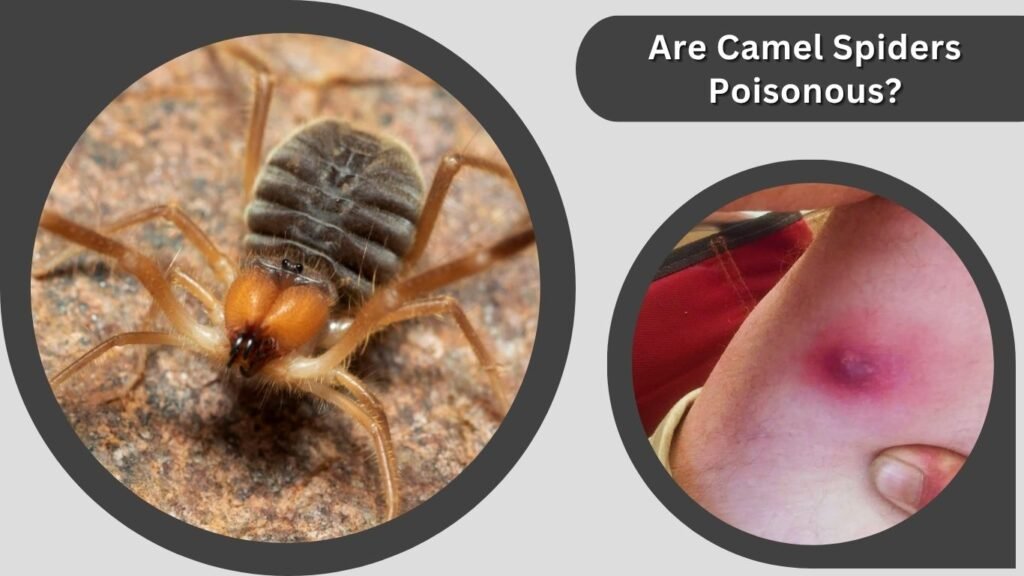
Many people assume camel spiders are poisonous because of their appearance and frightening reputation. In reality, camel spiders are neither poisonous nor venomous. They do not produce toxins, venom glands, or poisonous sprays like some other arachnids and insects.
Are Camel Spiders Venomous or Poisonous?
There is an important difference between venomous and poisonous animals. Venomous creatures inject toxins through bites or stings, while poisonous animals release toxins when touched or eaten. Camel spiders do neither. They rely entirely on strong jaws and speed rather than toxins to hunt prey or defend themselves.
Why People Think Camel Spiders Are Poisonous
Several myths have contributed to the fear surrounding camel spiders.
Common reasons include:
- Large intimidating jaws
- Fast running speed
- Viral internet photos
- Military stories from Iraq
- Confusion with venomous arachnids
Many exaggerated stories falsely claim camel spiders can kill humans or inject deadly venom.
Do Camel Spiders Spray Poison?
Camel spiders cannot spray poison or venom. This myth may come from confusion with vinegaroons, which release a vinegar-smelling defensive spray. Camel spiders instead defend themselves by running away or biting when cornered.
Camel Spider Bite Facts

Although camel spiders are non-venomous, they can still bite using their powerful jaws. Most bites happen only when the animal feels trapped or threatened. While the bite may be painful, it is generally not considered dangerous to healthy humans.
Can Camel Spiders Bite Humans?
Camel spiders are capable of biting if handled carelessly or accidentally stepped on. Their large jaws, called chelicerae, are strong enough to break insect shells and small prey. Human bites are uncommon because camel spiders usually try to escape rather than attack people.
What Does a Camel Spider Bite Feel Like?
A camel spider bite may feel like a sharp pinch or painful squeeze. The bite can sometimes break the skin and cause temporary discomfort.
Common bite reactions include:
- Mild swelling
- Redness
- Local pain
- Small bleeding
- Skin irritation
Most symptoms disappear after proper cleaning and basic wound care.
Are Camel Spider Bites Poisonous?
Camel spider bites are not poisonous because these arachnids do not inject venom. However, any animal bite can potentially lead to infection if bacteria enter the wound. Cleaning the bite area with soap and water is important after any bite incident.
Camel Spider Bite Symptoms
| Symptom | Mild Bite Reaction |
| Redness | Common |
| Swelling | Mild |
| Pain | Temporary |
| Bleeding | Possible |
| Fever | Rare |
Camel Spider Myths and Misconceptions
Camel spiders are surrounded by internet myths that greatly exaggerate their size, aggression, and danger level. Many of these stories became popular after military photos from desert regions circulated online. Understanding the truth helps separate fact from fiction.
Military Stories and Viral Photos
During military operations in Iraq and nearby deserts, photos of camel spiders spread rapidly online. Many images used camera angles that made the animals appear much larger than they actually were. Stories claiming they chased soldiers or ate large animals were heavily exaggerated.
Can Camel Spiders Kill Humans?
There are no confirmed reports of camel spiders killing humans. Because they lack venom, they are far less dangerous than many true spiders and scorpions. Their frightening appearance often causes fear that is much greater than the real risk they pose.
Do Camel Spiders Chase People?
Many people believe camel spiders actively chase humans, but this behavior is usually misunderstood. Camel spiders often run toward moving shadows because they seek cooler shaded areas in hot desert environments. Their speed can make it appear as though they are pursuing people aggressively.
Camel Spider Anatomy and Defense Mechanisms
Camel spiders survive in harsh desert habitats using speed, strong jaws, and quick reflexes rather than venom. Their physical adaptations allow them to hunt effectively at night and defend themselves when threatened. Understanding their anatomy helps explain why they appear intimidating despite being non-venomous.
Powerful Jaws and Chelicerae
The most noticeable feature of a camel spider is its large pair of jaws called chelicerae. These jaws are strong enough to crush insects, small lizards, and other prey. They also help the animal tear food apart quickly during feeding.
Speed and Hunting Skills
Camel spiders are extremely fast runners and active nighttime hunters. Instead of waiting for prey like many spiders, they chase insects and small animals across desert terrain. Their speed is one reason they are feared by people unfamiliar with them.
How Camel Spiders Protect Themselves
Camel spiders mainly rely on physical defenses and escape behavior rather than venom.
Their main defense methods include:
- Fast running speed
- Strong biting jaws
- Hiding in burrows
- Nighttime activity
- Escaping from predators quickly
Most camel spiders prefer fleeing over confrontation whenever possible.
Camel Spider vs Venomous Arachnids
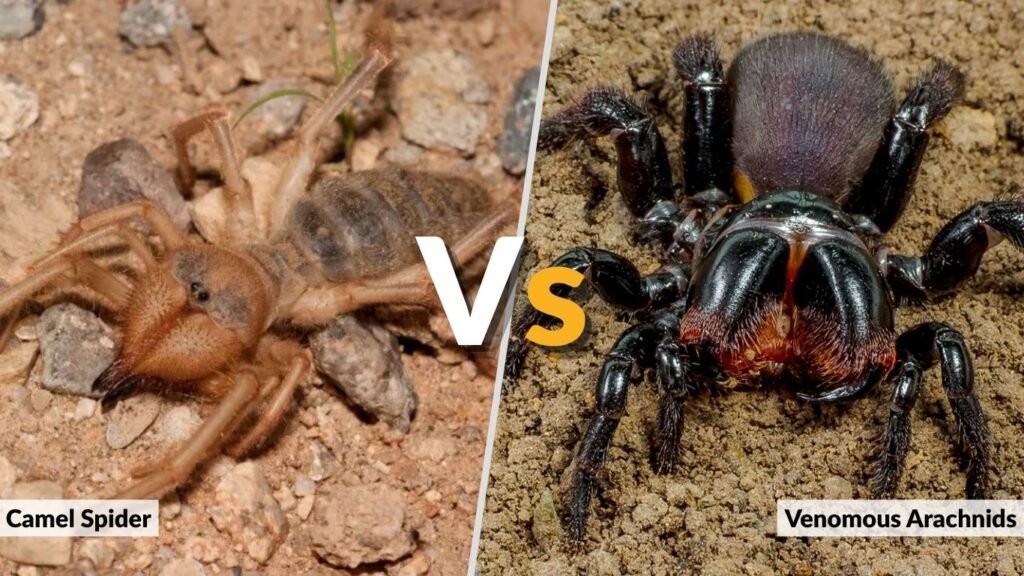
Camel spiders are often confused with venomous arachnids such as scorpions, black widows, and brown recluse spiders. However, these animals differ greatly in toxicity and danger level. Comparing them helps clarify why camel spiders are generally less harmful to humans.
Camel Spider vs Scorpion
Scorpions possess venomous stingers used for hunting and defense. Camel spiders lack venom entirely and depend only on jaw strength. While some scorpion stings can be medically serious, camel spider bites usually cause only mild local pain.
Camel Spider vs Black Widow
Black widow spiders produce powerful venom that affects the nervous system and may require medical treatment. Camel spiders have no venom glands and cannot inject toxins into prey or humans.
Camel Spider vs Brown Recluse
Brown recluse spiders are known for venom that may damage skin tissue around the bite area. Camel spider bites do not cause necrotic venom reactions because they contain no toxins. Infection risk mainly comes from poor wound cleaning rather than venom.
Comparison Table
| Creature | Venomous | Dangerous to Humans |
| Camel Spider | No | Low risk |
| Scorpion | Yes | Moderate to high |
| Black Widow | Yes | Dangerous |
| Brown Recluse | Yes | Dangerous |
Are Camel Spiders Dangerous to Pets?
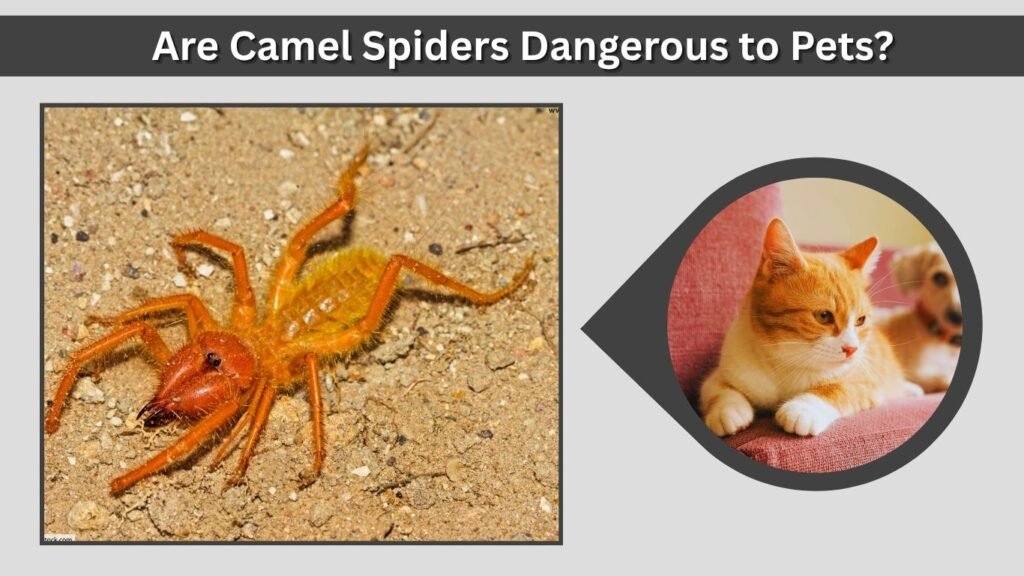
Camel spiders generally avoid large animals, including household pets. Most encounters with cats or dogs end quickly because the camel spider attempts to escape. However, curious pets may still get bitten if they try to attack or play with the arachnid.
Camel Spider vs Cats and Dogs
Cats and dogs are much larger than camel spiders and usually face little danger from them. A defensive bite may cause mild irritation or temporary pain, but serious complications are uncommon.
Risks to Small Animals
Camel spiders mainly prey on insects and tiny desert creatures. Small reptiles, insects, and other invertebrates are far more likely to become prey than larger mammals or pets.
When to Contact a Veterinarian
Pet owners should monitor animals after any unusual bite or sting. Veterinary attention may be needed if swelling, redness, limping, or signs of infection continue worsening after contact with a camel spider.
Camel Spider Habitats in the United States
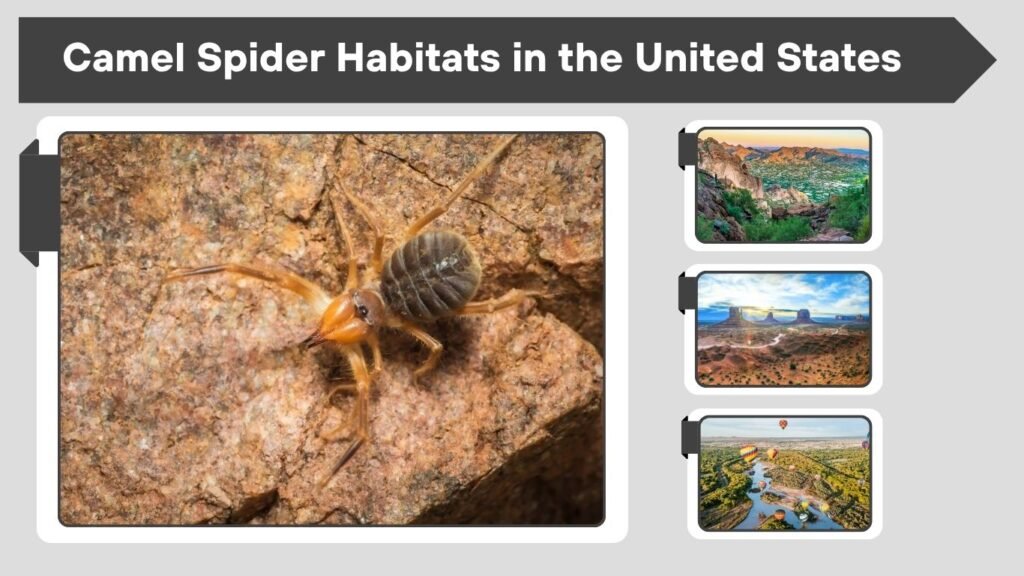
Several species of camel spiders live naturally in dry parts of the United States. They are most common in warm desert climates where nighttime hunting conditions are ideal. Human encounters usually happen outdoors or near lights that attract insects.
Camel Spiders in Arizona
Arizona deserts provide excellent habitat for camel spiders because of the hot climate and sandy terrain. They are commonly active during warm summer nights.
Camel Spiders in California
Camel spiders can be found in dry southern regions of California where rocky landscapes and desert vegetation offer shelter and hunting grounds.
Camel Spiders in New Mexico
New Mexico’s arid climate also supports camel spider populations. They are often seen near desert homes, garages, sheds, or outdoor lighting during nighttime activity.
FAQs
Are camel spiders poisonous to humans?
No, camel spiders are not poisonous or venomous. They do not produce venom, poison, or toxic sprays. Although their bite can be painful because of their strong jaws, they are generally considered low-risk to humans.
Can a camel spider bite hurt?
Yes, a camel spider bite can hurt because their jaws are powerful enough to pinch and break skin. Most bites cause mild pain, redness, swelling, and irritation that usually improve with simple wound care.
Do camel spiders spray poison?
No, camel spiders cannot spray poison. This myth is often confused with vinegaroons, which can release a vinegar-like defensive spray. Camel spiders mainly defend themselves by running away or biting if threatened.
Are giant camel spiders venomous?
No, even large or giant camel spiders are non-venomous. Their size does not change the fact that they lack venom glands and poisonous abilities. Larger species may simply appear more intimidating.
What should you do after a camel spider bite?
Wash the bite area with soap and water, apply antiseptic, and monitor for swelling or infection. Medical attention may be needed if severe redness, unusual pain, or signs of infection develop afterward.
