

Arizona camel spiders are fast-moving desert arachnids that often alarm people because of their unusual appearance and large jaws. Many residents mistake them for dangerous spiders or scorpions, especially when they appear around homes, garages, or desert trails at night. Stories online have also exaggerated their size and danger level.
Despite their frightening reputation, camel spiders are not venomous and rarely pose serious risks to humans. These desert hunters play an important role in controlling insects and other small prey. This guide explains how to identify Arizona camel spiders, where they live, how dangerous their bites really are, and the truth behind common myths.
What Is an Arizona Camel Spider?
Camel spiders found in Arizona belong to a unique arachnid group called Solifugae. Although they resemble spiders and scorpions, they are actually different from both. Their long legs, oversized jaws, and incredible running speed make them one of the most recognizable desert arachnids in the southwestern United States.
Camel Spider Scientific Classification
Camel spiders are arachnids related to spiders, ticks, mites, and scorpions. However, they belong to their own scientific order known as Solifugae. Unlike true spiders, camel spiders do not spin webs or produce venom.
Common Names in Arizona
Camel spiders are known by several different names throughout Arizona and nearby desert regions.
Popular names include:
- Wind scorpion
- Sun spider
- Solpugid
- Red Roman
- Sand spider
These names often confuse people into thinking camel spiders are venomous scorpions or true spiders.
Are Camel Spiders Native to Arizona?
Yes, camel spiders are naturally found in Arizona’s desert ecosystems. They are well adapted to hot, dry environments and survive by hunting insects and small prey during cooler nighttime hours.
Where Camel Spiders Live in Arizona
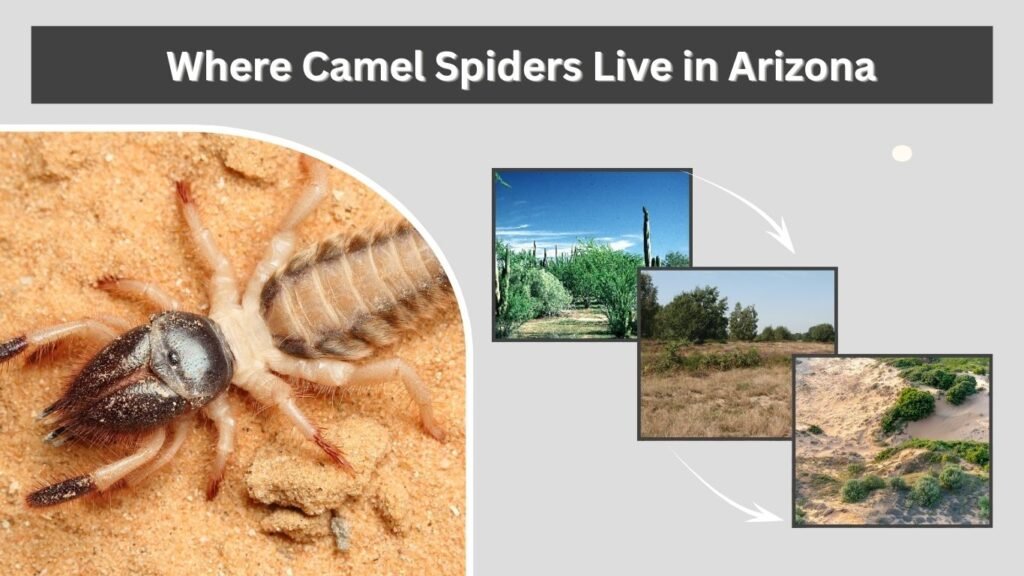
Arizona’s dry climate and desert terrain provide excellent conditions for camel spiders. They prefer warm habitats with sandy soil, rocky shelter, and abundant insect prey. Although they are most common in desert environments, camel spiders sometimes wander into homes or buildings while searching for food or cooler hiding spots.
Arizona Desert Habitats
Camel spiders are commonly found in several desert habitats across Arizona.
Preferred environments include:
- Sonoran Desert regions
- Dry grasslands
- Rocky desert terrain
- Sandy areas
- Shrub-covered landscapes
These areas provide shelter and nighttime hunting opportunities.
Camel Spiders in Phoenix Arizona
Camel spiders are occasionally seen in Phoenix and nearby urban desert communities. Outdoor lights attract insects, which in turn attract camel spiders searching for prey. Garages, sheds, patios, and storage areas often provide cool hiding spots during hot daytime temperatures.
Why Camel Spiders Enter Homes
Camel spiders usually enter buildings accidentally while hunting insects or escaping extreme heat. They may hide in shaded areas, under furniture, or near doorways where temperatures are cooler than outside desert conditions.
Arizona Camel Spider Identification
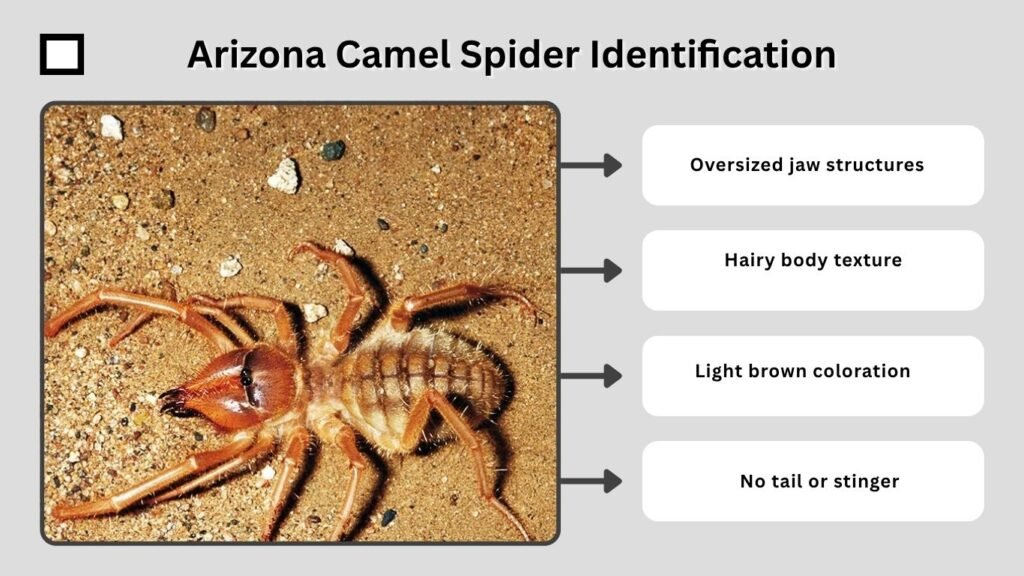
Correct identification is important because many harmless desert arachnids are mistaken for dangerous species. Camel spiders have several unique features that separate them from scorpions, wolf spiders, and tarantulas commonly found in Arizona.
Arizona Camel Spider Appearance
Camel spiders have long legs, large jaws, and tan or brown body coloration that helps them blend into desert surroundings.
Common identification features include:
- Oversized jaw structures
- Hairy body texture
- Long running legs
- Light brown coloration
- No tail or stinger
Their frightening appearance often causes unnecessary fear.
Arizona Camel Spider Size
Most Arizona camel spiders are moderate in size compared to internet myths. Body length usually ranges from one to three inches depending on the species. Their long legs can make them appear much larger when moving quickly across the ground.
Baby Camel Spider Identification
Young camel spiders resemble adults but are smaller and lighter in color. Baby camel spiders still move quickly and possess the same jaw structure seen in mature individuals.
Camel Spider vs Scorpion in Arizona
| Feature | Camel Spider | Scorpion |
| Tail | None | Curved stinger |
| Venom | No venom | Venomous |
| Speed | Very fast | Slower |
| Main Weapon | Strong jaws | Stinger |
Arizona Camel Spider Bite Facts
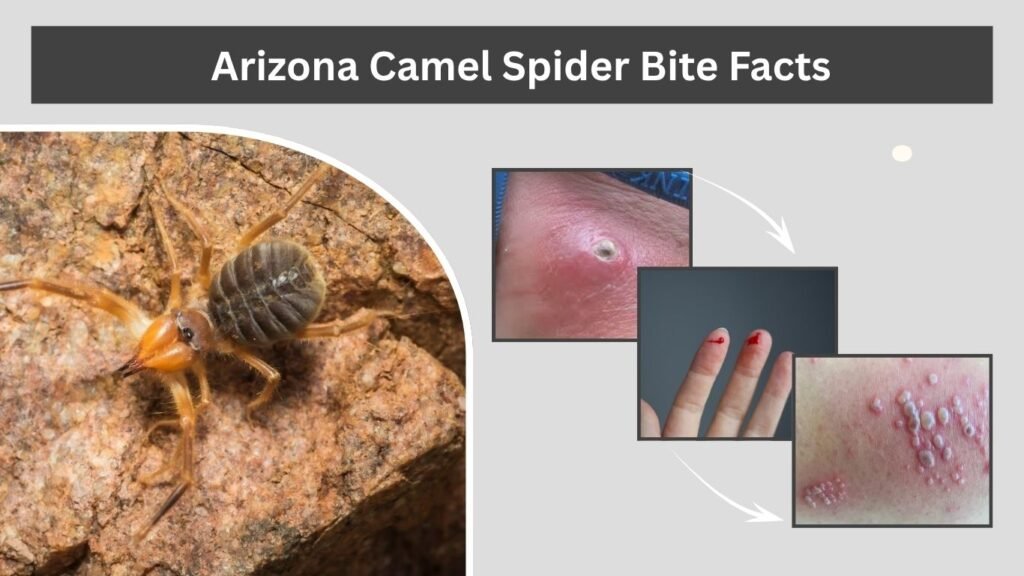
Although camel spiders are not venomous, they can still bite using their strong jaws. Most bites occur when people accidentally handle or corner them. While the bite may feel painful, it is generally not considered medically dangerous to healthy adults.
Can Arizona Camel Spiders Bite?
Camel spiders are capable of biting if threatened or trapped. Their jaws are designed for crushing insects and small prey, which means they can break human skin during defensive bites.
What Does a Camel Spider Bite Feel Like?
A camel spider bite may feel like a sharp pinch or painful squeeze. The affected area can become irritated for a short period afterward.
Common bite symptoms include:
- Mild redness
- Temporary swelling
- Minor bleeding
- Skin irritation
- Local pain
Most symptoms improve after simple wound cleaning and care.
Are Arizona Camel Spiders Poisonous?
Arizona camel spiders are not poisonous or venomous. They do not possess venom glands or toxic stingers. Infection risk from any bite is usually related to bacteria entering the wound rather than venom exposure.
Camel Spider Bite Symptoms
| Symptom | Common Reaction |
| Redness | Mild |
| Swelling | Temporary |
| Pain | Moderate |
| Bleeding | Possible |
| Fever | Rare |
Arizona Camel Spider Behavior
Camel spiders are active desert hunters that rely on speed and strong jaws to survive. Their unusual movement patterns and rapid running behavior often make them appear aggressive, even though they usually prefer escaping from humans whenever possible.
Why Camel Spiders Run Fast
Camel spiders are among the fastest arachnids in desert environments. Their speed helps them catch prey, avoid predators, and move quickly across hot sand surfaces during nighttime activity.
Nocturnal Hunting Habits
Most camel spiders hunt after sunset when desert temperatures become cooler. They feed on insects, beetles, small lizards, and other tiny animals found in Arizona deserts. Their nighttime lifestyle helps them avoid dangerous daytime heat.
Do Camel Spiders Chase Humans?
Many stories claim camel spiders chase people aggressively, but this behavior is often misunderstood. Camel spiders sometimes run toward human shadows because they seek cooler shaded areas rather than attempting to attack humans.
Camel Spider Myths in Arizona
Internet rumors and exaggerated desert stories have created many myths about Arizona camel spiders. Viral photos and military stories often make these arachnids seem far more dangerous and larger than they truly are. Understanding the facts helps reduce unnecessary fear.
Giant Camel Spider Stories
Online images frequently use camera angles that make camel spiders appear enormous. While some species are relatively large for arachnids, they are nowhere near the giant monster sizes often shown in viral photos.
Camel Spider Military Rumors
Stories from military personnel stationed in desert regions helped spread myths about camel spiders chasing soldiers or attacking sleeping people. Most of these tales were exaggerated or misunderstood over time.
Can Camel Spiders Kill Humans?
Camel spiders are not considered deadly to humans. Because they lack venom, their bites are usually limited to temporary pain and minor irritation. No confirmed human deaths have been directly linked to camel spider bites.
How Dangerous Are Camel Spiders in Arizona?

Although camel spiders look intimidating, they are generally low-risk arachnids. Most encounters end harmlessly because camel spiders prefer running away rather than fighting. Understanding their actual behavior helps people react calmly when encountering them outdoors or near homes.
Threat to Humans
Camel spiders are defensive rather than aggressive. They may bite if handled or trapped, but most bites are mild compared to venomous spider or scorpion stings commonly found in Arizona.
Risks to Pets
Cats and dogs occasionally encounter camel spiders while exploring outdoors. Most interactions are harmless, although curious pets may receive a defensive bite if they try to attack or play with the arachnid.
When Medical Care Is Needed
Medical attention may be necessary if a bite becomes infected or if unusual symptoms develop after contact. Severe swelling, spreading redness, fever, or allergic reactions should always be evaluated by a healthcare professional.
How to Avoid Camel Spiders in Arizona
Simple prevention steps can reduce the chances of finding camel spiders around homes, campsites, or outdoor storage areas. Because these arachnids are attracted to insects and cool hiding spots, keeping outdoor spaces clean is very important.
Keep Camel Spiders Away From Homes
Homeowners can make properties less attractive to camel spiders by reducing insects and sealing possible entry points.
Helpful prevention methods include:
- Seal wall cracks and gaps
- Remove clutter piles
- Reduce outdoor lighting insects
- Keep garages organized
- Remove debris near foundations
These steps also help discourage other desert pests.
Safe Desert Hiking Tips
People hiking or camping in Arizona deserts should check shoes, gloves, and clothing before use. Camel spiders sometimes hide beneath rocks or inside shaded areas during daytime heat.
What to Do if You Find One Indoors
If a camel spider enters a home, avoid touching it directly. Using a container and stiff paper is usually the safest way to relocate it outdoors. Professional pest control may help if sightings become frequent.
FAQs
Are camel spiders common in Arizona?
Yes, camel spiders are fairly common in Arizona’s desert regions. They are especially active during warm months and are often seen at night near rocks, garages, sheds, and outdoor lights where insects gather.
Are Arizona camel spiders poisonous?
No, Arizona camel spiders are not poisonous or venomous. They do not have venom glands or toxic stingers. Although they can bite with their strong jaws, their bites are usually mild and not medically dangerous.
How big do Arizona camel spiders get?
Most Arizona camel spiders grow between one and three inches long, including their legs. Their long legs and fast movement often make them appear larger than they actually are.
Can camel spiders bite humans in Arizona?
Yes, camel spiders can bite humans if they feel threatened or trapped. Their bites may cause temporary pain, redness, swelling, or minor bleeding, but serious reactions are uncommon.
What should you do after a camel spider bite?
Wash the bite area with soap and water, apply antiseptic, and monitor for signs of infection. Medical care may be needed if severe swelling, fever, or spreading redness develops afterward.
