
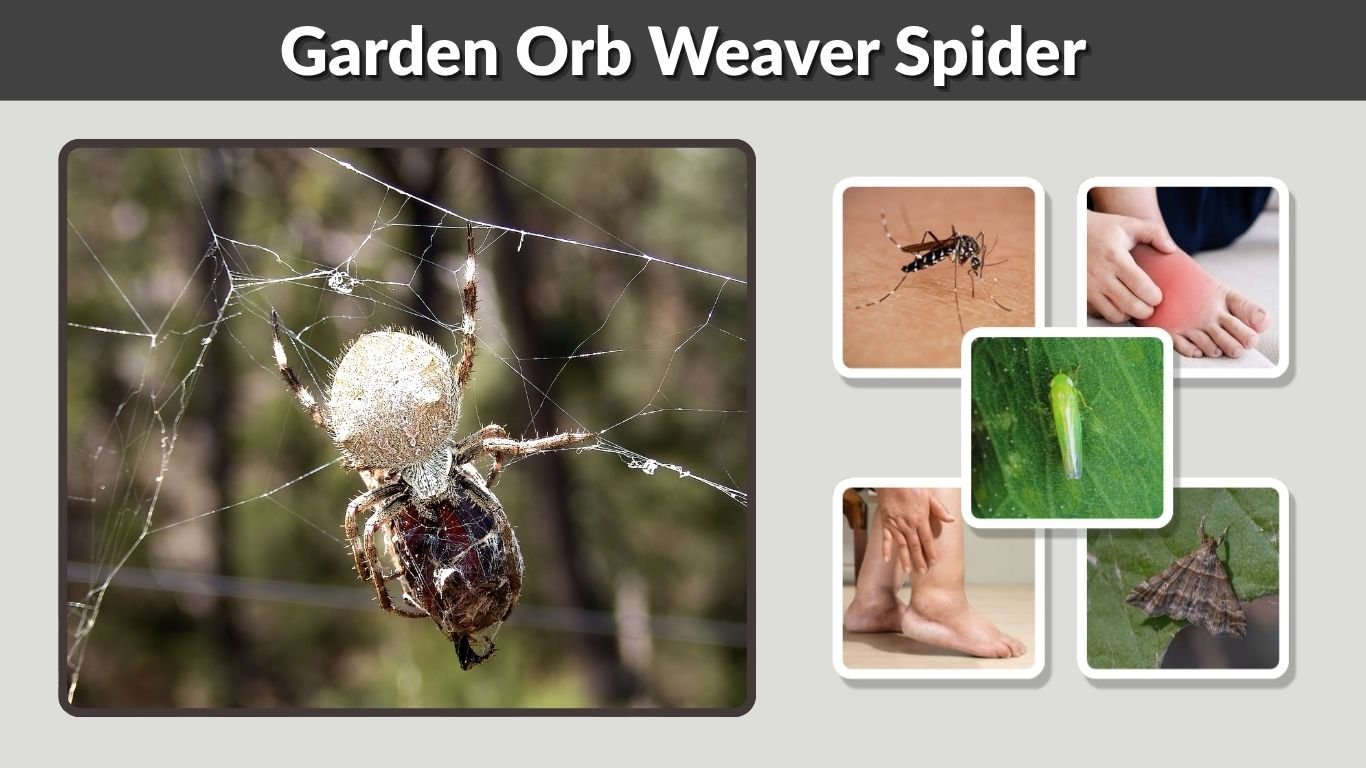
The garden orb weaver is a web-building spider commonly found among shrubs, flowers, trees, fences and buildings. It is best known for producing a large, circular web that catches moths, flies, beetles and other insects. Garden orb weavers vary greatly in size and color, ranging from brown and orange to silver, white, yellow and black. Although their appearance can be intimidating, these spiders are generally shy, beneficial and unlikely to cause a medically serious bite.
What Is a Garden Orb Weaver?
“Garden orb weaver” is not the name of one worldwide species. It is a broad common name used for several spiders in the orb-weaver family, Araneidae. The supplied keyword data shows that searchers commonly use the term for Australian garden orb weavers, yellow garden spiders, banded garden spiders and brown North American orb weavers.
In Australia, the Australian Museum uses “garden orb weaving spiders” for a large group commonly placed in Eriophora. In the United States, people may use the same general name for species of Neoscona and Argiope, including the yellow garden spider and banded garden orb weaver.
| Feature | General description |
| Family | Araneidae |
| Common colors | Brown, gray, orange, red, white, silver, yellow and black |
| Body size | Varies by species; often about 8–30 mm in adult females |
| Web | Large, circular or wheel-shaped orb |
| Diet | Flying insects and other small arthropods |
| Activity | Many species are most active after dark |
| Lifespan | Commonly around one year |
| Danger to people | Low |
Garden Orb Weaver Identification
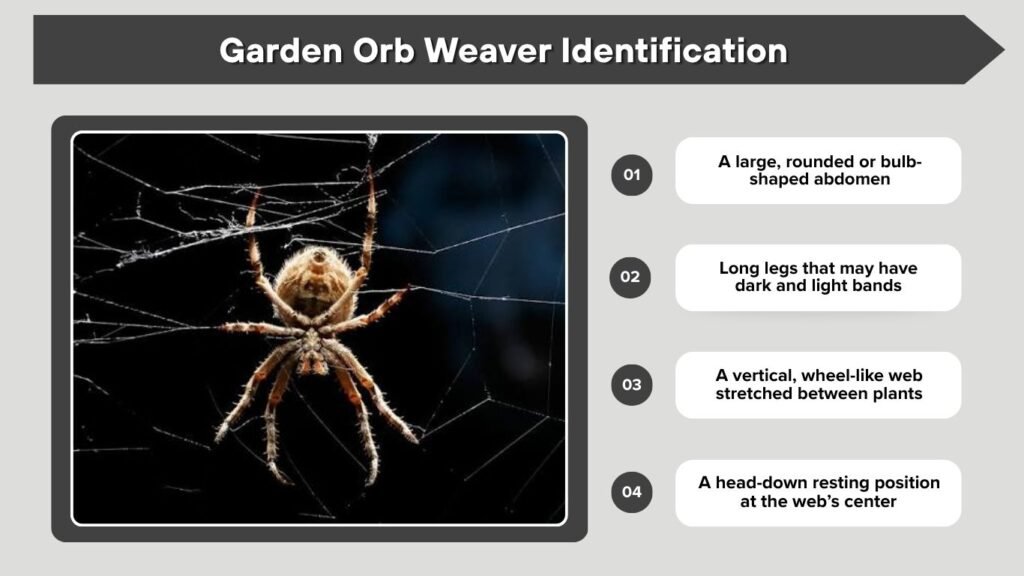
Garden orb weaving spiders have eight legs and a relatively small front body section connected to a noticeably larger abdomen. The abdomen may be rounded, oval or roughly triangular, depending on the species.
Common Identification Features
Look for the following characteristics:
- A large, rounded or bulb-shaped abdomen
- Long legs that may have dark and light bands
- A patterned back with stripes, spots or leaf-shaped markings
- A vertical, wheel-like web stretched between plants
- A head-down resting position at the web’s center
- A nearby daytime retreat made from leaves or silk
Australian garden orb weavers are often stout, reddish-brown or gray. Many have a leaf-shaped abdominal pattern, two small humps near the front of the abdomen and a white or brown dorsal stripe.
North American species are more variable. Neoscona crucifera is commonly reddish-brown or brown, while Neoscona domiciliorum may have a white or gray-yellow abdomen bordered by broad dark markings.
Yellow, Brown, Orange and Red Garden Orb Weavers
Color is not enough to identify a garden orb weaver because the common name covers numerous species.
Yellow Garden Orb Weaver
The yellow garden spider, Argiope aurantia, is a North American orb weaver with a bold black-and-yellow abdomen. Its web often contains a thick zigzag band of silk through the center. It is one of the spiders people frequently mean when they search for a “yellow garden orb weaver.”
Brown Garden Orb Weaver
Brown garden orb weavers may include Neoscona species in North America or garden orb-weaving species in Australia. Their brown, gray and rust-colored bodies provide camouflage against bark, dry leaves and branches.
Orange or Red Garden Orb Weaver
Some orb weavers become orange or reddish as they mature, while others naturally occur in several color forms. Body shape, markings, web design and location are more reliable than color alone when identifying them.
Garden Orb Weaver Size
Garden orb weaver size varies significantly by species and region. Body measurements normally exclude the legs.
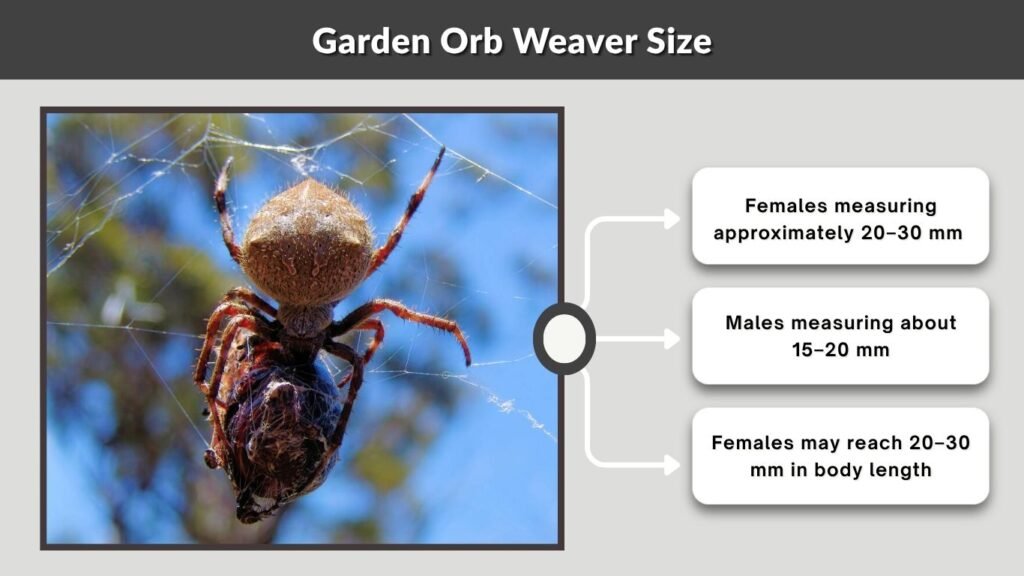
Australian garden orb-weaving spiders described by the Australian Museum have females measuring approximately 20–30 mm and males measuring about 15–20 mm.
The North American Neoscona crucifera has females around 8.5–19.7 mm long and males around 4.5–15 mm. The closely related Neoscona domiciliorum has females measuring roughly 7.2–16.2 mm.
The banded garden orb weaver, Argiope trifasciata, is among the larger examples. Females may reach 20–30 mm in body length, while males are generally around 15–20 mm.
Male vs Female Garden Orb Weaver
Male and female differences depend on the species, but females are usually easier to notice.
| Female | Male |
| Usually has a larger, fuller abdomen | Usually has a slimmer abdomen |
| Spends more time occupying a large web | Often wanders while searching for females |
| May become swollen before producing eggs | Has enlarged pedipalps near the mouth |
| Often displays stronger abdominal patterns | May appear less brightly colored |
The size difference can be dramatic in some orb weavers. However, Australian garden orb weavers may have males and females that are more similar in size than those of many other orb-weaver groups.
Garden Orb Weaver Web
The garden orb weaver web is a suspended, circular structure built from radial support lines and a sticky spiral. It is commonly placed across an opening between shrubs, branches, fences or buildings where insects regularly fly.
Many garden orb weavers build or repair their webs around sunset. The spider waits at the center, usually facing downward. Some species take the web down near dawn and eat the silk, allowing its nutrients to be reused. During daylight, the spider may hide beneath a leaf, under an eave or inside a silk-covered retreat.
A large Neoscona crucifera web can approach 60 cm, or about two feet, in diameter.
Diet and Hunting Behavior
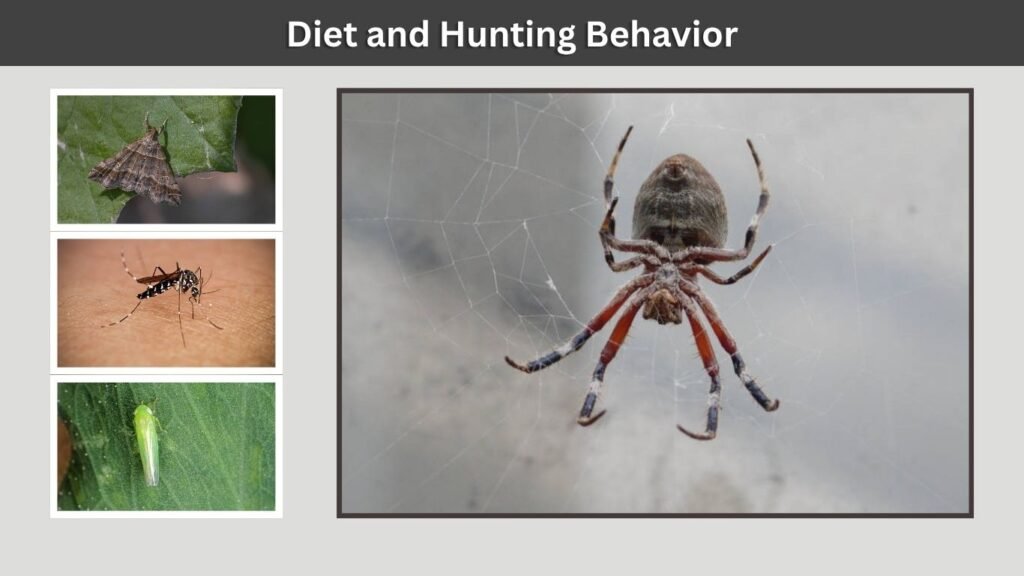
Garden orb weavers mainly eat insects that become trapped in their sticky webs. Their prey may include:
- Flies and mosquitoes
- Moths
- Beetles
- Leafhoppers
- True bugs
- Cicadas
- Other small arthropods
When an insect strikes the web, the spider detects vibrations through the silk. It rushes toward the prey, wraps it and uses a venomous bite to immobilize it. Large or dangerous insects may be released when attempting to capture them could damage the spider or its web.
Because they consume many flying insects, garden orb weavers are considered beneficial predators rather than garden pests.
Are Garden Orb Weaving Spiders Poisonous?
Garden orb weavers are venomous, but not poisonous. Venom is injected through the spider’s fangs to control prey. Poison generally causes harm when swallowed, touched or absorbed.
The venom of garden orb weavers is effective against small insects but is not considered medically significant for most people. These spiders are reluctant to bite and normally retreat, drop from the web or remain still when disturbed.
Garden Orb Weaver Bite
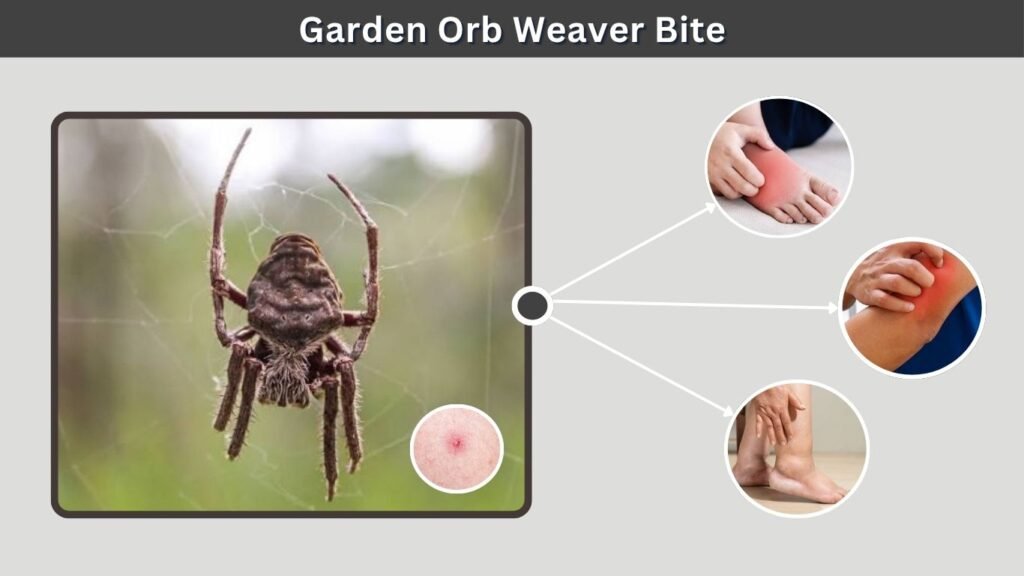
A garden orb weaver bite is uncommon. It is most likely to happen when a spider is squeezed, trapped inside clothing or handled roughly.
Possible symptoms include:
- Brief pain
- Mild redness
- Local swelling
- Numbness or itching
Australian Museum guidance notes that garden orb-weaver bites generally cause negligible symptoms or mild local pain, numbness and swelling. A cold pack may help relieve pain. Medical attention should be sought when symptoms are severe, unusual or persistent.
Garden Orb Weaver Habitat and Distribution
Garden orb weavers live in places where vegetation or structures provide suitable web supports. They are commonly found in gardens, woodland edges, meadows, orchards, parks and around porches or sheds.
Garden Orb Weaver in Australia
Garden orb-weaving spiders occur throughout Australia. Common forms described by the Australian Museum include Eriophora biapicata and Eriophora transmarina, particularly in eastern and southern regions. Australia has more than 100 species within the garden orb-weaver group described by the museum.
Garden Orb Weaver in the USA
The United States supports numerous garden-dwelling orb weavers. Neoscona crucifera ranges across much of eastern North America and extends westward to California and south into Mexico. Neoscona domiciliorum is primarily found in the southeastern United States, while banded and yellow garden spiders occur across broad parts of the country.
Lifespan and Egg Sac
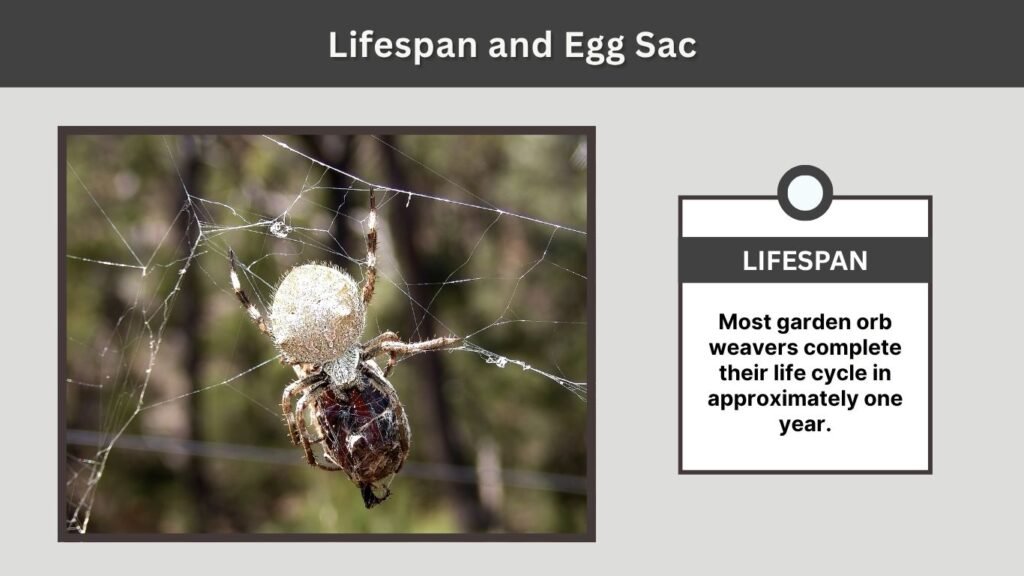
Most garden orb weavers complete their life cycle in approximately one year. Females mature, mate and produce one or more egg sacs before dying during colder weather or near the end of the season.
The eggs are protected inside silk. Australian garden orb weavers attach fluffy cocoons to vegetation, while some North American species conceal their egg sacs inside rolled leaves or protected locations. Spiderlings later emerge and may disperse through “ballooning,” releasing silk that carries them on air currents.
Orb Weaver vs Garden Spider
A garden spider can be an orb weaver, but not every spider living in a garden is an orb weaver.
“Orb weaver” describes spiders that belong to orb-weaving groups and produce circular webs. “Garden spider” is an informal name based on habitat. Yellow garden spiders, banded garden spiders and many brown garden spiders are orb weavers, while wolf spiders, jumping spiders and crab spiders found in gardens are not.
FAQs
Are garden orb weavers dangerous?
Garden orb weavers are not considered dangerous to most people. They possess venom for catching insects, but bites are rare and generally cause only mild, localized symptoms.
Should I remove a garden orb weaver?
Removal is usually unnecessary. The spider helps control flying insects and does not damage plants. A web crossing a doorway or walkway can be gently moved with a long stick.
Do garden orb weavers enter houses?
They prefer outdoor locations where they can anchor a large web. Individuals may occasionally appear near windows, garages, porches or indoor plants, but they do not normally create household infestations.
How large can a garden or weaver web become?
Web size varies by species. Some North American spotted orb weavers construct orb sections nearly two feet across, while the supporting lines may stretch considerably farther between trees or buildings.
Is a yellow garden spider an orb weaver?
Yes. The yellow garden spider is a member of the orb-weaver family and constructs a large circular web, often with a visible zigzag silk decoration near its center.
