
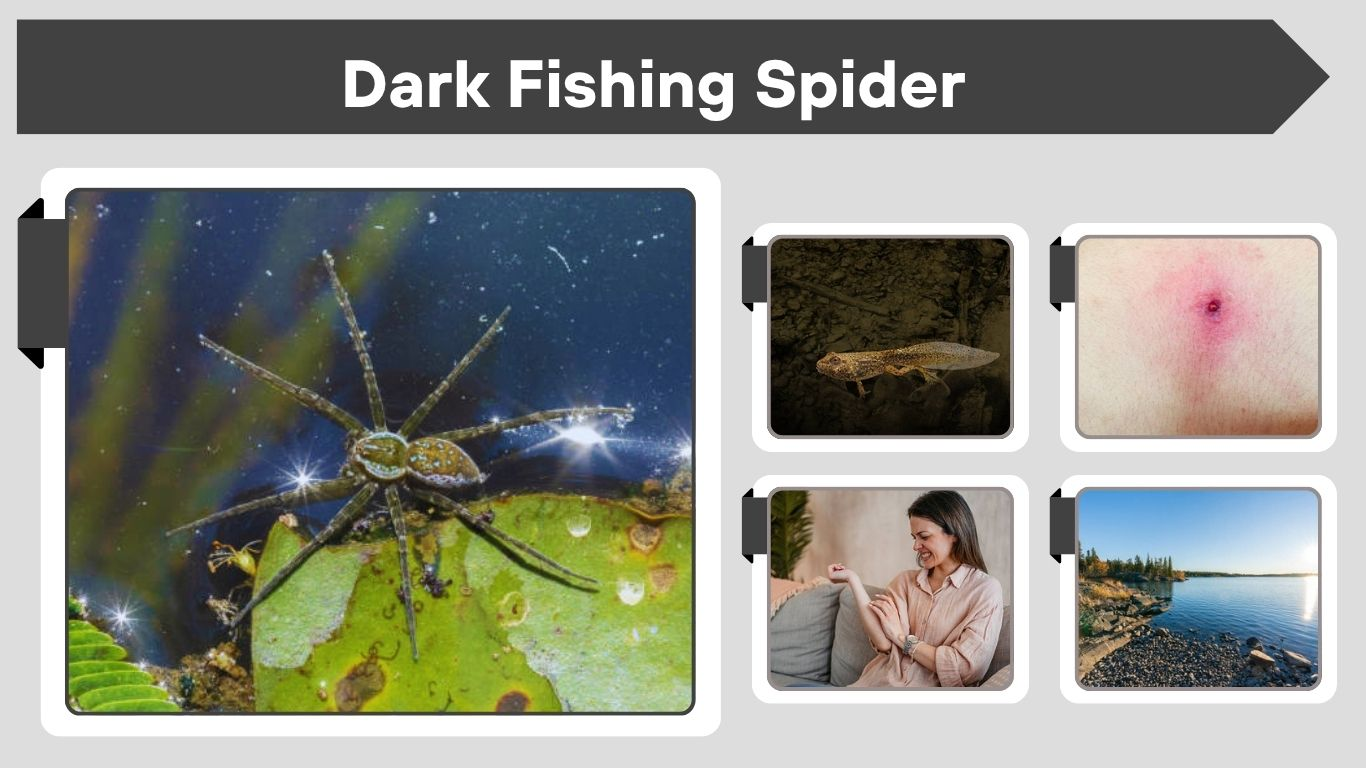
The dark fishing spider is one of the largest and most impressive spiders found in North America. Known for its huge leg span and unusual hunting behavior, this spider often frightens people when spotted near lakes, docks, or even inside homes. Despite its intimidating appearance, the dark fishing spider is usually harmless to humans.
Scientifically called Dolomedes tenebrosus, the dark fishing spider belongs to the fishing spider family and is closely associated with freshwater habitats. It is famous for its ability to hunt without webs, move quickly across surfaces, and occasionally capture aquatic prey.
What Is a Dark Fishing Spider?
The dark fishing spider is a large semi-aquatic spider commonly found near water sources such as lakes, ponds, and streams. Unlike orb-weaving spiders that rely on webs to trap insects, this species actively hunts its prey.
The spider uses excellent vision, vibration detection, and fast reflexes to ambush insects and other small animals. It is especially active at night and often hides during the daytime in tree bark, rocks, docks, or wooden structures.
Identification Features
The dark fishing spider has several unique features that help distinguish it from other large spiders.
Some key identification traits include:
- Scientific name: Dolomedes tenebrosus
- Brown, gray, or dark tan body coloration
- Long hairy legs with dark banding
- Wavy patterns across the abdomen
- Flattened body shape
- Excellent climbing ability
Its camouflage coloring helps it blend into tree bark, rocks, and wooden docks near freshwater habitats.
Why Is It Called a Fishing Spider?
Fishing spiders get their name from their hunting behavior near water. Although insects make up most of their diet, these spiders can catch aquatic prey using vibration-sensitive hairs on their legs.
The spider often waits quietly near shorelines with its front legs touching the water surface. When movement is detected, it quickly attacks the prey.
Fishing spiders are also known for:
- Running across water surfaces
- Hunting near streams and ponds
- Catching tadpoles and small fish
- Diving briefly underwater to escape predators
These unusual abilities make them very different from common household spiders.
Dark Fishing Spider Size
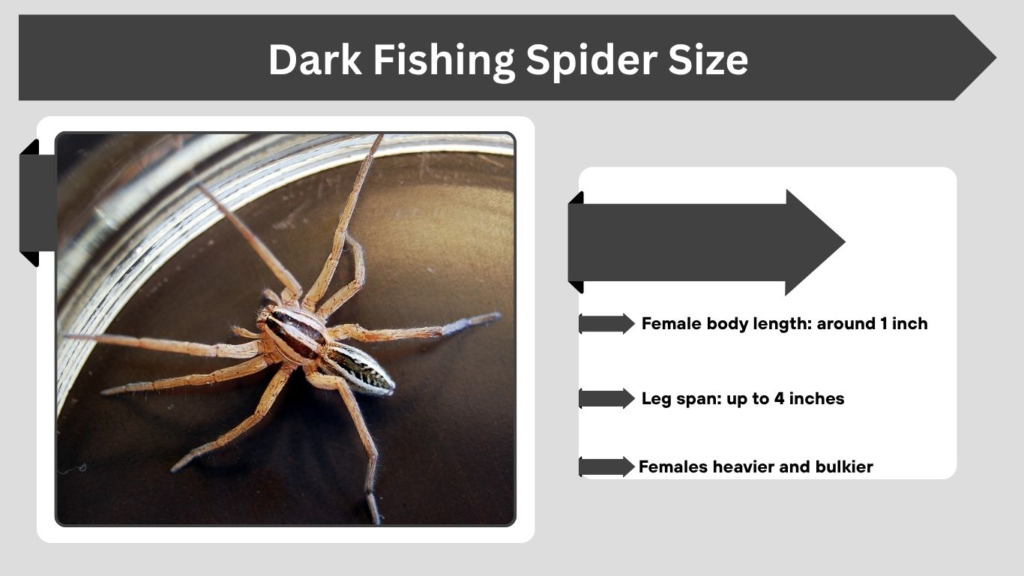
One of the biggest reasons people search for the dark fishing spider is its enormous size. Large females can appear extremely intimidating because of their long leg span and bulky bodies.
Although they are among the largest spiders in North America, they are generally shy and non-aggressive.
How Big Does the Dark Fishing Spider Get?
The size of the dark fishing spider varies depending on age and sex. Females are much larger than males and are more commonly noticed by people.
Typical size measurements include:
- Female body length: around 1 inch
- Male body length: slightly smaller
- Leg span: up to 4 inches
- Females heavier and bulkier than males
Their large appearance often causes confusion with wolf spiders or tarantulas.
Largest Dark Fishing Spider Size
Some mature female dark fishing spiders can reach impressive sizes, especially in humid regions with abundant food sources.
Their leg span may become nearly as wide as an adult hand, making them one of the largest spiders commonly encountered around homes and docks.
However, much of their intimidating appearance comes from their extremely long legs rather than body mass alone.
Dark Fishing Spider Size Comparison
The dark fishing spider is commonly confused with other large spiders, especially wolf spiders and brown recluse spiders. However, there are several important differences.
| Spider Species | Average Body Size | Leg Span | Common Habitat |
| Dark Fishing Spider | Large | Up to 4 inches | Near lakes, ponds, and streams |
| Wolf Spider | Medium to large | Usually smaller than fishing spiders | Ground habitats, grasslands, forests |
| Brown Recluse | Small | Much smaller | Indoor spaces, closets, basements |
The dark fishing spider is generally larger than wolf spiders and is much more strongly associated with freshwater habitats. Brown recluse spiders are significantly smaller and prefer indoor hiding areas rather than wet outdoor environments.
Dark Fishing Spider vs Wolf Spider
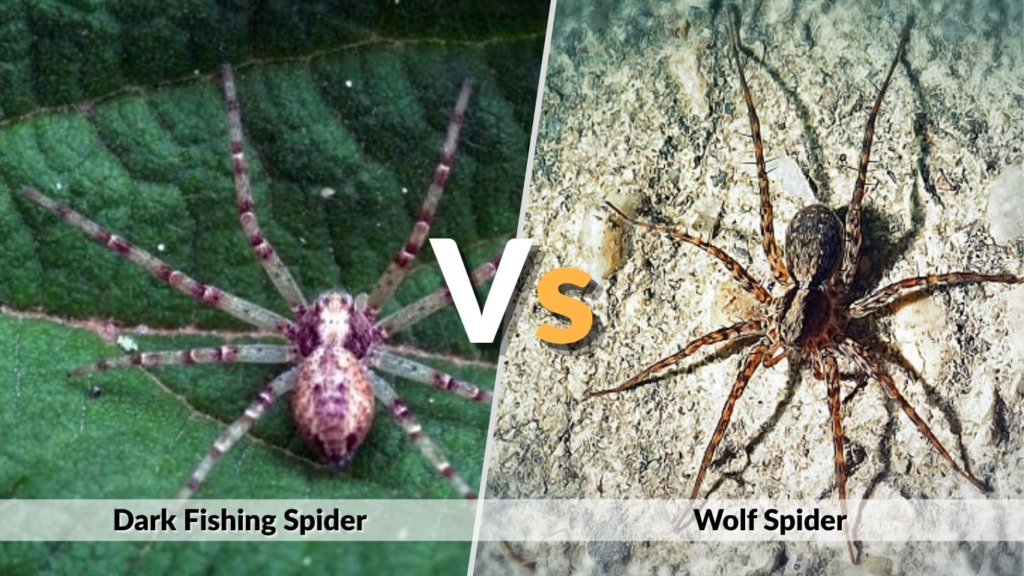
Many people mistake dark fishing spiders for wolf spiders because both species are large, hairy, and active hunters. However, these spiders belong to different groups and behave differently.
Fishing spiders are more strongly connected to water habitats, while wolf spiders usually hunt on dry ground.
Main Differences Between Dark Fishing Spider and Wolf Spider
The easiest way to identify the difference is by observing body shape, habitat, and leg positioning.
| Feature | Dark Fishing Spider | Wolf Spider |
| Habitat | Near water | Dry ground |
| Body Pattern | Wavy markings | Bold stripes |
| Leg Position | Spread outward | More compact |
| Hunting Style | Semi-aquatic | Ground hunter |
| Size | Larger overall | Smaller |
Dark fishing spiders also tend to rest flat against surfaces, while wolf spiders usually have a more upright posture.
Brown Recluse vs Dark Fishing Spider
Another common mistake is confusing the dark fishing spider with the brown recluse spider. This confusion often creates unnecessary fear because brown recluse spiders are medically significant, while dark fishing spiders are not considered dangerous.
Some important differences include:
- Brown recluse spiders are much smaller
- Brown recluse spiders have a violin-shaped marking
- Dark fishing spiders have banded legs and wavy patterns
- Brown recluse spiders prefer indoor hiding places
- Dark fishing spiders stay near water and wooded areas
Understanding these differences helps people identify the spider more accurately and avoid unnecessary panic.
Dark Fishing Spider Habitat
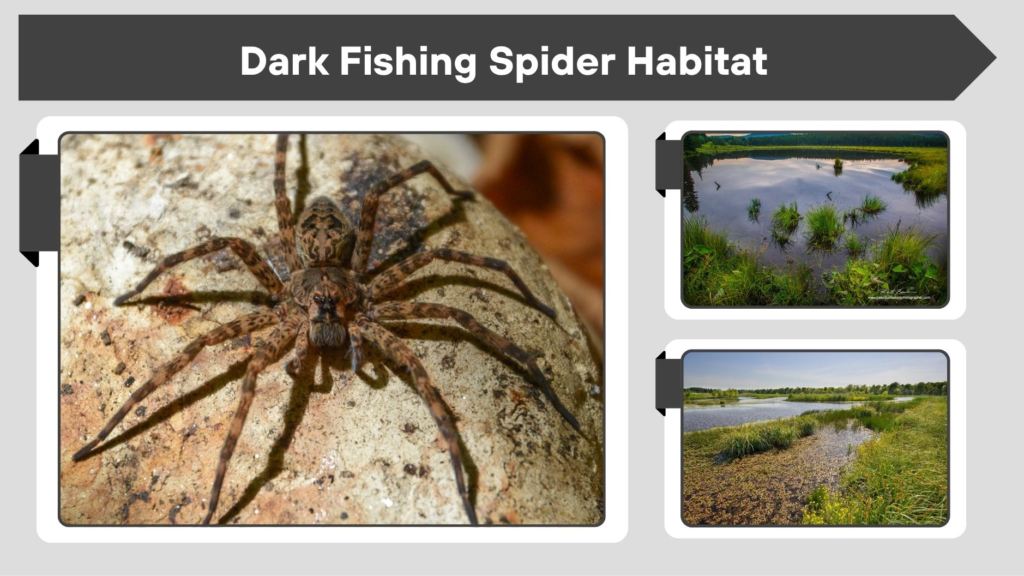
The dark fishing spider thrives in moist environments with easy access to freshwater and insects. It is commonly found around lakes, ponds, riverbanks, marshes, and forest streams.
These spiders often hide beneath rocks, loose bark, docks, and outdoor structures during the day before becoming active at night.
Where Does the Dark Fishing Spider Live?
Dark fishing spiders prefer habitats with high humidity and nearby water sources.
Common habitats include:
- Lakes
- Ponds
- Riverbanks
- Forested streams
- Wetlands
- Wooden docks
They are excellent climbers and may sometimes wander into garages, sheds, cabins, or basements searching for shelter.
Geographic Range
The dark fishing spider is widely distributed across many parts of North America. It is especially common in humid regions with forests, wetlands, and freshwater ecosystems.
This spider is frequently reported in:
- Illinois
- Michigan
- Ohio
- Minnesota
- Missouri
- North Carolina
- Maryland
- Wisconsin
- Pennsylvania
- Ontario
Because of its wide range, people often encounter this spider near cabins, boathouses, and wooded lakeside properties.
Why Dark Fishing Spiders Enter Houses
Although dark fishing spiders prefer outdoor habitats, they occasionally enter homes and buildings. This usually happens accidentally while searching for shelter, warmth, or insects.
Common reasons they appear indoors include:
- Moist basements or crawl spaces
- Open doors and windows
- Nearby lakes or ponds
- Seasonal weather changes
- Attraction to insects around lights
In most cases, the spider is simply wandering and does not intend to remain indoors permanently.
Dark Fishing Spider Diet
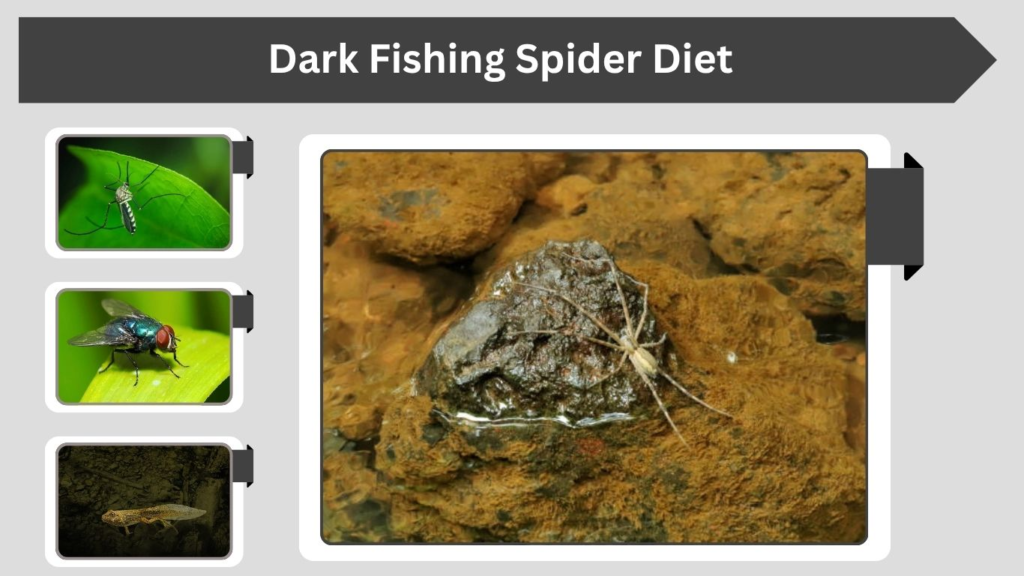
The dark fishing spider is an active predator that hunts both aquatic and land-based prey. Unlike web-building spiders, it relies on stealth, speed, and vibration detection to capture food.
Its flexible diet allows it to survive in many different environments.
What Does the Dark Fishing Spider Eat?
Dark fishing spiders feed on a wide variety of small animals and insects.
Their diet commonly includes:
- Mosquitoes
- Flies
- Beetles
- Moths
- Tadpoles
- Small fish
- Aquatic insects
- Tiny frogs
Larger females may occasionally capture prey larger than themselves, especially near shallow water.
Dark Fishing Spider Hunting Behavior
The hunting behavior of the dark fishing spider is one of its most fascinating characteristics. Instead of spinning prey-catching webs, the spider actively stalks or ambushes prey.
Important hunting behaviors include:
- Detecting vibrations through sensitive leg hairs
- Hunting mostly at night
- Waiting near water edges
- Running rapidly toward prey
- Using venom to immobilize prey
These spiders can even capture prey directly from the water surface by reacting quickly to movement.
Does the Dark Fishing Spider Build Webs?
Dark fishing spiders do produce silk, but they do not build traditional orb webs for catching prey.
Instead, silk is mainly used for:
- Egg sacs
- Nursery webs
- Safety draglines
- Temporary shelters
This hunting style makes them more similar to wolf spiders than web-building garden spiders.
Dark Fishing Spider Bite
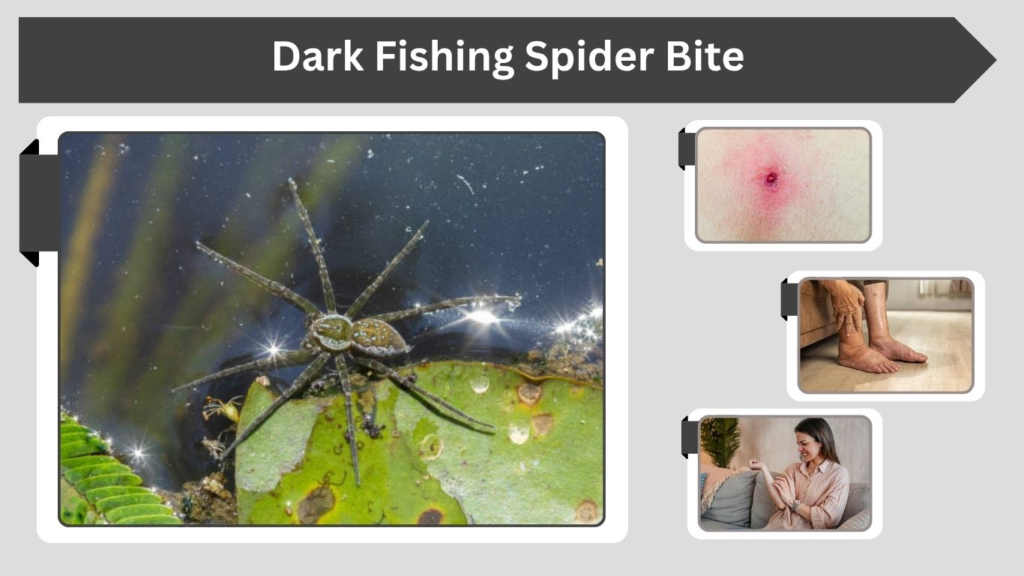
Because of its large appearance, many people fear being bitten by a dark fishing spider. Fortunately, these spiders are usually shy and avoid direct interaction with humans.
Bites are uncommon and generally occur only if the spider feels trapped or threatened.
Does the Dark Fishing Spider Bite?
Yes, the dark fishing spider can bite in self-defense. However, it is not naturally aggressive and usually tries to escape before biting.
Most bites happen when:
- The spider is accidentally handled
- It becomes trapped in clothing
- Someone disturbs it unexpectedly
- A person attempts to kill it
Even large fishing spiders rarely attack humans without provocation.
Is the Dark Fishing Spider Poisonous or Venomous?
The dark fishing spider is venomous, meaning it uses venom to subdue prey during hunting. Its venom is effective against insects and small animals but is not considered medically dangerous to humans.
For humans, the venom usually causes only mild symptoms that disappear within a short period.
Dark Fishing Spider Bite Symptoms
A bite from a dark fishing spider may cause:
- Mild redness
- Swelling
- Temporary pain
- Itching
- Minor skin irritation
Most symptoms are similar to a mild bee sting and rarely require professional medical treatment.
Is the Dark Fishing Spider Dangerous?
Despite its intimidating size, the dark fishing spider is not considered dangerous to humans. In fact, it plays an important ecological role by helping control insect populations around freshwater habitats.
These spiders are beneficial predators because they reduce mosquitoes and other nuisance insects naturally.
Dark Fishing Spider Life Cycle and Lifespan
Like other spiders, the dark fishing spider develops through several stages before reaching adulthood. Its lifespan depends on climate, food availability, and sex.
Females generally live longer than males and grow much larger over time.
Lifespan of the Dark Fishing Spider
The average lifespan of the dark fishing spider is usually around one to two years.
Some important lifespan facts include:
- Females often survive longer
- Males typically die sooner after mating
- Activity increases during warm months
- Cold weather reduces movement and feeding
During winter, these spiders may hide beneath bark, rocks, or protected structures for shelter.
Dark Fishing Spider Egg Sac
Female dark fishing spiders show strong maternal instincts compared to many other spider species.
The female carries her egg sac in her jaws until the eggs are close to hatching. She then builds a protective nursery web among vegetation or sheltered surfaces.
After hatching, spiderlings remain protected for a short period before dispersing into surrounding habitats.
Male vs Female Dark Fishing Spider
Male and female dark fishing spiders differ significantly in both appearance and behavior.
Female Dark Fishing Spider
Female dark fishing spiders are:
- Larger and heavier
- More powerful hunters
- Longer-lived
- More commonly seen near water
Their large size often makes them appear more intimidating than males.
Male Dark Fishing Spider
Male dark fishing spiders are:
- Smaller and slimmer
- More active during mating season
- Faster-moving
- Shorter-lived
Males are often seen wandering during late summer while searching for females.
FAQs
Is the dark fishing spider poisonous?
The dark fishing spider is venomous to its prey, but it is not considered dangerous to humans. Its venom helps immobilize insects and small aquatic animals. If bitten, most people experience only mild symptoms such as redness, swelling, or temporary pain similar to a bee sting.
How big is the dark fishing spider?
The dark fishing spider is one of the largest spiders in North America. Adult females can have a leg span of up to 4 inches, while males are usually smaller. Their large size often causes people to mistake them for wolf spiders or tarantulas.
What is the difference between a dark fishing spider and a wolf spider?
Dark fishing spiders usually live near water and have long legs that spread outward. Wolf spiders prefer dry ground habitats and have a stockier appearance. Fishing spiders also display wavy body markings, while wolf spiders commonly have bold stripes on their bodies.
Where do dark fishing spiders live?
Dark fishing spiders are commonly found near lakes, ponds, marshes, forest streams, and riverbanks. They are widespread across North America, especially in states like Michigan, Ohio, Illinois, Minnesota, and North Carolina where freshwater habitats are common.
Are dark fishing spider bites dangerous?
Dark fishing spider bites are generally not dangerous to humans. Bites are rare because these spiders prefer escaping rather than attacking. Symptoms are usually mild and may include slight swelling, itching, redness, or temporary discomfort that disappears within a short time.
