
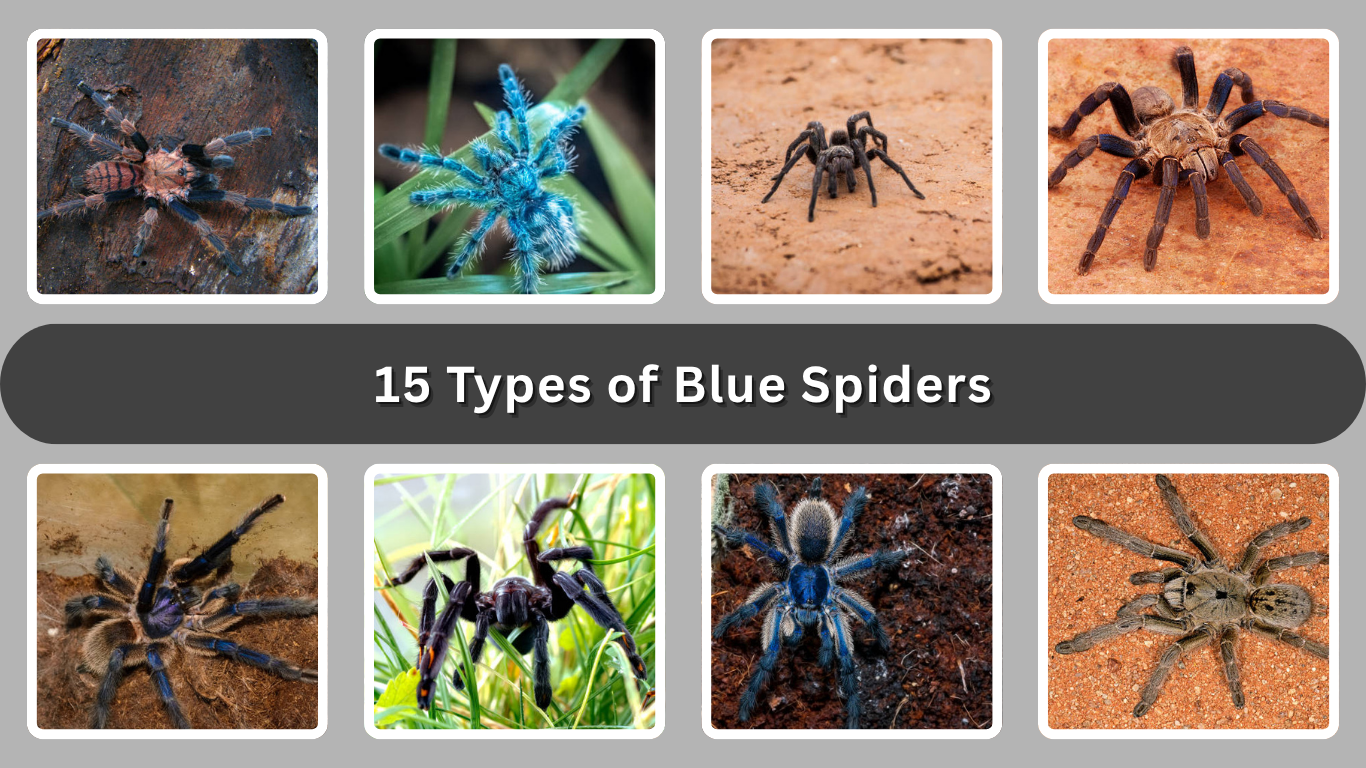
Blue spiders are among the most fascinating and visually striking arachnids in the world. Their vibrant blue coloration, often created through structural reflection rather than pigment, makes them highly unique. From deep cobalt tones to soft shimmering hues, these spiders captivate both researchers and hobbyists alike. In this list, you’ll discover 15 types of blue spiders, mainly tarantulas, each with distinct features, habitats, and behaviors that make them truly remarkable in the spider world.
1. Blue Tarantula

A “blue tarantula” is a general term used to describe tarantulas that display vivid blue coloration rather than a single scientifically recognized species. These spiders are admired for their striking, metallic blue shades that can range from soft bluish-gray to deep electric blue depending on species, lighting, and maturity. The coloration is often more intense in juveniles and may change slightly as the spider matures. Blue tarantulas are popular among arachnid enthusiasts due to their unique appearance, though they are generally better suited for experienced keepers because some species can be defensive or fast-moving.
Identification
- Color: Metallic or iridescent blue on legs, carapace, or entire body
- Size: Medium to large, typically 10–15 cm (4–6 inches) leg span
- Body Shape: Thick-bodied with dense hair covering the legs and abdomen
- Legs: Long and sturdy, often showing the most intense blue coloration
- Eyes: Eight small eyes grouped closely together
- Sexual Dimorphism: Females are larger, bulkier, and longer-lived than males
- Molting: Color may appear brighter after molting
Habitat
Blue tarantulas are usually found in warm, tropical, or subtropical environments across regions such as Asia, South America, and parts of Africa. Depending on the species, they may be arboreal (living in trees) or terrestrial (living on or below the ground). Arboreal types prefer to build silk retreats in tree hollows or branches, while terrestrial ones dig burrows in soil or hide under rocks and logs. These spiders thrive in humid conditions with stable temperatures, often requiring environments that mimic rainforest or savanna ecosystems. Proper humidity helps with molting and overall health.
Behavior
Blue tarantulas are typically nocturnal, becoming active at night to hunt for prey such as insects, small arthropods, and occasionally tiny vertebrates. They rely on speed, vibration sensing, and ambush tactics rather than webs to capture food. While many are shy and prefer retreat over confrontation, some species can be defensive if threatened. They may raise their front legs, display fangs, or flick urticating hairs (in New World species) as a warning. Old World species, however, lack these hairs and may rely more on biting as a defense mechanism.
Interesting Facts
The stunning blue coloration of these tarantulas is caused by structural coloration rather than pigment. Tiny nanostructures in their hairs reflect specific wavelengths of light, producing the blue effect. This means their color can appear to shift or shimmer depending on lighting and angle. Some blue tarantulas are among the fastest spiders, making them challenging to handle. Females can live for over 10–15 years, while males typically have much shorter lifespans. Their unique appearance and longevity make them highly valued in the exotic pet trade.
2. Green Bottle Blue Tarantula

The Green Bottle Blue Tarantula (Chromatopelma cyaneopubescens) is one of the most visually striking tarantulas in the world. Native to Venezuela, it is famous for its vibrant combination of colors—metallic blue legs, a green carapace, and an orange abdomen. Unlike many tarantulas that are either terrestrial or arboreal, this species shows semi-arboreal behavior and is known for its heavy webbing. Its bold coloration and active nature make it a favorite among hobbyists.
Identification
- Scientific Name: Chromatopelma cyaneopubescens
- Color: Bright blue legs, green carapace, and orange abdomen
- Size: Medium-sized, around 10–15 cm (4–6 inches) leg span
- Body Texture: Covered in fine hairs, giving a slightly fuzzy look
- Webbing: Produces extensive, thick web structures
- Eyes: Small, clustered eyes typical of tarantulas
- Sex Differences: Females are larger and live significantly longer than males
Habitat
This species originates from the dry scrublands and desert regions of northern Venezuela. Unlike many tarantulas that prefer humid environments, the Green Bottle Blue thrives in relatively dry conditions with good ventilation. It builds intricate web tunnels among shrubs, rocks, and branches rather than digging deep burrows. In captivity, it requires a well-ventilated enclosure with anchor points for webbing, along with low to moderate humidity. Proper airflow is essential to prevent health issues.
Behavior
The Green Bottle Blue Tarantula is known for being active, fast, and a heavy webber. It spends much of its time creating elaborate web networks that serve as both shelter and hunting grounds. While generally not aggressive, it can be skittish and quick to retreat when disturbed. It rarely relies on defensive behaviors like hair flicking unless provoked. This species is a voracious feeder and will eagerly hunt insects, using its webbing to detect vibrations and capture prey efficiently.
Interesting Facts
This tarantula is one of the most colorful species in the world, making it highly sought after in the pet trade. Its unique coloration becomes more vivid after each molt, especially in juveniles transitioning to adults. Unlike many tarantulas, it prefers a dry environment, which surprises many beginners. Its heavy webbing behavior is more similar to true spiders than typical tarantulas, giving it a distinctive lifestyle among its relatives.
3. Cobalt Blue Tarantula

The Cobalt Blue Tarantula (Cyriopagopus lividus) is one of the most famous blue spiders, known for its deep, electric blue legs and striking appearance. Native to Southeast Asia, particularly Thailand and Myanmar, this species is highly admired but also notorious for its defensive temperament. Unlike many beginner-friendly tarantulas, the Cobalt Blue is best suited for experienced keepers due to its speed, reclusive nature, and strong defensive instincts.
Identification
- Scientific Name: Cyriopagopus lividus
- Color: Deep metallic cobalt blue legs with a darker body
- Size: Medium, typically 12–15 cm (5–6 inches) leg span
- Body Structure: Thick-bodied with long, powerful legs
- Hair Type: Lacks urticating hairs (Old World species)
- Eyes: Small, grouped closely together
- Sex Differences: Females are larger and longer-lived than males
Habitat
The Cobalt Blue Tarantula is native to tropical regions of Southeast Asia, where it inhabits humid forests. It is a strictly terrestrial and fossorial (burrowing) species, spending most of its life underground. It digs deep, silk-lined burrows in moist soil and rarely ventures out unless hunting or disturbed. High humidity and stable temperatures are essential for its survival. In captivity, it requires a deep substrate for burrowing and a secure, low-disturbance environment.
Behavior
This species is known for being highly defensive and extremely fast. It prefers to stay hidden in its burrow and avoids open spaces whenever possible. When threatened, it may adopt a threat posture or strike quickly, as it lacks urticating hairs and relies on biting for defense. It is a nocturnal predator, emerging at night to hunt insects and other small prey. Its speed and reactivity make it challenging to handle or manage.
Interesting Facts
The brilliant blue coloration of the Cobalt Blue Tarantula is due to structural coloration rather than pigment, meaning it can appear more vibrant under certain lighting. Despite its popularity, it is rarely seen in the open because of its burrowing lifestyle. This species is often considered one of the most defensive tarantulas, making it unsuitable for beginners but fascinating for experienced enthusiasts.
4. Singapore Blue Tarantula

The Singapore Blue Tarantula (Omothymus violaceopes) is a stunning arboreal species known for its vibrant blue and purple coloration. Native to Singapore and Malaysia, this spider is admired for its long legs and graceful appearance. It is considered one of the more visually impressive tarantulas due to its mix of metallic blue, violet, and sometimes green hues. However, like many Old World species, it is not recommended for beginners due to its speed and defensive nature.
Identification
- Scientific Name: Omothymus violaceopes
- Color: Shades of blue, violet, and sometimes green on legs and body
- Size: Large, reaching up to 20 cm (8 inches) leg span
- Body Shape: Slender body with long, thin legs adapted for climbing
- Hair Type: Lacks urticating hairs (Old World species)
- Leg Appearance: Often shows gradient coloration from blue to purple
- Sex Differences: Females are larger and longer-lived than males
Habitat
This species is found in tropical rainforests of Singapore and surrounding regions. It is strictly arboreal, meaning it lives in trees rather than on the ground. The Singapore Blue Tarantula builds silk retreats in tree hollows, bark crevices, or high branches. It thrives in warm, humid environments with plenty of vertical space. In captivity, it requires a tall enclosure with good ventilation and hiding spots that mimic its natural tree-dwelling habitat.
Behavior
The Singapore Blue Tarantula is fast, alert, and highly defensive when threatened. It prefers to escape rather than confront danger but can react quickly if cornered. As an arboreal species, it is an excellent climber and spends most of its time off the ground. It is nocturnal and hunts insects and other small prey at night. Due to its speed and agility, handling is strongly discouraged.
Interesting Facts
This tarantula’s coloration can appear to shift between blue and purple depending on lighting conditions, making it especially eye-catching. It is one of the larger arboreal tarantulas, with an impressive leg span. Despite its beauty, it is rarely seen during the day because it prefers to stay hidden in its retreat. Its combination of size, color, and behavior makes it a favorite among advanced tarantula keepers.
5. Electric Blue Tarantula

The Electric Blue Tarantula is a name commonly used for vividly colored blue tarantulas, often referring to species with intense, glowing blue hues that appear almost neon under proper lighting. These spiders are highly sought after for their striking coloration, which can range from bright sky blue to deep electric tones. Though not a single scientific species, the term is frequently associated with visually stunning tarantulas that display exceptional blue coloration.
Identification
- Color: Bright, electric blue with shimmering or metallic tones
- Size: Medium to large, typically 12–16 cm (5–6.5 inches) leg span
- Body Type: Hairy, robust body with strong legs
- Leg Highlight: Legs often show the most intense blue coloration
- Eyes: Small, clustered eyes typical of tarantulas
- Molting Effect: Color becomes more vibrant after molting
- Sex Differences: Females are bulkier and longer-lived than males
Habitat
Electric blue-type tarantulas are usually found in tropical or subtropical regions, depending on the exact species being referred to. They may be arboreal or terrestrial, with some preferring trees while others live in burrows. These spiders typically thrive in warm environments with moderate to high humidity. Natural habitats include forests, grasslands, and sometimes scrubland areas. In captivity, their setup varies based on whether they are ground-dwelling or tree-dwelling, but stable temperature and proper humidity are always essential.
Behavior
These tarantulas are generally nocturnal and rely on stealth and quick movements to capture prey. They feed on insects and other small invertebrates. Behavior can vary widely—some are shy and reclusive, while others may be defensive when threatened. Fast movement is a common trait, making them difficult to handle. Like many tarantulas, they prefer to retreat rather than engage but can display defensive postures if disturbed.
Interesting Facts
The “electric blue” appearance comes from structural coloration, where microscopic structures reflect light rather than using pigment. This gives them a glowing, almost iridescent look. Their color can appear dramatically different under various lighting conditions. These spiders are popular in the exotic pet trade, but their speed and sometimes defensive nature make them more suitable for experienced keepers.
6. Blue Fang Spider

The Blue Fang Spider (Ephebopus cyanognathus) is a unique and fascinating tarantula known for its striking metallic blue fangs. Native to South America, particularly regions of Brazil and French Guiana, this species stands out not because of a fully blue body, but due to its vividly colored chelicerae (fang area). It is also unusual among tarantulas because it possesses urticating hairs on its front legs rather than the abdomen.
Identification
- Scientific Name: Ephebopus cyanognathus
- Color: Brown to dark body with metallic blue fangs
- Size: Medium, 10–13 cm (4–5 inches) leg span
- Fangs: Distinct bright blue or turquoise chelicerae
- Hair Feature: Urticating hairs located on front legs
- Body Texture: Velvety appearance with fine hairs
- Sex Differences: Females are larger and live longer than males
Habitat
The Blue Fang Spider inhabits tropical rainforest regions in northern South America. It is a fossorial species, meaning it spends most of its life in deep, silk-lined burrows underground. These burrows help maintain humidity and provide protection from predators. The environment is typically warm, moist, and shaded. In captivity, it requires deep substrate for digging, along with high humidity and stable temperatures to mimic its natural rainforest conditions.
Behavior
This species is generally shy and prefers to remain hidden in its burrow. It is nocturnal, emerging at night to hunt insects and small prey. When threatened, instead of flicking hairs from its abdomen, it rubs its front legs to release irritating hairs toward the threat. It may also adopt a defensive posture if provoked. While not overly aggressive, it should not be handled due to its defensive capabilities and speed.
Interesting Facts
The Blue Fang Spider is one of the few tarantulas with blue coloration focused on its fangs rather than its body. Its unusual placement of urticating hairs on the front legs makes it different from most New World tarantulas. The vivid blue fangs can appear even brighter after molting. This rare combination of features makes it highly interesting to collectors and spider enthusiasts.
7. Blue Baboon Tarantula

The Blue Baboon Tarantula (Monocentropus balfouri), also known as the Socotra Island Blue Baboon, is a highly sought-after species famous for its intense blue coloration and unique social behavior. Native to Socotra Island (Yemen), it stands out not only for its beauty but also because it can live in communal groups—something rare among tarantulas. Its combination of vivid color and unusual behavior makes it especially fascinating for experienced keepers.
Identification
- Scientific Name: Monocentropus balfouri
- Color: Deep metallic blue on legs with a darker body
- Size: Medium, 12–14 cm (5–5.5 inches) leg span
- Body Structure: Slender body with long legs
- Hair Type: Lacks urticating hairs (Old World species)
- Leg Pattern: Subtle contrast between lighter blue legs and darker carapace
- Sex Differences: Females are larger and longer-lived than males
Habitat
This species is native to the isolated Socotra Island, where it inhabits dry, rocky environments rather than dense rainforests. It is a terrestrial species that builds silk-lined burrows under rocks or in soil. The climate is warm with moderate humidity, and the spider has adapted well to semi-arid conditions. In captivity, it requires a setup with substrate for burrowing, hiding spaces, and moderate humidity along with good ventilation.
Behavior
The Blue Baboon Tarantula is known for its unique communal lifestyle, where multiple individuals can live together if introduced properly. It is an active webber, creating complex silk tunnels across its environment. While it can be defensive like other Old World species, it often prefers retreat over confrontation. It is a fast and alert hunter, feeding on insects and small prey, and is mostly active during nighttime.
Interesting Facts
Unlike most tarantulas, this species can be kept in colonies, making it highly unusual in the spider world. Its blue coloration is structural, meaning it reflects light to create its vivid appearance. The species is also known for heavy webbing, often covering large areas of its enclosure. Its rarity and behavior make it a prized species among advanced tarantula enthusiasts.
8. Blue Foot Baboon Tarantula

The Blue Foot Baboon Tarantula is a lesser-known but visually appealing tarantula recognized for the bluish coloration on its legs, especially around the feet. Like many “baboon” tarantulas, it originates from Africa and belongs to the Old World group, meaning it lacks urticating hairs and relies more on speed and defensive behavior. Its subtle blue tones combined with earthy body colors make it unique among tarantulas.
Identification
- Color: Brown to gray body with noticeable blue tint on legs or feet
- Size: Medium, typically 10–13 cm (4–5 inches) leg span
- Leg Features: Blue coloration more prominent on lower leg segments
- Body Shape: Compact body with strong, thick legs
- Hair Type: No urticating hairs (Old World species)
- Eyes: Small, clustered eyes
- Sex Differences: Females are larger and longer-lived than males
Habitat
Blue Foot Baboon Tarantulas are generally found in African regions with warm climates, including savannas and dry scrublands. They are terrestrial and fossorial, meaning they spend most of their time in burrows. These burrows help regulate temperature and humidity while offering protection from predators. In captivity, they require deep substrate for digging, moderate humidity, and a warm environment to replicate their natural habitat.
Behavior
This species is known for being fast, defensive, and highly alert. It prefers to stay hidden in its burrow but will react quickly if disturbed. Since it lacks urticating hairs, it may rely on threat displays or biting as a defense mechanism. It is a nocturnal hunter, emerging at night to capture insects and other small prey. Due to its speed and temperament, handling is not recommended.
Interesting Facts
The blue coloration on its legs is often subtle and may become more noticeable under certain lighting conditions. Like many Old World tarantulas, it is valued more for observation than interaction. Its burrowing behavior makes it less visible, but also fascinating to watch when it constructs tunnels. This species is best suited for experienced keepers who can manage its defensive nature.
9. Venezuelan Suntiger (Blue Morph)

The Venezuelan Suntiger (Psalmopoeus irminia) is a well-known arboreal tarantula admired for its bold orange-and-black pattern. In rare cases, a “blue morph” variation is observed, where certain individuals display subtle bluish tones, especially on the legs under specific lighting. Native to Venezuela, this species is fast, agile, and visually striking, making it a favorite among experienced keepers.
Identification
- Scientific Name: Psalmopoeus irminia
- Color: Typically black with orange markings; blue sheen may appear in certain morphs
- Size: Medium, 12–14 cm (5–5.5 inches) leg span
- Body Shape: Slender body with long legs adapted for climbing
- Hair Type: No urticating hairs (Old World–like behavior despite New World origin)
- Leg Pattern: Distinct striping, sometimes showing bluish reflection
- Sex Differences: Females are larger and longer-lived than males
Habitat
This species is native to tropical forests in Venezuela, where it lives in trees and dense vegetation. It is strictly arboreal, building silk retreats in tree bark, hollow branches, or crevices. The environment is warm and humid, with plenty of vertical space. In captivity, it requires a tall enclosure with hiding spots and proper ventilation, along with moderate to high humidity to replicate its natural conditions.
Behavior
The Venezuelan Suntiger is known for its speed and alertness. It is a fast-moving, defensive species that prefers to flee rather than confront threats, but it can react quickly if cornered. Being arboreal, it spends most of its time climbing and staying off the ground. It is nocturnal and hunts insects and small prey at night. Handling is not recommended due to its agility and defensive tendencies.
Interesting Facts
Although not typically blue, some individuals display a faint blue sheen under certain lighting, leading to the term “blue morph.” This optical effect is similar to structural coloration seen in other tarantulas. The species is also known for producing minimal webbing compared to other arboreal tarantulas. Its striking pattern and fast movements make it one of the most visually dynamic spiders in the hobby.
10. Blue Dwarf Tarantula

The Blue Dwarf Tarantula is a small but tarantula known for its subtle blue coloration and compact size. Unlike larger, more famous blue tarantulas, this type is valued for its delicate appearance and manageable size. It is often found in tropical regions and is appreciated by enthusiasts who prefer smaller species. Despite its size, it still displays the classic tarantula traits of stealth and effective hunting.
Identification
- Color: Light to moderate blue tones, sometimes mixed with gray or brown
- Size: Small, usually 5–8 cm (2–3 inches) leg span
- Body Shape: Compact body with relatively short legs
- Hair Coverage: Fine hairs covering body and legs
- Eyes: Small, clustered eyes typical of tarantulas
- Movement: Quick and agile despite small size
- Sex Differences: Females live longer and grow slightly larger than males
Habitat
Blue Dwarf Tarantulas are typically found in warm, tropical environments such as forests or grasslands. Due to their size, they often hide under leaf litter, small burrows, or natural crevices. Some species may show semi-arboreal tendencies, climbing low vegetation. They require moderate humidity and stable temperatures. In captivity, they do well in smaller enclosures with hiding spots and slightly moist substrate to mimic their natural microhabitats.
Behavior
This species is generally shy and prefers to stay hidden. It is a nocturnal hunter, emerging at night to feed on small insects. Due to its small size, it relies heavily on speed and stealth to catch prey and avoid predators. When threatened, it is more likely to flee than defend itself. However, it can still show defensive behavior if cornered, making handling unnecessary and not recommended.
Interesting Facts
Blue Dwarf Tarantulas are perfect for keepers who want a smaller, less space-demanding spider. Their blue coloration is often subtle and may only become noticeable under certain lighting conditions. Despite their size, they are efficient hunters and display fascinating behaviors. Their compact size also means they are less intimidating, making them an interesting option for observation rather than interaction.
11. Blue Bloom Tarantula

The Blue Bloom Tarantula is a visually appealing spider known for its soft, blooming blue coloration that appears to spread across its body like a subtle glow. While not a widely recognized scientific species, the name is often used in the hobby to describe tarantulas with a gentle, powdery blue appearance rather than intense metallic tones. Its calm visual appeal makes it stand out among more vividly colored blue spiders.
Identification
- Color: Soft, powdery blue with a slightly faded or “blooming” effect
- Size: Medium, typically 10–13 cm (4–5 inches) leg span
- Body Texture: Velvety appearance due to fine hair coverage
- Legs: Even coloration with no sharp contrast, giving a smooth look
- Eyes: Small and clustered
- Molting: Blue tones often appear brighter after molting
- Sex Differences: Females are larger and longer-lived than males
Habitat
Blue Bloom-type tarantulas are generally associated with tropical or subtropical environments. They may inhabit forest floors, low vegetation, or shallow burrows depending on the species. These spiders prefer moderate humidity and warm temperatures, often thriving in stable environments with minimal disturbance. In captivity, they require a simple setup with substrate for hiding and proper humidity to support healthy molting.
Behavior
These tarantulas are typically calm and reclusive, spending most of their time hidden. They are nocturnal hunters, feeding on small insects and other invertebrates. Rather than being aggressive, they tend to avoid confrontation and will retreat quickly when disturbed. Their movements are generally slower compared to more defensive species, making them easier to observe.
Interesting Facts
The “bloom” effect in their coloration comes from light reflecting off fine hairs, creating a soft, diffused blue appearance. This makes their color look more subtle compared to metallic blue species. They are often appreciated for their gentle look rather than bold contrast. Their calm nature and unique coloration make them appealing to collectors who enjoy observing less aggressive spiders.
12. Blue Burmese Tarantula

The Blue Burmese Tarantula is an eye-catching species associated with regions of Myanmar (Burma), known for its rich blue tones and strong, robust build. Though not as commonly discussed as other blue tarantulas, it is admired for its deep coloration and classic tarantula appearance. Like many Asian species, it belongs to the Old World group, meaning it is fast, defensive, and better suited for experienced keepers.
Identification
- Color: Deep blue to bluish-gray across legs and body
- Size: Medium to large, 12–15 cm (5–6 inches) leg span
- Body Structure: Thick body with powerful legs
- Hair Type: Lacks urticating hairs (Old World species)
- Leg Coloration: Blue tones often more visible on legs than abdomen
- Eyes: Small, clustered eyes
- Sex Differences: Females are larger and longer-lived than males
Habitat
This tarantula is typically found in warm, humid environments in Southeast Asia, particularly forested regions. It is mainly terrestrial and fossorial, spending much of its time in burrows dug into soft soil. These burrows help maintain moisture and provide protection. The natural habitat usually includes leaf litter, tree roots, and shaded ground. In captivity, it requires deep substrate, moderate to high humidity, and stable temperatures to mimic its natural conditions.
Behavior
The Blue Burmese Tarantula is generally shy but can be highly defensive when threatened. It prefers to stay hidden in its burrow and only comes out to hunt at night. Like many Old World species, it relies on speed and quick defensive reactions rather than warning behaviors. It is a nocturnal predator that feeds on insects and small invertebrates. Handling is not recommended due to its fast movements and defensive nature.
Interesting Facts
The blue coloration of this tarantula can appear darker or lighter depending on lighting conditions. It is not always as vividly blue as some other species, but it still has a noticeable bluish tone. Like other tarantulas, its color becomes more pronounced after molting. Its secretive lifestyle means it is rarely seen in the open, adding to its mysterious appeal among enthusiasts.
13. Blue Brazilian Tarantula

The Blue Brazilian Tarantula is a visually striking species associated with South America, particularly Brazil. It is admired for its bluish tones combined with earthy colors, creating a balanced and natural appearance. While not always as vividly blue as some Asian species, it still displays noticeable blue hues, especially under proper lighting. Its relatively calmer temperament compared to many Old World tarantulas makes it more approachable for hobbyists.
Identification
- Color: Bluish-gray to soft metallic blue mixed with brown tones
- Size: Medium to large, typically 12–16 cm (5–6.5 inches) leg span
- Body Shape: Thick, hairy body with sturdy legs
- Hair Feature: Possesses urticating hairs (New World species)
- Leg Appearance: Subtle blue sheen, more visible after molting
- Eyes: Small, clustered eyes
- Sex Differences: Females are larger and live significantly longer than males
Habitat
This tarantula is found in tropical regions of Brazil, where it inhabits forests and grasslands. It is primarily terrestrial, living in shallow burrows or hiding under logs, rocks, and leaf litter. The environment is warm with moderate humidity, allowing the spider to thrive. In captivity, it requires a well-ventilated enclosure with substrate for burrowing and slightly moist conditions to replicate its natural habitat.
Behavior
The Blue Brazilian Tarantula is generally calm and less defensive than many Old World species. It tends to rely on urticating hairs as a primary defense rather than biting. When disturbed, it may flick hairs or retreat to its hiding spot. It is a nocturnal hunter, feeding on insects and other small prey. Its slower movements compared to more aggressive species make it easier to observe.
Interesting Facts
The blue coloration of this tarantula is often subtle and may only become prominent under certain lighting conditions. Like many New World tarantulas, it is considered more manageable due to its calmer behavior. Its coloration can intensify after molting, revealing a more noticeable blue sheen. This species is appreciated for its balance of beauty and relatively mild temperament.
14. Blue Ornamental Tarantula

The Blue Ornamental Tarantula is a stunning arboreal spider often associated with species in the Poecilotheria genus, known for their intricate patterns and bluish coloration. Native to India and Sri Lanka, these tarantulas are admired for their combination of bright colors and bold markings. Their ornamental patterns, along with flashes of blue on their legs, make them one of the most visually striking tarantulas.
Identification
- Color: Mix of blue, white, black, and yellow patterns
- Size: Large, typically 15–20 cm (6–8 inches) leg span
- Body Shape: Slender body with long legs adapted for climbing
- Leg Pattern: Distinct ornamental markings with blue highlights
- Hair Type: No urticating hairs (Old World species)
- Eyes: Small, grouped eyes
- Sex Differences: Females are larger and longer-lived than males
Habitat
Blue Ornamental Tarantulas are found in tropical forests, where they live in trees. They prefer high, hollow trunks, bark crevices, and branches where they can build silk retreats. The environment is warm and humid, with plenty of vertical space. In captivity, they require tall enclosures with good airflow, climbing surfaces, and hiding spots to mimic their natural arboreal lifestyle.
Behavior
These tarantulas are extremely fast and alert. They rely on speed and agility to escape threats rather than confrontation, but they can be defensive if cornered. Being arboreal, they spend most of their time climbing and staying elevated. They are nocturnal hunters, feeding on insects and small prey. Due to their speed and defensive nature, handling is not recommended.
Interesting Facts
Blue Ornamental Tarantulas are known for their intricate patterns, which help them blend into tree bark despite their bright colors. The blue coloration often appears on the underside of their legs and becomes visible when they move. They are among the fastest tarantulas in the world, making them both fascinating and challenging to keep.
15. Blue Tiger Tarantula

The Blue Tiger Tarantula is a striking spider known for its tiger-like striping combined with subtle blue tones. The name is often used in the hobby to describe tarantulas that display both banded patterns and a bluish sheen, especially on their legs. This combination of patterns and color gives the spider a bold and exotic appearance, making it popular among enthusiasts who appreciate visually dynamic species.
Identification
- Color: Dark base color with blue highlights and tiger-like stripes
- Size: Medium to large, typically 12–16 cm (5–6.5 inches) leg span
- Pattern: Distinct striped or banded markings across legs and body
- Body Shape: Hairy, thick-bodied with strong legs
- Hair Feature: May possess urticating hairs (depending on species type)
- Eyes: Small, clustered eyes
- Sex Differences: Females are larger and longer-lived than males
Habitat
Blue Tiger-type tarantulas are generally found in tropical or subtropical regions, often in forested environments. They may be terrestrial or semi-arboreal, depending on the specific species. These spiders typically hide under logs, in burrows, or within vegetation. They prefer warm temperatures and moderate humidity. In captivity, they require a well-structured enclosure with hiding spots and stable environmental conditions.
Behavior
These tarantulas are usually nocturnal and rely on stealth to hunt prey such as insects and small invertebrates. Their behavior can range from calm to defensive depending on the species. When threatened, they may retreat quickly or display warning postures. Some may flick hairs as a defense, while others rely on speed and avoidance. Handling is generally discouraged due to their unpredictable nature.
Interesting Facts
The “tiger” pattern helps break up the spider’s outline, providing camouflage in natural environments. The blue coloration often appears more vivid after molting and under certain lighting conditions. Like many tarantulas, their coloration is partly due to structural effects rather than pigments. Their unique combination of stripes and blue hues makes them especially attractive to collectors.
FAQs
What makes blue tarantulas appear blue?
Blue tarantulas don’t usually have blue pigment. Their color comes from structural coloration, where microscopic structures reflect specific wavelengths of light. This creates a shimmering blue effect that can change depending on lighting and angle, making them look more vibrant after molting.
Are blue tarantulas dangerous to humans?
Most blue tarantulas are not dangerous to humans, but some species can be defensive. Old World species may deliver a more painful bite, while New World species use urticating hairs. They are generally not aggressive but should not be handled due to their speed and defensive behavior.
Where are blue tarantulas commonly found?
Blue tarantulas are typically found in tropical and subtropical regions such as South America, Southeast Asia, and parts of Africa. Their habitats include rainforests, scrublands, and burrows, depending on whether they are arboreal or terrestrial species.
Are blue tarantulas good pets for beginners?
Most blue tarantulas are not ideal for beginners. Many are fast, defensive, and require specific environmental conditions. However, some calmer species may be manageable with proper research. They are better suited for experienced keepers who understand tarantula care.
How long do blue tarantulas live?
Lifespan varies by species, but females can live 10–20 years, while males usually live only 3–6 years. Proper care, including correct humidity, temperature, and feeding, plays a major role in ensuring a longer and healthier life for these spiders.
