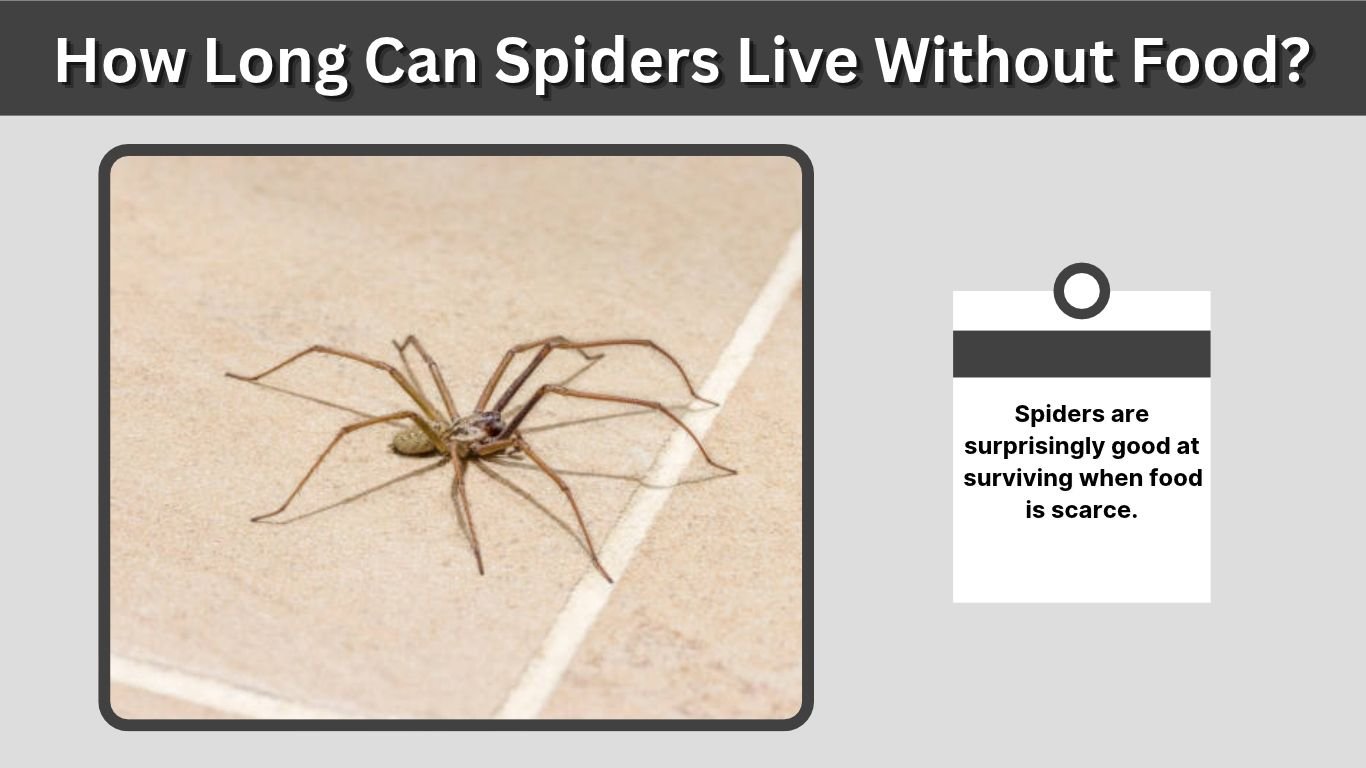
Spiders are surprisingly good at surviving when food is scarce. Unlike many animals that need to eat regularly, some spiders can remain alive for weeks or even several months without catching prey. Their low metabolism, stored energy, and ability to reduce activity help them survive long periods of starvation. However, survival time varies depending on the species, age, body size, temperature, and access to water. Understanding these factors explains why a spider can sometimes remain in a quiet corner of a house for months.
How Long Can Spiders Live Without Food?
Most spiders can survive for several weeks or months without eating, although some species can endure much longer periods. Their bodies are adapted to unpredictable food supplies, allowing them to conserve energy when insects and other prey are unavailable.
Research published in the journal Ecology examined starvation in two spider species. Adult wolf spiders (Lycosa lenta) survived an average of 208 days without food, while Filistata hibernalis survived an average of 276 days under starvation conditions.
The University of Florida’s IFAS Extension also reports that some spiders have been kept alive for more than two years without feeding. However, these exceptional observations should not be treated as the normal survival time for every spider.
In general, spiders with low metabolic rates and suitable environmental conditions can survive longer without food than species that remain highly active.
How Long Can Spiders Live Without Food or Water?
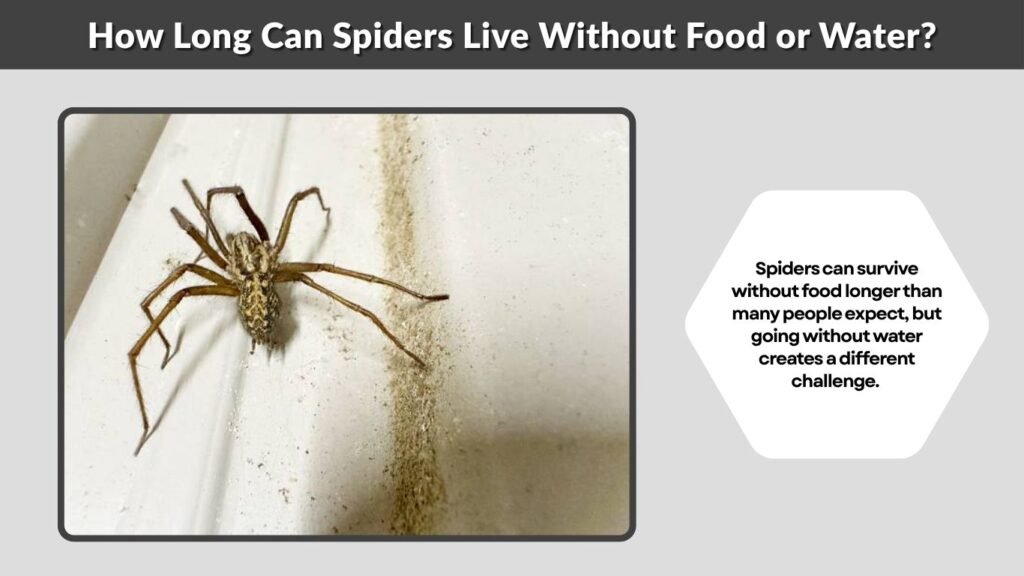
Spiders can survive without food longer than many people expect, but going without water creates a different challenge. They obtain much of their moisture from prey, and some species also drink droplets from their surroundings.
Water availability is important because spiders need moisture for normal body functions, digestion, and other biological processes.
Can Spiders Survive Without Water?
Yes, spiders can sometimes tolerate periods without direct access to water, but their survival depends on environmental humidity, species, and moisture obtained from food.
Research on orb-weaving spiders in the genus Argiope found that these spiders actively drank water and that drinking helped maintain their water balance independently of their nutritional intake.
Without sufficient moisture, spiders can become dehydrated even when food is available. Therefore, surviving without food and surviving without water should not be considered the same thing.
What Affects Survival Without Food and Water?
Several environmental and biological factors influence how long a spider can survive:
- Humidity: Moist environments can help reduce water loss and support survival.
- Temperature: Cooler conditions can reduce metabolic activity, while high temperatures may increase energy use and water loss.
- Body size: Larger spiders may have greater energy reserves, although species differences also matter.
- Food availability: Spiders that recently consumed a large meal may have more stored energy than those that were already hungry.
- Age: Young spiders and adults may respond differently to food shortages.
These factors explain why two spiders living in similar environments may survive for different lengths of time.
How Long Can Different Types of Spiders Live Without Food?
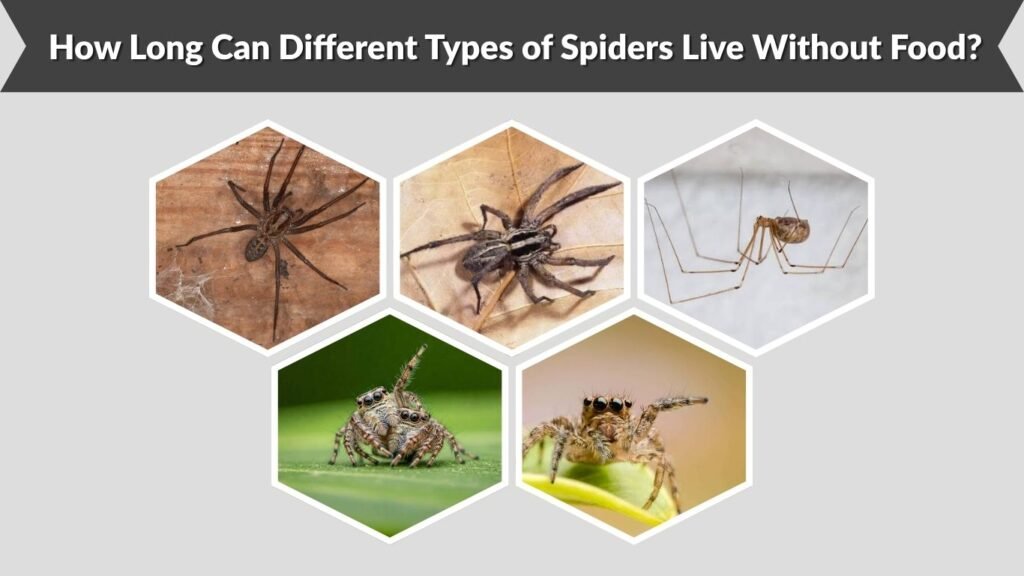
Different spider species have different feeding habits, metabolic rates, and energy requirements. Some are adapted to waiting for prey, while others actively hunt insects. Their starvation tolerance can therefore vary considerably.
House Spiders
House spiders can survive extended periods without food because indoor environments sometimes provide suitable shelter and relatively stable temperatures. They may also catch occasional flies, mosquitoes, and other small insects.
There is no reliable single starvation timeframe that applies to every house spider species. Some spiders have demonstrated exceptionally long survival without feeding, but this does not mean every spider found indoors can survive for years without food.
Wolf Spiders
Wolf spiders are active hunters that search for prey rather than relying on webs to capture insects. Despite their active hunting behavior, some species can tolerate long periods without eating.
A study of Lycosa lenta found that adult individuals survived an average of 208 days under starvation conditions. This demonstrates that certain wolf spiders can conserve energy effectively when prey becomes scarce.
Cellar Spiders
Cellar spiders are commonly found in basements, garages, corners, and other sheltered locations. They build loose webs and capture small insects that become trapped in their silk.
Their ability to remain relatively inactive between meals helps them cope with inconsistent food availability. However, a precise starvation duration has not been established for all cellar spider species.
Huntsman Spiders
Huntsman spiders are large, fast-moving hunters that do not depend on traditional capture webs. Despite their active hunting behavior, some huntsman species have impressive starvation tolerance.
A 2025 study of Heteropoda venatoria reported that this species could survive for more than four months without food when humidity was maintained. This finding highlights the importance of environmental conditions in spider survival.
Jumping Spiders
Jumping spiders actively search for prey and use their excellent vision to locate insects. They often hunt small flies, mosquitoes, and other arthropods.
Because they are active hunters, their energy requirements and starvation tolerance may differ from those of web-building spiders. However, there is insufficient evidence to assign one reliable food-free survival period to all jumping spider species.
Baby Spiders
Baby spiders, also called spiderlings, generally have different nutritional requirements from adults. They need energy for growth, development, and molting.
A prolonged shortage of food can interfere with their development and reduce their chances of survival. Their ability to withstand starvation depends on their species, developmental stage, and available energy reserves.
Why Can Spiders Survive So Long Without Food?
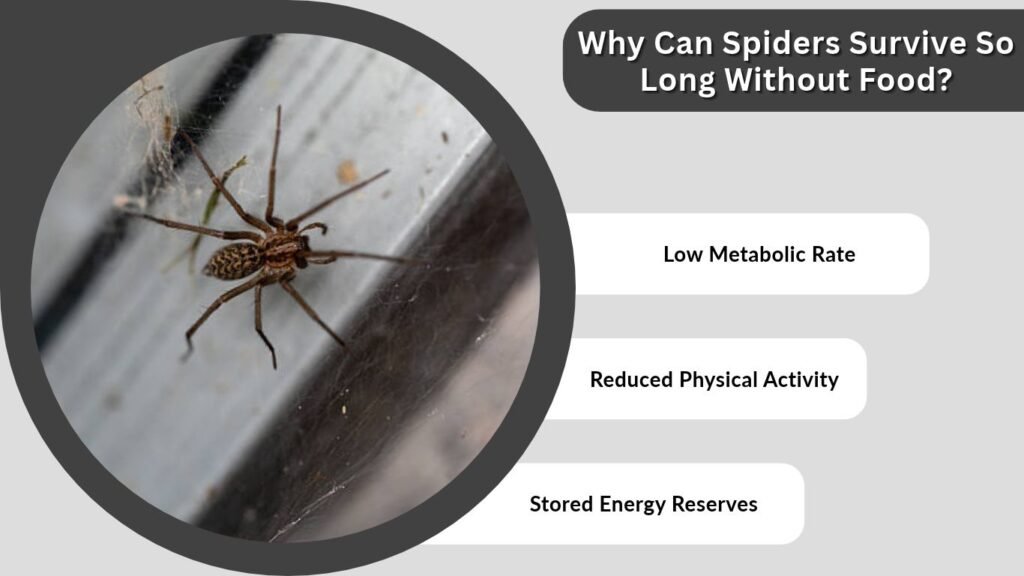
Spiders have several biological adaptations that help them survive when prey is unavailable. Their bodies can conserve energy, reduce unnecessary movement, and use stored nutrients during periods of starvation.
Low Metabolic Rate
One important reason spiders survive without food is their relatively low metabolic rate. They generally use less energy at rest than many animals of comparable size.
When food becomes unavailable, certain spiders can further reduce their metabolic activity. This allows them to use stored energy more slowly and extend their survival.
Reduced Physical Activity
Spiders do not need to move constantly to survive. Web-building species can remain in one location for extended periods while waiting for prey.
When food is scarce, many spiders reduce unnecessary movement and conserve energy. This behavior helps them avoid spending valuable resources when hunting opportunities are limited.
Stored Energy Reserves
Spiders store nutrients and energy from previous meals. These reserves help support essential body functions when they cannot find insects to eat.
A spider that has recently consumed a large meal may have more available energy than one that has experienced repeated food shortages.
Adaptation to Unpredictable Food Supplies
Insects and other small prey are not always available. Spiders have evolved different hunting and feeding strategies that allow them to cope with unpredictable food supplies.
Some capture insects using webs, while others actively search for prey. Their ability to survive between successful meals is an important part of their ecological adaptation.
What Happens When a Spider Goes Without Food for Too Long?
Although spiders can survive extended periods without eating, starvation eventually affects their bodies and behavior. As stored energy becomes depleted, they may become weaker and less active.
Their abdomen may gradually shrink, and normal activities such as walking, hunting, and web-building can become less effective. A spider may also struggle to reproduce or complete its development if it experiences prolonged food shortages.
Young spiders are particularly vulnerable because they need sufficient nutrients to grow and molt successfully. Eventually, severe starvation can lead to death.
The time required for these changes varies considerably between species. Environmental conditions and access to moisture also influence how quickly a starving spider deteriorates.
FAQs
1. How long can spiders live without eating?
Many spiders can survive several weeks or months without eating. Some species can tolerate much longer periods. Research has documented average starvation survival of 208 days in one wolf spider species, while certain other spiders have survived for over a year under particular conditions.
2. How long can house spiders live without food?
House spiders can survive extended periods without food, but the exact duration depends on their species, age, temperature, and energy reserves. Some spiders have survived more than two years without feeding in captivity, although this is an exceptional observation rather than a typical house spider survival estimate.
3. Can spiders die from starvation?
Yes, spiders eventually die if they cannot obtain enough nutrients. As their stored energy decreases, they become weaker, less active, and less capable of hunting or performing essential activities. Prolonged starvation can ultimately cause death.
4. Can spiders survive longer without food in cold weather?
Some spiders can conserve energy more effectively in cooler conditions because their metabolic activity decreases. However, extreme cold can be dangerous, and survival depends on the species and its ability to tolerate low temperatures.
5. Do spiders need water every day?
No, spiders do not necessarily need to drink water every day. Some obtain moisture from their prey, while others drink droplets from their surroundings. Their water requirements vary depending on species, temperature, humidity, and feeding conditions.
