
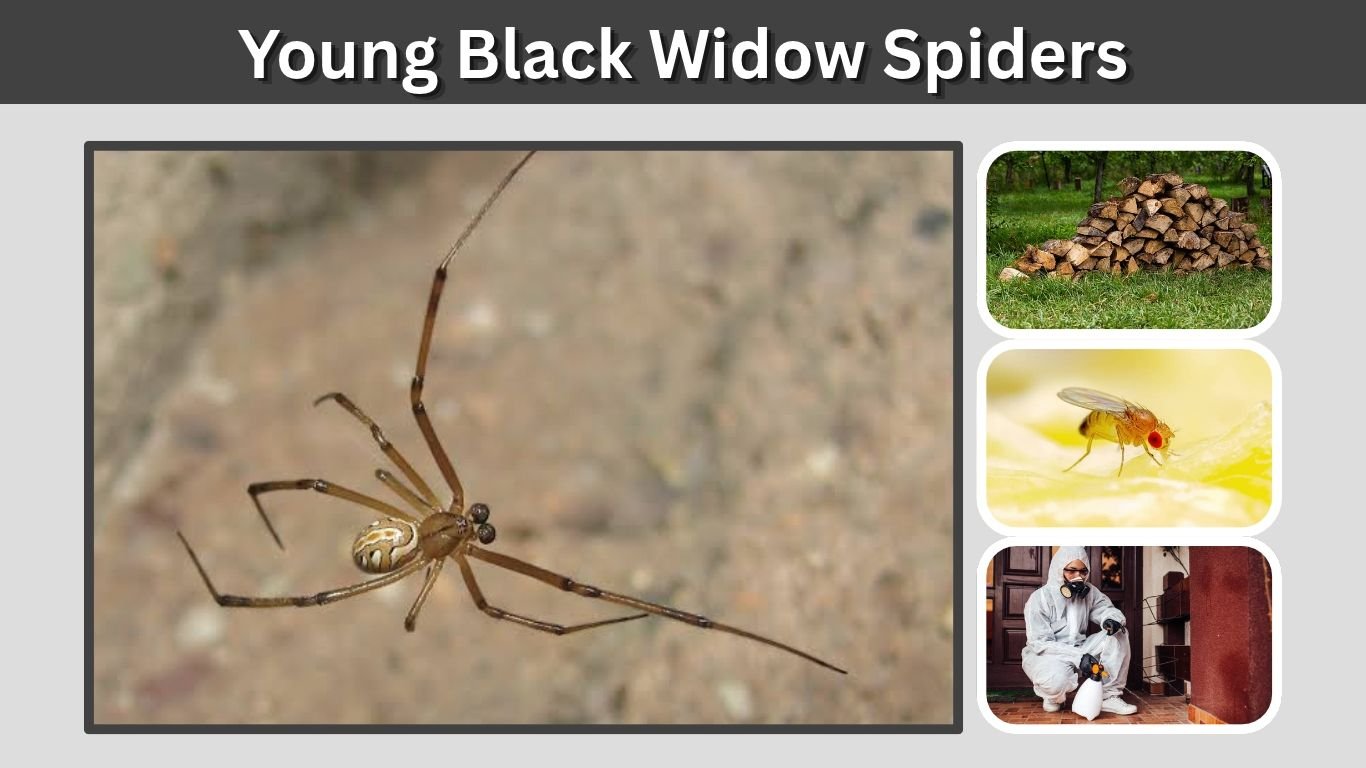
Young black widow spiders look surprisingly different from their adult counterparts. Instead of having completely black bodies with bright red hourglass markings, newly hatched spiderlings are often pale, with white, brown, or orange patterns developing as they grow. These tiny spiders emerge from protective egg sacs and gradually develop into recognizable adults through several molts. Understanding what young black widow spiders look like, when they hatch, where they live, and whether they can bite helps homeowners identify them and avoid unnecessary encounters with venomous spiders.
What Do Young Black Widow Spiders Look Like?
Young black widow spiders, also called spiderlings, have lighter bodies and more colorful markings than mature females. Their appearance changes significantly as they develop.
Newly emerged spiderlings are often pale white or cream with darker spots. As they grow, their bodies develop brown, orange, white, and black patterns.
Physical Characteristics of Young Black Widows
- Body Color: Newly emerged spiderlings are usually pale, gradually developing darker coloration.
- Abdomen: Their rounded abdomens may display white stripes, spots, or orange markings.
- Legs: Young spiders often have light brown or tan legs with darker bands.
- Body Size: Newly emerged spiderlings measure only a few millimeters.
- Hourglass Marking: The underside marking may initially appear pale before becoming orange or red.
- Body Shape: Young black widows have relatively small bodies with eight slender legs.
- Color Changes: Juvenile females generally become darker after successive molts.
Adult females eventually develop the familiar glossy black appearance, while mature males often retain lighter markings.
When Do Young Black Widow Spiders Hatch?
Black widow spiders reproduce by laying eggs inside protective silk sacs attached to their webs.
Female black widows may produce several egg sacs during favorable conditions. Each sac can contain dozens to several hundred eggs, depending on the species.
Black Widow Spider Egg Development
The eggs usually hatch within approximately two to four weeks, although temperature and species influence development.
Newly hatched spiders initially remain inside the egg sac. After further development and molting, they emerge through an opening in the protective silk.
Warm temperatures can accelerate development, while cooler conditions generally slow the process.
The female often remains close to her egg sacs, providing protection until the spiderlings emerge.
Life Cycle of Young Black Widow Spiders
Young black widow spiders undergo several developmental stages before becoming adults. Unlike insects that experience complete metamorphosis, spiders grow through repeated shedding of their outer skeletons.
This process is called molting.
Stages of Black Widow Spider Development
- Egg Stage: Eggs develop inside a protective silk sac attached to the female’s web.
- Hatching Stage: Tiny spiderlings hatch and initially remain inside the egg sac.
- Early Spiderling Stage: Young spiders emerge and may remain clustered near the maternal web.
- Juvenile Stage: Spiderlings establish small webs, capture prey, and undergo additional molts.
- Subadult Stage: Their bodies increase in size, and sexual differences become more noticeable.
- Adult Stage: Mature females develop their characteristic dark appearance, while males remain smaller.
Depending on the species, temperature, and food availability, black widows may reach maturity within several months.
Where Do Young Black Widow Spiders Live?
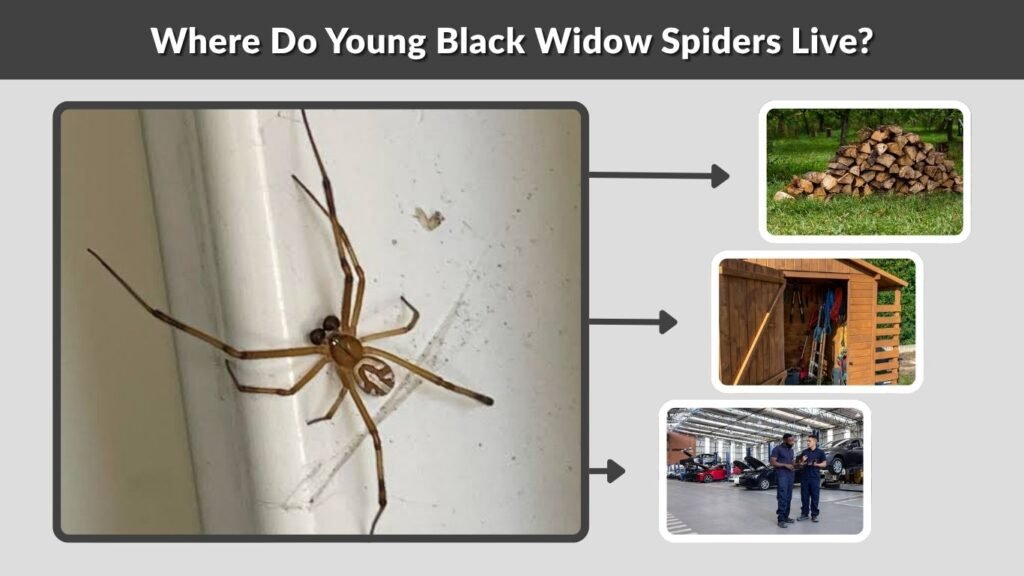
Young black widow spiders initially remain near the egg sac and their mother’s web. However, they eventually disperse to find suitable habitats.
Their preferred environments include sheltered locations with available insects and minimal disturbance.
Common Young Black Widow Habitats
- Woodpiles: Small gaps provide sheltered spaces for establishing webs.
- Rock Crevices: Protected openings offer hiding places.
- Garages: Undisturbed corners provide suitable conditions.
- Garden Areas: Flowerpots and ground-level debris attract insects.
- Storage Sheds: Protected spaces allow young spiders to construct webs.
- Building Foundations: Small cracks provide sheltered retreats.
How Do Young Black Widows Spread?
Some young black widows disperse through a behavior called ballooning.
They release fine silk strands that catch moving air, allowing wind currents to carry them away from their original location.
Once they reach suitable habitats, surviving spiderlings begin constructing webs and capturing insects.
What Do Young Black Widow Spiders Eat?
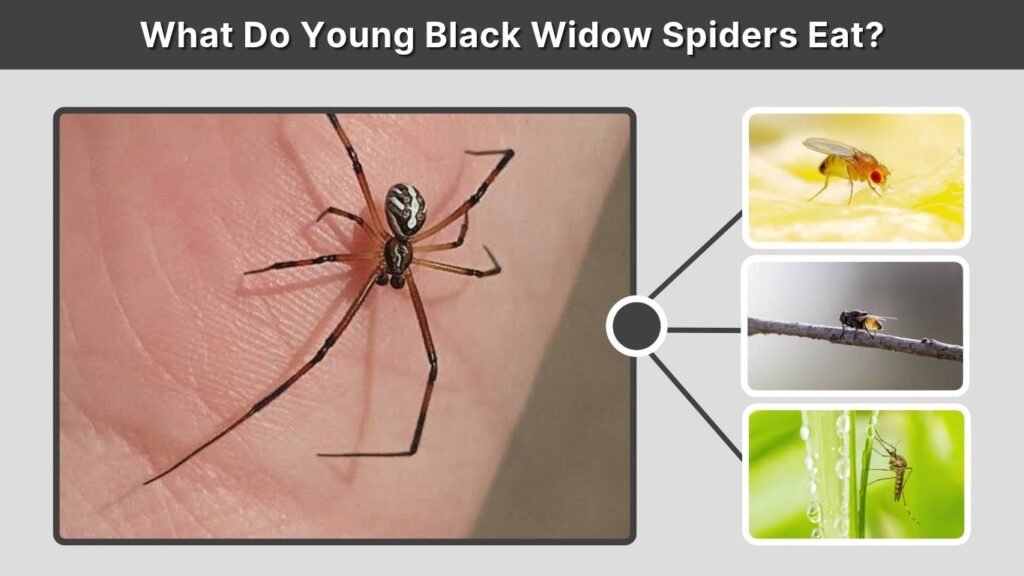
Young black widow spiders are carnivorous predators. After using their remaining nutritional reserves from the egg stage, they begin capturing small insects and other arthropods.
Their diet changes as they grow and become capable of handling larger prey.
Common Food Sources
Young black widows may feed on fruit flies, tiny gnats, small mosquitoes, and other insects caught in their webs.
Larger juveniles can capture small beetles, flies, and other appropriately sized arthropods.
Like adults, young black widows use silk and venom to immobilize prey before consuming it.
Do Young Black Widow Spiders Bite?
Young black widow spiders possess venom, but newly emerged spiderlings are not considered a significant danger to humans.
Their tiny fangs are generally too small to penetrate human skin effectively. Adult female black widows are responsible for the medically significant bites associated with these spiders.
Are Juvenile Black Widows Dangerous?
As juvenile females grow, their fangs become larger and their ability to deliver venom develops. Therefore, older juveniles should not be handled.
Black widow spiders generally avoid human contact and are more likely to bite when trapped or pressed against the skin.
A bite from a larger black widow can cause pain, muscle cramps, sweating, nausea, and other symptoms.
Anyone experiencing a suspected black widow bite should seek medical advice promptly, especially if significant symptoms develop.
Do Black Widow Spiders Eat Their Young?
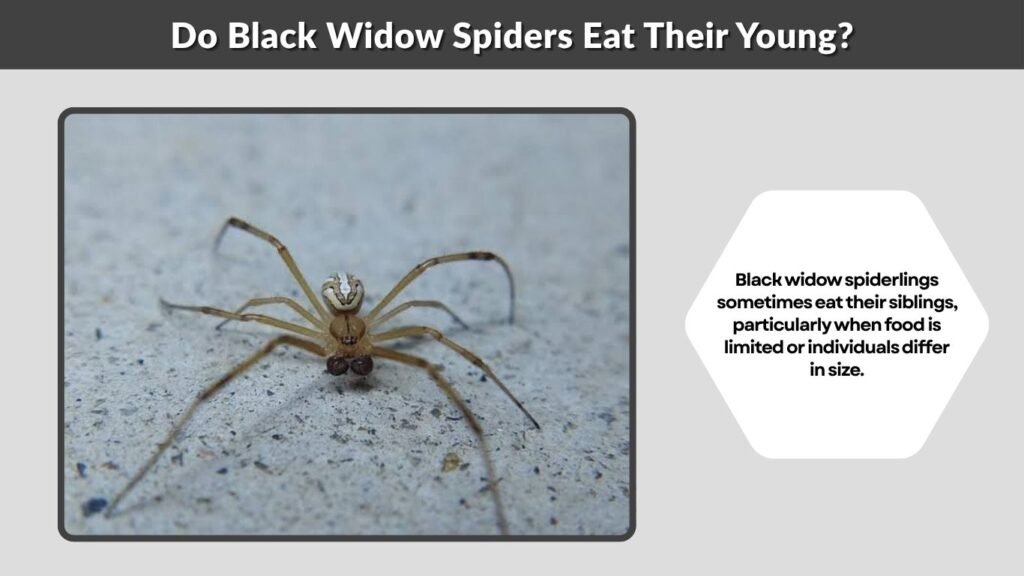
Black widow spiderlings sometimes eat their siblings, particularly when food is limited or individuals differ in size.
This behavior is known as cannibalism and can occur while young spiders remain together.
However, the idea that female black widows routinely eat all their offspring is misleading.
Female black widows often guard their egg sacs and remain nearby during early development.
Cannibalism among spiderlings, predation by other animals, and environmental conditions contribute to the relatively small percentage that survive to adulthood.
Do Black Widow Spiders Carry Their Young on Their Backs?
Black widow spiders do not normally carry their young on their backs.
This behavior is characteristic of wolf spiders, whose spiderlings climb onto their mother’s abdomen and remain there temporarily after hatching.
Black widow females instead protect their offspring by keeping egg sacs within their webs.
After emerging, spiderlings may remain nearby briefly before dispersing.
The young eventually establish independent webs and begin hunting small insects.
How to Handle Young Black Widow Spiders Safely
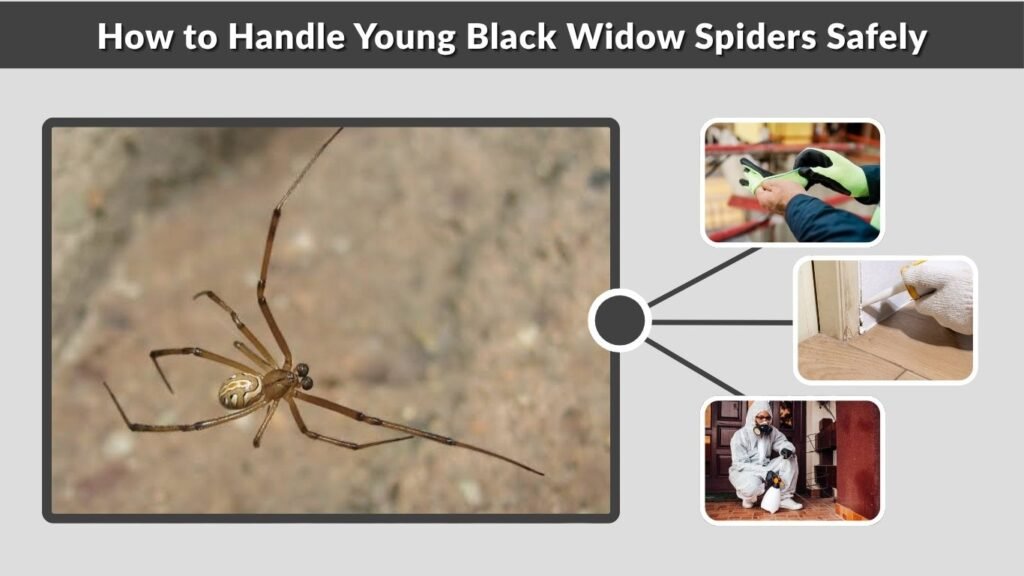
Finding young black widow spiders around a house does not necessarily mean a large infestation exists.
However, the presence of multiple spiderlings may indicate that an egg sac recently hatched nearby.
Safety and Prevention Tips
- Avoid Touching Spiderlings: Do not attempt to identify them by handling them directly.
- Inspect Egg Sacs: Check sheltered areas carefully without disturbing suspected widow spiders.
- Reduce Clutter: Remove unnecessary materials from garages, sheds, and outdoor storage spaces.
- Wear Gloves: Protect your hands when moving firewood or garden equipment.
- Seal Openings: Repair gaps around windows, doors, and foundations.
- Seek Professional Help: Consider pest control assistance when black widows repeatedly appear in occupied spaces.
Keeping outdoor storage areas organized and reducing insect populations can make homes less attractive to developing black widows.
FAQs
1. Do Young Black Widow Spiders Have Red Hourglass Markings?
Young black widow spiders may have pale, orange, or developing hourglass markings. Newly emerged spiderlings often have mostly white abdomens with dark spots. The familiar red hourglass becomes more distinct as juvenile females grow and molt.
2. How Many Young Do Black Widow Spiders Have?
Female black widow spiders can produce egg sacs containing dozens to several hundred eggs. The number varies by species and environmental conditions. A single female may produce multiple sacs, although many offspring do not survive to adulthood.
3. How Long Do Young Black Widow Spiders Take to Grow?
Young black widow spiders generally require several months to reach adulthood. Their growth depends on species, temperature, food availability, and sex. Males often mature sooner than females because they typically undergo fewer molts.
4. Can Young Black Widow Spiders Survive Without Their Mother?
Yes, young black widow spiders can survive independently after they emerge and disperse. They establish small webs, capture insects, and continue growing. Although females protect egg sacs, spiderlings do not depend on prolonged parental feeding or care.
5. Do Young Black Widow Spiders Live Together?
Young black widow spiders may temporarily remain clustered near their egg sac after emerging. However, they eventually disperse and establish separate webs. They are generally solitary as they grow, and cannibalism may occur when spiderlings remain together.
