
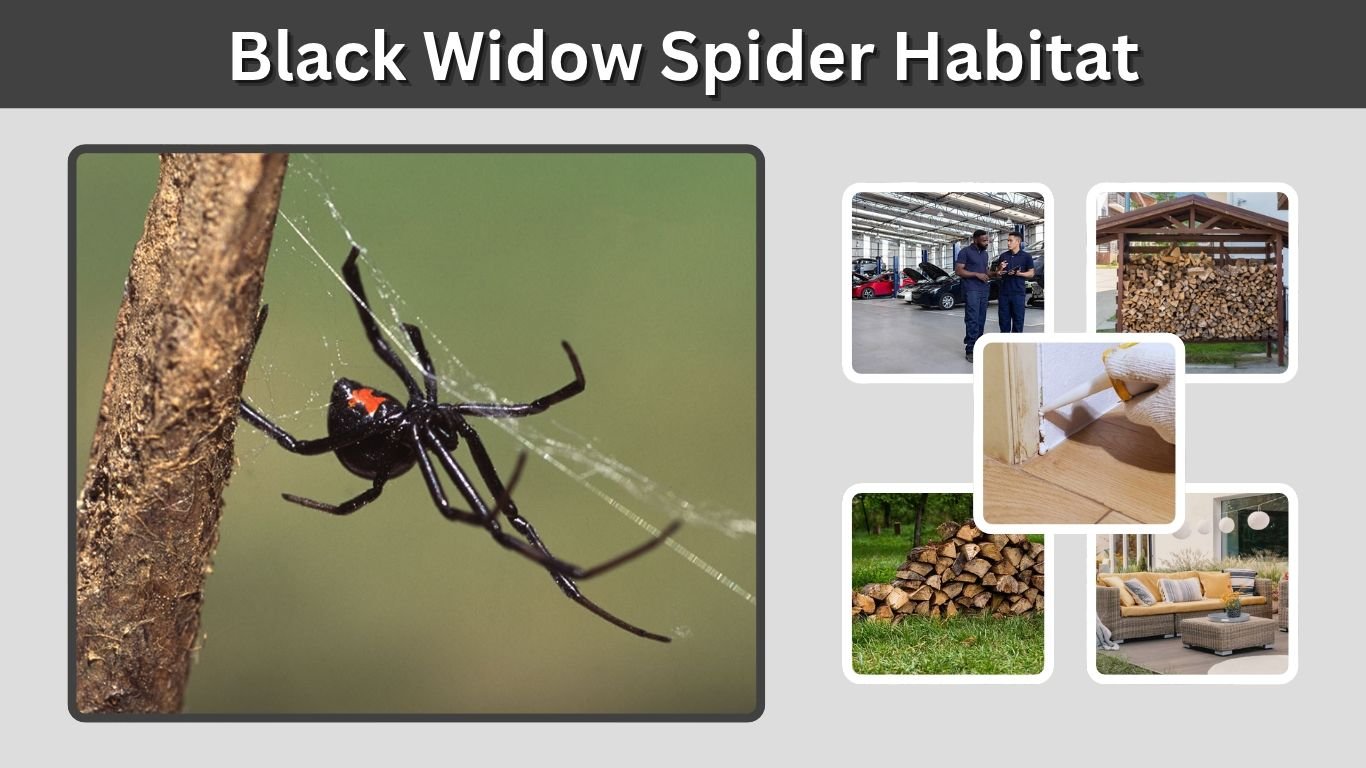
Black widow spiders prefer sheltered habitats where they can build tangled webs, capture insects, and remain hidden during the day. Their natural homes include rock crevices, abandoned animal burrows, hollow logs, and dry spaces beneath debris. They also settle around garages, sheds, gardens, and building foundations when suitable hiding places are available. Although these venomous spiders are often associated with hot regions, some species tolerate cooler climates. Learning about black widow spider habitats helps you recognize their preferred conditions and avoid accidentally disturbing them.
What Is the Natural Habitat of Black Widow Spiders?
The natural habitat of black widow spiders includes forests, deserts, grasslands, and rocky environments. These spiders prefer secluded places that provide protection from predators, direct sunlight, and environmental disturbances.
Black widows usually establish their webs close to the ground. They often select existing holes or narrow spaces where they can remain hidden while waiting for insects.
Common Natural Habitats
- Rock Crevices: Small openings between rocks provide secure retreats and stable web-building locations.
- Hollow Logs: Decaying wood and hollow tree stumps offer protected spaces with access to insects.
- Animal Burrows: Abandoned rodent burrows provide dark, sheltered environments.
- Forests: Fallen branches, tree stumps, and ground debris create suitable hiding places.
- Deserts: Shaded rocks and sheltered ground cavities protect spiders from intense sunlight.
- Grasslands: Ground-level vegetation and small cavities provide web-building opportunities.
Black widows generally remain near established webs when food and shelter are sufficient.
What Environmental Conditions Do Black Widows Prefer?
Black widow spiders thrive in environments that combine suitable temperatures, shelter, and reliable food sources. They are particularly associated with dark, relatively dry, undisturbed locations.
However, habitat preferences vary among species and geographic regions.
Temperature and Humidity
Many black widow species tolerate hot conditions, especially western black widows living in desert environments. Their sheltered retreats help reduce exposure to extreme temperatures.
Although they favor protected locations, black widows do not require completely dry environments. They can also inhabit relatively humid regions, including forests and gardens.
Shelter and Food Availability
Black widows select habitats where they can build webs without frequent disturbance. Locations with flying or crawling insects provide dependable feeding opportunities.
Crickets, beetles, flies, and other small arthropods commonly become trapped in their sticky webs.
Where Do Black Widow Spiders Live Around Homes?
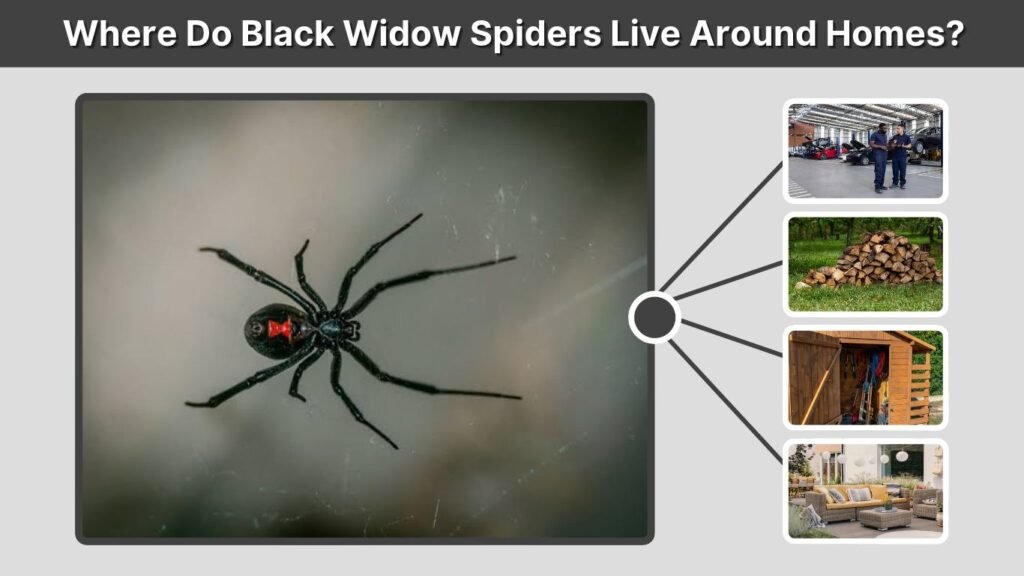
Residential properties can provide excellent black widow habitats. Outdoor structures, stored materials, and building foundations create protected spaces similar to natural rock crevices and hollow logs.
Black widows typically remain outside, although they sometimes establish webs inside garages, basements, and storage buildings.
Common Hiding Places Around Houses
- Garages: Dark corners, storage boxes, and spaces near doors provide suitable retreats.
- Woodpiles: Gaps between stacked firewood offer shelter and insect activity.
- Garden Areas: Flowerpots, retaining walls, and garden equipment create hiding places.
- Sheds: Rarely disturbed corners support web construction.
- Crawl Spaces: Protected spaces beneath houses provide stable shelter.
- Outdoor Furniture: Undersides of benches, tables, and chairs can support webs.
- Utility Boxes: Water meter and irrigation boxes provide enclosed spaces.
Homeowners should inspect these locations carefully before handling stored objects.
Black Widow Spider Habitats in California and Georgia
Black widow spider habitats differ depending on regional climate, vegetation, and available shelter. Southern California and Georgia provide contrasting environments where these spiders can thrive.
Black Widow Spider Habitat in Southern California
Southern California supports western black widows (Latrodectus hesperus). These spiders inhabit deserts, rocky hillsides, residential neighborhoods, and sheltered outdoor structures.
They commonly establish webs beneath rocks, inside irrigation boxes, around building foundations, and in garages.
Western black widows can survive extremely hot, dry environments. They also occur in some mountainous locations that experience winter snow.
Black Widow Spider Habitat in Georgia
Georgia provides suitable conditions for southern black widows (Latrodectus mactans), which occur throughout the state.
These spiders inhabit wooded areas, woodpiles, rock borders, garden structures, and cracks around building foundations.
Georgia’s relatively warm climate and abundant insects support black widow populations in natural and residential environments.
How Do Black Widow Spiders Build Webs in Their Habitat?
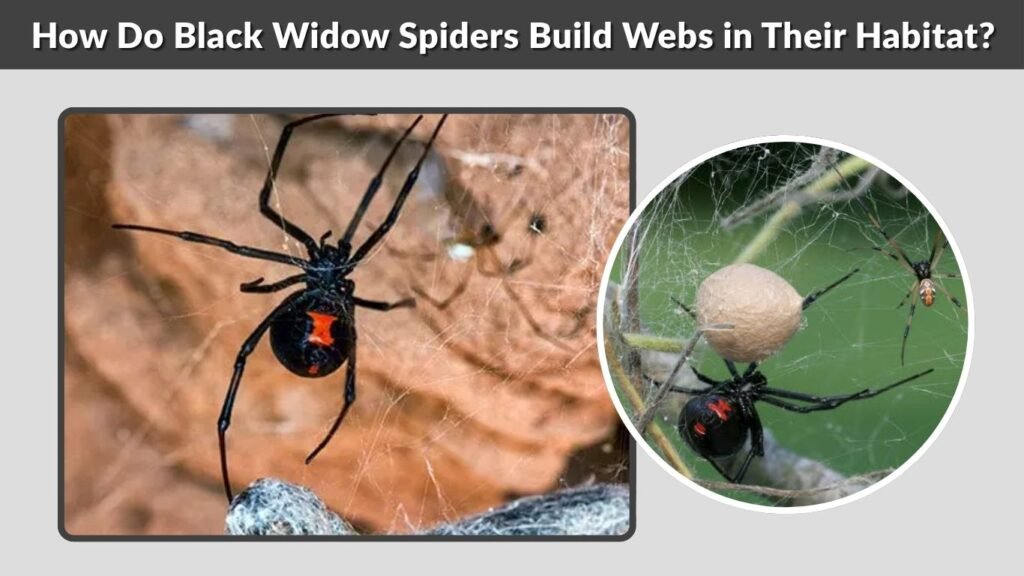
Black widow spiders construct irregular, tangled webs rather than the circular webs commonly associated with garden spiders.
Their silk is strong, and webs frequently extend from a sheltered retreat into nearby open space where insects may pass.
Why Web Location Matters
Female black widows usually remain near their webs rather than actively searching across large areas for prey.
They often hide during the day and emerge onto their webs at night. Vibrations from trapped insects help them detect potential food.
The female may also suspend egg sacs within her web, making a protected location important for reproduction.
How Does Black Widow Habitat Change With the Seasons?
Seasonal temperatures influence black widow activity, development, and shelter selection. However, these spiders do not necessarily abandon their habitats when weather conditions change.
Summer Habitat
During warmer months, black widows often become more active. They continue feeding, maintaining webs, and reproducing in suitable sheltered areas.
Shaded retreats beneath rocks, logs, and outdoor structures help protect them from direct sunlight and extreme heat.
Winter Habitat
In colder regions, black widows may survive winter beneath stones, inside woodpiles, or within other protected cavities.
Their activity and development slow considerably during cold weather. Some individuals also occupy sheltered buildings where temperatures are less extreme.
Winter survival varies according to species, developmental stage, and local climate.
How to Identify a Black Widow Spider Habitat
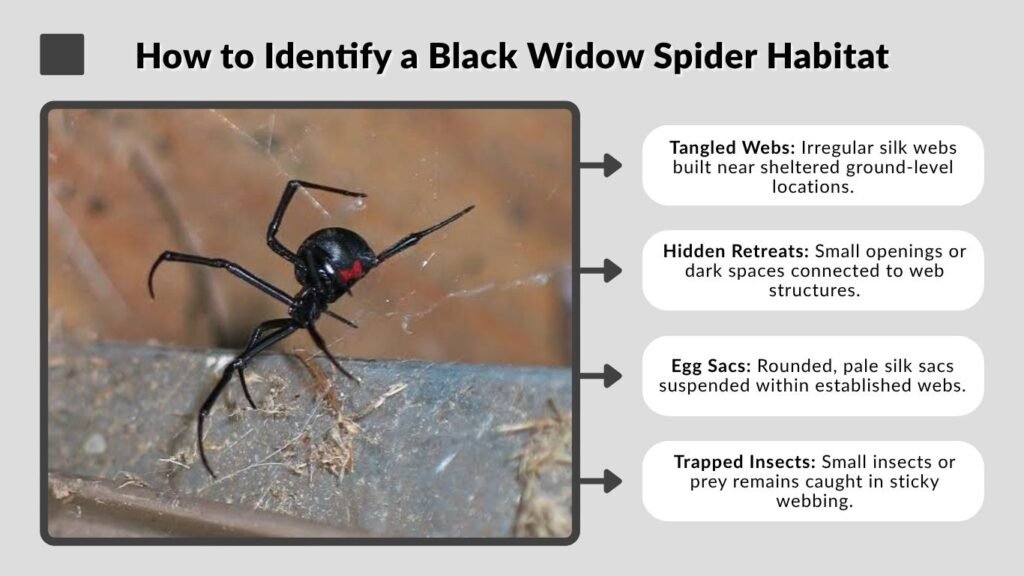
Recognizing black widow habitat characteristics can help homeowners identify areas where spiders may be present.
Several signs indicate that a sheltered location may support an established black widow web.
Signs of Black Widow Activity
- Tangled Webs: Irregular silk webs built near sheltered ground-level locations.
- Hidden Retreats: Small openings or dark spaces connected to web structures.
- Egg Sacs: Rounded, pale silk sacs suspended within established webs.
- Adult Females: Glossy black spiders, often displaying a red hourglass marking underneath the abdomen.
- Trapped Insects: Small insects or prey remains caught in sticky webbing.
Other spider species create similar webs, so these signs alone cannot confirm black widow identification.
How to Make Your Property Less Suitable for Black Widows
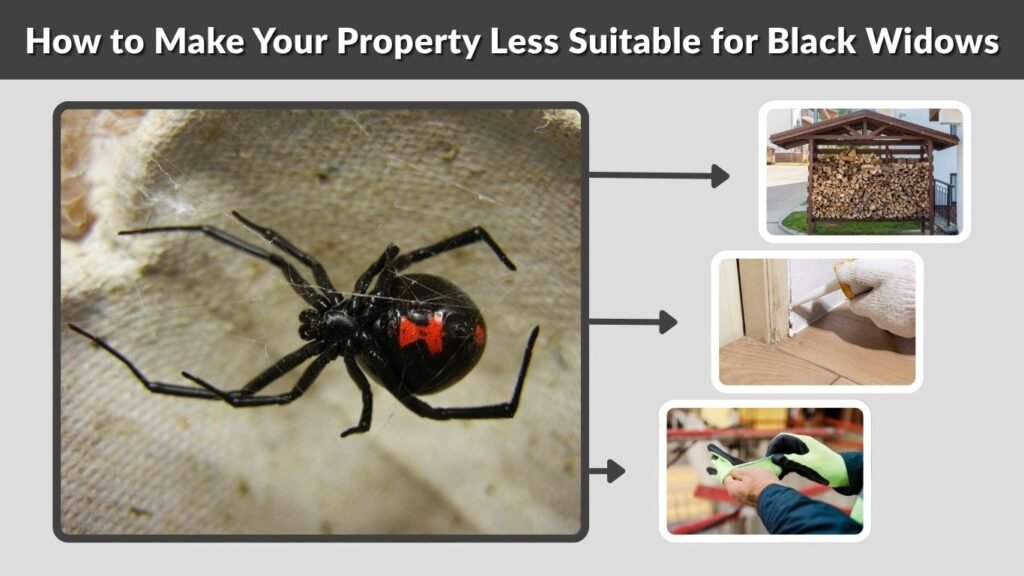
Reducing available shelter and insect activity can make residential environments less attractive to black widow spiders.
Regular maintenance is particularly important around garages, gardens, sheds, and outdoor storage areas.
Black Widow Habitat Prevention Tips
- Remove unnecessary clutter from garages and sheds.
- Store firewood away from building walls.
- Seal cracks around foundations, windows, and doors.
- Inspect outdoor furniture and gardening equipment.
- Keep storage areas organized and regularly cleaned.
- Reduce insects attracted to outdoor lighting.
- Wear gloves when handling objects in suspected spider habitats.
Avoid reaching blindly into dark cavities. Black widows usually avoid contact with humans, but they may bite when accidentally pressed against the skin.
If a suspected black widow bite occurs, seek medical advice promptly, especially if significant pain, muscle cramps, sweating, or other widespread symptoms develop.
FAQs
1. What Is a Black Widow Spider’s Preferred Habitat?
Black widow spiders prefer dark, sheltered, relatively undisturbed habitats with abundant insects. Common locations include rock crevices, woodpiles, hollow logs, animal burrows, garages, and outdoor storage areas. These protected spaces allow spiders to build webs and remain concealed during daylight.
2. Do Black Widow Spiders Live in Forests?
Yes, black widow spiders inhabit some forest environments. They usually establish webs beneath fallen logs, inside hollow tree stumps, or among rocks and ground debris. Their presence depends on the species, climate, and availability of suitable shelter.
3. Do Black Widow Spiders Prefer Wet or Dry Habitats?
Black widow spiders generally favor sheltered locations that are relatively dry. However, they can inhabit both arid and humid regions. They often avoid exposed environments, selecting protected areas where temperature and moisture conditions are more stable.
4. Can Black Widow Spiders Live Inside Houses?
Yes, black widow spiders occasionally live inside houses, especially in basements, garages, crawl spaces, and storage rooms. They prefer quiet locations with limited disturbance. Frequently used living spaces are generally less suitable because they offer fewer protected retreats.
5. Do Black Widow Spiders Live in the Desert?
Yes, western black widow spiders commonly inhabit desert environments. They survive by occupying shaded rock crevices, abandoned animal burrows, and protected spaces around buildings. These shelters reduce exposure to extreme heat while providing locations for web construction.
