
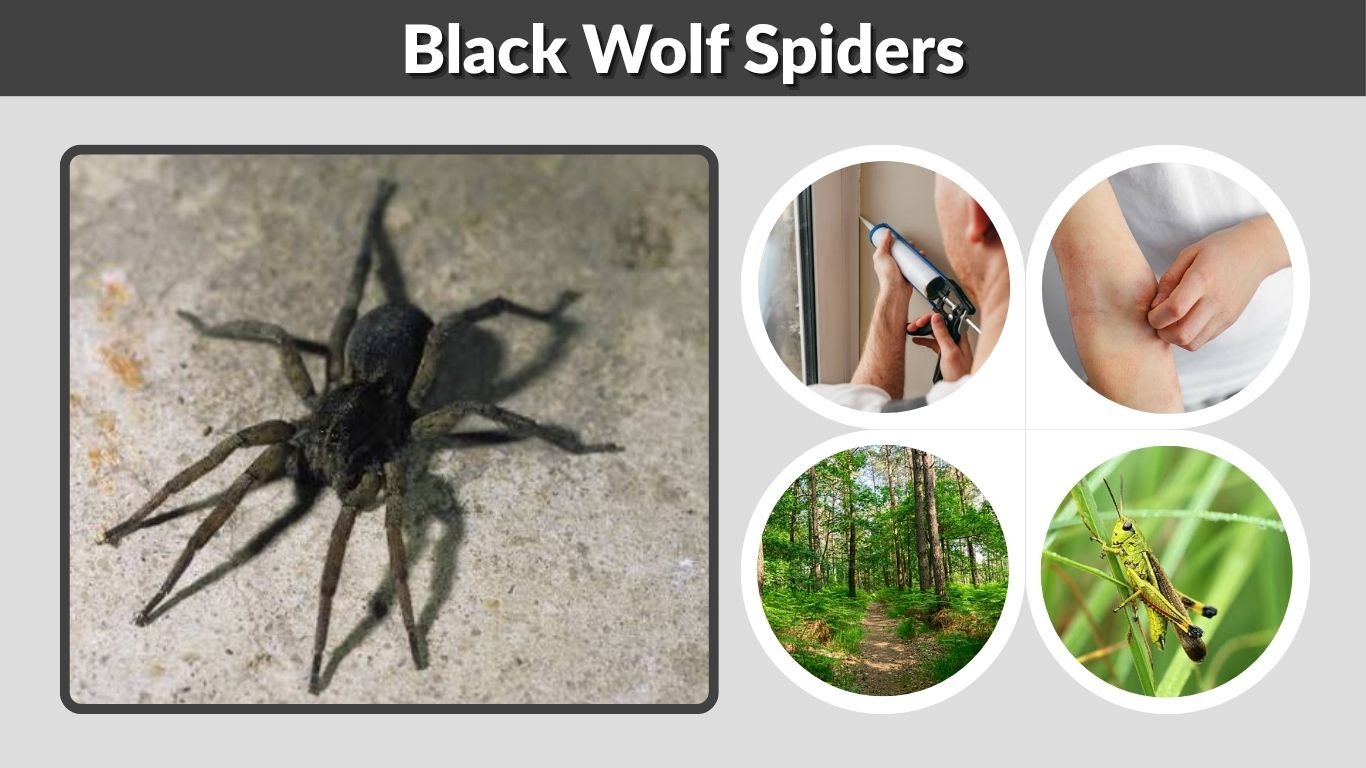
Black wolf spiders are fascinating ground-dwelling hunters recognized for their dark bodies, hairy legs, and remarkable speed. Although most wolf spiders are brown or gray, some species appear nearly black, making them easy to confuse with other dark-colored spiders. These spiders commonly inhabit gardens, forests, grasslands, and occasionally homes. Many people wonder whether black wolf spiders are dangerous, how to identify them, and whether they eat black widows. Understanding their physical characteristics, hunting behavior, habitats, and venom helps distinguish these beneficial predators from potentially dangerous spider species.
What Are Black Wolf Spiders?
Black wolf spiders are dark-colored members of the spider family Lycosidae. They are not a single species but rather wolf spiders with black, charcoal-gray, or very dark brown coloration. Their appearance varies depending on species, age, and environmental conditions.
Unlike web-building spiders, wolf spiders actively hunt insects and other small creatures. Their excellent eyesight and powerful legs allow them to locate and capture prey.
Are Wolf Spiders Black or Brown?
Most wolf spiders are brown, gray, or tan, but some appear nearly black. Their bodies may display lighter stripes, spots, or subtle patterns that become visible under bright lighting.
Dark coloration provides camouflage among rocks, soil, bark, and leaf litter. However, identifying wolf spiders requires examining their body structure and eye arrangement rather than relying entirely on color.
How to Identify Black Wolf Spiders
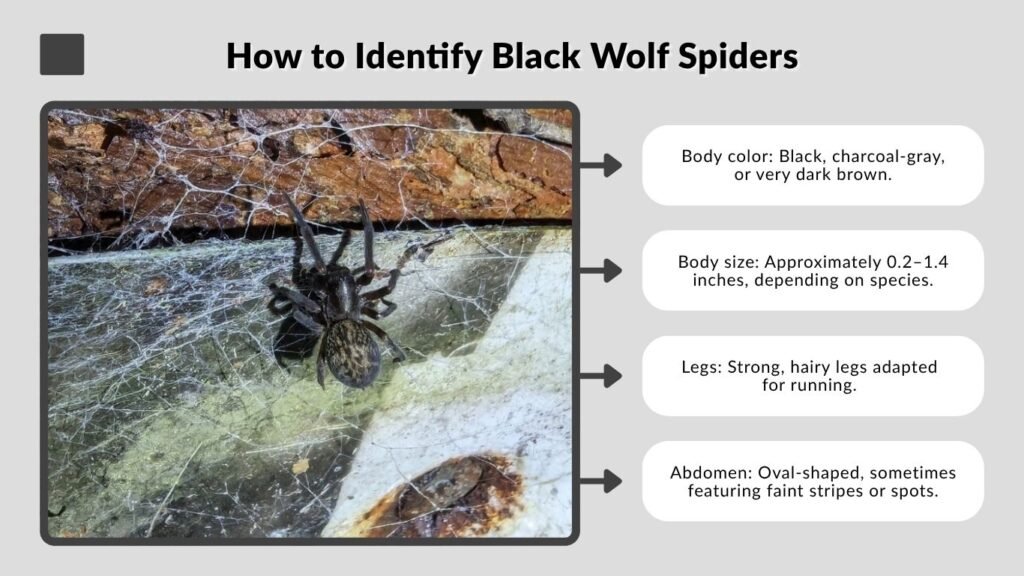
Black wolf spiders have robust bodies, hairy legs, and distinctive eye arrangements. Their appearance can resemble fishing spiders, ground spiders, or other dark-colored arachnids.
Physical Characteristics of Black Wolf Spiders
- Body color: Black, charcoal-gray, or very dark brown.
- Body size: Approximately 0.2–1.4 inches, depending on species.
- Legs: Strong, hairy legs adapted for running.
- Eyes: Eight eyes arranged in three rows, including two large forward-facing eyes.
- Abdomen: Oval-shaped, sometimes featuring faint stripes or spots.
- Movement: Fast, ground-level hunting rather than web-based prey capture.
Female wolf spiders also display a distinctive behavior: carrying their egg sacs attached to their spinnerets. After hatching, their spiderlings ride on the mother’s back.
How Big Do Black Wolf Spiders Get?
Black wolf spider size varies significantly between species. Smaller individuals may measure less than half an inch in body length, while larger species can exceed one inch.
Their long legs make them appear considerably larger than their actual body measurements.
Are Female Black Wolf Spiders Bigger?
Female wolf spiders are often larger and more robust than males. Their larger abdomens help accommodate developing eggs.
Males are frequently slimmer and may travel greater distances while searching for mates. However, body size alone cannot reliably determine a spider’s sex or species.
Where Do Black Wolf Spiders Live?
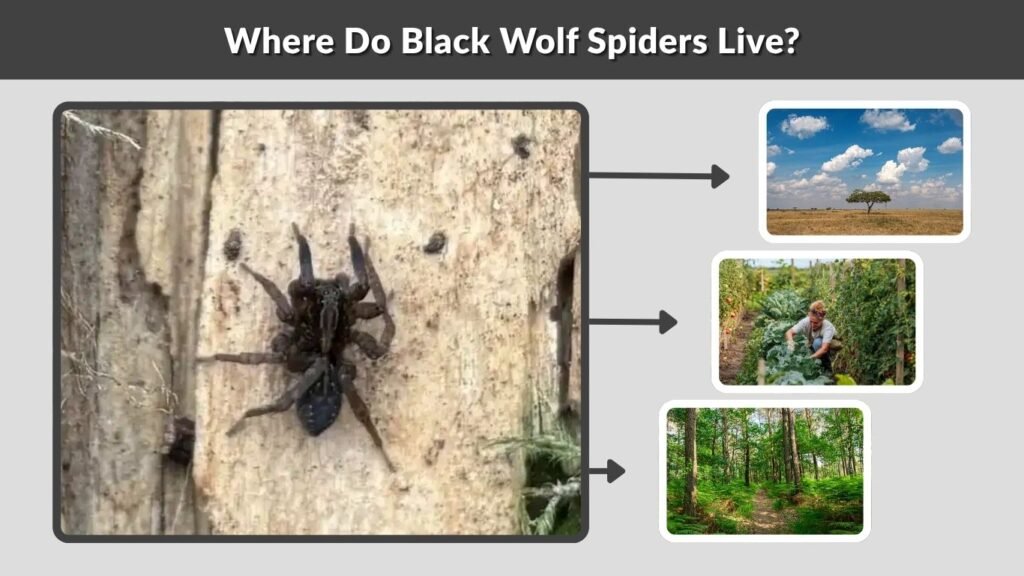
Black wolf spiders inhabit many terrestrial environments across North America and other parts of the world. They are commonly associated with forests, grasslands, gardens, agricultural fields, and rocky areas.
Most prefer ground-level habitats offering abundant insects and protected hiding places.
Are Black Wolf Spiders Found in Houses?
Yes, black wolf spiders occasionally enter houses through gaps beneath doors, foundation cracks, and poorly sealed windows.
They may appear in basements, garages, bathrooms, or storage rooms while searching for prey or shelter.
Unlike some house spiders, wolf spiders generally do not establish permanent indoor webs. They prefer roaming and hunting rather than remaining in one location.
What Do Black Wolf Spiders Eat?
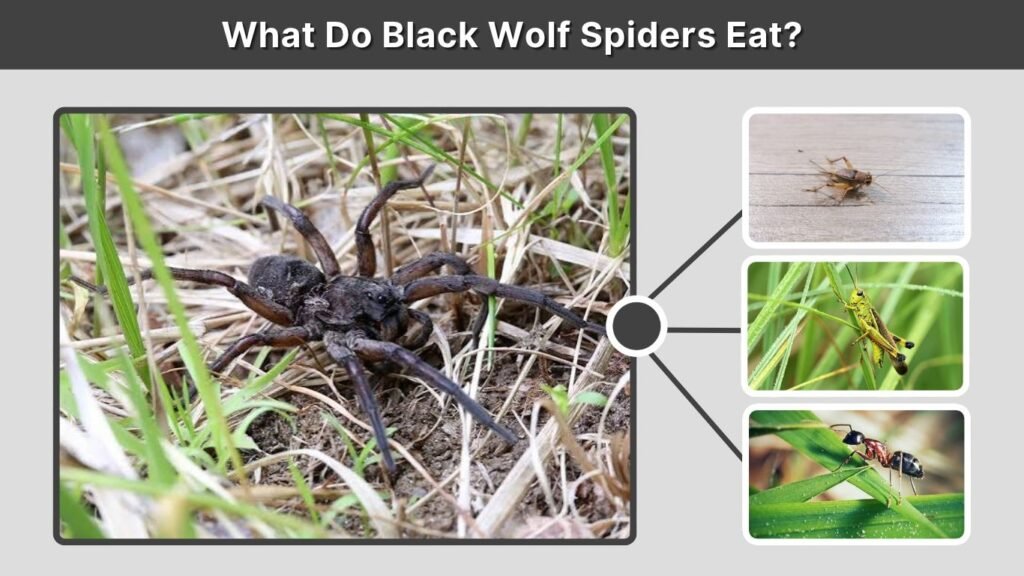
Black wolf spiders are carnivorous predators that primarily feed on insects and other arthropods. They rely on speed, eyesight, and ambush techniques rather than capture webs.
Their hunting activities help regulate insect populations in gardens and natural environments.
Common Prey of Black Wolf Spiders
- Crickets: Frequently captured by larger wolf spiders.
- Grasshoppers: Smaller individuals may become prey.
- Beetles: Various ground-dwelling beetles provide food.
- Ants: Some wolf spiders consume ants when opportunities arise.
- Cockroaches: Small cockroaches may be captured.
- Other spiders: Wolf spiders sometimes prey on smaller spiders.
- Caterpillars: Soft-bodied larvae can become occasional prey.
Larger wolf spiders may occasionally capture small vertebrates, although insects and other arthropods make up most of their diets.
Do Wolf Spiders Eat Black Widows?
Yes, wolf spiders can prey on black widow spiders when suitable opportunities arise. Both are predators, and encounters may result in one spider killing the other.
However, black widows are not a primary or regular food source for most wolf spiders. Predation depends on body size, environmental conditions, and whether the wolf spider encounters a widow outside its protective web.
Can Wolf Spiders Kill Black Widows?
Wolf spiders may kill black widows through rapid attacks, especially when they have a size or positional advantage.
However, black widows possess potent venom and construct strong, irregular webs that help capture prey.
A wolf spider entering a black widow’s web may become trapped and killed instead. Therefore, the outcome depends on the circumstances rather than one species always defeating the other.
Do Black Widows Eat Wolf Spiders?
Yes, black widow spiders can eat wolf spiders that become entangled in their webs.
Black widows inject venom into captured prey and subsequently consume it. Smaller wolf spiders may be particularly vulnerable when entering established widow webs.
This predator-prey relationship can operate in both directions.
Are Black Wolf Spiders Dangerous?
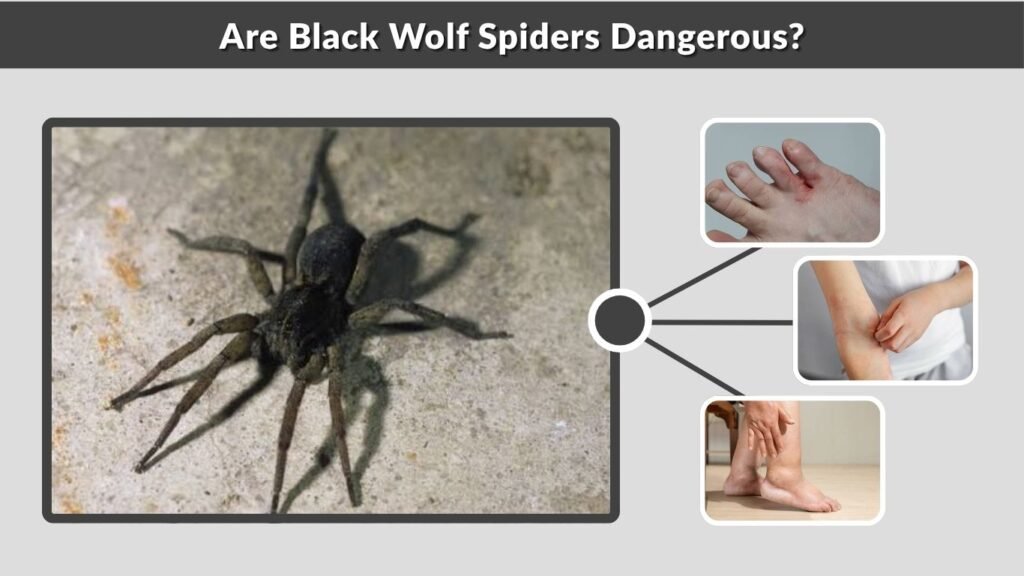
Black wolf spiders possess venom, but their bites are generally not medically dangerous to humans.
They usually avoid confrontation and attempt to escape when disturbed. Bites most commonly occur when a spider becomes trapped against the skin or is handled.
Symptoms of a Black Wolf Spider Bite
- Localized pain or stinging.
- Mild redness around the bite.
- Temporary swelling.
- Itching or skin irritation.
- Occasionally, a small puncture mark.
Most uncomplicated bites improve with basic first aid. Washing the area with soap and water and applying a wrapped cold compress may reduce discomfort.
Seek medical attention for severe symptoms, signs of infection, or a possible allergic reaction. Difficulty breathing requires emergency medical care.
Black Wolf Spider vs. Black Widow Spider
Black wolf spiders and black widows may appear similar because of their dark coloration. However, their body shapes, markings, and behaviors are noticeably different.
Key Differences Between Them
Black wolf spiders typically have hairy, robust bodies with relatively long, sturdy legs. They actively hunt along the ground and do not construct capture webs.
Female black widows generally possess shiny, rounded abdomens, slender legs, and distinctive red markings, often forming an hourglass underneath.
Black widows also build irregular cobwebs and usually remain near their sheltered web locations. Their venom is significantly more medically concerning to humans than wolf spider venom.
How to Prevent Black Wolf Spiders in Your House
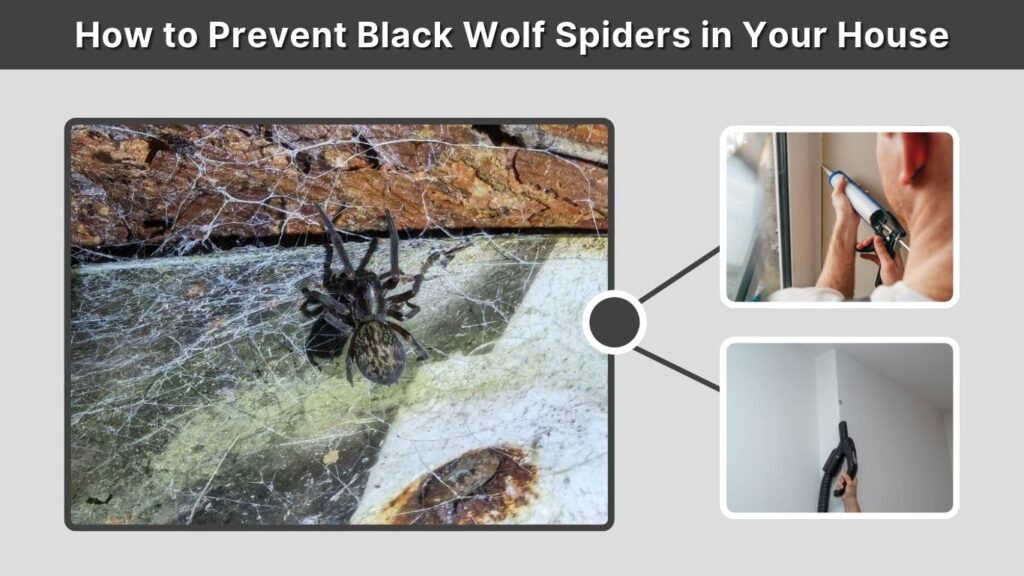
Black wolf spiders help control insects outdoors, but homeowners may prefer to discourage them from entering living spaces.
Reducing entry points and eliminating attractive hiding places is generally more effective than unnecessary pesticide applications.
Effective Black Wolf Spider Prevention Tips
- Seal cracks around doors, windows, and foundations.
- Install properly fitted door sweeps and window screens.
- Remove clutter from basements and storage rooms.
- Keep firewood and debris away from exterior walls.
- Reduce insects around outdoor lighting.
- Vacuum spiders found indoors or relocate them safely using a container.
Regular cleaning and building maintenance help reduce unwanted spider encounters while preserving beneficial populations outdoors.
FAQs
1. Can Wolf Spiders Be Completely Black?
Yes, some wolf spiders can appear almost completely black. However, many have faint gray, brown, or lighter markings that become visible under bright lighting. Coloration varies between species, so identifying a wolf spider requires examining its body structure and eyes.
2. Are Black Wolf Spiders Poisonous?
Black wolf spiders are venomous rather than poisonous. They inject venom through their fangs to immobilize prey. Their venom is generally not medically dangerous to humans, although bites can cause temporary pain, swelling, redness, and discomfort around the affected area.
3. Are Black Wolf Spiders Found in Michigan?
Yes, Michigan has several wolf spider species, including dark-colored individuals. They commonly inhabit gardens, grasslands, forests, and areas around buildings. Some occasionally enter basements or garages while hunting insects, particularly during seasonal changes and periods of increased activity.
4. Do Black Wolf Spiders Jump?
Wolf spiders can make short lunges or jumps while capturing prey or avoiding threats. However, they are primarily running hunters rather than specialized jumpers. Their powerful legs and quick movements help them chase insects across soil, rocks, and vegetation.
5. Do Black Wolf Spiders Bite Humans?
Black wolf spiders can bite humans, but incidents are relatively uncommon. Most bites occur when a spider is accidentally pressed against the skin or handled. Their bites usually produce mild localized symptoms rather than the serious systemic effects associated with black widow venom.
