

Black spiders in Michigan are commonly found in gardens, basements, garages, and wooded areas. While some are tiny and fast-moving, others have large, hairy bodies or striking white, yellow, and red markings. Many homeowners worry that a black spider could be a dangerous black widow, but most dark-colored spiders in the state are harmless insect predators. Knowing their appearance, habitats, and behavior makes identification easier. This guide covers seven types of black spiders in Michigan, including black widows, jumping spiders, wolf spiders, and garden spiders.
Are Black Spiders Common in Michigan?
Black spiders are common throughout Michigan, particularly during warmer months when insects are abundant. They inhabit forests, grasslands, gardens, residential buildings, and other environments offering shelter and food.
Michigan supports numerous spider species, including several with black or predominantly dark-colored bodies. However, not every black spider belongs to the same family or has similar behavior.
Some species actively hunt insects, while others construct webs and wait for prey. Most are beneficial predators that help control insect populations without posing significant threats to humans.
7 Common Types of Black Spiders in Michigan
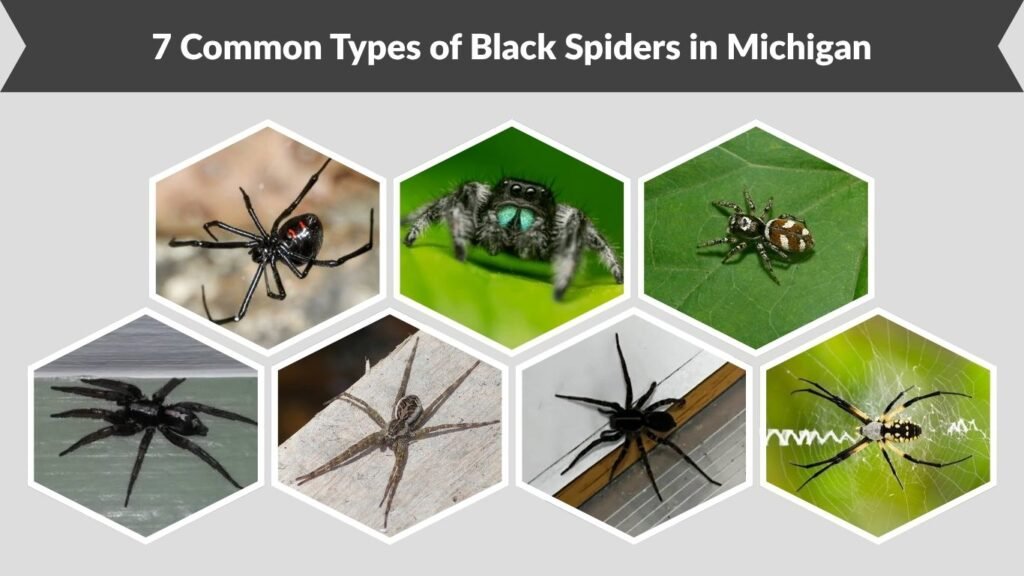
Several spider species found in Michigan have black bodies, dark markings, or combinations of black with other colors. Their appearance, size, hunting methods, and preferred habitats can help distinguish them.
1. Northern Black Widow Spider (Latrodectus variolus)
The northern black widow is one of Michigan’s most medically significant spiders. Adult females generally have glossy black bodies with rounded abdomens and red markings.
Unlike southern black widows, northern black widows frequently have a divided red hourglass marking underneath their abdomen. Some also display red spots along their backs.
They prefer secluded areas such as hollow logs, woodpiles, sheds, and brush piles. Although venomous, northern black widows are typically shy and rarely bite unless disturbed or trapped.
2. Bold Jumping Spider (Phidippus audax)
Bold jumping spiders are small, fuzzy black spiders commonly found around Michigan homes and gardens.
They have compact bodies, strong front legs, and distinctive white spots on their abdomens. Younger individuals may display orange markings that gradually change as they mature.
Their metallic green or blue-green mouthparts are another recognizable feature.
Unlike web-building spiders, bold jumping spiders actively hunt insects. They use excellent eyesight and impressive jumping abilities to capture prey.
These spiders are generally harmless to humans.
3. Zebra Jumping Spider (Salticus scenicus)
Zebra jumping spiders are tiny black and white spiders that frequently appear on walls, fences, windows, and outdoor structures.
Their bodies feature alternating black and white markings resembling zebra stripes. They are usually less than one centimeter long.
These spiders move rapidly and jump short distances while hunting small insects.
They prefer sunny surfaces where prey is abundant. Although their sudden movements may surprise homeowners, zebra jumping spiders are not considered dangerous.
4. Eastern Parson Spider (Herpyllus ecclesiasticus)
Eastern parson spiders have dark brown to nearly black bodies with a distinctive white marking extending along their abdomens.
Their white pattern often resembles a necktie or clerical collar, explaining their common name.
These fast-moving spiders usually hunt at night rather than constructing webs to trap prey.
They frequently enter Michigan basements, garages, and crawlspaces while searching for insects.
Parson spiders are not medically dangerous, although they may deliver painful defensive bites when trapped against the skin.
5. Dark Fishing Spider (Dolomedes tenebrosus)
Dark fishing spiders are among the largest spiders encountered in Michigan. Their bodies usually display dark brown, gray, or blackish markings.
With their legs extended, some individuals can span several inches.
They commonly inhabit wooded environments, buildings near forests, and areas surrounding rivers or lakes.
Despite their name, dark fishing spiders are not restricted to aquatic habitats.
They hunt insects and other small animals and may occasionally capture aquatic prey. Their impressive size can be intimidating, but they are generally not aggressive toward humans.
6. Black Wolf Spiders (Family Lycosidae)
Wolf spiders are robust, hairy hunting spiders that occur throughout Michigan. Some species appear nearly black, while others have brown, gray, or striped bodies.
They possess strong legs and excellent vision, allowing them to pursue insects across the ground.
Wolf spiders commonly inhabit lawns, gardens, forests, and areas beneath rocks or fallen leaves.
Unlike many web-building spiders, they actively hunt prey.
Although large wolf spiders can deliver defensive bites, they are not considered medically dangerous to most people.
7. Black and Yellow Garden Spider (Argiope aurantia)
Black and yellow garden spiders are large orb-weaving spiders commonly found in Michigan gardens and grassy areas.
Adult females have bright yellow and black abdominal markings, long legs, and distinctive circular webs.
Their webs often contain a thick white zigzag pattern called a stabilimentum.
These spiders primarily feed on flying insects, including flies, grasshoppers, and moths.
Despite their impressive appearance, black and yellow garden spiders are generally peaceful and rarely bite humans.
How to Identify Black Spiders in Michigan
Identifying black spiders requires examining their body shape, markings, size, and behavior. Color alone is not enough because several unrelated species have similar dark appearances.
Key Identification Features
Look for these characteristics:
- Solid black body: May indicate a widow or another dark-colored spider.
- White abdominal spots: Common among bold jumping spiders.
- Black and white stripes: Characteristic of zebra jumping spiders.
- Red hourglass marking: An important identification feature of female black widows.
- Large, hairy body: Often associated with wolf spiders and fishing spiders.
- Yellow abdominal markings: Common among black and yellow garden spiders.
- White abdominal stripe: A recognizable feature of eastern parson spiders.
Web structure and location can provide additional identification clues, particularly when physical markings are difficult to observe.
Are There Black Widow Spiders in Michigan?
Yes, northern black widow spiders are native to Michigan. They are particularly associated with the western Lower Peninsula, although sightings have been documented elsewhere in the state.
Their preferred habitats include sheltered outdoor spaces, old stumps, hollow logs, and piles of vegetation.
Are Black Widows Found in Northern Michigan?
Northern black widows have been documented in northern portions of Michigan’s Lower Peninsula.
Their distribution is not uniform, and confirmed sightings should not be interpreted as evidence that they are abundant everywhere.
The Upper Peninsula has fewer well-documented observations, so any suspected widow spider should be identified carefully rather than assumed to be present or absent.
Are Black Spiders in Michigan Dangerous?

Most black spiders in Michigan are harmless to humans. Jumping spiders, wolf spiders, fishing spiders, and garden spiders generally avoid confrontation.
The northern black widow deserves greater caution because its venom can cause severe pain, muscle cramps, and other systemic symptoms.
Can Black Spiders in Michigan Bite?
Most spiders can bite defensively, but bites are uncommon and usually occur when spiders are trapped or handled.
Common symptoms of minor spider bites include:
- Temporary pain or stinging
- Localized redness
- Mild swelling
- Itching or irritation
- Tenderness around the bite
Suspected black widow bites require prompt medical advice because symptoms may become severe. Seek emergency care for intense muscle cramps, chest pain, or breathing difficulties.
Where Do Black Spiders Live in Michigan?
Black spiders occupy numerous habitats throughout Michigan. Their preferred locations depend on available prey, moisture, sunlight, and suitable shelter.
Common Indoor and Outdoor Habitats
They may be encountered in:
- Basements: Parson spiders and other wandering hunters occasionally enter.
- Garages: Dark corners provide shelter and insect prey.
- Gardens: Jumping spiders and orb-weavers commonly hunt insects.
- Woodpiles: Northern black widows may occupy protected spaces.
- Forests: Wolf spiders and fishing spiders inhabit wooded environments.
- Window frames: Small jumping spiders often hunt near sunny surfaces.
- Grasslands: Garden spiders construct webs between vegetation.
Most outdoor spiders enter houses accidentally rather than establishing permanent indoor populations.
How to Get Rid of Black Spiders in Michigan
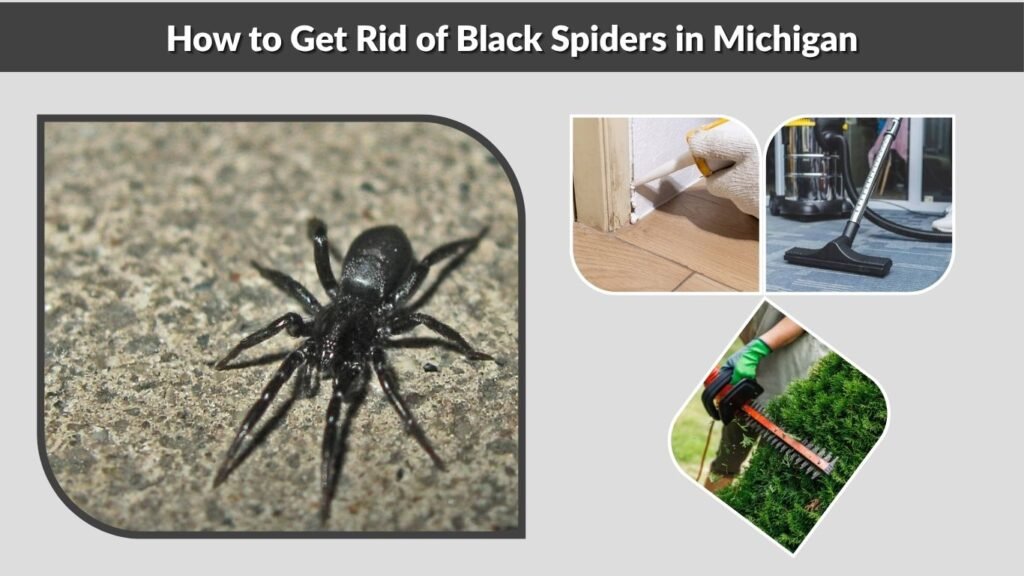
Black spiders usually do not require chemical control because they naturally reduce insect populations. However, homeowners can discourage spiders from entering frequently used indoor spaces.
Effective Spider Prevention Methods
- Seal entry points: Repair gaps around windows, doors, foundations, and exterior walls.
- Remove clutter: Organize storage areas and eliminate unnecessary hiding places.
- Vacuum regularly: Remove unwanted webs and spiders from indoor corners.
- Trim vegetation: Keep dense plants away from entrances and foundations.
- Reduce insect attractions: Limit unnecessary outdoor lighting near doors.
- Inspect stored materials: Check firewood, boxes, and gardening equipment before handling.
- Relocate harmless spiders: Use a container to move unidentified spiders without touching them directly.
Avoid handling suspected black widows. When removal cannot be performed safely, contact a qualified pest management professional.
FAQs
1. Are Black Widow Spiders Common in Michigan?
Northern black widow spiders are established in Michigan, particularly in the western Lower Peninsula. However, they are not encountered as frequently as many harmless spiders. They prefer secluded locations and generally avoid direct contact with humans.
2. What Are the Big Black Spiders in Michigan?
Large black or dark-colored spiders in Michigan are often wolf spiders, dark fishing spiders, or black and yellow garden spiders. Fishing spiders can appear especially large because of their long legs. Most are not medically dangerous.
3. What Are the Small Black Spiders in Michigan?
Small black spiders found around Michigan homes are frequently jumping spiders, particularly bold jumping spiders. These compact hunters often display white abdominal spots and metallic green mouthparts. They are beneficial predators and rarely cause problems for homeowners.
4. Are There Black and Red Spiders in Michigan?
Yes, northern black widows are black spiders with red markings found in Michigan. Some jumping spiders also display red or orange abdominal patterns. A red marking alone does not confirm a black widow, so accurate identification is important.
5. Are Black Spiders in Michigan Poisonous?
Most black spiders in Michigan are venomous rather than poisonous, but their venom is not medically significant to humans. Northern black widows are an important exception because their bites can cause severe symptoms. Most other dark-colored spiders are harmless.
