
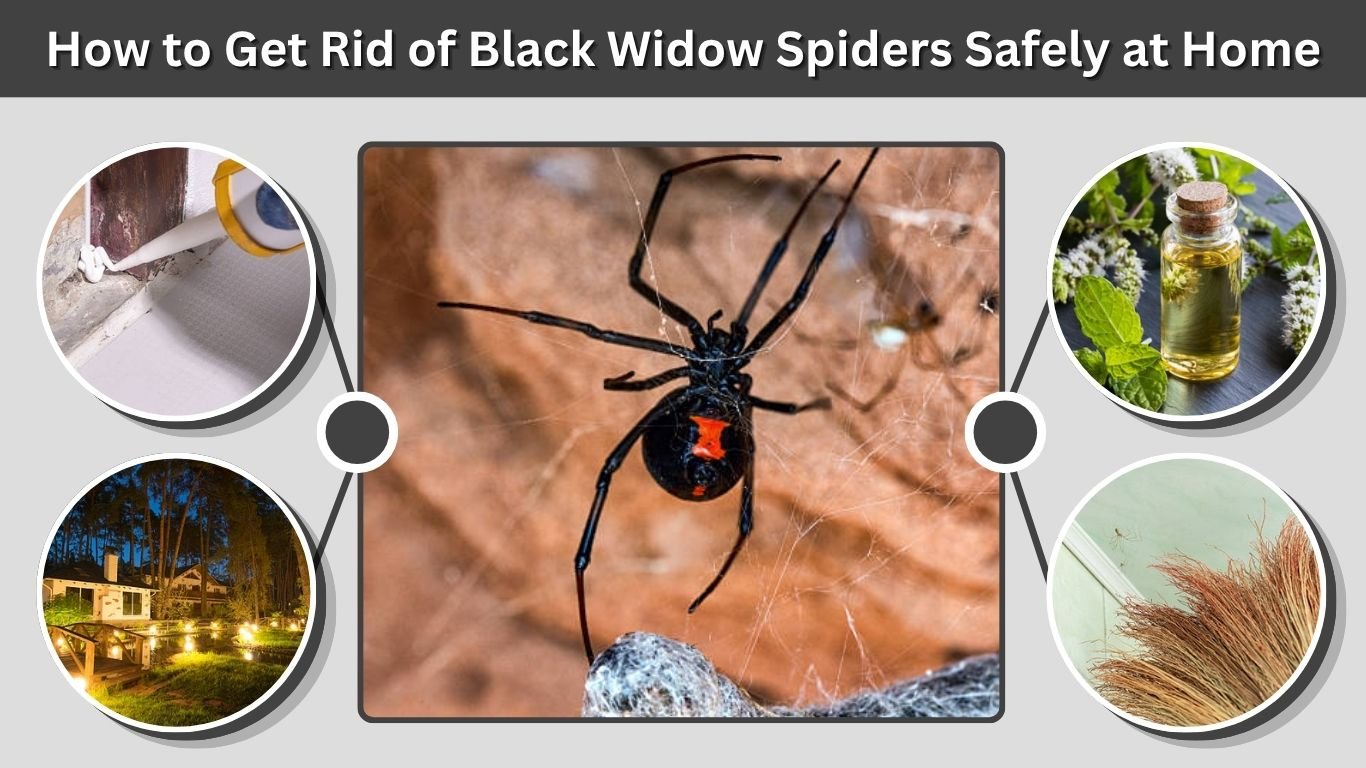
Black widow spiders can become a serious concern when they settle in garages, basements, yards, or outdoor storage areas. Although these spiders usually avoid human contact, their venomous bites can cause severe symptoms. Fortunately, several effective methods can help you remove black widow spiders and prevent future infestations. From vacuuming webs and eliminating hiding places to using appropriate spider-control products, the right approach depends on where they are living. This guide explains how to get rid of black widow spiders safely, naturally, and effectively around your home.
How to Get Rid of Black Widow Spiders Quickly
The most effective way to get rid of black widow spiders is to remove existing spiders, eliminate their webs and egg sacs, and reduce sheltered hiding places. Black widows generally remain in quiet locations where they can catch insects without disturbance. Therefore, focusing on these areas provides better long-term results than simply spraying random surfaces around your house.
1. Locate Black Widow Hiding Places
Start by inspecting sheltered locations around your property. Look for irregular, tangled webs beneath furniture, behind stored materials, and near building foundations.
Common hiding places include:
- Garages, basements, and storage sheds
- Woodpiles and stacked construction materials
- Rock piles and outdoor landscaping materials
- Crawl spaces and foundation openings
- Garden pots and outdoor furniture
- Utility boxes and unused equipment
Use a flashlight and maintain a safe distance when inspecting dark spaces. Never place your hands directly into suspected spider hiding places.
2. Remove Spiders and Their Webs
A vacuum cleaner with a long hose attachment can effectively remove accessible spiders, webs, and egg sacs without requiring direct contact.
After vacuuming, immediately empty the contents into a sealed plastic bag and place it in an outdoor trash container. Avoid touching the collected material, and follow the vacuum manufacturer’s cleaning instructions.
3. Eliminate Remaining Hiding Places
Remove unnecessary clutter, organize stored materials, and clean neglected corners. Store belongings in sealed plastic containers rather than open cardboard boxes.
Regular cleaning reduces available shelter and makes the area less attractive to black widow spiders.
How to Get Rid of Black Widow Spiders Naturally
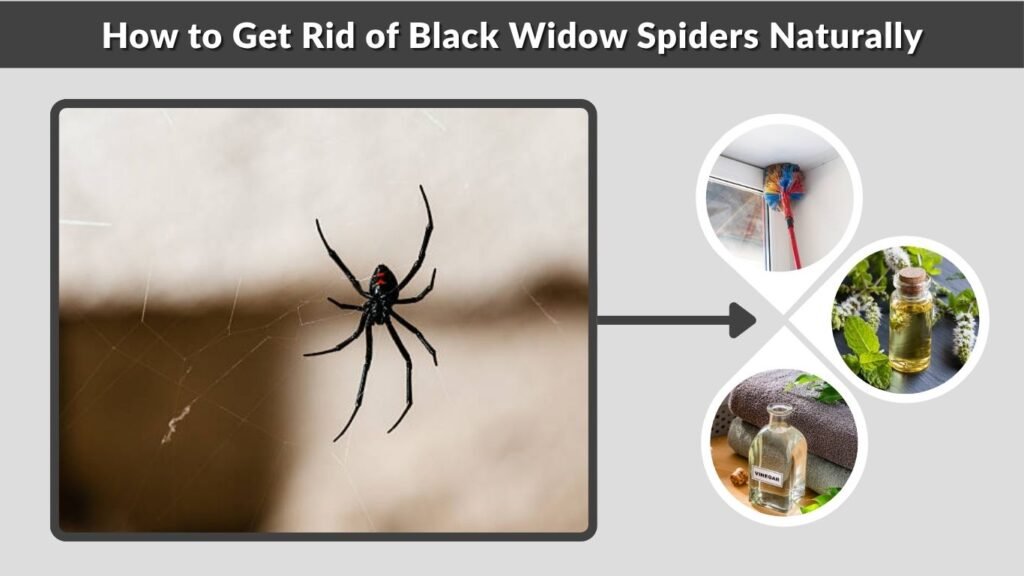
Natural black widow spider control focuses on physical removal, habitat modification, and reducing the insects that attract spiders. These approaches avoid routine pesticide applications and are often effective when dealing with small numbers of spiders. However, natural methods require consistent maintenance because new spiders may eventually move into untreated or undisturbed areas.
Vacuuming and Removing Spider Webs
Vacuuming is one of the most reliable nonchemical methods for controlling black widow spiders.
Use a vacuum with an extended attachment to reach corners, baseboards, and protected spaces. Remove both the spider and its web whenever possible.
Repeat inspections regularly because new webs may appear after the original spider has been removed.
Using Peppermint Oil and Vinegar
Peppermint oil and vinegar are frequently recommended as natural spider repellents. However, scientific evidence does not establish either as a dependable treatment for black widow infestations.
Strong odors may influence some spider behavior, but these products cannot be relied upon to eliminate black widows or destroy their egg sacs. Concentrated essential oils may also harm pets, and vinegar can damage certain surfaces.
For reliable control, prioritize vacuuming, removing clutter, and sealing entry points.
Reducing Insects Around Your Home
Black widow spiders feed on insects and other small arthropods. Reducing available prey can make your property less attractive.
Keep trash containers closed, clean up food waste, repair window screens, and avoid unnecessary outdoor lighting that attracts insects.
How to Get Rid of Black Widow Spiders in a Garage
Garages are among the most common places to encounter black widow spiders because they provide darkness, shelter, and relatively undisturbed storage areas. Spiders may establish webs behind boxes, beneath shelves, or around tools that remain unused for months. A thorough cleaning combined with proper storage can significantly reduce the likelihood of repeated infestations.
Clean and Organize Your Garage
Follow these garage-cleaning steps:
- Inspect dark corners: Use a flashlight to check beneath shelves and behind storage containers.
- Remove existing webs: Vacuum accessible webs and egg sacs using a long attachment.
- Organize stored belongings: Replace open cardboard boxes with sealed plastic containers.
- Move items off the floor: Use shelving to reduce protected spaces beneath stored materials.
- Check garage doors: Install appropriate door seals to close gaps near the ground.
- Inspect regularly: Monitor previously affected areas for new webs and spiders.
Wear closed shoes, long sleeves, and protective gloves when handling stored objects.
Use Spider Traps for Monitoring
Sticky traps can help detect spiders moving along garage walls and behind storage units.
Position traps in protected locations inaccessible to children and pets. Check them regularly and replace them when necessary.
Traps can help monitor activity, but they should not replace web removal and habitat management.
How to Get Rid of Black Widow Spiders Outside
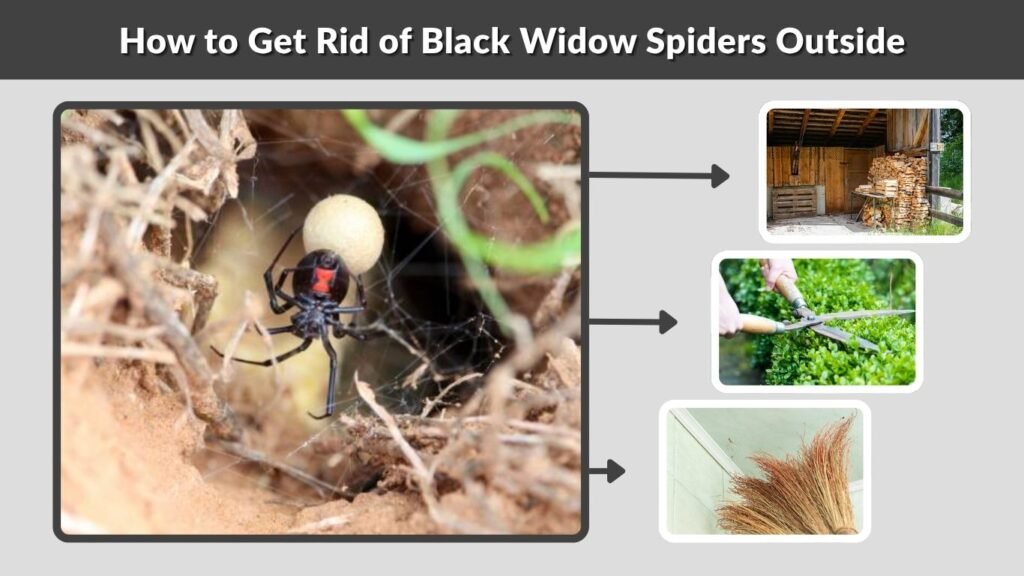
Black widow spiders frequently inhabit outdoor areas where rocks, vegetation, and stored materials provide protection. Completely eliminating spiders from a yard is neither realistic nor environmentally desirable because many spiders help control insects. Instead, focus on areas near entrances, patios, playgrounds, and other locations where people might accidentally encounter them.
Remove Outdoor Spider Hiding Places
Several landscaping improvements can reduce black widow activity:
- Move woodpiles: Store firewood away from the house and frequently used outdoor areas.
- Remove unnecessary debris: Clear abandoned containers, broken pots, and construction materials.
- Trim vegetation: Cut back plants touching walls, doors, and foundations.
- Clean patio furniture: Inspect underneath chairs, tables, and decorative items.
- Maintain garden beds: Avoid excessive clutter and thick accumulations of debris near entrances.
- Remove exposed webs: Use a long-handled broom or strong stream of water where appropriate.
Control Black Widows in Your Yard
Inspect areas beneath landscaping stones, garden equipment, and unused outdoor structures.
Keep children away from suspected nesting areas until spiders have been safely removed. Avoid reaching beneath rocks or garden decorations without checking them first.
For inaccessible webs or numerous spiders, professional removal may be safer than attempting treatment yourself.
How to Get Rid of Black Widow Spiders Inside Your House
Indoor black widow spiders are most likely to occupy basements, crawl spaces, storage rooms, and other quiet locations. Removing them requires careful inspection because spiders may remain hidden behind furniture or stored objects. The safest approach combines targeted physical removal with improvements that prevent additional spiders from entering the building.
Remove Indoor Black Widows Safely
Use a vacuum cleaner with an extended hose to collect visible spiders and nearby webs while keeping your hands away from the spider.
Dispose of vacuum contents promptly in a sealed outdoor trash bag. Avoid attempting to pick up black widow spiders with bare hands.
If a spider is inside an inaccessible wall cavity or an area that cannot be reached safely, contact a pest control professional.
Seal Cracks and Entry Points
Inspect the exterior walls, foundations, doors, and windows for openings.
Use suitable sealant to close cracks and install door sweeps where necessary. Repair damaged screens and gaps around utility penetrations.
These improvements also reduce the entry of insects that provide food for spiders.
How to Get Rid of Black Widow Spider Nests and Egg Sacs
Black widow spiders do not construct traditional nests. Instead, females establish tangled webs in protected locations and suspend egg sacs within them. Removing egg sacs is important because they can eventually release numerous young spiders. However, the female may remain nearby, making careless handling potentially dangerous.
Identifying Black Widow Egg Sacs
Black widow egg sacs are generally rounded, silk-covered structures attached to irregular webs.
Their color can range from whitish to tan or grayish, depending on age and species. They should not be confused with the distinctly spiky egg sacs commonly produced by brown widow spiders.
Safely Removing Egg Sacs
Use a vacuum with a long attachment to remove accessible egg sacs and nearby webbing without touching them.
Immediately seal and discard the vacuum contents outdoors. Do not squeeze, crush, or handle egg sacs with bare hands.
If several egg sacs are located in a confined crawl space, consider professional pest management.
What Kills Black Widow Spiders?
Physical removal is usually preferable when only a few black widow spiders are present. However, targeted insecticide treatment may be necessary when spiders remain in inaccessible spaces or repeatedly appear after cleaning. Choosing an appropriate product and following its label are essential for protecting people, pets, and the surrounding environment.
Spider Sprays and Insecticides
Some spider-control products contain pyrethrins or pyrethroids, including certain formulations of bifenthrin, permethrin, or cyfluthrin.
Products specifically labeled for the intended spider-control application may help kill exposed spiders or provide limited residual control.
Never use a pesticide in locations or ways not permitted by its label. Avoid spraying electrical equipment, food-contact surfaces, or areas accessible to children and pets unless the product instructions explicitly allow it.
Do Bug Bombs Kill Black Widow Spiders?
Total-release foggers, commonly called bug bombs, are generally ineffective for black widow control.
Spiders often hide inside protected crevices where fogging chemicals cannot penetrate adequately. These products can also introduce unnecessary chemical exposure and other hazards.
Targeted removal and habitat management are usually more effective.
How to Prevent Black Widow Spiders From Coming Back
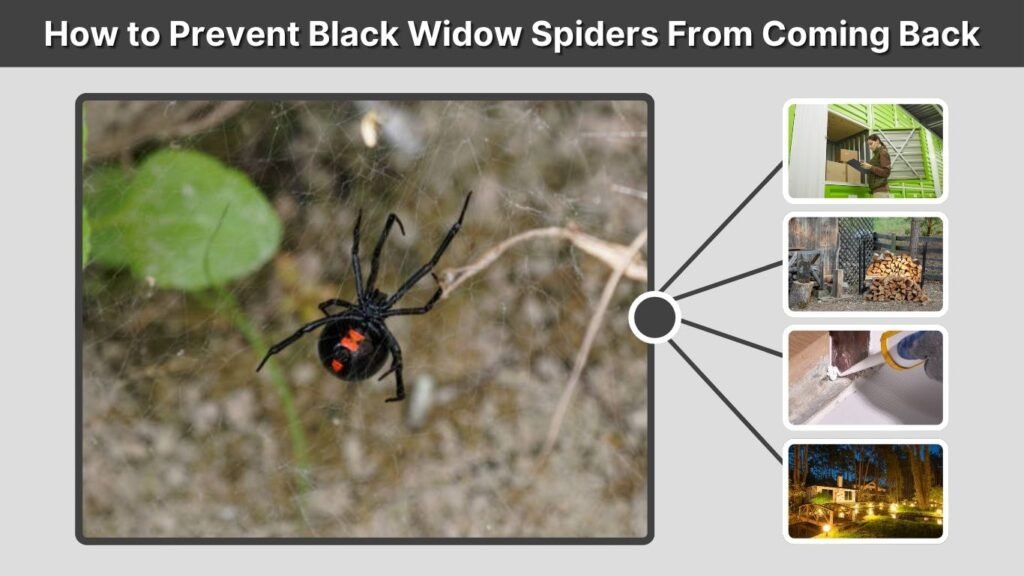
Preventing black widow spiders requires ongoing property maintenance rather than a single treatment. Removing existing spiders without addressing suitable shelter may allow others to establish webs in the same areas. Regular cleaning, proper storage, and exclusion measures make your property less attractive to black widows and other unwanted pests.
Effective Long-Term Prevention Tips
- Inspect storage spaces monthly: Check garages, sheds, and other undisturbed areas for spider activity.
- Keep firewood away from entrances: Avoid stacking wood directly against exterior walls.
- Seal building openings: Repair damaged door seals, window screens, and foundation gaps.
- Reduce unnecessary outdoor lighting: Limit insect attraction near entrances and windows.
- Store belongings securely: Use sealed containers for seasonal clothing and equipment.
- Maintain outdoor vegetation: Trim shrubs and remove debris near frequently used areas.
- Check outdoor equipment: Inspect gardening gloves, boots, and tools before handling them.
When Should You Call Pest Control?
Consider hiring a licensed pest control professional when multiple black widows repeatedly appear, egg sacs are present in difficult-to-reach locations, or spiders occupy areas frequently used by children.
Professional treatment may also be appropriate when spiders are established beneath the house or inside inaccessible structural spaces.
Are Black Widow Spiders Dangerous When Removing Them?
Black widow spiders are generally not aggressive and usually bite defensively when trapped, pressed against the skin, or disturbed. However, their venom can cause significant pain and systemic symptoms. Anyone attempting removal should understand the risks and avoid unnecessary direct contact.
Safety Precautions During Removal
Wear long sleeves, long pants, sturdy shoes, and protective gloves when inspecting cluttered spaces.
Use long-handled equipment rather than reaching into concealed areas. Keep children and pets away from active removal work.
If a suspected black widow bite occurs, wash the area with soap and water, apply a cool compress, and seek prompt medical care. Severe muscle cramping, difficulty breathing, or other widespread symptoms require emergency medical attention.
FAQs
1. What Is the Fastest Way to Get Rid of Black Widow Spiders?
The fastest practical method is to remove accessible black widow spiders and their webs using a vacuum cleaner with a long hose. Immediately seal and discard the collected contents outdoors. For widespread activity or inaccessible hiding places, professional pest control is preferable.
2. Can You Get Rid of Black Widow Spiders Naturally?
Yes, natural control methods include vacuuming spiders, removing webs and egg sacs, clearing clutter, and sealing entry points. These methods reduce favorable habitats without relying on pesticides. However, peppermint oil, vinegar, and similar remedies are not reliable solutions for established infestations.
3. What Smell Do Black Widow Spiders Hate?
There is no scientifically established scent that consistently repels black widow spiders. Peppermint, citrus, and vinegar are sometimes recommended, but their effectiveness against black widows remains uncertain. Removing hiding places and food sources provides more dependable results than relying on strong odors.
4. How Do You Get Rid of Black and Brown Widow Spiders?
Both black and brown widow spiders can be managed through careful vacuuming, egg sac removal, clutter reduction, and sealing entry points. Brown widows often build webs around outdoor furniture and sheltered structures. Persistent infestations may require targeted treatment by licensed pest control professionals.
5. How Do You Get Rid of False Black Widow Spiders?
False black widow spiders can usually be controlled by removing webs, vacuuming accessible spiders, reducing clutter, and sealing gaps around windows and doors. Although they resemble true black widows, they belong to a different genus and are generally less medically dangerous.
