
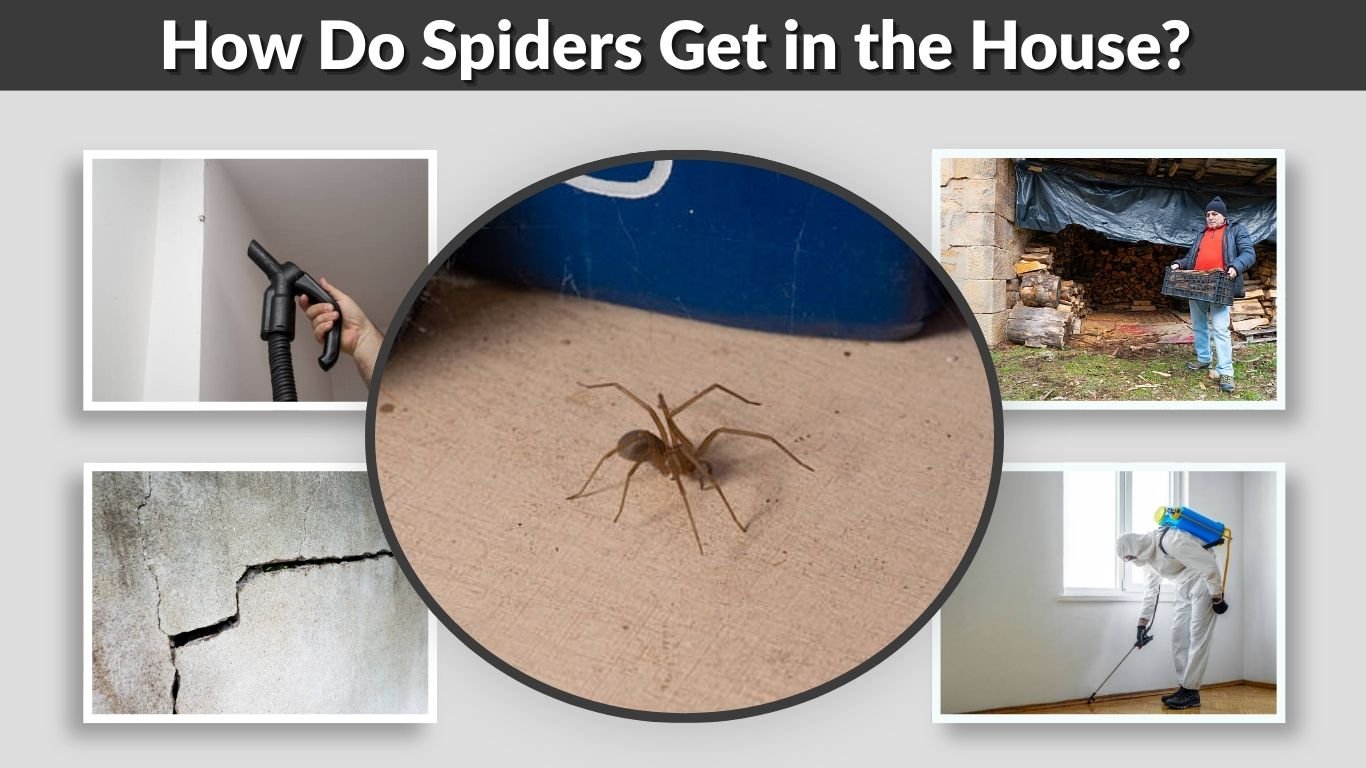
Finding a spider on your wall, ceiling, or bathroom floor can leave you wondering how it got inside. Spiders enter homes through surprisingly small openings around doors, windows, foundations, and vents. Some accidentally hitch a ride on firewood, houseplants, or moving boxes, while others have lived indoors for generations. The good news is that most household spiders are harmless and relatively easy to manage. This guide explains how spiders get in the house, why they stay, and practical ways to stop unwanted visitors.
How Do Spiders Get in the House? 7 Common Ways
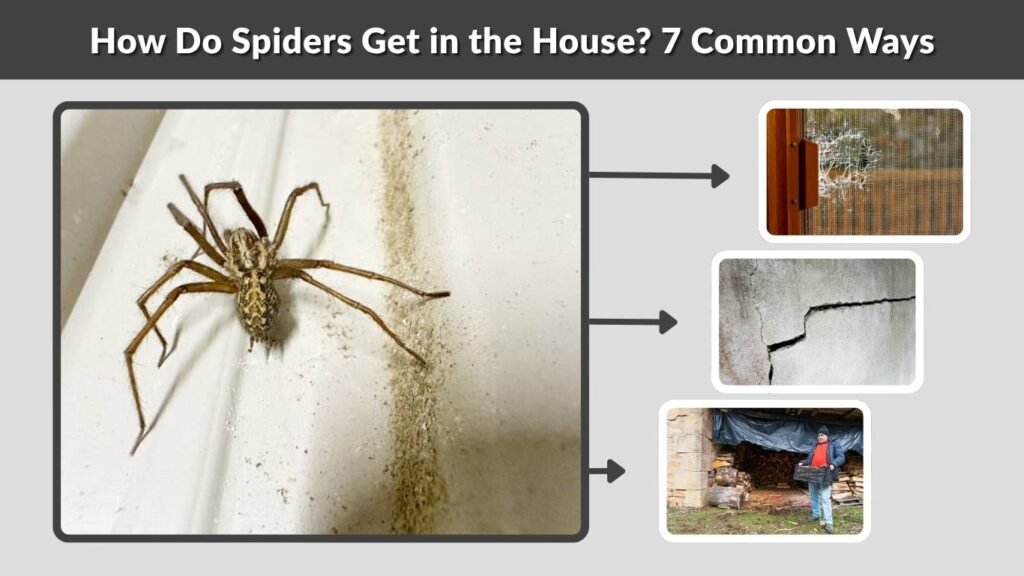
Spiders can enter houses through several unexpected openings, even when doors and windows appear closed. Their flexible bodies allow many species to squeeze through narrow gaps. Some spiders actively wander indoors, while others arrive accidentally on household objects. Understanding these entry points makes preventing unwanted spiders much easier.
1. Gaps Under Doors
Small spaces underneath exterior doors provide convenient entry points for spiders. Wolf spiders and other ground-dwelling species can crawl through these openings while hunting insects or searching for shelter.
Damaged weatherstripping and missing door sweeps make entry easier, particularly around garages and back doors.
2. Open Windows and Damaged Screens
Spiders frequently enter through open windows or damaged insect screens. Even a small tear near the screen frame can provide enough space for a spider to crawl inside.
Windows near gardens, trees, and outdoor lighting may attract more spiders because insects gather nearby.
3. Cracks in Walls and Foundations
Tiny cracks in exterior walls, foundations, and siding can create hidden passageways into a house. Spiders may follow these openings into basements, crawl spaces, and wall cavities.
Older buildings with deteriorating seals often provide more potential entry points than well-maintained structures.
4. Openings Around Pipes and Vents
Plumbing pipes, electrical cables, dryer vents, and ventilation openings sometimes have unsealed gaps around them.
Spiders can use these spaces to move between outdoor areas and interior walls. Properly fitted vent screens and suitable sealants help reduce access without blocking necessary ventilation.
5. Firewood, Plants, and Moving Boxes
Spiders sometimes enter houses without crawling through structural openings. Instead, people accidentally carry them inside.
Firewood, potted plants, cardboard boxes, outdoor furniture, and stored decorations may contain hidden spiders or egg sacs. Inspecting these items before bringing them indoors reduces accidental introductions.
6. Garages and Basement Entrances
Garages and basements are common spider entry areas because they often connect directly with outdoor environments.
Spiders may crawl underneath garage doors, around basement windows, or through foundation gaps. Once inside, they can travel into living rooms, bedrooms, and other connected spaces.
7. Roof Gaps and Chimneys
Openings around rooflines, attic vents, chimneys, and damaged soffits may allow spiders to enter upper portions of a building.
These sheltered spaces can also attract insects, encouraging spiders to remain nearby. Appropriate screening and repairs can help prevent entry.
Why Do Spiders Come Inside Your House?
Not every spider deliberately enters a home seeking warmth. Many wander indoors accidentally while exploring their surroundings. Others remain because indoor conditions offer suitable hiding places and available prey. Understanding what attracts spiders helps explain why certain rooms contain more spiders than others.
Searching for Food
Spiders primarily feed on insects and other small arthropods. Houses containing flies, mosquitoes, moths, ants, or other prey may support more spiders.
Outdoor lights can also attract flying insects near windows and doorways, creating favorable hunting locations.
Finding Shelter and Mates
Quiet spaces behind furniture, inside closets, and beneath storage boxes provide protection from disturbance.
Some mature male spiders become especially noticeable during mating seasons because they wander in search of females. Their increased activity can make it seem as though spiders suddenly appeared everywhere.
How Do Different Types of Spiders Get Into Houses?
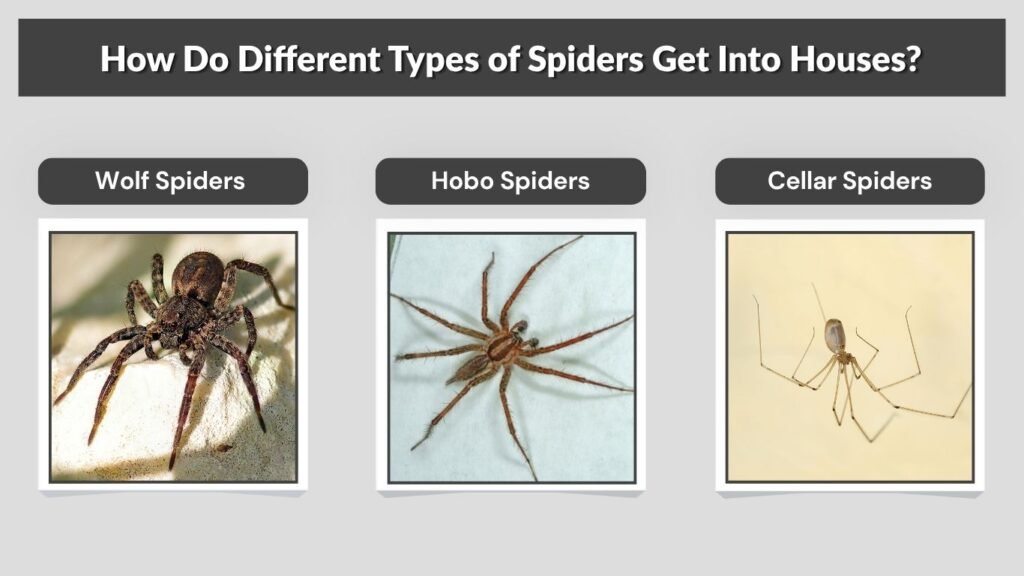
Different spiders enter and occupy homes in different ways. Some spend most of their lives indoors, while others accidentally wander inside from gardens or surrounding vegetation. Their size, hunting behavior, and preferred habitats influence where homeowners are most likely to encounter them.
How Do Big Spiders and Wolf Spiders Get in the House?
Large spiders, including wolf spiders and some huntsman spiders, commonly enter through gaps beneath doors, open entrances, and other structural openings.
Wolf spiders hunt along the ground rather than using capture webs. Their wandering behavior explains why they sometimes appear unexpectedly on floors.
How Do Brown Recluse and Hobo Spiders Get in the House?
Brown recluse spiders may enter through openings or be transported inside cardboard boxes, furniture, and stored belongings. They often hide in dark, undisturbed places.
Hobo spiders may enter buildings through ground-level openings, particularly within their established geographic range. Neither species occurs naturally everywhere, so accurate identification is important.
How Do House Spiders and Cellar Spiders Get Inside?
Common house spiders may enter through windows, doorways, and cracks. Some establish indoor populations that reproduce over multiple generations.
Cellar spiders frequently occupy basements, ceilings, and quiet corners. Their long legs and irregular webs make them recognizable household inhabitants.
How Do Jumping Spiders and Baby Spiders Get Inside?
Jumping spiders can enter through open windows, doorways, and gaps while searching for prey.
Baby spiders may arrive through tiny openings, but many hatch from egg sacs already present indoors. Finding several small spiders together may indicate a nearby egg sac rather than multiple outdoor visitors.
Where Should You Check for Spider Entry Points?
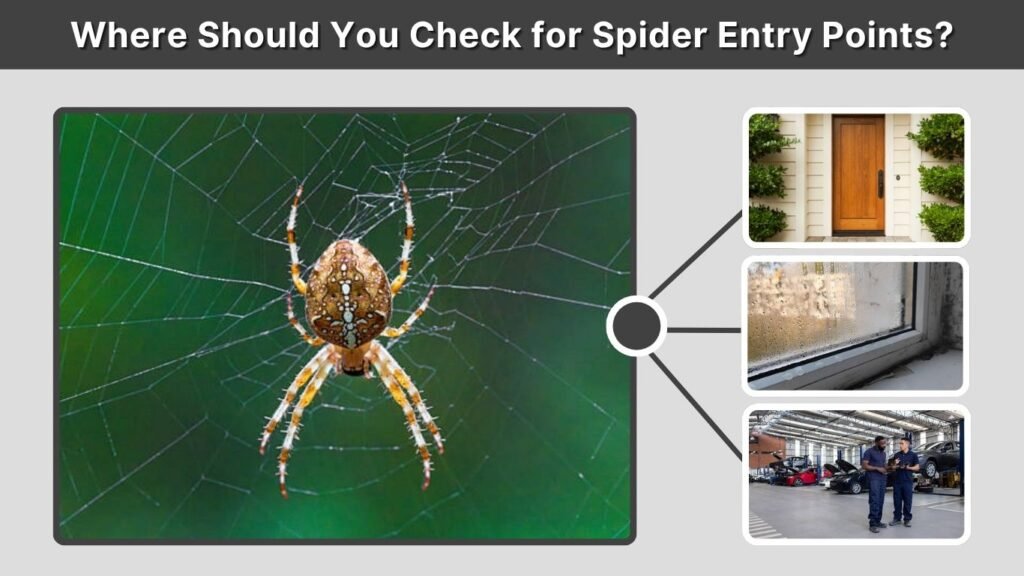
Finding potential entry points is one of the most effective ways to reduce spiders indoors. Inspect areas where outdoor surfaces connect with interior rooms, especially where insects and spiders have been observed repeatedly.
Important places to inspect include:
- Exterior doors: Look for visible light underneath doors and damaged weatherstripping.
- Windows: Check torn screens, loose frames, and poorly sealed edges.
- Foundation walls: Inspect cracks near ground level and basement entrances.
- Utility openings: Examine gaps around pipes, wiring, and ventilation systems.
- Garages and attics: Look around door seals, roof openings, and stored belongings.
Checking these locations regularly can reveal small problems before they become persistent entry routes.
How to Keep Spiders From Getting in the House
Preventing spider entry usually works better than repeatedly removing spiders after they appear. Basic home maintenance, insect management, and regular cleaning can significantly reduce indoor spider activity.
Here are seven practical prevention methods:
- Seal cracks and gaps: Apply suitable caulk around foundations, windows, and exterior openings.
- Install door sweeps: Close spaces beneath exterior doors and garage entrances.
- Repair window screens: Replace torn screens and secure loose frames.
- Reduce indoor insects: Keep food covered, manage waste, and fix insect entry points.
- Remove unnecessary clutter: Organize storage areas to eliminate hiding places.
- Inspect outdoor items: Check firewood, plants, furniture, and boxes before bringing them inside.
- Manage exterior lighting: Reduce unnecessary nighttime lighting near entrances to attract fewer insects.
These measures cannot guarantee a completely spider-free home, but they help make indoor environments less accessible and attractive.
How Do You Get Rid of Spiders in the House?
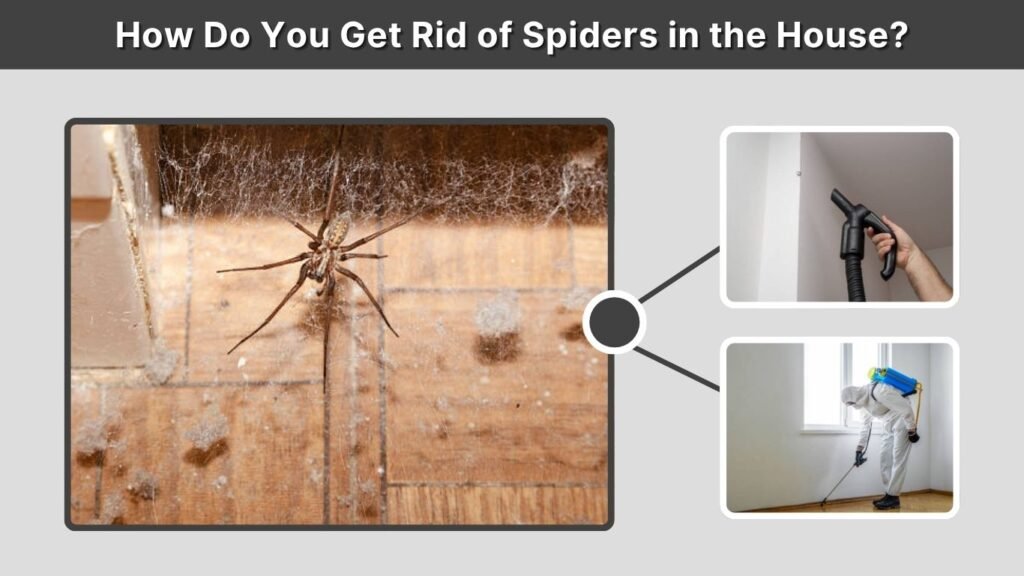
When spiders have already entered, removing them and reducing favorable conditions can help prevent recurring problems. Most situations can be managed without widespread pesticide applications.
For effective spider control:
- Capture individual spiders: Use a container and stiff paper to relocate spiders when safe. Avoid handling unfamiliar species directly.
- Vacuum webs and egg sacs: Clean ceiling corners, closets, basements, and behind furniture regularly.
- Reduce insect populations: Address flies, moths, and other prey that may support indoor spiders.
- Contact a pest professional: Seek expert identification and targeted control if potentially dangerous spiders or persistent infestations are suspected.
Broad insecticide spraying is generally unnecessary for occasional household spiders and may not solve underlying entry problems.
FAQs
1. How do spiders get in the house when everything is closed?
Spiders can enter through tiny cracks, damaged weatherstripping, ventilation gaps, and openings around pipes. They may also arrive on firewood, plants, or boxes. Closing windows and doors helps, but sealing overlooked structural openings is equally important.
2. How do huge spiders get in the house?
Large spiders usually enter through openings beneath doors, around garage entrances, or through damaged screens. Some species are excellent at moving through surprisingly narrow spaces. Larger spiders may also accidentally enter when people leave exterior doors open.
3. Why am I suddenly seeing so many spiders in my house?
Increased spider sightings may result from seasonal mating activity, greater insect availability, or recently hatched spiderlings. Changes in weather and indoor disturbance can also make spiders more noticeable. Multiple sightings do not necessarily indicate an infestation.
4. Can spiders get into a house through air vents?
Yes, spiders can enter through poorly screened ventilation openings or gaps surrounding ductwork. Proper vent covers and screens can reduce access. Never block essential airflow, and use ventilation components designed for the specific system.
5. Do spiders come inside houses to escape cold weather?
Some spiders seek sheltered locations during unfavorable weather, but many household spiders already live indoors. Seasonal increases in sightings may also reflect mating behavior rather than temperature alone. Different spider species respond differently to changing environmental conditions.
