
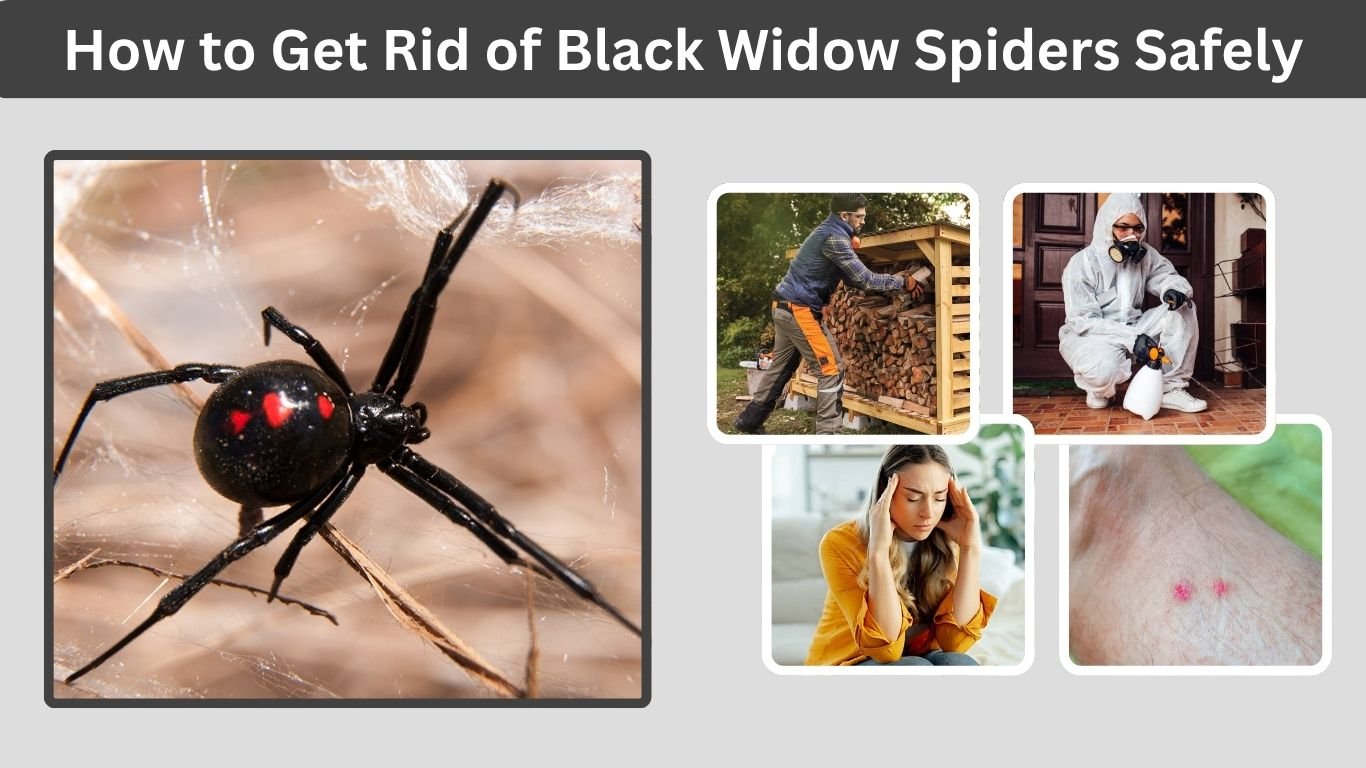
Black widow spiders are among the most recognizable venomous spiders in North America. Their shiny black bodies, distinctive red markings, and messy webs make them easy to notice around garages, basements, and outdoor storage areas. Although they rarely bite unless disturbed, their venom can cause serious symptoms. Learning how to get rid of black widow spiders safely is important for protecting your family and pets. This guide explains effective removal methods, natural prevention strategies, and practical ways to keep black widows from returning to your property.
How to Identify Black Widow Spiders
Before attempting black widow spider removal, it is important to identify the species correctly. Several harmless spiders resemble black widows, and unnecessary handling increases the risk of being bitten. Adult female black widows are particularly recognizable, although males and immature spiders often have different markings. Knowing their appearance and preferred hiding places makes inspections safer and more effective.
What Do Black Widow Spiders Look Like?
Adult female black widows usually have shiny black bodies and rounded abdomens.
Common identification features include:
- A shiny black body with a rounded abdomen.
- A red or orange hourglass marking underneath the abdomen, although it may be incomplete or occasionally absent.
- Long, slender legs.
- Irregular, tangled webs rather than circular webs.
- Smaller males and immature spiders with lighter markings.
Where Do Black Widows Usually Hide?
Black widows prefer protected, relatively undisturbed locations. Common hiding places include garages, sheds, woodpiles, crawl spaces, and spaces beneath outdoor furniture.
They often construct webs near the ground, particularly around cracks and crevices where insects pass.
8 Effective Ways to Get Rid of Black Widow Spiders
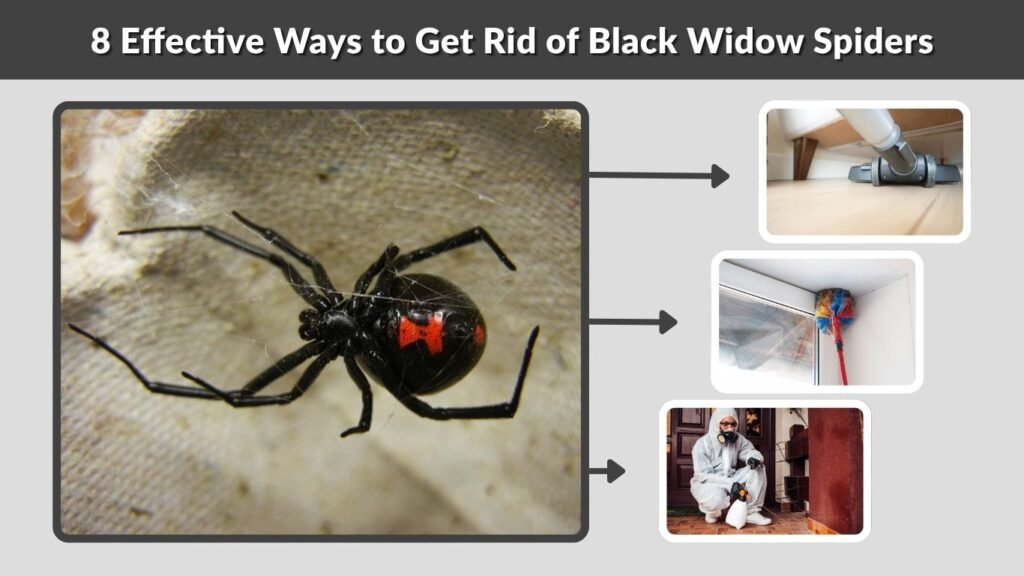
Removing black widow spiders requires more caution than dealing with ordinary household spiders. Although these spiders generally avoid confrontation, they may bite when trapped or threatened. The safest approach combines careful removal, habitat modification, and prevention. If a spider is difficult to reach or several are present, professional pest control is the better option.
1. Keep Your Distance From the Spider
Never handle a black widow with bare hands or reach into its web.
Keep children and pets away from the affected area. Avoid moving boxes, furniture, or equipment that may contain hidden spiders until you can inspect them safely.
If identification is uncertain, photograph the spider from a safe distance.
2. Remove Accessible Spiders With a Vacuum
A vacuum cleaner with a long hose attachment can remove individual spiders and their webs without direct contact.
Only attempt this when the spider is clearly visible and safely accessible. Avoid placing your hands near its hiding place.
After vacuuming, carefully seal and dispose of the vacuum bag or collected debris outdoors. If removal feels unsafe, contact a pest professional.
3. Remove Black Widow Egg Sacs
Black widow egg sacs may contain hundreds of developing spiderlings. Removing accessible egg sacs can help prevent additional spiders from emerging.
Avoid handling egg sacs directly because a female may remain nearby.
A long vacuum attachment can be useful for safely accessible sacs. Seal and discard the collected material promptly.
4. Eliminate Spider Webs
Black widow webs are irregular, tangled structures commonly found around sheltered corners and low openings.
Once the spider has been safely removed, clear away its web using a long-handled cleaning tool or vacuum.
Repeated web removal helps identify active nesting locations and makes them less suitable for spiders.
5. Remove Clutter and Hiding Places
Clutter provides protected spaces where black widows can establish webs.
Clear unnecessary cardboard boxes, unused equipment, and accumulated outdoor debris. Store seasonal belongings in tightly closed containers.
Wear work gloves and inspect stored items before moving them. Do not reach blindly underneath objects where spiders might be hiding.
6. Seal Cracks and Entry Points
Black widows can enter buildings through gaps around foundations, doors, windows, and utility lines.
Seal suitable cracks with caulk, repair damaged screens, and install door sweeps.
These improvements also reduce the number of insects entering your home, making indoor areas less attractive to spiders.
7. Reduce Insects Around Your Home
Black widows eat insects and other small arthropods. Areas with abundant prey provide favorable feeding opportunities.
Keep garbage containers covered, remove food debris, and repair moisture problems that encourage household insects.
Reduce unnecessary exterior lighting or position lights away from entrances to attract fewer flying insects near buildings.
8. Hire a Professional Pest Control Service
Professional spider removal is appropriate when multiple black widows are present or spiders occupy dangerous, inaccessible locations.
A qualified technician can inspect hiding areas, remove spiders, and recommend appropriate treatments.
Professional help is especially advisable when black widows are found near children’s play areas or frequently used entrances.
How to Get Rid of Black Widow Spiders Naturally
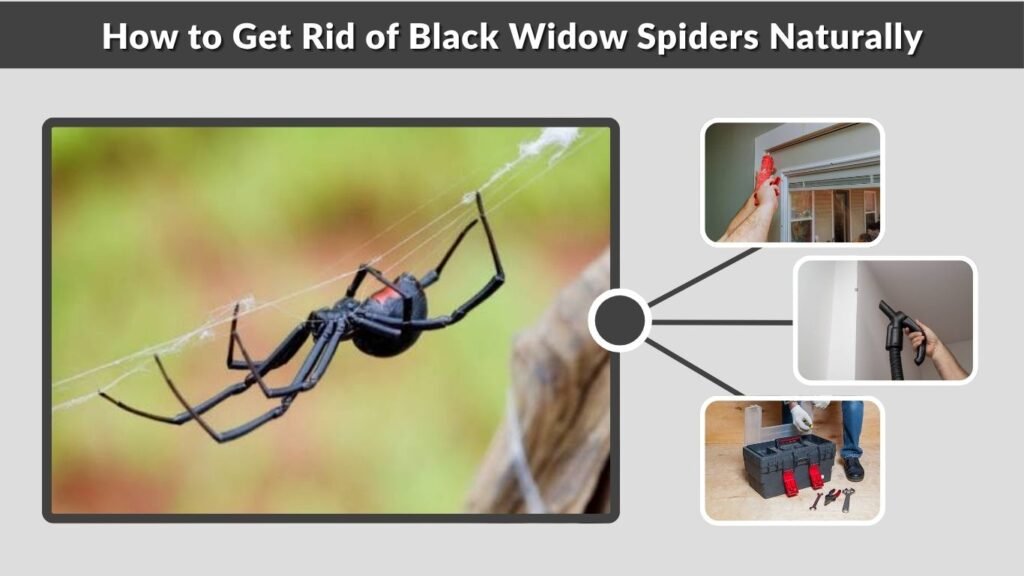
Natural black widow control focuses on reducing hiding places and preventing access rather than using insecticides. These methods are valuable for long-term management, particularly around homes with children or pets. However, natural repellents alone cannot guarantee protection against venomous spiders. Physical exclusion and careful cleaning remain the most dependable nonchemical prevention strategies.
Natural Spider Prevention Methods
Useful nonchemical approaches include:
- Sealing exterior cracks and foundation openings.
- Removing woodpiles and unnecessary debris.
- Vacuuming accessible webs and egg sacs.
- Reducing outdoor insect activity.
- Keeping storage spaces organized and undisturbed areas inspected.
Does Peppermint Oil Repel Black Widows?
Peppermint oil is frequently advertised as a natural spider repellent. However, there is insufficient evidence that it reliably repels black widow spiders or eliminates established populations.
Essential oils may also irritate people or harm pets. They should not replace proven prevention methods.
How to Get Rid of Black Widow Spiders in Your Garage
Garages are common black widow habitats because they contain stored equipment, dark corners, and insects. Spiders may establish webs beneath shelves, beside garage doors, or behind unused objects. Preventing infestations requires careful storage practices and regular inspections. Avoid disturbing concealed spiders while cleaning, particularly in garages where black widows have already been identified.
Organize Garage Storage
Replace cardboard boxes with sealed plastic containers. Keep gardening gloves, shoes, and seasonal equipment in closed cabinets or containers.
Before moving stored belongings, inspect the surrounding area and wear protective clothing.
Inspect Garage Doors and Corners
Check door frames, vents, window openings, and lower wall corners for webs.
Repair damaged weatherstripping and remove accessible webs after ensuring spiders are no longer present.
Regular inspections can help identify new activity before populations become established.
How to Get Rid of Black Widow Spiders Outside
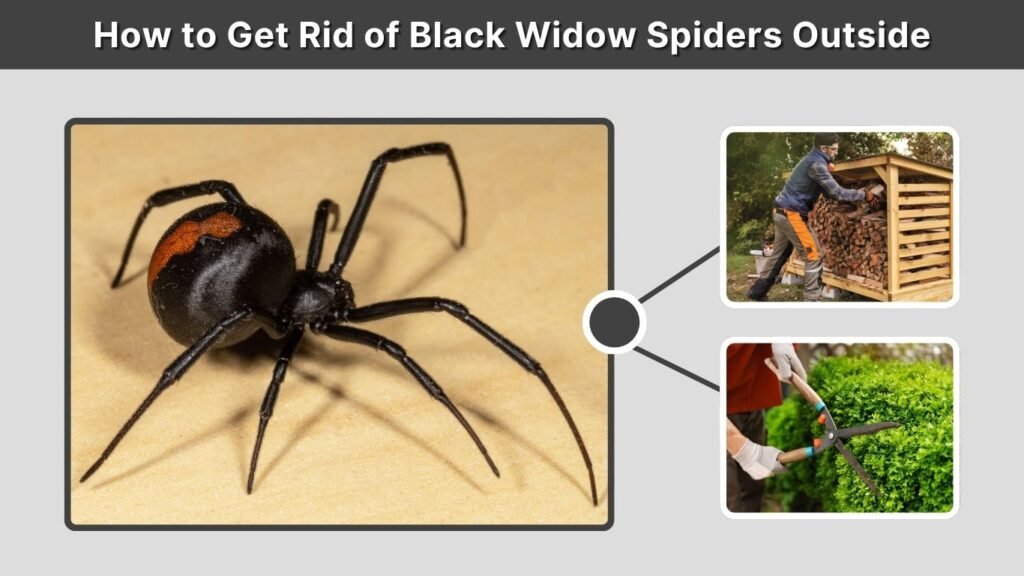
Black widows frequently live outdoors beneath rocks, woodpiles, planters, and patio furniture. Completely eliminating them from a yard is generally unrealistic because spiders can recolonize suitable habitats. Instead, concentrate on reducing encounters near entrances, seating areas, and other frequently used locations. Maintaining outdoor spaces also helps reduce insects and sheltered nesting sites.
Keep Your Yard Free of Debris
Move firewood away from buildings, trim dense vegetation, and remove accumulated leaves around foundations.
Inspect outdoor furniture carefully before moving or using it.
Check Outdoor Furniture and Equipment
Black widows sometimes hide beneath lawn chairs, picnic tables, flowerpots, and unused equipment.
Use a flashlight to inspect sheltered openings without reaching underneath them.
Have spiders removed safely before allowing children to use affected outdoor equipment.
Are Chemical Treatments Effective Against Black Widows?
Some insecticides labeled for spider control can help manage black widows, particularly when targeted at appropriate hiding places. However, chemical treatments do not guarantee permanent elimination. Black widows can return when food sources and suitable shelter remain available. Pesticides should be considered only when necessary and used according to their approved label instructions.
When Should You Use Spider Insecticides?
If nonchemical methods are insufficient, consult a licensed pest professional about targeted applications.
Avoid indiscriminate spraying, foggers, or mixing household chemicals. Use only products specifically labeled for the intended location and purpose.
What Should You Do if a Black Widow Spider Bites?
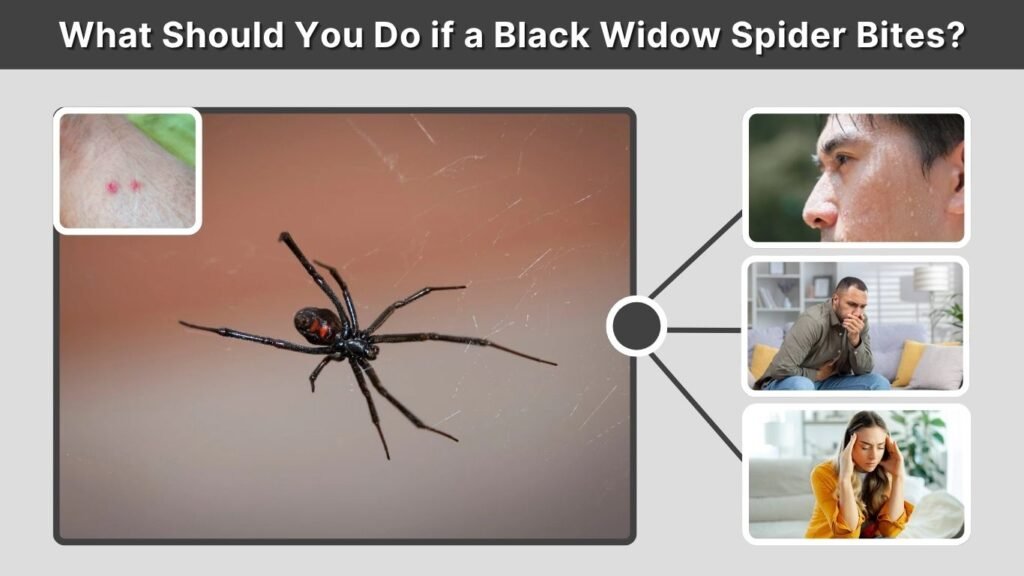
Black widow bites are uncommon, but their venom can cause significant pain and muscle symptoms. Serious reactions require prompt medical attention. Understanding the warning signs and appropriate first aid is important, especially for children and people with underlying medical conditions.
Symptoms of a Black Widow Bite
Possible symptoms include:
- Pain or irritation around the bite.
- Severe muscle cramps or abdominal pain.
- Sweating, nausea, or vomiting.
- Headache, weakness, or shaking.
- Difficulty breathing in severe cases.
First Aid for Black Widow Bites
Seek medical attention immediately if a black widow bite is suspected.
While arranging medical care, gently wash the bite with soap and water and apply a cool compress wrapped in cloth.
Avoid cutting the wound, attempting to suck out venom, or applying a tourniquet.
FAQs
1. What Kills Black Widow Spiders Instantly?
Some insecticides labeled for direct spider treatment can kill black widows, but results vary and immediate effectiveness is not guaranteed. Avoid approaching or handling them unnecessarily. Professional removal is safer when spiders are concealed or difficult to reach.
2. Does Vinegar Kill Black Widow Spiders?
Vinegar is not a proven or reliable black widow control method. Household mixtures may fail to eliminate spiders and can encourage risky close contact. Removing accessible spiders safely and reducing nesting habitats are more dependable approaches.
3. How Do You Get Rid of Black Widow Spider Nests?
Black widows build tangled webs rather than conventional nests. Once the spider has been safely removed, vacuum accessible webs and egg sacs. Inspect nearby cracks and storage areas for additional activity without reaching into concealed spaces.
4. Can Black Widow Spiders Come Back After Removal?
Yes. Black widows may return if insects, clutter, and protected hiding places remain available. Regular inspections, proper storage, and sealing openings can reduce recolonization, although complete permanent elimination is usually unrealistic.
5. Are Black Widow Spiders Aggressive Toward Humans?
Black widows are generally shy and do not actively pursue people. Most bites happen when a spider is accidentally trapped or disturbed. Avoiding direct contact and inspecting hidden spaces are important ways to reduce the risk.
