
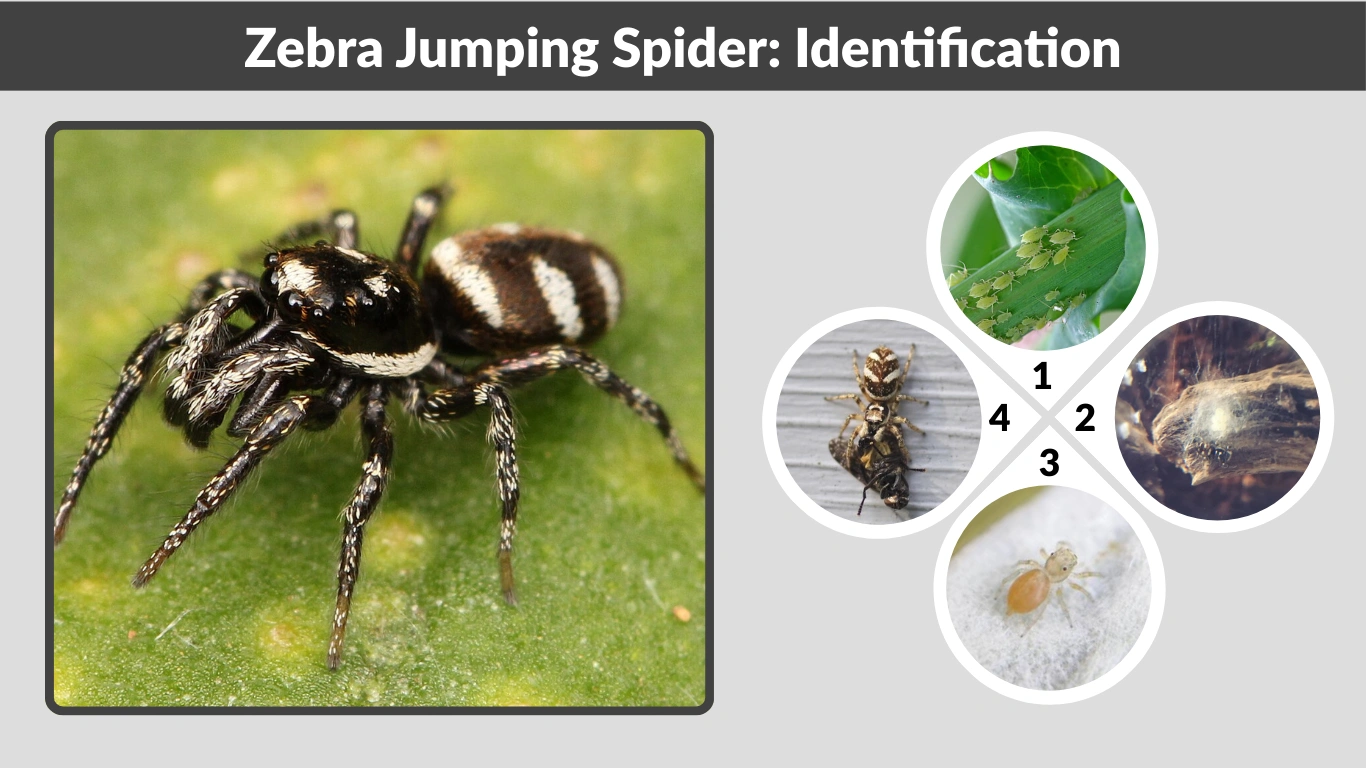
The zebra jumping spider is a small but eye-catching spider known for its bold black-and-white stripes and quick, jerky movements. Often seen on sunny walls, garden fences, and windowsills, this spider is active during the day and relies on excellent vision rather than webs to hunt prey. Many people search for information about zebra jumping spider size, lifespan, and whether a zebra jumping spider bite is dangerous. Others are curious about male vs female differences, juvenile forms, and what a full grown zebra jumping spider looks like.
Identification of Zebra Jumping Spider

The zebra jumping spider belongs to the jumping spider family and is easy to recognize once you know its key traits.
- Scientific name: Salticus scenicus
- Common names: Zebra jumping spider, jumping zebra spider, zebra jumper spider
- Body color: Black with bright white, zebra-like stripes
- Eye structure: Large front eyes with excellent vision
- Body shape: Compact body with relatively short, strong legs
- Movement style: Fast walking with sudden jumps rather than web-based movement
Zebra Jumping Spider Appearance and Color Pattern
The most striking feature of the zebra jumping spider is its sharp black-and-white pattern. The cephalothorax and abdomen are decorated with horizontal and curved white bands that stand out clearly against a deep black background. These bold stripes are what give the spider its “zebra” name and make it one of the easiest jumping spiders to identify.
Its body is covered with fine hairs that can give it a slightly fuzzy appearance in bright light. When viewed closely, the spider’s face often appears expressive due to its large, forward-facing central eyes. These eyes provide excellent depth perception and help the spider accurately judge distances before jumping.
The color pattern is not only decorative but also functional. The contrasting bands help break up the spider’s outline on rough surfaces like bark, stone, and brick walls. This camouflage makes it harder for predators to detect the spider while it hunts in open, sunlit areas.
Zebra Jumping Spider Size and Full Grown Length

A full grown zebra jumping spider is considered small compared to many house spiders, but it is relatively robust for a jumping spider. Most adults measure about 5 to 9 millimeters in body length, with females usually being slightly larger than males. When the legs are included, the spider can appear bigger, especially when it raises its front legs while exploring or hunting.
Juveniles are much smaller and may look like tiny moving dots at first glance. As they grow through multiple molts, their zebra stripes become clearer and more sharply defined. The abdomen also becomes rounder and more proportionate to the rest of the body.
Although small, zebra jumping spiders often look larger than their actual size because of their bold pattern and active movements. Their sturdy build and confident hunting posture give them a noticeable presence on walls and windows, where people commonly spot them.
Juvenile Zebra Jumping Spider vs Adult
Juvenile zebra jumping spiders look similar to adults but are paler and less sharply marked. Their stripes may appear grayish rather than bright white, and the contrast between black and white becomes stronger with each molt. As they grow, their body shape also changes, becoming thicker and more compact.
Young spiders go through several molting stages before reaching adulthood. During each molt, they shed their old exoskeleton and emerge slightly larger. This is also when their vision improves and their jumping accuracy becomes more precise.
Behaviorally, juveniles are more cautious and tend to hunt smaller prey. Adults are bolder, move more confidently, and are more likely to be seen actively stalking insects in open spaces. A full grown zebra jumping spider also shows clearer male or female traits, which are harder to notice in younger spiders.
Zebra Jumping Spider Male vs Female

Male Zebra Jumping Spider
Male zebra jumping spiders are usually smaller and slimmer than females. Their bodies often appear more compact, and their front legs may be slightly longer in proportion to their size. Males are also more active and are frequently seen roaming surfaces in search of females.
During the breeding season, males perform complex courtship displays. These include waving their front legs, vibrating their bodies, and making short, precise jumps to attract female attention while avoiding being mistaken for prey.
Female Zebra Jumping Spider
Female zebra jumping spiders are larger, with a fuller, rounder abdomen. This body shape becomes especially noticeable when they are carrying eggs. Females tend to be less mobile than males, spending more time near sheltered spots where they can build silk retreats.
After mating, the female creates a small silk nest in cracks, under bark, or behind loose surfaces. Inside this retreat, she lays her eggs and guards them until they hatch, showing a level of parental behavior uncommon in many other spiders.
Male vs Female Differences
The most obvious difference between male and female zebra jumping spiders is size, with females being visibly larger. Males are generally more active and noticeable due to their constant movement, while females are often found near egg sacs. Subtle differences in body proportions and behavior make sex identification easier once the spider reaches adulthood.
Habitat and Natural Distribution

Zebra jumping spiders are highly adaptable and are found across many parts of Europe, North America, and other temperate regions. They prefer sunny, open surfaces where insects are plentiful, making walls, fences, tree trunks, and garden structures ideal hunting grounds.
They are extremely common around human homes. Brick walls, window frames, outdoor furniture, and balconies often provide the perfect combination of warmth, shelter, and prey. Indoors, they may wander in through open windows or doors, especially during warmer months.
Rather than building large webs, zebra jumping spiders rely on keen eyesight and speed. They create small silk shelters mainly for resting, molting, or laying eggs, not for catching prey. Their ability to thrive in both natural and urban environments is a major reason they are so frequently encountered.
Behavior and Jumping Ability
Zebra jumping spiders are active daytime hunters that rely heavily on their exceptional eyesight. Unlike web-building spiders, they stalk prey much like tiny cats, slowly approaching before launching a precise jump. Their strong back legs act like springs, allowing them to leap many times their own body length.
Before jumping, they attach a thin silk safety line to the surface. This silk acts as a tether, protecting them from falling if they miss their target. Their movements often appear curious and alert, with frequent pauses and head turns as they visually track insects or explore their surroundings.
These spiders are also known for their bold personalities. They often face humans directly, giving the impression of watching back. Despite this confidence, they are harmless and will usually jump away rather than defend themselves.
Diet and Feeding Habits

The zebra jumping spider feeds primarily on small insects. Common prey includes flies, mosquitoes, gnats, aphids, and tiny moths. Their excellent vision allows them to single out individual insects even on busy surfaces.
Once prey is spotted, the spider slowly approaches, carefully calculating distance and angle. When close enough, it leaps and grabs the insect with its front legs before delivering a quick bite. Digestive enzymes are then injected, breaking down the prey’s tissues so they can be consumed.
Because they actively hunt pest insects, zebra jumping spiders are considered beneficial. In gardens and around homes, they help naturally control fly and mosquito populations, making them helpful rather than harmful residents.
Zebra Jumping Spider Lifespan and Life Cycle

The zebra jumping spider goes through several clear life stages from egg to adult.
- Egg stage: Females lay eggs inside small silk nests hidden in cracks or under surfaces.
- Spiderling stage: Tiny spiderlings hatch and remain near the nest for a short time.
- Juvenile stage: Young spiders molt several times while growing and developing clearer stripes.
- Adult stage: Full grown zebra jumping spiders develop distinct male or female traits.
- Average lifespan: Most live about one year in the wild, sometimes slightly longer in protected environments.
- Seasonal cycle: Activity peaks in warm months, with reproduction mainly in spring and summer.
Zebra Jumping Spider Bite: Is It Dangerous?
A zebra jumping spider bite is extremely rare. These spiders are not aggressive and will only bite if trapped, squeezed, or directly threatened. Even when a bite does occur, it is usually mild.
Most reported bites feel similar to a tiny pinprick or light mosquito bite. Symptoms may include slight redness, mild swelling, or brief itching. Serious reactions are very uncommon.
Basic first aid, such as washing the area and applying a cold compress, is usually sufficient. Medical attention is only necessary if unusual pain, spreading redness, or signs of infection develop.
Is the Zebra Jumping Spider Poisonous?
Zebra jumping spiders do possess venom, as do almost all spiders. However, their venom is designed to subdue tiny insect prey, not humans. In people, the venom is extremely weak and not medically significant.
The term “poisonous” is often confused with “dangerous.” While zebra jumping spiders are technically venomous, they are not dangerous to humans. Their bites do not cause serious health problems and do not transmit disease.
For insects, however, their venom is highly effective. It quickly immobilizes prey, allowing the spider to feed efficiently.
Zebra Jumping Spider as a Pet
Some spider enthusiasts keep zebra jumping spiders as small, low-maintenance pets. Because of their alert behavior and visual hunting style, they are often considered one of the more interesting spiders to observe.
A simple enclosure with good ventilation, small branches, and hiding spots is sufficient. They do not require large spaces. Feeding usually involves offering fruit flies or other tiny insects a few times per week.
Handling is generally discouraged, not because they are dangerous, but because they are delicate. Most owners prefer to observe rather than touch them, allowing the spider to display its natural hunting and jumping behaviors.
Interesting Facts About Zebra Jumping Spiders
Zebra jumping spiders may be tiny, but they display surprisingly complex traits.
- Exceptional eyesight: They can see details and colors far better than most spiders.
- Advanced jumping control: They accurately calculate distance before leaping.
- Visual communication: Body movements play a role in courtship.
- Intelligent hunting: They can change strategies if prey escapes.
- Natural pest control: They help reduce insect populations around homes and gardens.
Common Myths and Misidentification
Zebra jumping spiders are often mistaken for more dangerous spiders because of their bold coloring. Some people confuse them with juvenile wolf spiders or other black-and-white species. In reality, zebra jumpers are among the least threatening spiders commonly found near homes.
A common myth is that all striped spiders are aggressive or poisonous. Zebra jumping spiders are neither. They avoid confrontation and rely on escape rather than defense.
Understanding their harmless nature helps reduce unnecessary fear and encourages appreciation of their role in the local ecosystem.
FAQs
What is a zebra jumping spider?
A zebra jumping spider is a small, active spider known for its black-and-white striped body and excellent eyesight. It hunts insects by stalking and jumping rather than using webs. These spiders are commonly seen on walls, fences, and garden surfaces during daylight hours.
How big does a full grown zebra jumping spider get?
A full grown zebra jumping spider usually measures about 5 to 9 millimeters in body length. Females are slightly larger than males. Although small, their bold striping and energetic movement often make them appear bigger than they really are.
Is a zebra jumping spider bite dangerous?
A zebra jumping spider bite is not dangerous. Bites are very rare and usually cause only mild redness or slight irritation. They are not aggressive and prefer to jump away rather than bite. Serious reactions are extremely uncommon.
What is the lifespan of a zebra jumping spider?
The zebra jumping spider lifespan is typically around one year in the wild. They grow from egg to adult through several molting stages. Some individuals may live slightly longer in protected indoor or sheltered environments.
How can you tell a male vs female zebra jumping spider?
Female zebra jumping spiders are usually larger with a rounder abdomen, especially when carrying eggs. Males are smaller, slimmer, and more active. Males also perform visible courtship displays that females do not.
