
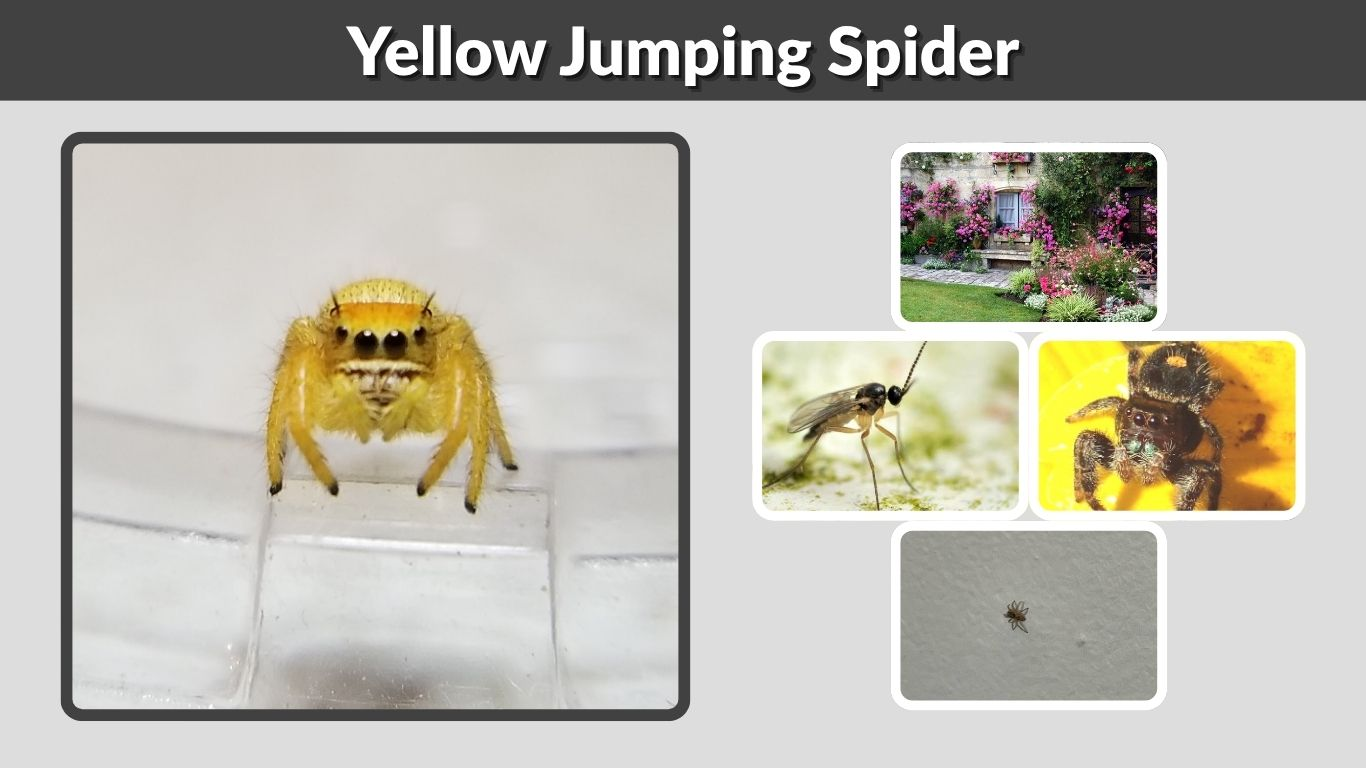
A yellow jumping spider can be confusing to identify because many spiders show yellow dots, stripes, legs, or markings. Some are true jumping spiders, while others only look similar at first glance. This guide explains how to recognize yellow and black jumping spiders, what their markings may mean, whether they are dangerous, and how to tell them apart from yellow sac spiders.
What Is a Yellow Jumping Spider?
A yellow jumping spider is not usually one single species. The phrase often describes any jumping spider with yellow coloring, yellow spots, yellow stripes, yellow legs, or a black-and-yellow pattern. Many jumping spiders change color as they mature, so juveniles may look more yellow or orange than adults.
Jumping spiders belong to the Salticidae family. They are small, active hunters with excellent eyesight. Instead of building large prey-catching webs, they stalk insects and leap onto them. Their movements are often quick and curious, with frequent pauses, head turns, and short jumps.
A spider may be called a yellow jumping spider if it has a yellow back, yellow dot on the abdomen, yellow stripes on the legs, or a bright yellow body. However, color alone is not enough for exact identification. Location, body shape, eye pattern, size, and behavior all matter.
Yellow Jumping Spider Identification
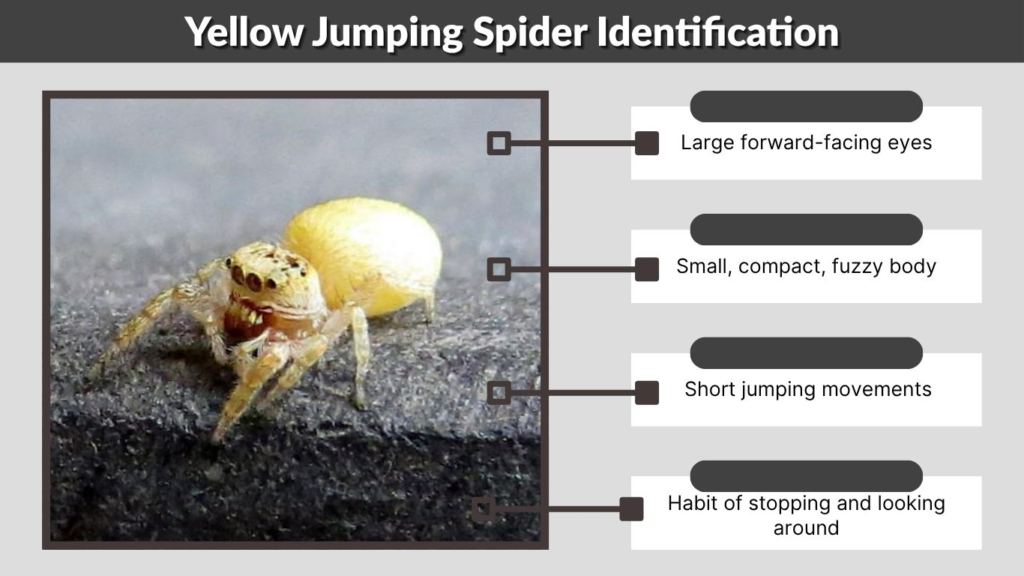
Many people search for a “yellow jumping spider” after seeing a tiny spider on a wall, plant, window, porch, or garden leaf. The easiest way to confirm whether it is a jumping spider is to look at its face and movement.
Key Features to Look For
A true jumping spider usually has a compact body, short sturdy legs, and large front-facing eyes. It may turn toward you when you move, almost as if it is watching. This is one of the most recognizable signs of a jumping spider.
Common identification clues include:
- Large forward-facing eyes
- Small, compact, fuzzy body
- Short jumping movements
- Active daytime hunting
- No large messy web for catching prey
- Habit of stopping and looking around
- Silk safety line when jumping
A tiny yellow jumping spider may be difficult to identify without a close photo. If possible, take a clear picture from the front and top without touching the spider.
Common Yellow Markings
Yellow markings can appear in several ways. Some spiders have a yellow dot on the back, while others have yellow legs, yellow stripes, or a yellowish abdomen. These markings may be bright, pale, cream-colored, golden, or orange-yellow.
| Search Description | What It May Mean | Identification Tip |
| Black jumping spider with yellow spot on back | Often a dark jumping spider with pale or yellow abdominal marking | Check for large front eyes and fuzzy body |
| Black jumping spider with yellow stripes | May be a jumping spider with leg or abdomen bands | Look for compact shape and jumping behavior |
| Tiny yellow jumping spider | Could be a juvenile jumping spider or another small spider | Size and eye pattern are important |
| Yellow jumping spider with yellow legs | May be a species with pale or yellowish legs | Compare with local species photos |
| Yellow sac spider jump | Often confusion with yellow sac spiders | Yellow sac spiders are usually paler and less compact |
Black and Yellow Jumping Spider
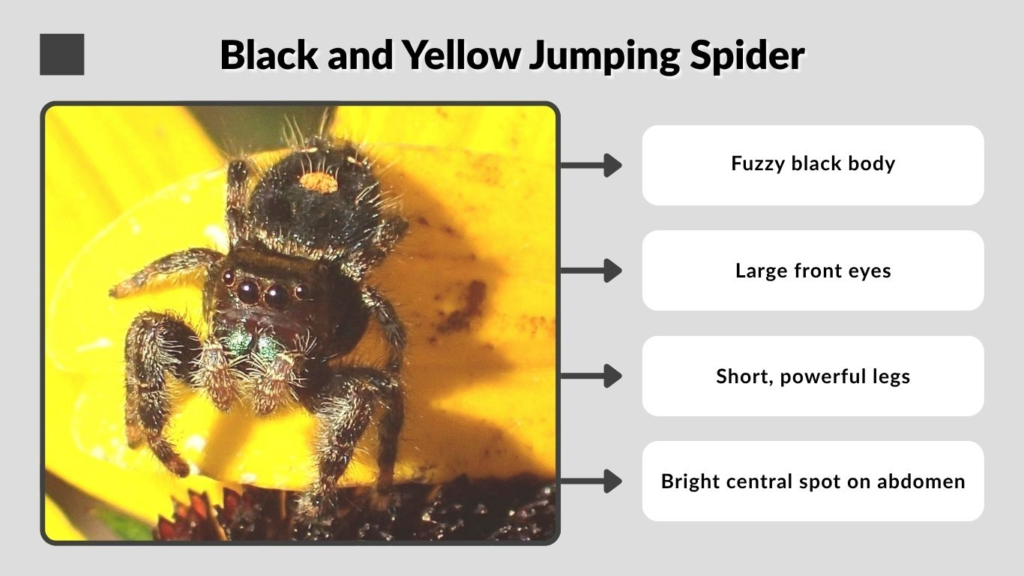
A black and yellow jumping spider is one of the most common descriptions people use. This may refer to a spider with a black body and yellow spots, yellow stripes, or yellowish leg bands. In some cases, the “yellow” markings may actually be white, cream, orange, or pale gold depending on lighting and age.
Why Some Look Black and Yellow
Some jumping spiders have bold contrast to help with camouflage, signaling, or species recognition. Young spiders may also show orange or yellow markings that become lighter as they mature. That is why a black jumping spider with a yellow dot may later look like a black spider with a white spot.
The bold jumping spider is a good example of a dark jumping spider that may show pale, orange, yellowish, or white spots depending on age and individual variation. Juveniles may look more orange or yellow before their markings change.
Black Jumping Spider With Yellow Spot on Back
A black jumping spider with a yellow spot on its back is often harmless, but exact identification depends on your region. The spot may be on the abdomen, not the true back. Some people describe any bright abdominal mark as a “dot on the back.”
Look for these signs:
- Fuzzy black body
- Large front eyes
- Short, powerful legs
- Bright central spot on abdomen
- Smaller spots or markings nearby
- Quick jumps rather than fast running
If the spider is glossy, round-bodied, and has red or orange markings underneath, be more cautious because it may not be a jumping spider.
Small or Tiny Yellow Jumping Spider
A small yellow jumping spider may be a juvenile. Young jumping spiders are often harder to identify because their adult markings are not fully developed. They may look pale yellow, tan, gray-yellow, or lightly striped.
Juvenile Yellow Jumping Spider
Juvenile jumping spiders molt several times as they grow. Their color may change after each molt. A yellow juvenile jumping spider may later become darker, brighter, or more patterned.
Young spiders are usually very small and fragile. If you find one indoors, avoid crushing it or picking it up with your fingers. Use a cup and paper to move it outside if needed.
Little Yellow Jumping Spider Indoors
A little yellow jumping spider indoors is usually not a problem. Jumping spiders may enter homes while hunting small insects or seeking shelter. They do not infest homes like some pests, and they do not build large webs in corners.
If you prefer not to keep it inside, gently relocate it to a garden, shrub, porch plant, or protected outdoor area. Avoid using chemical sprays unless there is a serious pest issue.
Yellow Jumping Spider vs Yellow Sac Spider
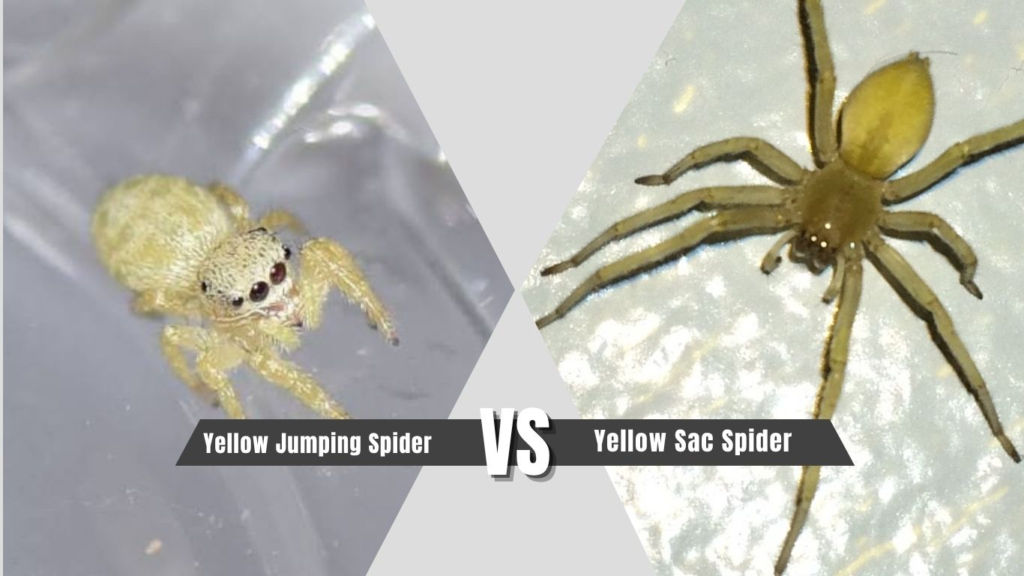
One important keyword in this cluster is “yellow sac spider jump.” This suggests many people confuse yellow jumping spiders with yellow sac spiders. They are different spiders with different behavior.
How Yellow Sac Spiders Look
Yellow sac spiders are usually pale yellow, cream, or yellow-green. Their bodies are smoother and less compact than jumping spiders. They often have longer legs and do not have the same large, forward-facing jumping spider eyes.
Yellow sac spiders are also more active at night. During the day, they may hide in small silk sacs in corners, behind objects, or in folded leaves.
How Jumping Spiders Are Different
Jumping spiders are usually more compact, more alert-looking, and more visual. They often hunt during the day and may turn to face movement. They do not make sac-like hiding places in the same way, although they may create small silk retreats for resting or molting.
If the spider is pale yellow, smooth, long-legged, and found wandering at night, it may be a yellow sac spider. If it is compact, fuzzy, wide-eyed, and jumps in short bursts during the day, it is more likely a jumping spider.
Are Yellow Jumping Spiders Poisonous?
Yellow jumping spiders are venomous in the same basic way most spiders are venomous: they use venom to subdue prey. However, they are not considered dangerous to people. The better question is whether they are medically significant, and for most jumping spiders, the answer is no.
A yellow jumping spider bite is unlikely unless the spider is trapped, squeezed, or handled roughly. Even then, most bites are mild.
Are Black and Yellow Jumping Spiders Poisonous?
A black and yellow jumping spider is usually not dangerous. It may bite defensively, but it is not aggressive toward humans. Most would rather escape than bite.
Possible mild bite symptoms may include:
- Small red bump
- Minor swelling
- Itching
- Brief pain
- Mild irritation
If symptoms spread, become severe, or include trouble breathing, dizziness, fever, or intense pain, seek medical care. Also be careful if you are not completely sure the spider was a jumping spider.
Where Yellow Jumping Spiders Are Found
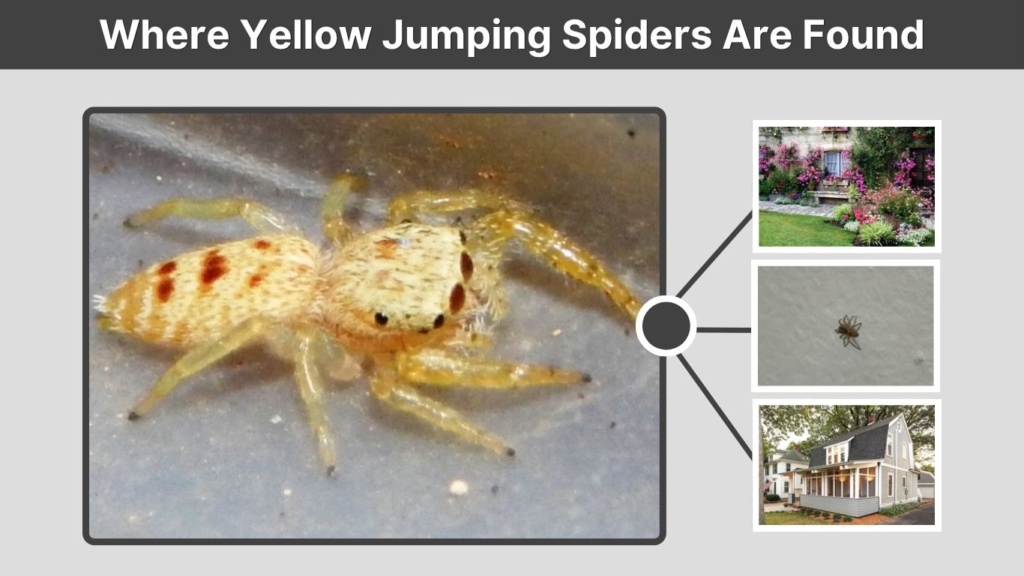
Searches mention places like Texas, Florida, Arizona, Nevada, Oregon, Ontario, the UK, Australia, and the Midwest. Yellow or black-and-yellow jumping spiders can appear in many regions, but the exact species changes by location.
Yellow Jumping Spider in the USA
In the United States, jumping spiders are common in gardens, fields, wood piles, fences, windowsills, and house walls. Black and yellow jumping spiders may be found in many states, though the species may vary.
You may see them in:
- Texas gardens and walls
- Florida shrubs and outdoor structures
- Oregon fences and plants
- Midwest homes and porches
- Arizona or Nevada outdoor areas
- Michigan and Ohio gardens
- Kansas lawns and sheds
Because regional species differ, a photo and location are very helpful for identification.
Yellow Jumping Spider in the UK or Australia
In the UK and Australia, the phrase “yellow jumping spider” may refer to completely different species than in North America. Australia has many colorful jumping spiders, including species with bright yellow, orange, green, or patterned bodies. In the UK, yellowish spiders may be smaller and less colorful, and some may not be jumping spiders at all.
For accurate identification, compare the spider with local spider guides rather than relying only on color.
Yellow Jumping Spider Behavior
Yellow jumping spiders behave like other jumping spiders. They are active hunters, not web trappers. They use vision to locate prey, then approach slowly before jumping.
Hunting Style
A jumping spider may stalk flies, gnats, mosquitoes, small moths, or other tiny insects. Before jumping, it often attaches a silk safety line. This silk line helps protect it if the jump fails.
You may notice the spider raising its front legs, shifting side to side, or pausing before leaping. These behaviors are normal and help it judge distance.
Why It Looks Curious
Jumping spiders seem curious because they have strong vision and often turn toward movement. They may watch your hand, camera, or face. This does not mean they are planning to attack. They are simply reacting to movement in their environment.
What Do Yellow Jumping Spiders Eat?
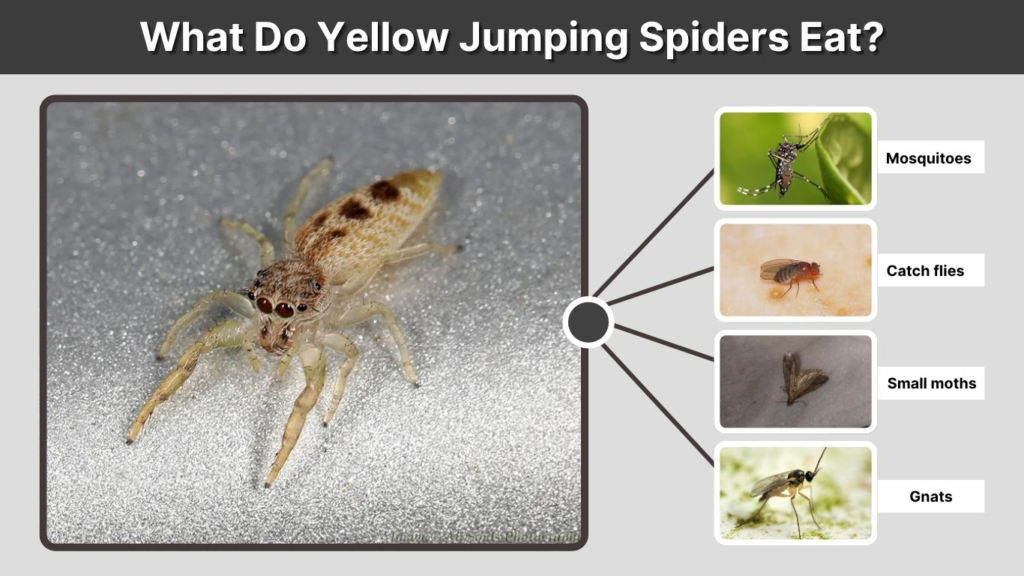
Yellow jumping spiders eat small insects and other tiny arthropods. Outdoors, they help control pests naturally. They may catch flies, mosquitoes, small moths, gnats, and other soft-bodied insects.
If kept as pets, jumping spiders are usually fed flightless fruit flies, small flies, or appropriately sized feeder insects. The prey should not be larger than the spider’s body. Large crickets or aggressive insects can injure a small jumping spider.
Do They Need a Web to Catch Food?
No. Jumping spiders do not rely on sticky orb webs to catch prey. They may create silk retreats for resting, hiding, or molting, but they hunt by sight and movement.
This is one reason they are often seen walking on walls, windows, leaves, and fences instead of sitting in a web.
Should You Keep a Yellow Jumping Spider as a Pet?
Some people keep jumping spiders as pets because they are small, alert, and interesting to watch. A yellow jumping spider may be kept if the species is safe, legal, and suitable for captivity. However, wild-caught spiders can be difficult to identify and may already be mature, stressed, or injured.
Basic Pet Care Needs
A pet jumping spider needs:
- Small ventilated enclosure
- Climbing surfaces
- Safe hiding or resting area
- Light misting for moisture
- Properly sized live prey
- No deep water dish
- No pesticide-exposed insects
Do not buy a “yellow jumping spider for sale” unless the seller can identify the species and explain its care needs. Responsible sellers should provide age, feeding information, and basic housing guidance.
How to Photograph a Yellow Jumping Spider for ID
Good photos make identification much easier. Many yellow jumping spider searches are based on quick sightings, but blurry images can lead to wrong guesses.
For a useful ID photo:
- Take one photo from above
- Take one from the front if possible
- Include the location where it was found
- Avoid flash if it washes out color
- Do not handle or squeeze the spider
- Note whether it jumped or built a web
A spider with yellow dots in Oregon may not be the same species as a yellow jumping spider in Texas or Australia. Location matters almost as much as color.
FAQs
Are yellow jumping spiders dangerous?
Yellow jumping spiders are generally not dangerous to people. They are small, shy hunters that usually jump away when disturbed. A bite is possible if one is trapped or squeezed, but most jumping spider bites are mild and cause only minor irritation.
What is a black and yellow jumping spider?
A black and yellow jumping spider is usually a jumping spider with dark body coloring and yellowish spots, stripes, or leg markings. It may be a juvenile, a regional species, or a spider whose pale markings look yellow in certain lighting.
What does a yellow dot on a jumping spider mean?
A yellow dot usually refers to a bright marking on the abdomen. It can help with identification, but it is not enough by itself. Some young jumping spiders have yellow or orange markings that become white or paler as they mature.
Is a yellow sac spider a jumping spider?
No. A yellow sac spider is not a jumping spider. Yellow sac spiders are usually paler, smoother, longer-legged, and more active at night. Jumping spiders are compact, often fuzzy, active in daylight, and have large forward-facing eyes.
What should I do if I find a tiny yellow jumping spider?
Leave it alone if it is not bothering you, or gently move it outside with a cup and paper. Do not grab it with your fingers because tiny jumping spiders are fragile. If you want to keep it, prepare a secure enclosure and tiny prey first.
