
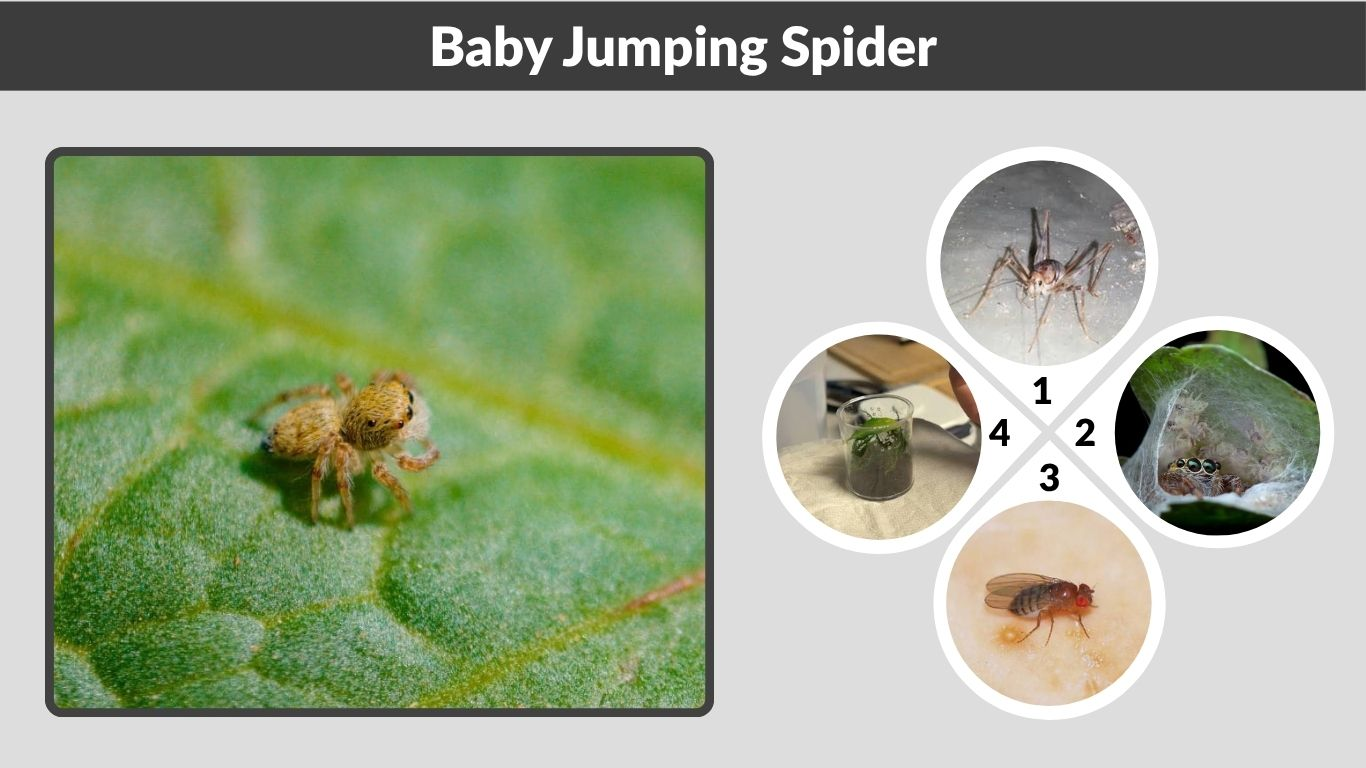
A baby jumping spider may look tiny, fragile, and surprisingly cute, but it is already an alert little hunter. These spiderlings can jump, stalk prey, and explore their surroundings soon after leaving the egg sac. Whether you found one indoors, discovered a nest, or want to raise jumping spider babies, this guide explains what they look like, what they eat, and how to care for them safely.
What Is a Baby Jumping Spider?
A baby jumping spider is commonly called a spiderling. It is the young stage of a jumping spider before it grows into an adult. Jumping spiders belong to the Salticidae family, a group known for excellent vision, active hunting, and short, controlled jumps.
After hatching, baby jumping spiders usually stay close to the egg sac for a short time. Once they molt and become stronger, they begin to disperse. At this stage, they are extremely small and delicate, so they need tiny prey, gentle handling, and a safe environment if kept in captivity.
Baby jumping spiders are not insects. Like adult spiders, they have eight legs, fangs, silk glands, and a body divided into two main parts. They may be hard to identify at first because many species look plain or pale when young.
What Does a Baby Jumping Spider Look Like?
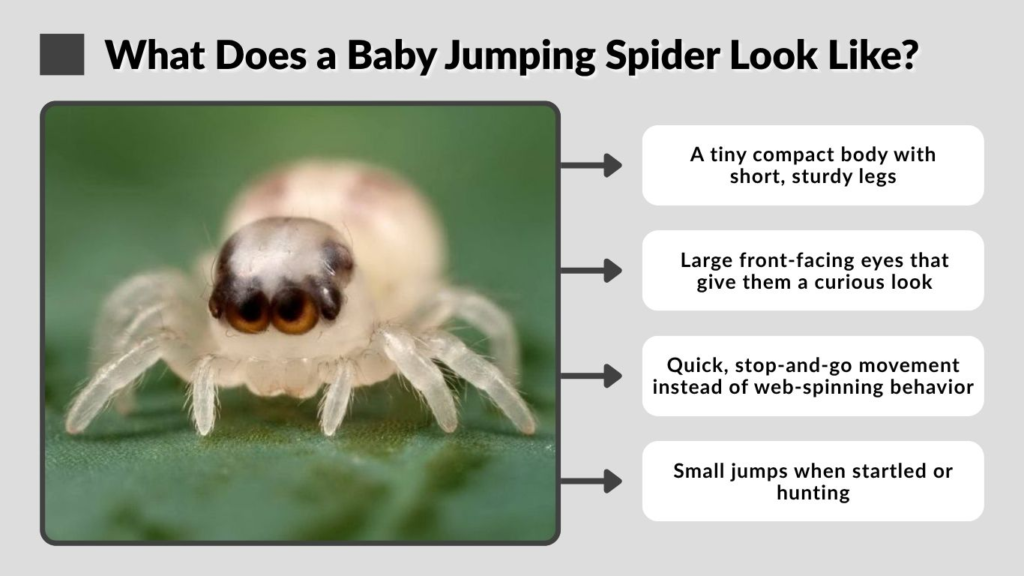
A baby jumping spider often looks like a miniature version of an adult, but its colors and markings may not be fully developed. Some are pale, brown, gray, black, or lightly patterned. Others may later become colorful species such as bold jumping spiders, regal jumping spiders, zebra jumping spiders, or tan jumping spiders.
Common Features of Baby Jumping Spiders
Most baby jumping spiders share a few visible traits:
- A tiny compact body with short, sturdy legs
- Large front-facing eyes that give them a curious look
- Quick, stop-and-go movement instead of web-spinning behavior
- Small jumps when startled or hunting
- A habit of turning toward movement
Their eyes are one of the easiest clues. Jumping spiders have large central eyes that help them judge distance and track prey. Even a tiny baby jumping spider may seem to “look” at you when you move nearby.
Baby Jumping Spider Size
Baby jumping spiders are usually very small, often only a few millimeters long when they first leave the egg sac. Their size depends on species, age, and molt stage. A newborn spiderling can be difficult to see clearly without a magnifying glass.
| Stage | Approximate Size | Notes |
| Newly hatched spiderling | 1–2 mm | Very delicate and usually near the egg sac |
| Young baby jumping spider | 2–4 mm | Begins hunting tiny prey |
| Older juvenile | 4–8 mm | Stronger, more visible markings |
| Adult jumping spider | 6–20+ mm | Size varies widely by species |
A baby zebra jumping spider or baby tan jumping spider may stay smaller than a baby regal jumping spider, which can grow into a much larger adult.
Are Baby Jumping Spiders Dangerous?
Baby jumping spiders are not considered dangerous to people. They are shy, small, and more interested in escaping than biting. A baby jumping spider bite is unlikely because spiderlings are tiny and their fangs are very small.
However, any spider may bite if it is trapped, squeezed, or handled roughly. If a bite happens, it is usually mild for most people, similar to a small pinprick or minor irritation. People with allergies or unusual reactions should take symptoms seriously and seek medical advice if swelling, pain, or other concerning signs appear.
Safe Interaction Tips
To avoid harming the spider or stressing it:
- Do not pinch or grab it with your fingers
- Use a soft brush or small cup if you need to move it
- Avoid blowing directly on it
- Keep it away from pets, chemicals, and sticky traps
- Release it outdoors if you do not plan to care for it properly
Baby jumping spiders are fragile. Even a short fall, rough touch, or unsuitable enclosure can injure them.
Baby Jumping Spider Care Basics
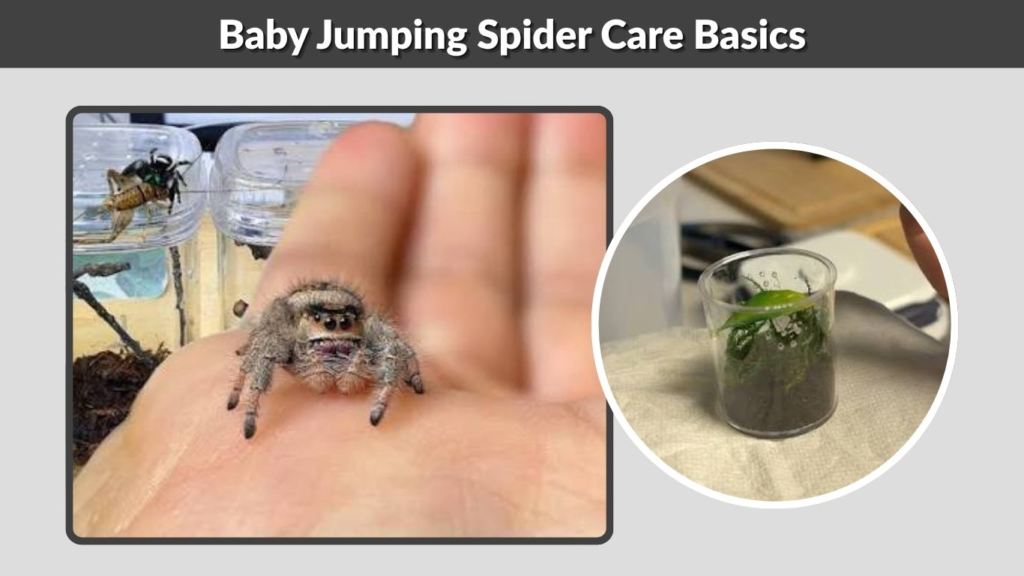
If you want to care for a baby jumping spider, the main goal is to provide a tiny, secure space with proper ventilation, humidity, and food. Many people accidentally use enclosures that are too large. A spiderling can struggle to find prey in a big container.
Best Baby Jumping Spider Enclosure
A small ventilated container is usually better than a large tank. The enclosure should prevent escapes while still allowing airflow. Tiny air holes should be small enough that the spiderling cannot squeeze through.
Good enclosure features include:
- A small, clear container for easy observation
- Fine ventilation holes or mesh
- A dry area for resting
- A small piece of bark, paper, or artificial plant for climbing
- No sharp decorations
- No deep water dish
Baby jumping spiders often build small silk hammocks near the top or side of the enclosure. This hammock is where they rest, molt, and hide. Avoid destroying it unless absolutely necessary.
Humidity and Water
Baby jumping spiders need moisture, but they can drown easily. Never place an open water bowl in a spiderling enclosure. Instead, lightly mist one side of the container or place a tiny drop of water on the wall.
The enclosure should not stay wet. Too much moisture can cause mold, stress, or poor molting conditions. A light mist every few days may be enough, depending on the room’s dryness and the species.
What Can You Feed a Baby Jumping Spider?
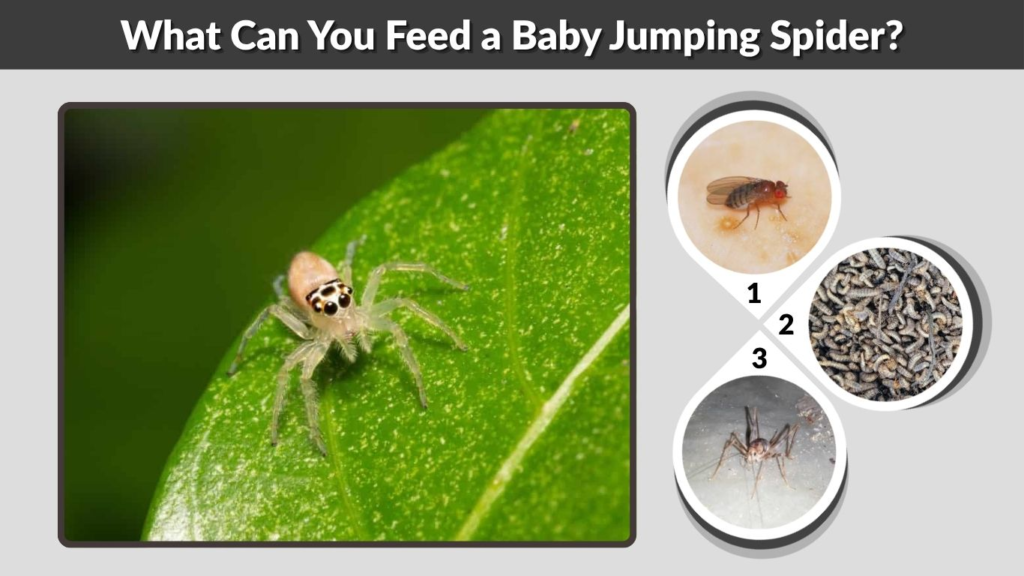
A baby jumping spider needs prey that is small enough for it to overpower. Food that is too large can scare, injure, or kill the spiderling. The safest choice is tiny live prey.
Best Foods for Baby Jumping Spiders
Suitable foods may include:
- Flightless fruit flies
- Small fruit fly larvae
- Springtails for very tiny spiderlings
- Pinhead crickets for larger juveniles
- Tiny house flies
- Small freshly killed prey if the spider accepts it
Most keepers use fruit flies because they are small, active, and easy for baby jumping spiders to hunt. Very young spiderlings may need the smallest fruit fly species or springtails.
Foods to Avoid
Do not feed prey that may harm the spiderling. Avoid:
- Large crickets
- Ants
- Wild insects exposed to pesticides
- Hard-bodied beetles
- Prey larger than the spider’s body
- Dead insects that are old or dried out
Ants are especially risky because they can bite, spray chemicals, or overwhelm a tiny spider. If you collect insects from outside, there is also a risk of pesticide contamination.
How Often Should You Feed a Baby Jumping Spider?
Most baby jumping spiders eat every 1 to 3 days when growing. The exact schedule depends on age, species, temperature, and appetite. A spiderling with a small abdomen may be hungry, while one with a round abdomen may not need food immediately.
A simple feeding routine is to offer tiny prey and remove uneaten food after a few hours. Do not leave dangerous prey inside overnight, especially crickets. Fruit flies are usually safer, but they should still be monitored.
Signs a Baby Jumping Spider Is Hungry
A hungry spiderling may:
- Actively stalk movement
- Spend more time exploring
- Have a smaller, flatter abdomen
- React quickly when prey appears
Signs It May Be Full or Preparing to Molt
A spiderling may refuse food if it is full, stressed, or close to molting. It may stay in its silk hammock, move less, or ignore prey. Do not force feeding. Molting is a sensitive time, and live prey should be removed to prevent injury.
Baby Jumping Spider Not Eating: What It Means
A baby jumping spider not eating is not always an emergency. Spiderlings may skip food before molting or after being moved to a new enclosure. Stress, unsuitable prey size, low temperature, or dehydration can also reduce appetite.
Check the basics first. Make sure the prey is small enough, the enclosure is not too large, and the spider has access to light moisture. If the spiderling is hiding in a hammock, it may be preparing to molt. In that case, leave it undisturbed and remove live prey.
If the abdomen becomes very thin and the spider remains weak for several days, the prey may be too large or the spider may be struggling. Try offering smaller food such as fruit flies or springtails.
How Many Babies Can a Jumping Spider Have?
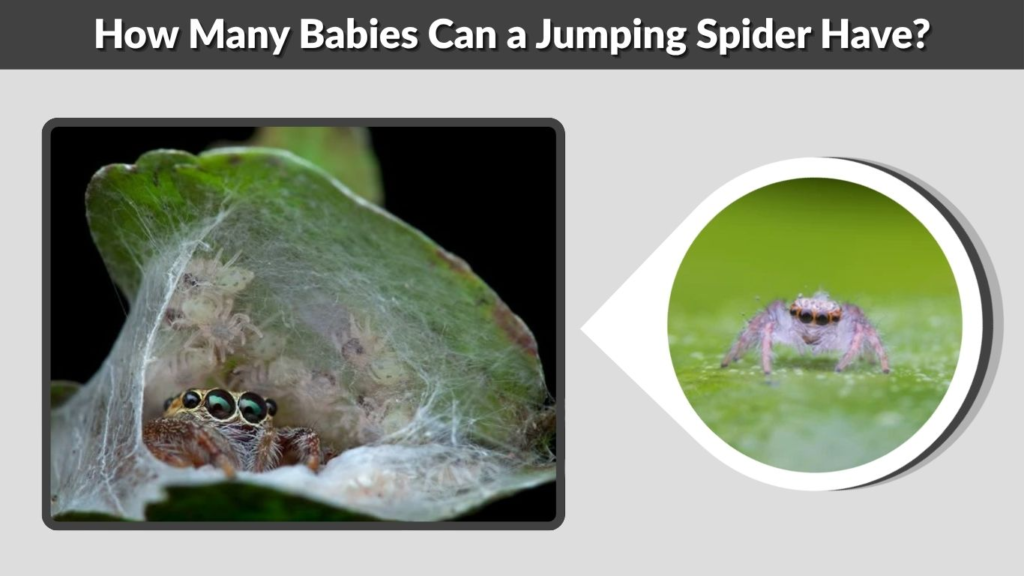
A female jumping spider can lay many eggs in a silk egg sac. The number depends on the species, the female’s size, and her condition. Some may produce a few dozen spiderlings, while larger species can produce much more.
When jumping spider babies hatch, they often remain together briefly before dispersing. In captivity, spiderlings may need to be separated as they grow because they can compete, stress each other, or even eat one another.
What to Do If Your Jumping Spider Had Babies
If your pet jumping spider had babies, stay calm and avoid opening the enclosure too often. Spiderlings are tiny escape artists.
Helpful steps include:
- Keep the enclosure closed and secure
- Avoid disturbing the egg sac or silk nest
- Prepare tiny food such as fruit flies
- Separate spiderlings once they start dispersing
- Use small individual containers for growing babies
- Mist lightly, but avoid soaking the enclosure
Not every spiderling will survive. This is normal, even with careful care.
Baby Jumping Spider vs Adult Jumping Spider
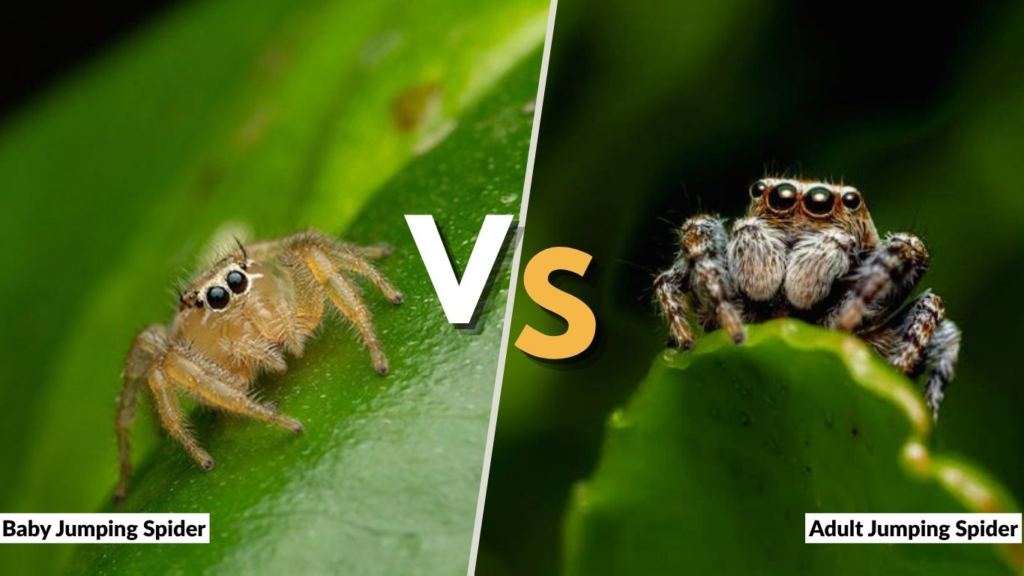
Baby and adult jumping spiders share many behaviors, but they have different needs. Baby spiders are more fragile, need smaller prey, and dehydrate more quickly. Adults are stronger, easier to identify, and can handle larger enclosures and prey.
A baby jumping spider also molts more frequently. Each molt allows it to grow. During this period, it may hide, refuse food, and become vulnerable. Adult jumping spiders molt less often, and mature males usually stop molting after reaching adulthood.
Can You Keep a Baby Jumping Spider as a Pet?
Yes, some people keep baby jumping spiders as pets, but spiderlings require more careful care than adults. Beginners often do better with an older juvenile or adult because they are easier to feed and less fragile.
A baby regal jumping spider, baby bold jumping spider, or baby tan jumping spider can grow into a fascinating pet, but it needs proper food, secure housing, and patience. Buying from a responsible breeder is usually safer than taking wild spiders, especially if you need species-specific care advice.
Before buying a baby jumping spider for sale, check local rules, species needs, and the seller’s reputation. Avoid sellers who cannot identify the species or explain feeding and molt stages.
Baby Jumping Spider Identification Tips
Identifying a baby jumping spider can be difficult because young spiders often lack adult colors. Many species change appearance after several molts. For example, a baby bold jumping spider may not yet show strong white markings, and a baby regal jumping spider may not display adult coloration.
To improve identification, look at:
- Location where it was found
- Body shape and eye pattern
- Color and markings
- Size
- Behavior
- Photos of local jumping spider species
Take a clear close-up photo from above and from the front if possible. Avoid handling the spider for a better picture. If the spider is very young, you may need to wait until it grows before making a confident identification.
Fun Facts About Baby Jumping Spiders
Baby jumping spiders are tiny, but their behavior is impressive. They do not rely on large prey-catching webs. Instead, they use vision, patience, and sudden jumps to hunt.
Interesting facts include:
- They use silk as a safety line when jumping
- They can track moving prey with excellent eyesight
- They build silk hammocks for resting and molting
- They may wave their front legs while exploring
- They learn their surroundings through movement and vision
Their curious appearance is one reason searches like “cute baby jumping spider” and “adorable baby jumping spider” are popular, even when the search volume looks low in keyword tools.
FAQs
What is a baby jumping spider called?
A baby jumping spider is called a spiderling. Spiderlings hatch from eggs inside a silk egg sac and stay near the nest briefly before dispersing. They look like tiny versions of adults, although their colors and markings may not fully develop until later molts.
What do you feed a baby jumping spider?
Baby jumping spiders should eat very small live prey, such as flightless fruit flies, springtails, or tiny flies. The prey should be smaller than the spider’s body. Avoid ants, large crickets, beetles, or wild insects that may have contacted pesticides.
How often do you feed a baby jumping spider?
Most baby jumping spiders can be offered food every 1 to 3 days. If the abdomen is round, the spider may be full. If it hides in a silk hammock and refuses food, it may be preparing to molt, so remove prey and avoid disturbing it.
How big is a baby jumping spider?
A newly hatched baby jumping spider may be only 1 to 2 millimeters long. Older spiderlings may reach several millimeters as they molt and grow. Size varies by species, so a baby regal jumping spider may eventually become much larger than a baby zebra jumping spider.
What should I do if I find a baby jumping spider indoors?
If you find one indoors, gently move it with a cup and paper or leave it alone if it is safe. Do not crush or grab it. If you want to keep it, prepare a secure ventilated enclosure, tiny prey, and light moisture before attempting care.
