
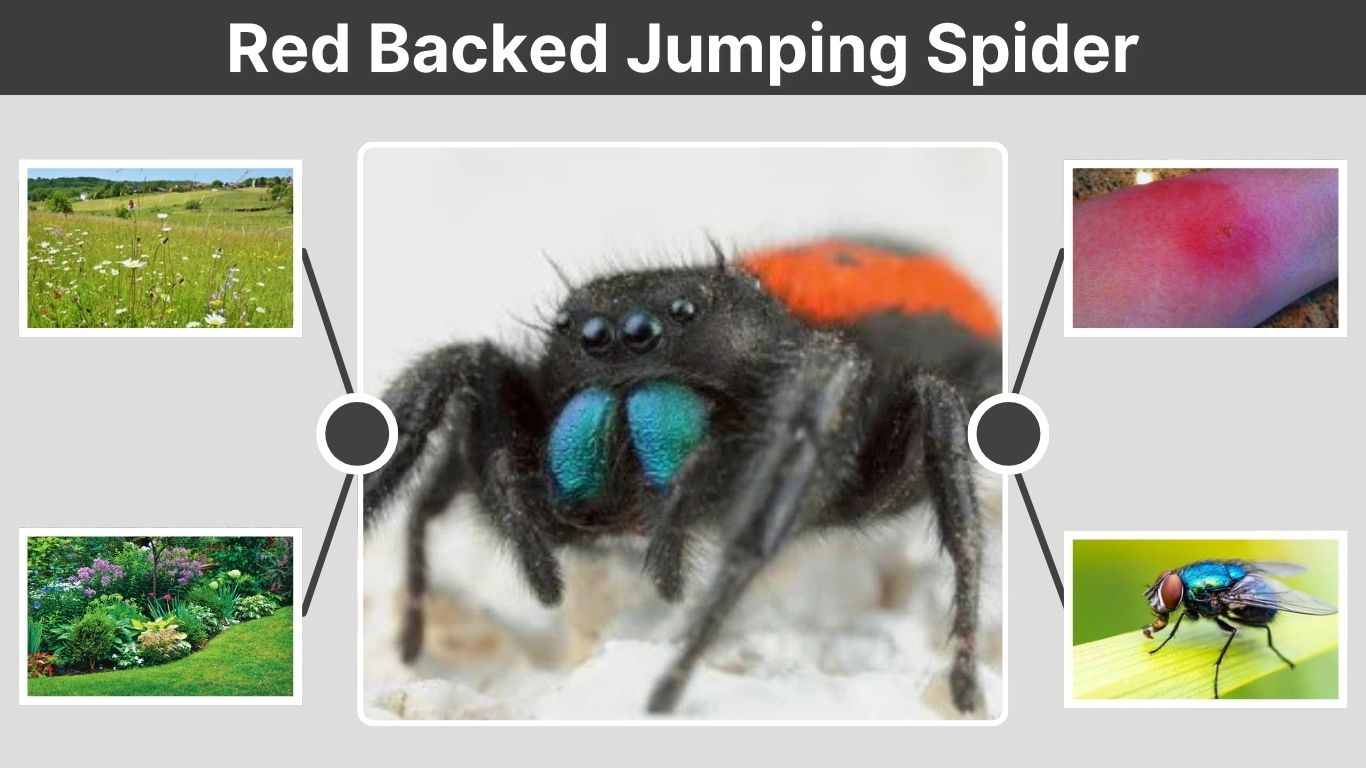
The red backed jumping spider is a striking black spider with a bright red or orange-red abdomen. It is most often identified as Phidippus johnsoni, also called the red-backed jumping spider or Johnson jumping spider. Many people notice it because of its bold color, quick movement, and large forward-facing eyes. Although it may look alarming, this spider is not considered dangerous to most people.
What Is a Red Backed Jumping Spider?
The red backed jumping spider is a member of the jumping spider family, Salticidae. Jumping spiders are active hunters rather than web-trapping spiders. They use excellent vision, careful stalking, and short jumps to catch insects and other small prey.
This spider is commonly seen on fences, plants, walls, wood, rocks, gardens, and dry outdoor areas. It may also appear near homes, especially where insects are present. Its black body and bright red back make it one of the easier jumping spiders to recognize.
The name can cause confusion. A “red backed jumping spider” is not the same as the Australian redback spider. The Australian redback is a widow spider, while the red-backed jumping spider is a compact, fuzzy, active hunter with large eyes.
Red Backed Jumping Spider Identification
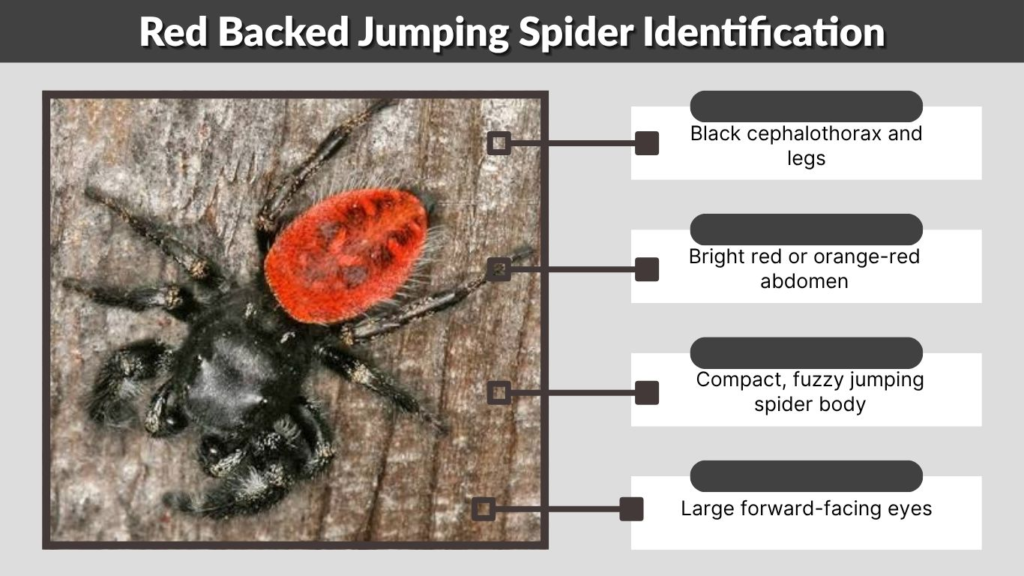
The easiest way to identify a red backed jumping spider is by its color pattern and body shape. It usually has a mostly black body with a red or orange-red abdomen. Like other jumping spiders, it has a compact build, short fuzzy body, strong legs, and large front-facing eyes.
Key Identification Features
Look for these features:
- Black cephalothorax and legs
- Bright red or orange-red abdomen
- Compact, fuzzy jumping spider body
- Large forward-facing eyes
- Quick, alert movements
- Short jumps rather than web hanging
- Often seen in sunny, dry places
Some people search for “black jumping spider with red dot on back” or “jumping spider with red spot on back.” These searches often describe a red-backed jumping spider, but other species can also show red or orange markings. Photos from the top, front, and side can help with a more confident identification.
Scientific Name
The red-backed jumping spider is commonly known as Phidippus johnsoni. It belongs to the same broad genus as other large, colorful jumping spiders. In many areas of western North America, it is one of the most noticeable red-and-black jumping spiders.
Red Backed Jumping Spider Male vs Female
Male and female red backed jumping spiders can look similar at first, but their abdominal patterns often differ. Both sexes can have a red abdomen, but females commonly show a black stripe or marking down the center of the red area. Males often appear to have a more solid red abdomen.
| Feature | Male Red Backed Jumping Spider | Female Red Backed Jumping Spider |
| Abdomen color | Often mostly solid red or orange-red | Red with a black central stripe or marking |
| Body shape | Usually slimmer | Often rounder and heavier |
| Pedipalps | Mature males have enlarged tips | Slimmer pedipalps |
| Behavior | More likely to roam for mates | More likely to stay near retreat or egg sac |
| Egg sac | Does not produce eggs | Can produce and guard egg sacs |
Male vs female identification is easiest in adults. Juveniles may not show clear reproductive traits, and their colors may change as they molt. If you are trying to identify a pet spider, wait until it is mature before making a confident sex determination.
Red Backed Jumping Spider Habitat
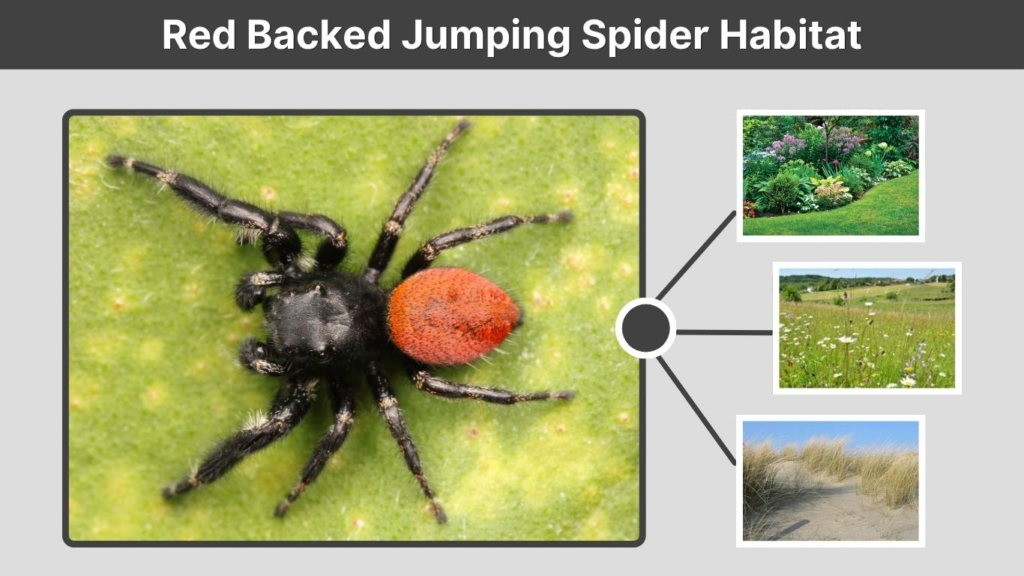
The red backed jumping spider is most associated with western North America. It is often reported from California and other western regions, including dry habitats, coastal areas, oak woodland, gardens, and sunny outdoor spaces.
Common Habitat Areas
You may find it in:
- Gardens
- Dry grasslands
- Coastal dunes
- Oak woodlands
- Shrubland
- Fences and walls
- Rocks and wood piles
- Around homes and sheds
This spider does not build a large prey-catching web. Instead, it creates small silk retreats. These retreats may be tucked under rocks, bark, wood, leaves, or sheltered surfaces. The spider uses the retreat for resting, molting, egg laying, and protection during bad weather.
Red Backed Jumping Spider Location
Many searches include state or region names, such as “California red back jumping spider,” “red back jumping spider Washington,” “red back jumping spider Utah,” “red back jumping spider New Mexico,” and “red backed jumping spider BC.”
The species is strongly associated with western North America, but similar-looking spiders may appear in other regions. If you are outside its typical range, identification should be made carefully. A black jumping spider with a red mark is not always Phidippus johnsoni.
California Red Back Jumping Spider
California is one of the most common places people report seeing red backed jumping spiders. They may be found in gardens, on outdoor walls, in dry vegetation, and around natural areas. The spider’s red back can stand out clearly against pale walls, soil, or green plants.
Red Back Jumping Spider in Homes
If one appears indoors, it likely wandered in while hunting or seeking shelter. It is not a household pest that infests food or damages structures. You can usually relocate it outdoors using a cup and paper.
Is the Red Backed Jumping Spider Poisonous?
The red backed jumping spider is not considered poisonous to people. More accurately, spiders are venomous rather than poisonous. Venom is injected through a bite, while poison is harmful when eaten or touched.
The red backed jumping spider does have venom, but it is used to subdue small insects and other prey. For humans, a bite is usually not medically serious. Most jumping spider bites cause only mild local symptoms, if they occur at all.
This spider’s red color can make people worry that it is highly dangerous. However, bright color alone does not mean a spider is harmful to humans. The red backed jumping spider should not be confused with the Australian redback spider, which is a different type of spider.
Red Backed Jumping Spider Bite
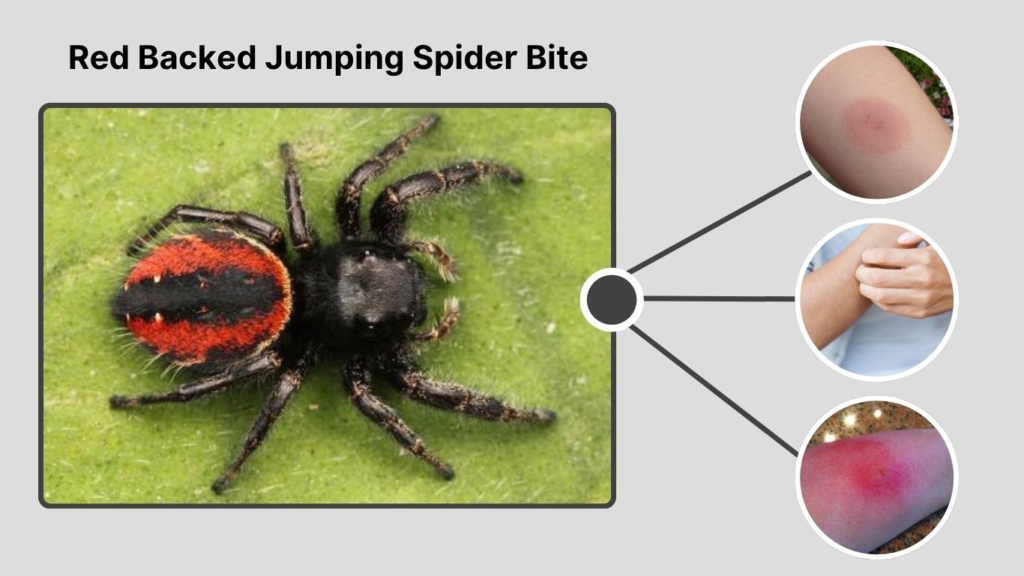
A red backed jumping spider bite is possible, but uncommon. These spiders are not aggressive toward people. A bite usually happens only if the spider is trapped, squeezed, or handled roughly.
Bite Symptoms
A mild red back jumping spider bite may cause:
- Brief pinching pain
- Minor redness
- Mild swelling
- Itching
- Tenderness
- A small raised bump
Most symptoms are local and temporary. The bite may look like a small insect bite or irritated red spot. Many skin marks are blamed on spiders even when the actual cause is unknown, so it is hard to confirm a bite unless you saw it happen.
When to Get Medical Help
Get medical care if symptoms are severe or unusual. Warning signs include trouble breathing, facial swelling, dizziness, spreading redness, pus, fever, severe pain, muscle cramps, or a wound that becomes dark or blistered. These signs may suggest an allergic reaction, infection, or a bite from a different spider.
Red Back Spider vs Jumping Spider
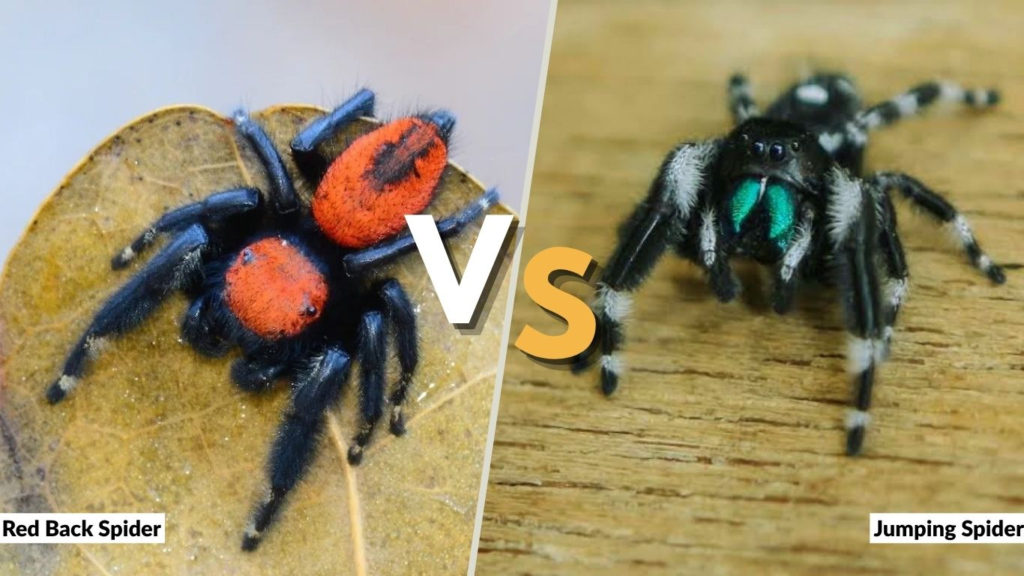
One important keyword in this topic is “red back spider vs jumping spider.” These are very different spiders.
The red-backed jumping spider is a jumping spider, usually Phidippus johnsoni. It has large front eyes, a compact fuzzy body, and a red back. It actively hunts prey and jumps short distances.
The redback spider, often written as “redback spider,” usually refers to Latrodectus hasselti, an Australian widow spider. It has a different body shape, different behavior, and medically significant venom.
| Feature | Red-Backed Jumping Spider | Australian Redback Spider |
| Spider type | Jumping spider | Widow spider |
| Body shape | Compact, fuzzy, active hunter | Round abdomen, web-building spider |
| Eyes | Large front-facing eyes | Small eyes, less noticeable |
| Web use | Uses retreats, hunts actively | Builds messy webs |
| Danger to humans | Usually mild bite risk | Medically significant |
| Common range | Western North America | Australia and introduced areas |
This distinction is important because the similar names can lead to unnecessary fear.
What Does a Red Backed Jumping Spider Eat?
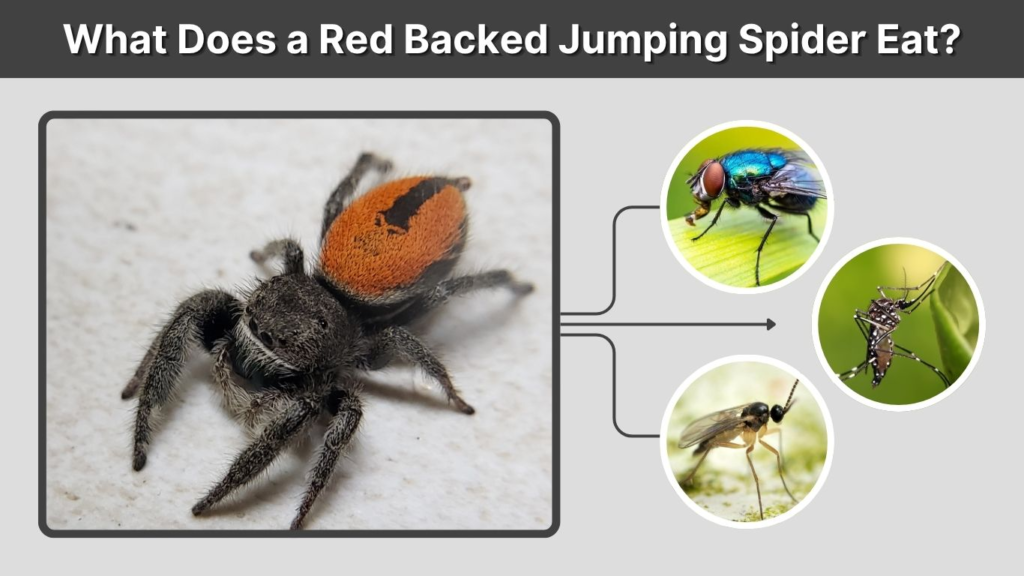
The red backed jumping spider is a predator. It eats small insects and other arthropods. It may hunt flies, small moths, mosquitoes, beetles, plant pests, and even other spiders.
Unlike web-building spiders, it does not wait for prey to get trapped. It stalks its target slowly, judges distance with its large eyes, then jumps quickly. Before jumping, it often attaches a silk safety line to the surface.
This hunting behavior makes the spider beneficial in gardens and around homes. It helps control small insects naturally.
Red Backed Jumping Spider Care
Some people search “red backed jumping spider care” or “red back jumping spider for sale” because jumping spiders are popular among spider keepers. If kept responsibly, they need a secure enclosure, proper ventilation, safe décor, and suitable live prey.
Basic Care Needs
A red backed jumping spider in captivity generally needs:
- A small, secure enclosure
- Cross ventilation
- Climbing surfaces
- Hiding areas or anchor points for silk retreats
- Proper humidity without soaking the enclosure
- Small live feeder insects
- Clean water droplets misted safely
- Protection from overheating and direct sun
Avoid wild collection where it is restricted or harmful to local populations. If purchasing, choose ethical captive-bred sources when available. Never release a captive spider into a non-native area.
Feeding
Feed prey that is smaller than the spider or about an appropriate manageable size. Common feeder options may include small flies, small crickets, or other suitable feeder insects. Remove uneaten prey if it could harm the spider, especially during molting.
Red Backed Jumping Spider Lifespan
The red backed jumping spider lifespan can vary depending on conditions, sex, age, and whether it lives in the wild or captivity. Like many jumping spiders, its life is shaped by molting, feeding, mating, and environmental conditions.
In the wild, many individuals do not survive long because of predators, weather, parasites, and food shortages. In captivity, careful feeding and protection may help some individuals live longer. Females often live longer than males after maturity, while mature males may spend more energy searching for mates.
Baby Red Backed Jumping Spiders
Baby red backed jumping spiders, or spiderlings, are tiny and delicate. They hatch from an egg sac guarded by the female. After emerging, they gradually disperse and begin hunting very small prey.
Spiderlings may not show the same strong red-and-black pattern as adults. Their color can change with age and molting. Because of their small size, they are harder to identify confidently.
Are Red Backed Jumping Spiders Dangerous?
Red backed jumping spiders are not considered dangerous to most people. They may look bold because they turn to watch movement and may jump suddenly, but they are not trying to attack humans.
They are generally beneficial predators and can be left alone outdoors. If found indoors, relocate the spider gently rather than crushing it. Use a cup and paper, then release it in a sheltered outdoor area.
FAQs
Is a red backed jumping spider poisonous?
No, a red backed jumping spider is not considered poisonous to humans. Technically, it is venomous because it uses venom to catch prey, but its bite is usually mild for people. Most bites cause only local irritation, if any symptoms occur.
Does a red back jumping spider bite?
Yes, it can bite, but bites are uncommon. A red back jumping spider usually bites only when trapped, squeezed, or handled roughly. It is more likely to jump away than attack. Most bites are mild and temporary.
What does a red backed jumping spider bite look like?
A bite may look like a small red bump, mild swelling, or an irritated spot. It can resemble a mosquito bite or other minor insect bite. If the mark spreads, becomes very painful, drains pus, or blisters, seek medical advice.
Where do red backed jumping spiders live?
Red backed jumping spiders are most associated with western North America. They are often found in dry habitats, gardens, oak woodland, coastal areas, rocks, wood, fences, and outdoor walls. Similar-looking spiders may occur elsewhere, so location helps with identification.
Can you keep a red backed jumping spider as a pet?
Yes, some experienced keepers keep red backed jumping spiders, but they need proper care. They require a secure ventilated enclosure, climbing space, small live prey, safe moisture, and protection during molts. Captive-bred spiders are preferred over wild collection when available.
