
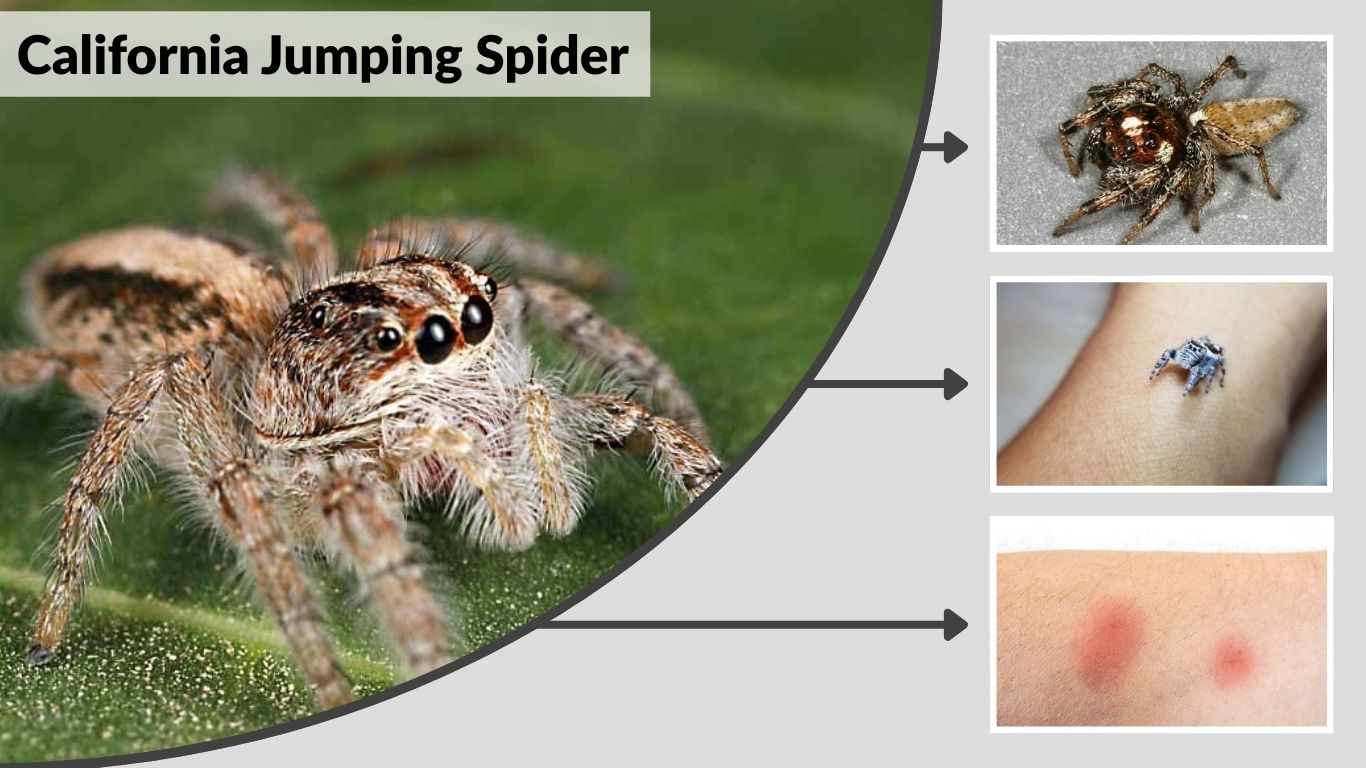
California is home to many jumping spiders, from tiny brown species on fences to colorful red-backed spiders in gardens and chaparral. Most are harmless, active hunters that use their large eyes and quick jumps to catch insects. This guide explains how to identify a California jumping spider, where different types are found, whether they bite, and what to do if you see one indoors or outdoors.
What Is a California Jumping Spider?
A California jumping spider is any jumping spider found in California. It is not one single species. The state has many jumping spiders with different colors, sizes, and habitats. Some are black and white, some are brown or gray, and others have red, orange, or pale markings.
Jumping spiders belong to the Salticidae family. They are known for their large forward-facing eyes, compact bodies, and short jumps. Unlike orb-weaving spiders, they do not build large sticky webs to catch prey. Instead, they stalk insects and leap when close enough.
You may see a jumping spider in California on walls, windowsills, fences, shrubs, tree bark, rocks, garden plants, or outdoor furniture. Many are active during the day because they rely heavily on vision.
How to Identify a Jumping Spider in California
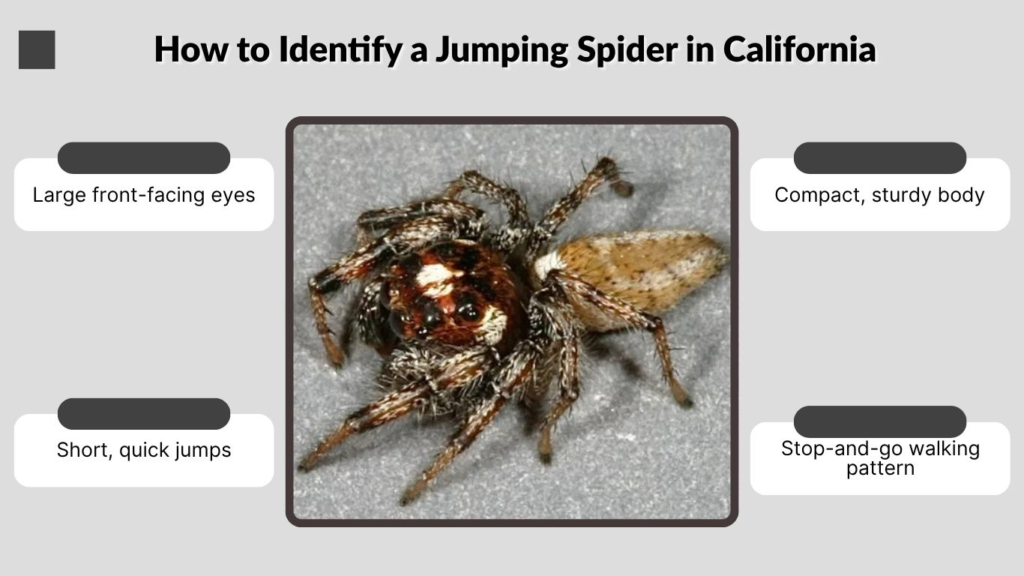
Jumping spiders are usually easier to identify by behavior and body shape than by color alone. California has many spiders that may look similar at first, so look for a combination of features.
Key Identification Features
A jumping spider usually has:
- Large front-facing eyes
- Compact, sturdy body
- Short, quick jumps
- Stop-and-go walking pattern
- Fuzzy or hairy appearance
- Habit of turning toward movement
- No large prey-catching web
The eyes are the strongest clue. Jumping spiders have a distinctive “face” with large central eyes. If the spider seems to look directly at you, turns when you move, and jumps short distances, it may be a jumping spider.
Size of California Jumping Spiders
Most California jumping spiders are small. Some are only a few millimeters long, while larger species can be more noticeable. Females are often larger and rounder than males. Juveniles may look pale, tiny, or less colorful than adults.
| Type or Description | Common Look | Notes |
| California red jumping spider | Gray body with red-orange abdomen | Often linked with Phidippus adumbratus |
| California flattened jumping spider | Brown, gray, flattened body | Often seen on walls, fences, or bark |
| Bold jumping spider | Black with pale spots, sometimes greenish fangs | Common North American jumping spider |
| Brown jumping spider | Tan, gray, or mottled brown body | Often blends with bark, walls, or soil |
| Tiny jumping spider | Very small juvenile or small species | Harder to identify without close photo |
California Red Jumping Spider
The California red jumping spider is one of the most searched types in this keyword group. It usually refers to a red or orange-backed jumping spider found in parts of California. Many people notice the bright abdomen first and describe it as a red back, orange back, or red abdomen.
What It Looks Like
A California red jumping spider may have a gray, black, or pale body with a red-orange abdomen. Some individuals have pale spots or light markings on the abdomen. The spider may look fuzzy, alert, and compact.
People may search for it using phrases such as:
- red jumping spider California
- California red back jumping spider
- red backed jumping spider California
- jumping spider red abdomen California
- black and red jumping spider California
Because color can vary by age, sex, lighting, and species, a photo is the best way to confirm identification.
Where It May Be Found
Red or orange-backed jumping spiders may be seen on plants, leaves, fences, outdoor walls, and natural habitats such as chaparral or scrub areas. In Southern California, people often report colorful jumping spiders in gardens, coastal areas, and dry outdoor landscapes.
They are not pests. They are natural predators of small insects and usually leave people alone.
California Flattened Jumping Spider
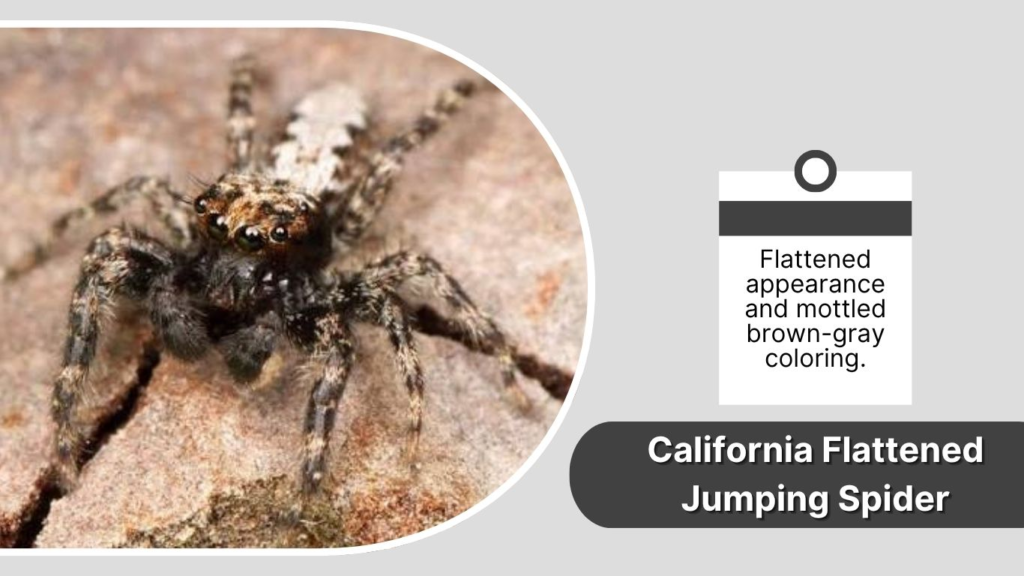
The California flattened jumping spider is another important species in this keyword cluster. It is often described as flat, brown, gray, mottled, or bark-like. Its flattened body helps it hide against surfaces.
How to Recognize It
The California flattened jumping spider often has a low, flattened appearance and mottled brown-gray coloring. This makes it blend in well with tree bark, fences, posts, and walls. It may not look as colorful as a red jumping spider, but it has the same jumping spider traits: large eyes, quick movement, and active hunting.
Common searches include:
- California flattened jumping spider
- California flatten jumping spider
- California flattened jumping spider bite
- brown jumping spider California
- small brown jumping spider California
Is the California Flattened Jumping Spider Dangerous?
It is not considered dangerous to people. Like other jumping spiders, it may bite defensively if trapped or squeezed, but it is not aggressive. Most people can simply leave it alone or move it outside with a cup and paper.
Bold Jumping Spider in California
The bold jumping spider, also called the daring jumping spider, is a well-known black jumping spider with pale spots and sometimes metallic green or blue-looking mouthparts. It is common across much of North America and may be seen in California as well.
What It Looks Like
A bold jumping spider often has a black fuzzy body with white, cream, orange, or yellowish spots. Young individuals may show orange markings that become lighter with age. This is why people may search for “black jumping spider California,” “large black jumping spider California,” or “black jumping spider green fangs California.”
You may notice:
- Black fuzzy body
- Pale spots on abdomen
- Strong front legs
- Iridescent green or blue chelicerae
- Curious, alert movement
- Short jumps when hunting or escaping
Despite its bold behavior, it is not a dangerous spider.
Black, Brown, White, and Orange Jumping Spiders in California
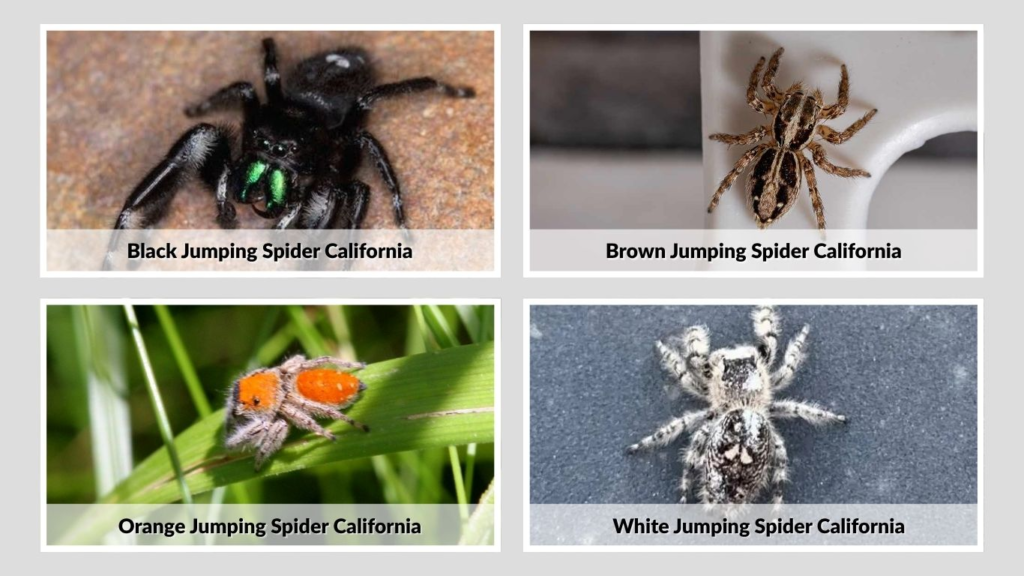
Many California jumping spider searches are based on color. This is useful for narrowing possibilities, but color alone is not enough for exact species identification.
Black Jumping Spider California
A black jumping spider in California may be a bold jumping spider or another dark salticid species. Some have white spots, pale bands, orange markings, or greenish mouthparts. Large black jumping spiders are usually more noticeable, but many are still small compared with other household spiders.
If the spider is compact, fuzzy, and turns to face movement, it is likely a jumping spider rather than a dangerous spider.
Brown Jumping Spider California
Brown jumping spiders are common because brown and gray patterns provide camouflage. They may live on bark, fences, rocks, soil, or dry garden areas. A small brown jumping spider in California may be a juvenile or a naturally small species.
Brown jumping spiders are often overlooked because they blend into their surroundings. They may only become noticeable when they jump or move across a bright wall.
Orange Jumping Spider California
An orange jumping spider in California may be a red-backed species, a juvenile, or a spider with orange abdominal markings. Some spiders that look orange in sunlight may look red, rust, or brown in shade.
Orange and red markings are common search triggers because they can make people worry about venom. However, jumping spiders with orange or red backs are usually not dangerous to people.
White Jumping Spider California
A white jumping spider may be pale, cream-colored, gray-white, or a spider with white spots. Some black jumping spiders have white abdominal markings. Others may appear white after molting or because of lighting.
If the spider is very pale and long-legged, check carefully because it may not be a jumping spider. Eye pattern and behavior are more reliable than color.
Northern California vs Southern California Jumping Spiders
California has many habitats, so jumping spider species can vary between Northern California, Southern California, coastal regions, valleys, mountains, deserts, and urban areas.
Northern California Jumping Spiders
In Northern California, jumping spiders may be found on garden plants, fences, bark, walls, trails, and around homes. Brown, gray, black, and mottled species are common because they blend well with trees, wood, and outdoor structures.
Searches such as “jumping spider northern California” and “golden jumping spider northern California” often come from people trying to identify spiders seen around gardens, parks, or homes.
Southern California Jumping Spiders
Southern California has dry gardens, chaparral, coastal scrub, and warm urban landscapes where jumping spiders can be active. Red, orange, black, brown, and flattened jumping spiders may be noticed on leaves, walls, fences, and outdoor furniture.
Searches such as “southern California jumping spider,” “jumping spider south California,” and “small jumping spider Southern California house” often involve spiders seen indoors or near patios.
California Jumping Spider Bite
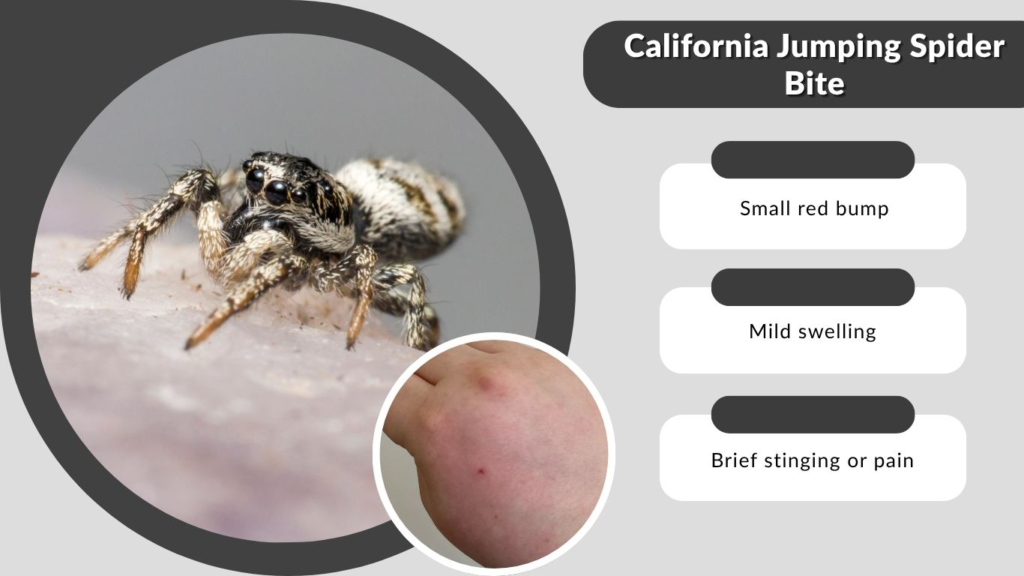
A California jumping spider bite is possible but uncommon. Jumping spiders are not aggressive toward people. They usually jump away or hide when disturbed. A bite is most likely if the spider is pressed against skin, trapped in clothing, or handled roughly.
What a Bite May Feel Like
A minor jumping spider bite may cause:
- Small red bump
- Mild swelling
- Itching
- Brief stinging or pain
- Local irritation
Most mild bites can be washed with soap and water and monitored. A cold compress may help with swelling. Seek medical advice if symptoms worsen, spread, become very painful, or if you have signs of an allergic reaction.
Are California Jumping Spiders Poisonous?
California jumping spiders are venomous to their prey, but they are not considered poisonous or dangerous to humans. “Poisonous” usually means harmful when touched or eaten, while “venomous” means venom is injected by a bite or sting. Jumping spiders use venom to subdue insects, not to attack people.
Are Jumping Spiders Good to Have Around?
Jumping spiders are beneficial predators. They eat small insects and may help reduce flies, gnats, mosquitoes, and other tiny pests around homes and gardens. They do not damage wood, fabric, food, or plants.
In most cases, the best response is to leave them alone. If one is indoors and you do not want it there, gently move it outside.
How to Move One Safely
To relocate a jumping spider:
- Place a clear cup over it
- Slide a piece of paper underneath
- Carry it outside carefully
- Release it near plants, bark, or a sheltered wall
- Avoid grabbing it with fingers
This method protects both you and the spider.
California Jumping Spider as a Pet
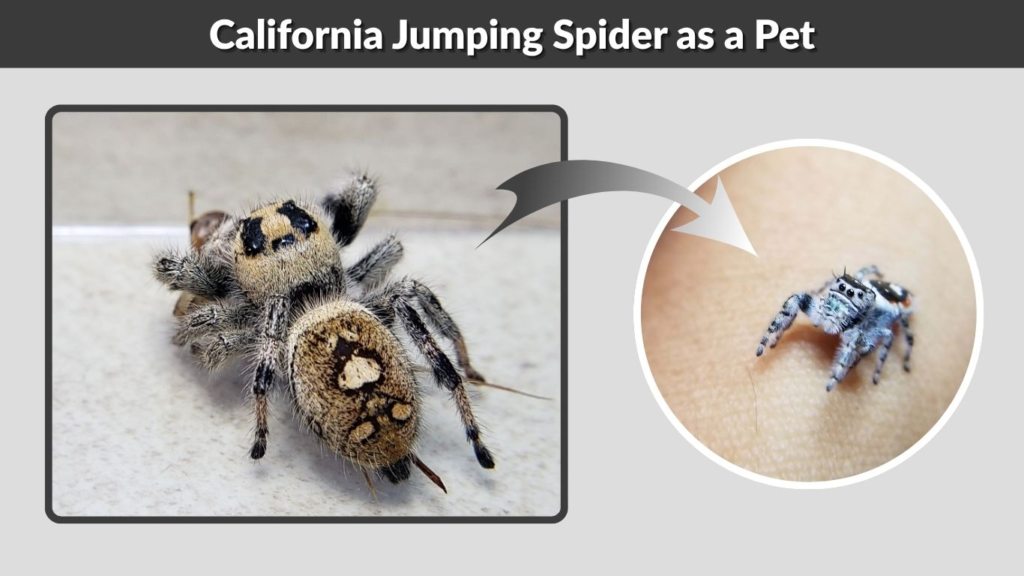
Some people search for “California jumping spider for sale” or “jumping spider pet California.” Jumping spiders can be kept as pets, but they need proper care. Wild-caught spiders may be adults, stressed, or difficult to identify, so beginners often do better with captive-bred spiders from responsible sellers.
Basic Care Needs
A pet jumping spider needs:
- Small ventilated enclosure
- Climbing surfaces
- A place to build a silk retreat
- Light misting for moisture
- Properly sized live prey
- No deep water dish
- No pesticide-exposed insects
Before buying a jumping spider, check local rules and make sure the seller identifies the species. Avoid buying spiders from sellers who cannot explain age, feeding needs, or enclosure requirements.
How to Photograph a California Jumping Spider for Identification
A clear photo can make identification much easier. Many jumping spiders are too small to identify from a quick glance, especially juveniles or brown species.
For a useful photo, try to capture:
- Front view showing the eyes
- Top view showing body markings
- Side view of the abdomen is colorful
- Location where it was found
- Approximate size
- Behavior, such as jumping or hiding
Do not harm or handle the spider for a photo. Natural light and a steady close-up are usually enough.
FAQs
What is the most common California jumping spider?
There is no single jumping spider that represents all of California. Common sightings include black, brown, gray, red-backed, and flattened jumping spiders. The bold jumping spider and California flattened jumping spider are among the types people often notice around homes, walls, fences, and gardens.
Are California jumping spiders dangerous?
California jumping spiders are generally not dangerous to people. They are small, shy hunters that usually escape rather than bite. A bite may cause mild redness, swelling, or itching, but serious reactions are uncommon. Seek medical help if symptoms become severe or unusual.
What is the red jumping spider in California?
The red jumping spider in California often refers to the California red jumping spider, commonly associated with Phidippus adumbratus. It may have a gray or dark body with a red-orange abdomen. Exact identification still depends on location, markings, size, and a clear photo.
Do California jumping spiders live indoors?
Yes, jumping spiders may wander indoors while hunting insects or seeking shelter. They do not usually infest homes or build large webs. If you find one inside, you can leave it alone or gently relocate it outdoors using a cup and paper.
Can I keep a California jumping spider as a pet?
Yes, some jumping spiders can be kept as pets, but they need a secure ventilated enclosure, small live prey, climbing space, and light moisture. Captive-bred spiders are usually better for beginners than wild-caught spiders because their species, age, and care needs are easier to confirm.
