
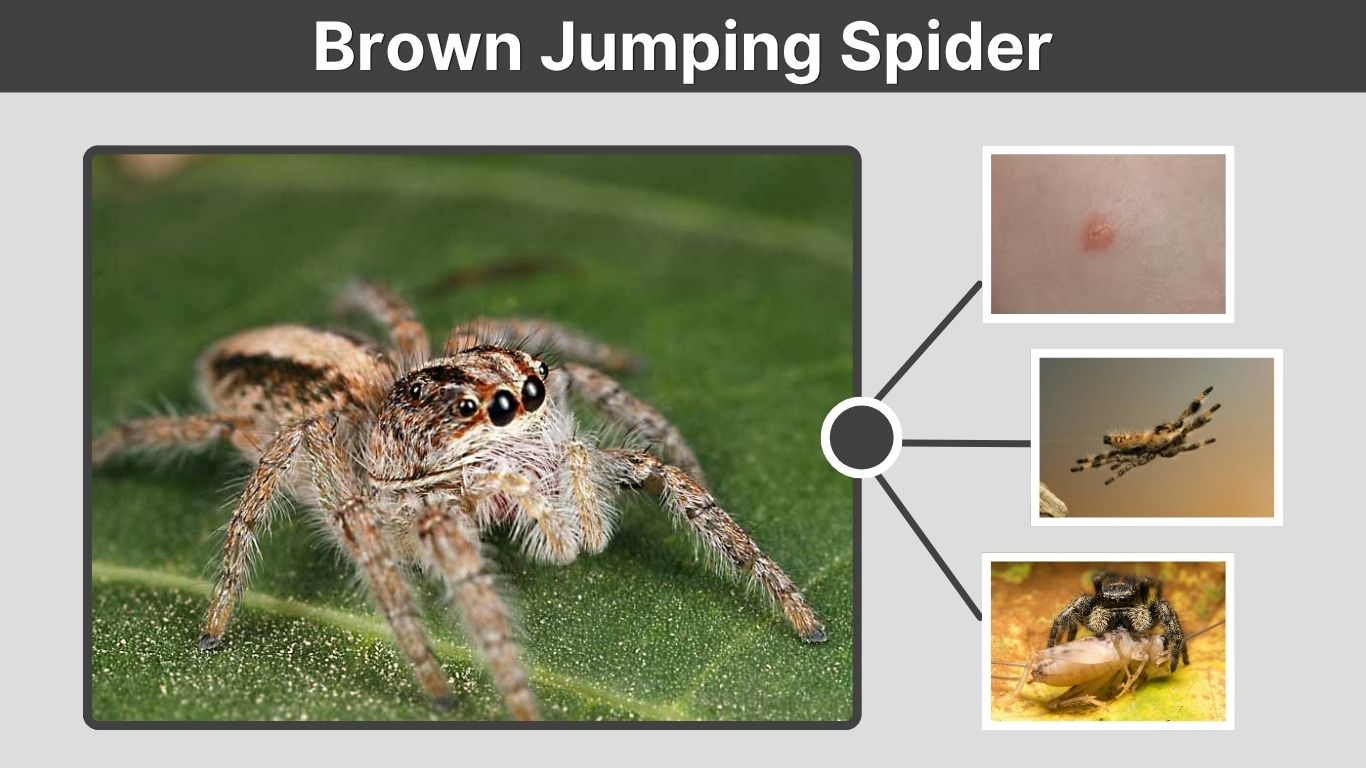
A brown jumping spider can look alarming when it suddenly hops across a wall, window, floor, or garden plant. In most cases, it is not a brown recluse and is not a serious threat to people. Brown jumping spiders are usually small, alert, active hunters with large front-facing eyes, compact bodies, and quick jumping movements. This guide explains how to identify them, where they live, whether they bite, and how they compare with brown recluse spiders.
What Is a Brown Jumping Spider?
A brown jumping spider is usually any brown or tan spider from the jumping spider family, Salticidae. “Brown jumping spider” is not always one exact species. Instead, people use the name for several small jumping spiders that appear brown, tan, gray-brown, or brown and black.
Why People Notice Them
Jumping spiders are easier to notice than many other spiders because they do not simply sit in webs. They walk, stop, turn toward movement, and leap short distances. Their behavior can make them seem curious or bold.
Common places to see them include:
- Windowsills and sunny walls
- Garden plants and fences
- Patio furniture and porch railings
- Basements, garages, and sheds
- Indoor corners near light or insects
They often enter homes by accident while following prey or shelter.
Are They the Same as Brown Recluse Spiders?
No. A brown jumping spider and a brown recluse spider are not the same. Jumping spiders are active daytime hunters with large eyes and compact bodies. Brown recluse spiders are reclusive, flatter-looking, usually more uniform brown, and do not have the same large front-eye appearance.
The confusion happens because both can be brown and small. However, their movement, body shape, and eye arrangement are very different.
How to Identify a Brown Jumping Spider
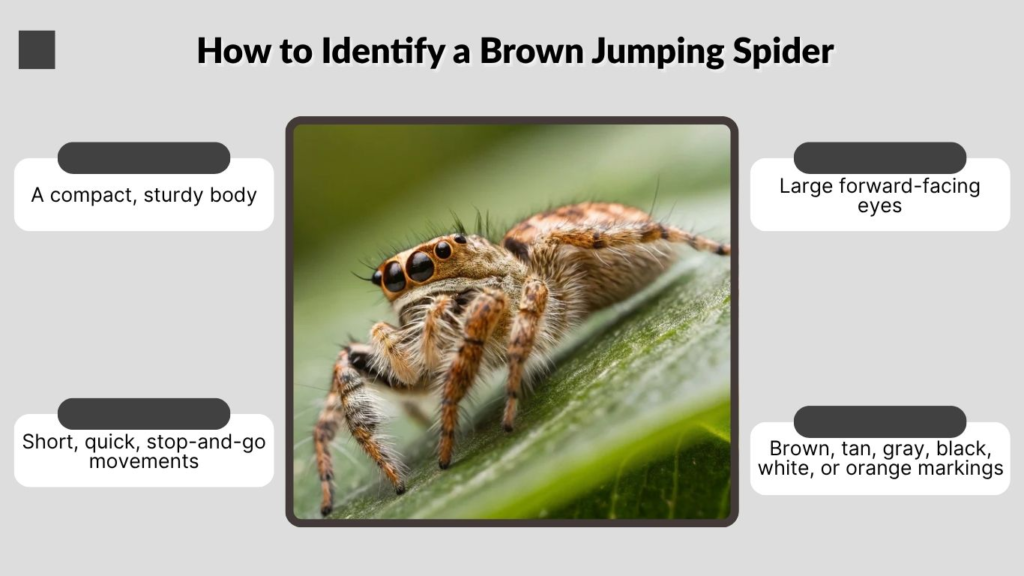
Brown jumping spiders can vary in color, but they usually share several easy-to-spot traits. The most useful identification clue is not color alone. Look at the eyes, body shape, movement, and behavior together.
Key Features
A typical brown jumping spider may have:
- A compact, sturdy body
- Large forward-facing eyes
- Short, quick, stop-and-go movements
- Hairy or fuzzy legs and body
- Brown, tan, gray, black, white, or orange markings
- A habit of turning toward movement
- The ability to leap short distances
Some species have white spots, stripes, orange markings, or darker front legs. Others are light brown, golden brown, or dark brown.
Brown and White Jumping Spiders
Many people search for a brown and white jumping spider because white markings are common in several species. These markings may appear as spots, bands, stripes, or patches on the abdomen or legs.
A brown and white jumping spider is often harmless and may be one of many local jumping spider species. The white markings alone are not enough for exact species identification, but they are helpful when combined with body shape and eye pattern.
Brown and Black Jumping Spiders
A brown and black jumping spider may look darker than expected, especially indoors or in low light. Some jumping spiders have dark front legs, black heads, or black-and-brown striped bodies. Others may be immature individuals whose colors change as they grow.
If the spider is stocky, hairy, and turns its large eyes toward you, it is more likely a jumping spider than a recluse.
Does a Brown Recluse Spider Jump?
This is one of the most common questions because many people see a brown spider move quickly and worry it is a brown recluse. Brown recluse spiders do not jump like jumping spiders. They move by walking or running and prefer to hide in quiet, dark places.
Brown Recluse vs Jumping Spider
The easiest way to separate the two is behavior. A jumping spider actively stalks prey and may leap. A brown recluse avoids attention and usually hides.
| Feature | Brown Jumping Spider | Brown Recluse Spider |
| Movement | Jumps, stalks, turns toward motion | Crawls or runs, avoids light |
| Body shape | Compact and often fuzzy | Flatter, smoother, longer-legged |
| Eyes | Large front-facing eyes | Six eyes in pairs, not large front eyes |
| Color | Brown, black, white, tan, orange patterns | Usually more uniform brown |
| Web use | Silk retreat, not prey-catching web | Irregular retreat web |
| Human risk | Usually low | Medically important in true range |
Can a Brown Recluse Be Mistaken for a Jumping Spider?
Yes, but the opposite is more common: harmless brown spiders are often mistaken for brown recluses. Many brown spiders, including jumping spiders, wolf spiders, sac spiders, and house spiders, may look suspicious at first glance.
A spider that jumps, watches you, and has big front eyes is much more consistent with a jumping spider than a brown recluse.
Common Brown Jumping Spider Species
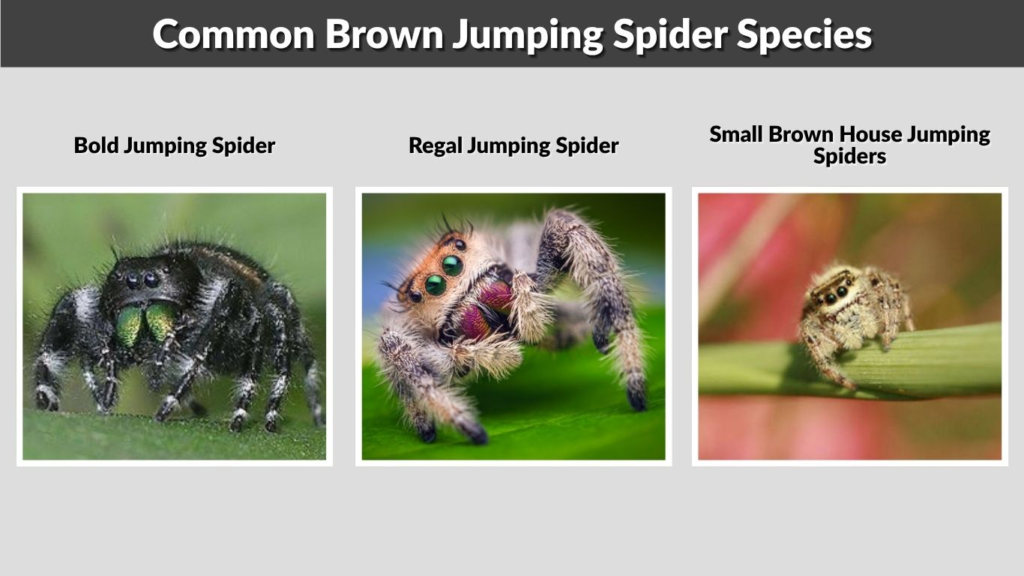
There are many jumping spider species, and exact identification can be difficult without a clear close-up photo. Still, several groups are commonly noticed around homes and gardens.
Bold Jumping Spider
The bold jumping spider is one of the most recognized jumping spiders in North America. It is often black with white spots, but individuals can look brownish depending on age, lighting, or molting stage. Some may be described as a brown bold jumping spider.
Bold jumpers are active hunters and are often found on walls, fences, windows, and garden structures.
Regal Jumping Spider
The regal jumping spider is a large, attractive jumping spider found mostly in warmer regions. Females can have gray, brown, orange, or patterned coloration, while males are often darker. People may describe some females as brown regal jumping spiders.
They are popular among spider enthusiasts because of their size and expressive-looking eyes.
Small Brown House Jumping Spiders
A small brown jumping spider in the house is often a harmless indoor visitor. These spiders may hunt flies, gnats, moths, and other small insects near windows or lights.
They do not infest homes in the same way ants, roaches, or bed bugs do. Seeing one or two usually means they found prey or wandered inside.
Brown Jumping Spider by Location
Searches for brown jumping spiders often include a state, country, or region because spider species vary by location. A brown jumping spider in California may not be the same species as one in Texas, Florida, Georgia, Arizona, or Michigan.
United States
Brown jumping spiders are common across many parts of the United States. They may be found in:
- California
- Texas
- Florida
- Georgia
- Arizona
- Colorado
- Illinois
- Indiana
- Michigan
- Missouri
- Ohio
- Oregon
In warm states, jumping spiders may be active for longer periods of the year. In colder states, they are more noticeable during warm months or indoors.
UK, Canada, and Australia
Brown jumping spiders also occur outside the United States. The UK, Canada, and Australia all have jumping spiders, though the species differ. Australia has many distinctive jumping spiders, including colorful and patterned species. Canada and the UK have smaller species that may be noticed on walls, plants, fences, and sunny outdoor surfaces.
Because species vary by region, the best way to identify one is to use a clear photo and local spider identification resources.
Brown Jumping Spider Bite: Should You Worry?
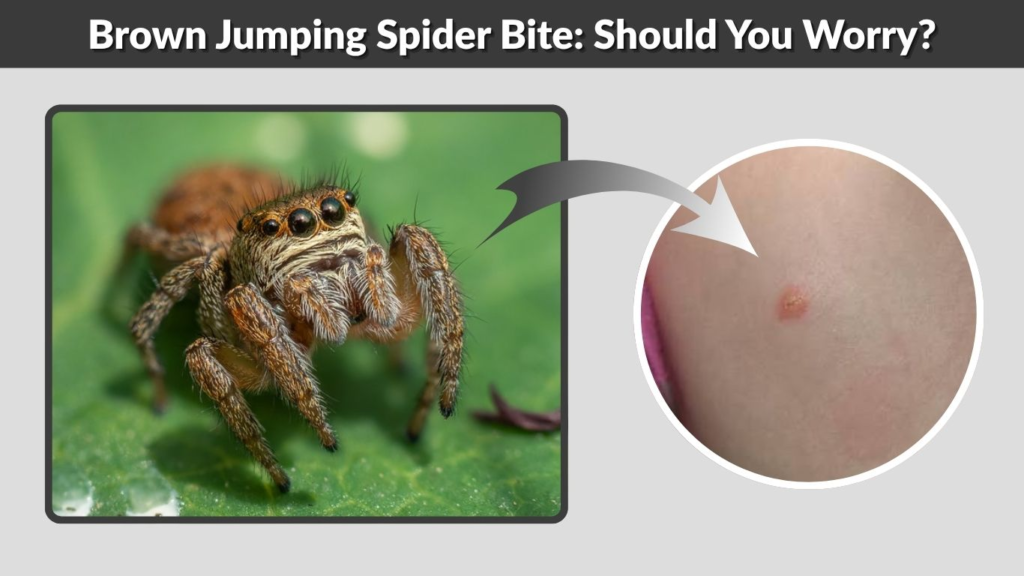
A brown jumping spider bite is usually not serious. Jumping spiders are not aggressive toward people and generally bite only if trapped, pressed against the skin, or handled roughly. Most would rather escape.
Possible Bite Symptoms
If a jumping spider bites, symptoms may include:
- Mild redness
- Slight swelling
- Itching
- Minor pain or tenderness
- A small raised bump
These symptoms are often similar to a mosquito bite or minor skin irritation. Clean the area with soap and water, apply a cold compress, and avoid scratching.
When to Get Medical Help
Seek medical care if symptoms worsen, spread, or include severe pain, fever, pus, increasing redness, dizziness, trouble breathing, or signs of an allergic reaction. Also get help if you believe the spider may have been a medically important species such as a brown recluse or black widow.
Do not diagnose a brown recluse bite based only on a wound. Many skin problems can resemble spider bites, including bacterial infections, allergic reactions, and other irritations.
Why Do Brown Jumping Spiders Jump?
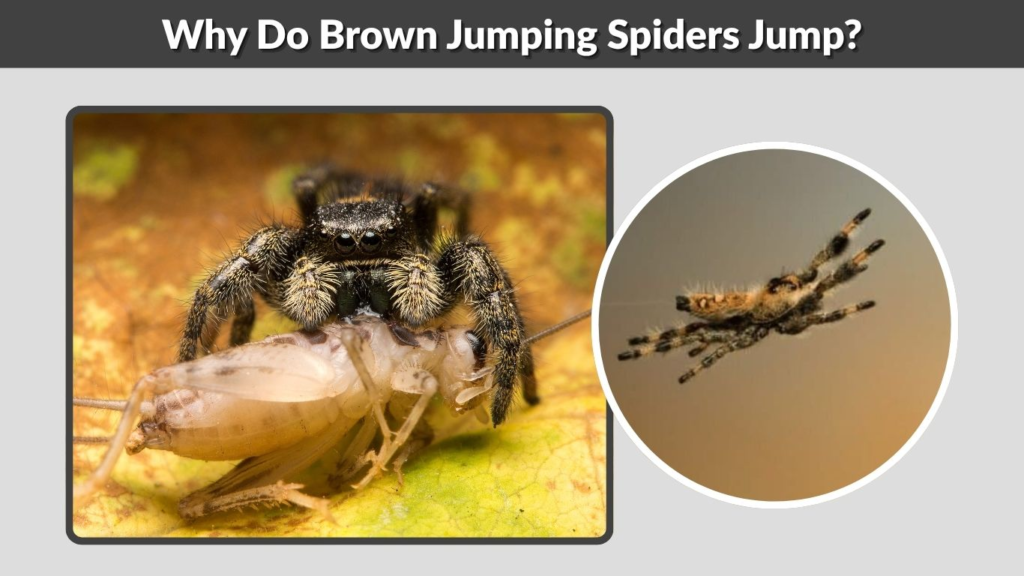
Jumping spiders jump because they are active hunters. Instead of building a web to catch prey, they stalk insects and pounce. Their jumps are controlled and usually short. Before jumping, they may pause, aim, and attach a silk safety line.
What They Eat
Brown jumping spiders commonly eat small insects and other tiny arthropods, such as:
- Flies
- Gnats
- Mosquitoes
- Small moths
- Aphids
- Other small spiders
This makes them beneficial around homes and gardens. They help reduce small pest populations naturally.
Are They Aggressive?
A brown jumping spider may seem aggressive because it faces you, raises its front legs, or jumps suddenly. In reality, this is usually defensive or exploratory behavior. Their large eyes help them track movement, so they often appear to be “watching” people.
They are not chasing humans. They are either hunting, escaping, or reacting to movement.
Brown Jumping Spider in the House
Finding a tiny brown jumping spider in your house is common and usually not a cause for alarm. They may enter through gaps, open doors, windows, plants, boxes, or firewood.
What to Do
If you find one indoors:
- Capture it gently with a cup and paper
- Release it outside near plants or a sheltered area
- Avoid crushing it if you can safely relocate it
- Seal gaps around windows and doors
- Reduce indoor insects that attract spiders
Killing one spider will not solve an insect problem. If you see many spiders, look for the insects they may be feeding on.
How to Prevent More Indoors
To reduce spider activity indoors, keep windows screened, seal cracks, vacuum corners, remove clutter, and reduce outdoor lights that attract insects. Trim plants away from the home and avoid storing boxes directly against walls or floors.
Jumping spiders are not usually a sign of a dangerous infestation. They are more often occasional visitors.
Small, Tiny, Big, and Large Brown Jumping Spiders
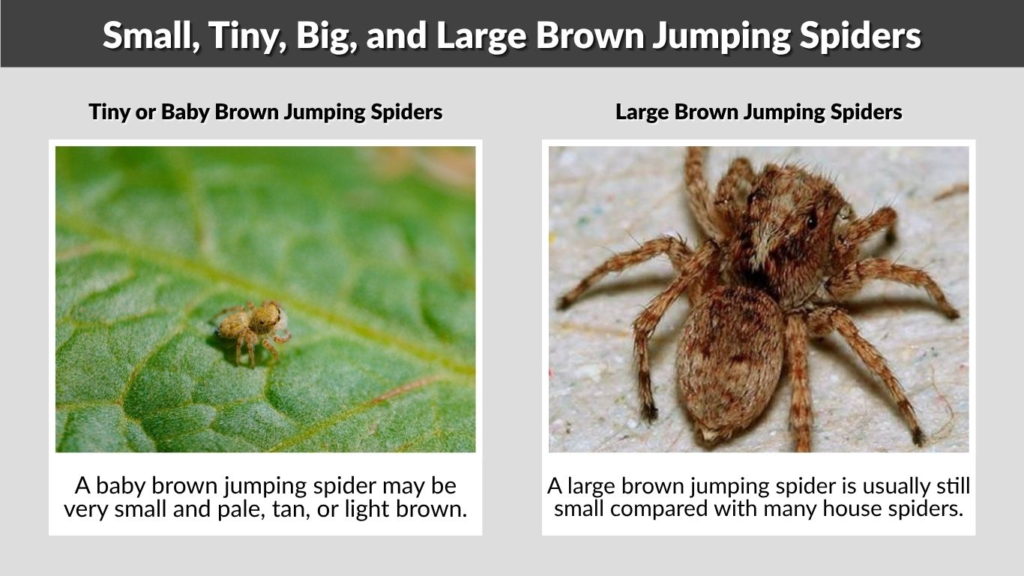
Brown jumping spiders come in many sizes. People may describe them as tiny, little, small, big, or large depending on what they are comparing them to.
Tiny or Baby Brown Jumping Spiders
A baby brown jumping spider may be very small and pale, tan, or light brown. Young jumping spiders can look different from adults and may not yet show strong markings. They still tend to have the same compact shape and alert movement.
Large Brown Jumping Spiders
A large brown jumping spider is usually still small compared with many house spiders. Some larger jumping spiders may look chunky, hairy, and intimidating, but they are generally not dangerous to humans.
Large females may appear broader and heavier than males. Males may have longer-looking front legs or darker markings.
Brown Jumping Spider vs Other Brown Spiders
Not every small brown spider that jumps or moves quickly is a jumping spider. Some spiders run fast, drop from webs, or make sudden movements that seem like jumping.
Spiders Commonly Confused With Brown Jumping Spiders
Other brown spiders people may confuse with jumping spiders include:
- Wolf spiders
- Sac spiders
- House spiders
- Funnel-web or grass spiders
- Young orb-weavers
- Brown recluse spiders in areas where they occur
The best clue is the eye pattern. Jumping spiders have large, forward-facing eyes that give them a distinctive “face.” Most other brown spiders do not.
FAQs
Does a brown recluse spider jump?
No. Brown recluse spiders do not jump like jumping spiders. They move by crawling or running and usually avoid light and activity. If a brown spider clearly jumps, turns toward movement, and has large front-facing eyes, it is much more likely to be a jumping spider than a brown recluse.
Are brown jumping spiders poisonous?
Brown jumping spiders are venomous in the way most spiders are, but they are not considered dangerous to most people. Their venom is used to subdue tiny prey. Bites are uncommon and usually cause only mild local irritation unless a person has an unusual reaction.
Why is there a small brown jumping spider in my house?
A small brown jumping spider may enter your house while following insects or seeking shelter. They are often found near windows, walls, ceilings, basements, and garages. One or two spiders indoors usually means they wandered in and does not necessarily indicate an infestation.
What does a brown jumping spider look like?
A brown jumping spider usually has a compact, hairy body, large front-facing eyes, and quick stop-and-go movement. It may be light brown, dark brown, black and brown, brown and white, or striped. Some have white spots, orange markings, or fuzzy legs.
Should I kill a brown jumping spider?
You usually do not need to kill a brown jumping spider. They are beneficial predators that eat small insects. If one is indoors, gently capture it with a cup and paper and release it outside. If you see many spiders, focus on reducing insects and sealing entry points.
