
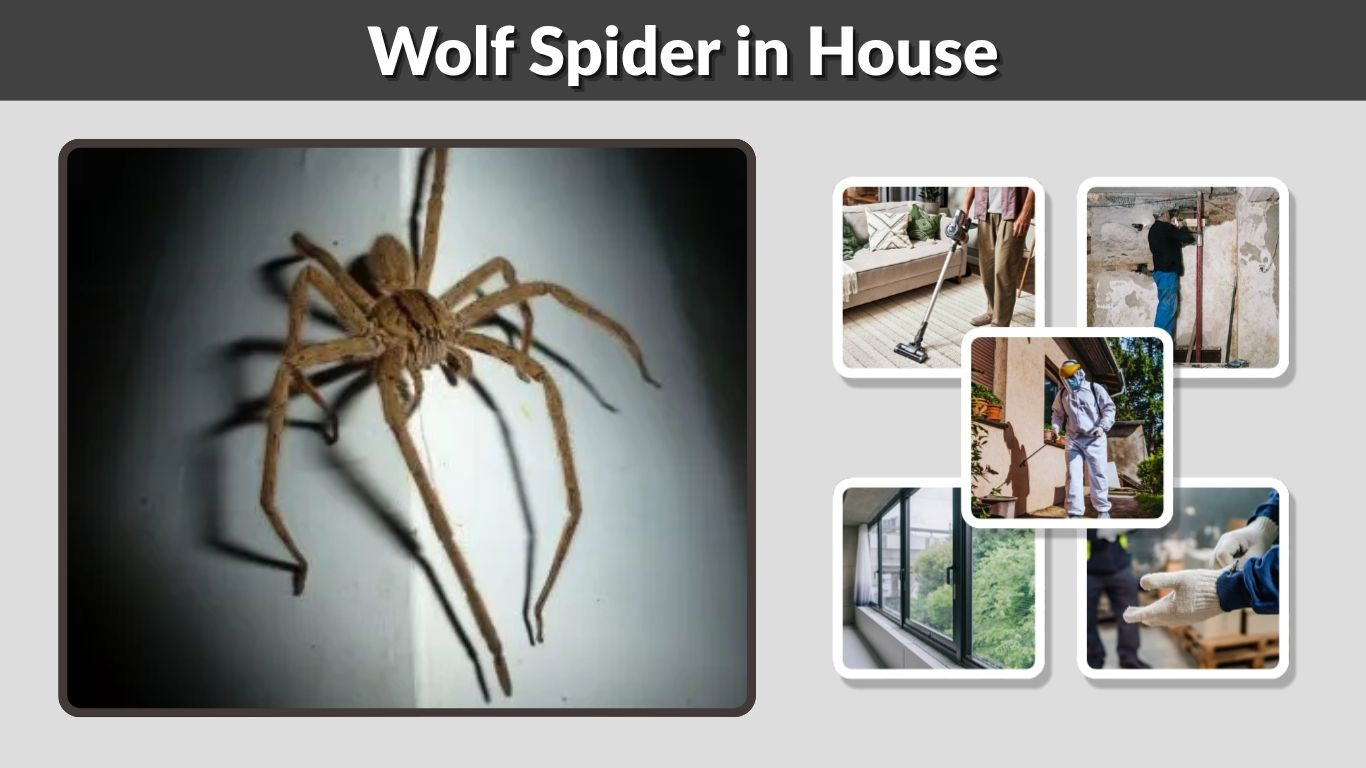
Finding a wolf spider in your house can be scary, especially because these spiders are fast, hairy, and often larger than common indoor spiders. The good news is that wolf spiders are usually not dangerous to people and often enter homes by accident. They do not build webs to catch prey, so seeing one crawling across the floor usually means it is hunting insects or looking for shelter.
Why Is There a Wolf Spider in Your House?
Wolf spiders may look alarming, but their presence indoors usually has a simple reason. They are active hunters that chase insects instead of waiting in webs, so they may wander inside through small gaps, doors, windows, basements, garages, and crawl spaces.
Common Reasons Wolf Spiders Come Indoors
- They are searching for insects to eat.
- Outdoor weather is too hot, cold, or dry.
- They entered through gaps around doors or windows.
- There is clutter in basements, garages, or storage rooms.
- Outdoor lights are attracting insects near your home.
- They accidentally came inside on firewood, boxes, or outdoor items.
Wolf spiders are often found in basements and lower-level areas, and some extension sources note that they may enter homes more often during fall. They are generally shy and not dangerous, although large individuals can bite if handled or trapped.
What Should You Do If You See a Wolf Spider?
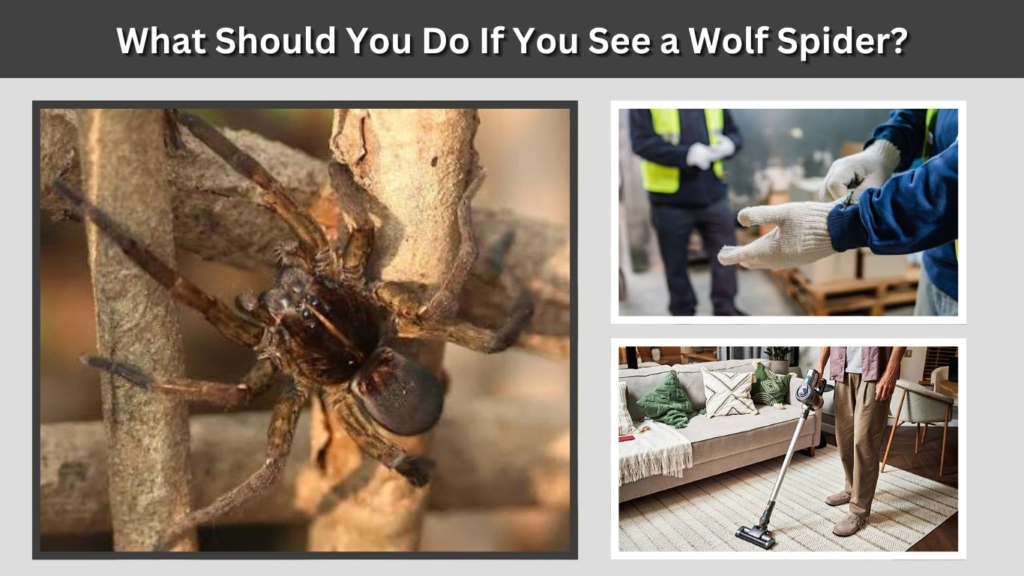
The best response is to stay calm and avoid crushing it with your bare hands. A wolf spider is not trying to attack you. It usually wants to escape and hide.
Safe Removal Steps
- Place a clear cup or jar over the spider.
- Slide a piece of cardboard or thick paper underneath.
- Carry it outside and release it away from doors and windows.
- Wear gloves if you are nervous.
- Use a vacuum only if you cannot safely catch it.
Oregon State University Extension says wolf spiders are predatory and beneficial because they help manage other insects, and they can be physically removed from the home and relocated outside.
What Not to Do
Do not pick up a wolf spider with your fingers. Do not corner it against your skin, clothing, or bedding. Wolf spiders are not aggressive, but they may bite if squeezed or handled. Avoid using heavy pesticide sprays indoors unless there is a serious recurring problem.
Are Wolf Spiders Dangerous in the House?
For most people, a wolf spider in the house is more frightening than harmful. Wolf spiders can bite, but bites are usually mild compared with medically important spiders such as black widows or brown recluses.
| Concern | What It Means |
| Bite risk | Possible if handled, pressed, or trapped |
| Venom danger | Usually not medically serious for most people |
| Children and pets | Avoid contact, but panic is not needed |
| Infestation risk | Usually means entry gaps or indoor insects |
| Webs | Wolf spiders do not make prey-catching webs |
A wolf spider bite may cause pain, redness, or swelling, but Cleveland Clinic notes that it typically does not require medical attention. However, allergic reactions or unusual symptoms should be checked by a medical professional.
How to Tell If It Is a Wolf Spider
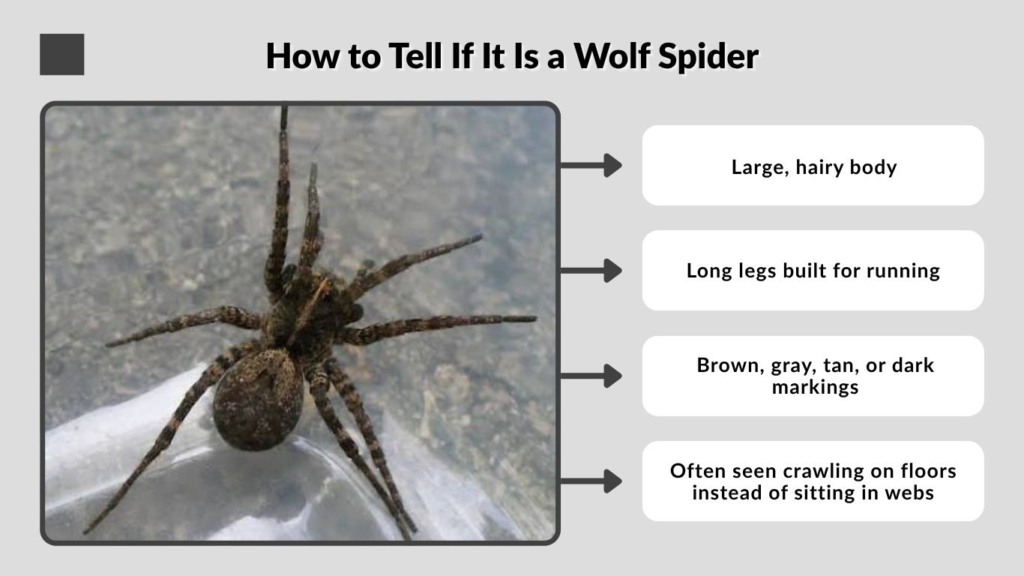
Correct identification matters because some people confuse wolf spiders with brown recluse spiders or other brown spiders. Wolf spiders are usually robust, hairy, and fast-moving. They often have striped or mottled brown, gray, or black patterns that help them blend into soil, leaves, and wood.
Wolf Spider Identification
- Large, hairy body
- Long legs built for running
- Brown, gray, tan, or dark markings
- Often seen crawling on floors instead of sitting in webs
- Two large forward-facing eyes with smaller eyes around them
- Female may carry an egg sac or spiderlings on her back
One unusual feature of wolf spiders is that the female carries her egg sac attached to her spinnerets, and newly hatched young may ride on her back for the first few weeks.
Why You Should Not Ignore Many Wolf Spiders
Seeing one wolf spider indoors is usually not a big issue. Seeing many of them may mean your home has entry points, moisture, clutter, or enough insects to attract predators.
| Sign | Possible Cause | What to Do |
| One spider in basement | Accidental entry | Remove and seal gaps |
| Several spiders weekly | Insects inside | Reduce pest food sources |
| Spiders near doors | Entry gaps | Add door sweeps |
| Spiders in garage | Clutter or outdoor access | Declutter and inspect |
| Spiderlings indoors | Egg sac nearby | Vacuum carefully and clean storage areas |
How to Keep Wolf Spiders Out of Your House
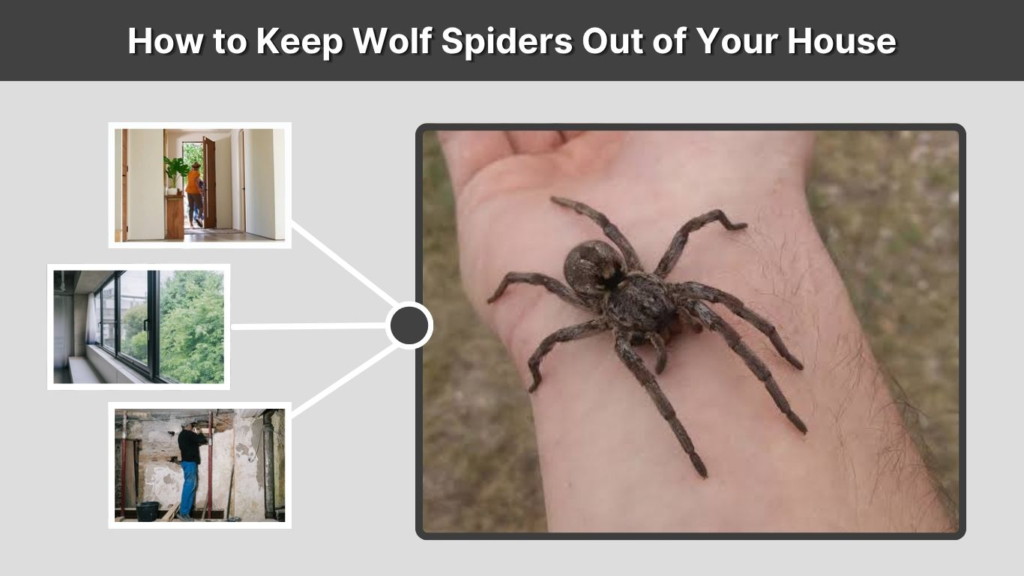
The best wolf spider control is prevention. Instead of only killing the spiders you see, focus on why they are coming inside.
Seal Entry Points
Check your home for cracks and gaps around:
- Doors
- Windows
- Basement walls
- Utility pipes
- Foundation cracks
- Garage doors
- Vents and screens
Use caulk, weatherstripping, mesh screens, and door sweeps to block small openings. University extension guidance commonly recommends exclusion as the best way to keep spiders outdoors.
Remove Hiding Places
Wolf spiders like dark, quiet hiding spots. Reduce clutter in basements, closets, garages, laundry rooms, and storage areas. Keep boxes sealed and off the floor when possible.
Reduce Their Food Source
If your home has many insects, wolf spiders may stay because food is available. Vacuum crumbs, repair leaky areas, store food properly, and reduce flies, ants, roaches, and other small pests.
Manage Outdoor Areas
Keep leaves, wood piles, stones, and dense vegetation away from the foundation. Trim plants that touch the house. Move firewood away from doors. Turn off unnecessary outdoor lights or use yellow bug lights to reduce insect activity near entrances.
Should You Kill a Wolf Spider?
You can kill a wolf spider if you feel threatened, but removal is usually a better option. Wolf spiders help control insects, and one spider indoors does not automatically mean an infestation. If you can safely relocate it, that is the most balanced approach.
However, if someone in the home has severe spider anxiety, small children, pets that try to eat spiders, or repeated sightings, then stronger control steps may be needed.
When Should You Call Pest Control?
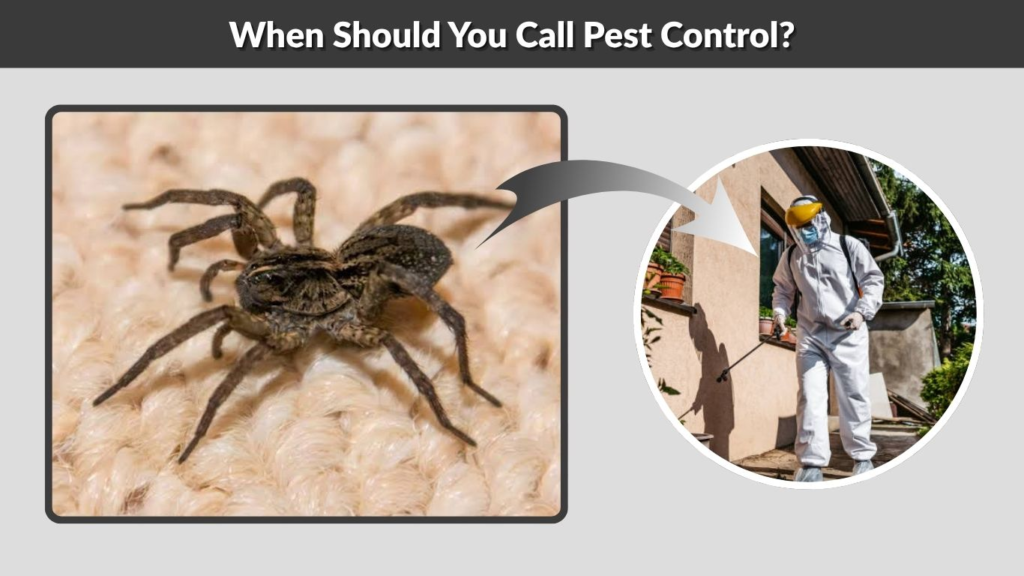
You may not need pest control for one wolf spider. But professional help can be useful when sightings are frequent or when you are unsure whether the spider is actually a wolf spider.
Call pest control if:
- You see several large spiders every week.
- You find many spiderlings indoors.
- You suspect brown recluse or black widow spiders.
- There are many insects attracting spiders.
- You cannot find where they are entering.
- Someone in the home is repeatedly getting bites.
The University of Kentucky notes that many spiders in buildings are harmless, but black widows and brown recluses are the main spiders of greater concern in many U.S. regions.
FAQs
Are wolf spiders common in houses?
Yes, wolf spiders can enter houses, especially basements, garages, and ground-level rooms. They usually come inside by accident while hunting insects or looking for shelter. One wolf spider indoors does not always mean you have an infestation.
Do wolf spiders make webs in the house?
Wolf spiders do not make webs to trap prey. They are hunting spiders that chase insects on the ground. If you see a large spider running across the floor instead of sitting in a web, it may be a wolf spider.
Will a wolf spider bite me while I sleep?
It is unlikely. Wolf spiders do not seek out people to bite. A bite may happen if the spider is trapped against your skin, clothing, or bedding. Shake out items stored on the floor and avoid leaving clothes piled in dark areas.
What attracts wolf spiders indoors?
Wolf spiders are attracted by insects, hiding places, moisture, and easy entry points. Cluttered basements, garages, outdoor debris, foundation gaps, and bright lights that attract bugs can all make your home more inviting to them.
How do I get rid of wolf spiders naturally?
Remove them with a cup and cardboard, vacuum hiding spots, seal cracks, reduce clutter, and control indoor insects. Also move wood, leaves, and debris away from the foundation so wolf spiders have fewer places to hide near your house.
