
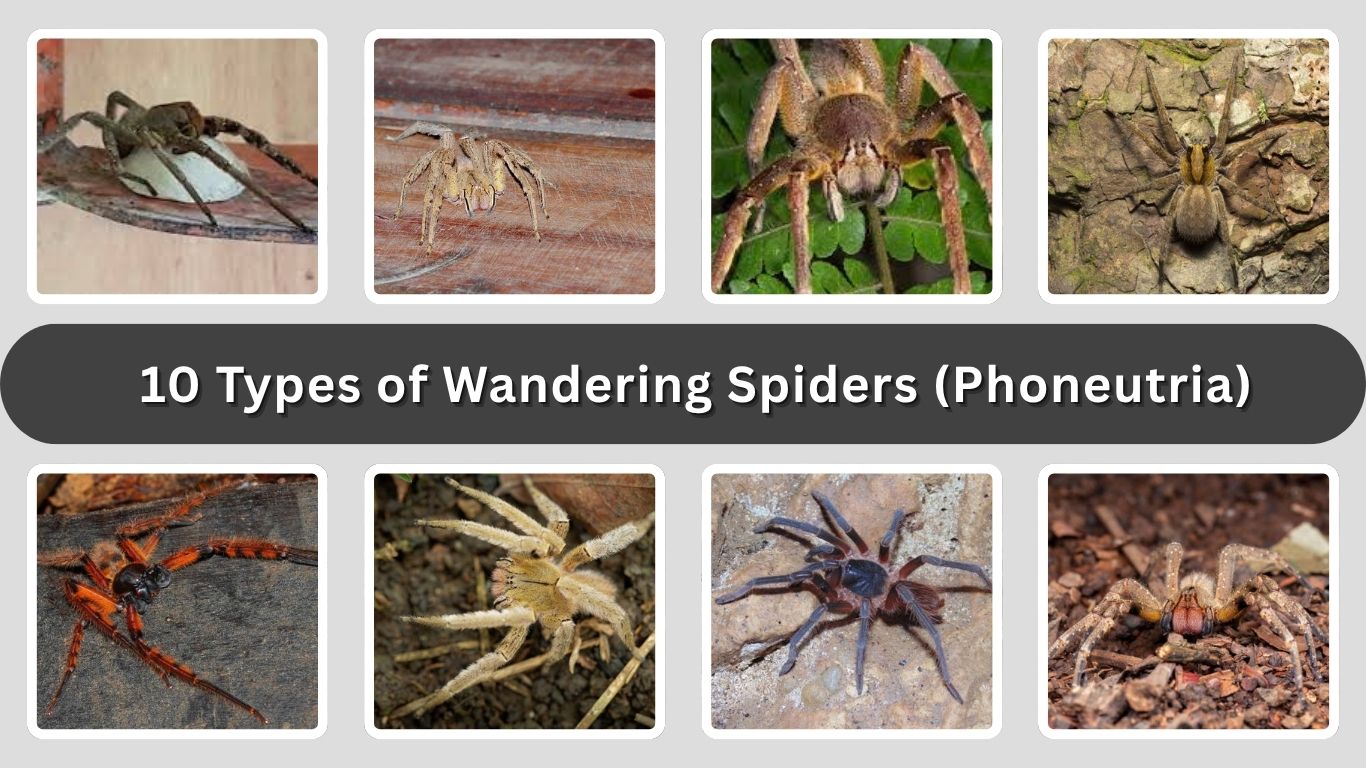
Wandering spiders of the genus Phoneutria are among the most well-known and feared spiders in the world. Unlike web-building spiders, these species actively roam at night in search of prey, which increases the chances of accidental encounters with humans. Their speed, size, and defensive behavior often give them a reputation for being aggressive.
This list highlights 10 types of Phoneutria wandering spiders, focusing on their identification, behavior, habitat, and potential risk to humans. Understanding these spiders can help separate fact from fear and provide insight into one of the most fascinating yet misunderstood groups of arachnids.
1. Phoneutria fera

Phoneutria fera is one of the largest and most well-known species of wandering spiders. It belongs to the genus Phoneutria, often referred to as “Brazilian wandering spiders,” and is recognized for its potent venom and highly active behavior.
Identification
- Large, robust body
- Brown coloration with darker markings
- Long, hairy legs
- Distinct red hairs near the fangs
- Leg span up to 15 cm
Behavior
Phoneutria fera is a nocturnal hunter that does not rely on webs. Instead, it actively roams the forest floor in search of prey. When threatened, it may raise its front legs in a defensive posture, displaying its fangs as a warning.
Habitat
This species is commonly found in tropical rainforests, especially in the Amazon region. It prefers dark, humid environments such as leaf litter, logs, and crevices. It may also occasionally enter human dwellings while searching for shelter.
Risk to Humans
Phoneutria fera is considered medically significant due to its strong venom. Bites can cause intense pain and other serious symptoms, requiring prompt medical attention. However, it typically bites only when provoked or accidentally disturbed.
2. Phoneutria nigriventer

Phoneutria nigriventer is one of the most infamous wandering spiders, often associated with human encounters due to its tendency to enter homes and transported goods. It is widely known for its potent venom and defensive behavior.
Identification
- Large brown body with darker markings
- Hairy legs with strong build
- Distinct dark underside (hence the name “nigriventer”)
- Red hairs near the fangs
- Leg span up to 15 cm
Behavior
This species is highly active and does not build webs to catch prey. It hunts at night and is known for its defensive display, raising its front legs when threatened. It may appear aggressive but usually reacts defensively.
Habitat
Found in forests, plantations, and urban areas. It often hides in dark places such as logs, banana bunches, and inside homes, increasing the chance of human contact.
Risk to Humans
It is medically significant and considered dangerous. Bites can cause severe pain and systemic symptoms. Immediate medical attention is required if bitten.
3. Phoneutria keyserlingi

Phoneutria keyserlingi is another species of wandering spider known for its active hunting style and strong defensive behavior. It is less commonly encountered but still notable within the genus.
Identification
- Medium to large brown body
- Subtle darker patterns on the abdomen
- Long, hairy legs
- Robust and slightly compact build
- Leg span around 12–14 cm
Behavior
Like other wandering spiders, it is nocturnal and hunts without a web. It is quick and alert, often adopting a defensive posture when threatened. It prefers to avoid confrontation but can defend itself if necessary.
Habitat
Typically found in tropical and subtropical regions, living in forests, under logs, and within leaf litter. It may occasionally enter human environments in search of shelter.
Risk to Humans
This species is also medically significant. Bites are rare but can cause pain and other symptoms. Medical attention is recommended if a bite occurs.
4. Phoneutria boliviensis

Phoneutria boliviensis is a widespread wandering spider species found across parts of Central and South America. It is known for its active hunting style and defensive nature, similar to other members of the Phoneutria genus.
Identification
- Medium to large brown body
- Dark markings on the abdomen
- Long, hairy legs
- Robust body structure
- Leg span around 12–15 cm
Behavior
This spider is a nocturnal hunter that actively searches for prey instead of using webs. It is fast and alert, and when threatened, it may raise its front legs in a defensive display. It usually avoids humans but can react if disturbed.
Habitat
Commonly found in forests, plantations, and sometimes near human dwellings. It prefers warm, humid environments and hides in leaf litter, logs, and crevices during the day.
Risk to Humans
Phoneutria boliviensis is considered medically significant. Bites are uncommon but can be painful and require medical attention, though they are generally less severe than some other species in the genus.
5. Phoneutria reidyi

Phoneutria reidyi is another Amazonian wandering spider species known for its large size and strong predatory behavior. It shares many traits with other Phoneutria species, including potent venom and defensive tendencies.
Identification
- Large brown body with darker patterns
- Hairy, strong legs
- Slight reddish coloration near mouthparts
- Elongated abdomen
- Leg span up to 14–16 cm
Behavior
This spider is highly active at night, roaming in search of prey. It is quick and capable of delivering a defensive display when threatened. It prefers to escape but will defend itself if necessary.
Habitat
Primarily found in tropical rainforests, especially in the Amazon basin. It lives in leaf litter, under logs, and in other dark, humid hiding spots.
Risk to Humans
Phoneutria reidyi is medically significant, though encounters are rare. Bites can cause pain and systemic symptoms, so medical care is recommended if a bite occurs.
6. Phoneutria bahiensis

Phoneutria bahiensis is a lesser-known wandering spider species native to Brazil. Like others in the genus, it is an active hunter with potent venom, though it is not commonly encountered by humans.
Identification
- Medium to large brown body
- Subtle darker markings on the abdomen
- Long, hairy legs
- Robust build
- Leg span around 12–14 cm
Behavior
This spider is nocturnal and hunts without using a web. It is fast-moving and alert, often retreating when disturbed but capable of displaying a defensive posture if threatened.
Habitat
It is typically found in tropical regions, especially forests and rural areas. It hides in leaf litter, under logs, and in dark crevices during the day.
Risk to Humans
Phoneutria bahiensis is considered medically significant. Bites are rare but can cause pain and other symptoms, so medical attention is advised if bitten.
7. Phoneutria eickstedtae

Phoneutria eickstedtae is a rare and less-studied species within the wandering spider group. It shares many characteristics with other Phoneutria species, including speed and defensive behavior.
Identification
- Brown body with faint patterning
- Long, hairy legs
- Slightly elongated abdomen
- Strong, agile build
- Leg span around 12–14 cm
Behavior
This species is a nocturnal hunter that actively searches for prey. It is quick and tends to avoid contact but will raise its front legs in a defensive display if threatened.
Habitat
Found in forested regions of Brazil, it prefers humid environments with plenty of cover such as leaf litter and fallen logs.
Risk to Humans
Although not frequently encountered, it is considered medically significant. Bites can be painful and may require medical attention, though incidents are rare.
8. Phoneutria pertyi

Phoneutria pertyi is a lesser-known species of wandering spider found in Brazil. Like others in the Phoneutria genus, it is an active hunter with strong defensive instincts and potent venom.
Identification
- Medium to large brown body
- Darker markings across the abdomen
- Long, hairy legs
- Sturdy and slightly elongated body
- Leg span around 12–15 cm
Behavior
This spider is nocturnal and actively hunts prey instead of relying on webs. It is fast and alert, often retreating when disturbed but capable of raising its front legs in a defensive posture if threatened.
Habitat
Typically found in forested and humid regions, it hides in leaf litter, under logs, and in natural crevices. It prefers dark, sheltered environments during the day.
Risk to Humans
Phoneutria pertyi is considered medically significant. Bites are rare but can cause pain and other symptoms, so medical attention is recommended if a bite occurs.
9. Phoneutria depilata

Phoneutria depilata is a species found mainly in Central America and northern parts of South America. It shares the typical wandering spider traits of speed, strength, and potent venom.
Identification
- Brown body with subtle darker patterns
- Less dense hair compared to some species
- Long, slender legs
- Strong, agile build
- Leg span around 10–13 cm
Behavior
This species is an active nocturnal hunter that roams in search of prey. It avoids confrontation but can display defensive behavior, including raising its front legs when threatened.
Habitat
Commonly found in tropical forests, plantations, and sometimes near human settlements. It hides in leaf litter, logs, and dark corners during the day.
Risk to Humans
Phoneutria depilata is medically significant, though bites are uncommon. Symptoms can include pain and discomfort, so medical care is advised if bitten.
10. Phoneutria cf. fera

Phoneutria cf. fera refers to specimens closely related to Phoneutria fera but not fully classified or confirmed as the exact species. These spiders share many physical and behavioral traits with other wandering spiders in the genus.
Identification
- Large brown body with darker markings
- Long, hairy legs
- Robust build
- Similar appearance to Phoneutria fera
- Leg span up to 14–16 cm
Behavior
Like other wandering spiders, this species is a nocturnal hunter that actively searches for prey. It is fast and alert, often avoiding humans but capable of displaying a defensive posture when threatened.
Habitat
Typically found in tropical rainforest environments, especially in the Amazon region. It prefers dark, humid areas such as leaf litter, logs, and natural crevices.
Risk to Humans
This spider is considered medically significant due to its similarity to Phoneutria fera. Bites are rare but can cause serious symptoms, so immediate medical attention is recommended if a bite occurs.
