
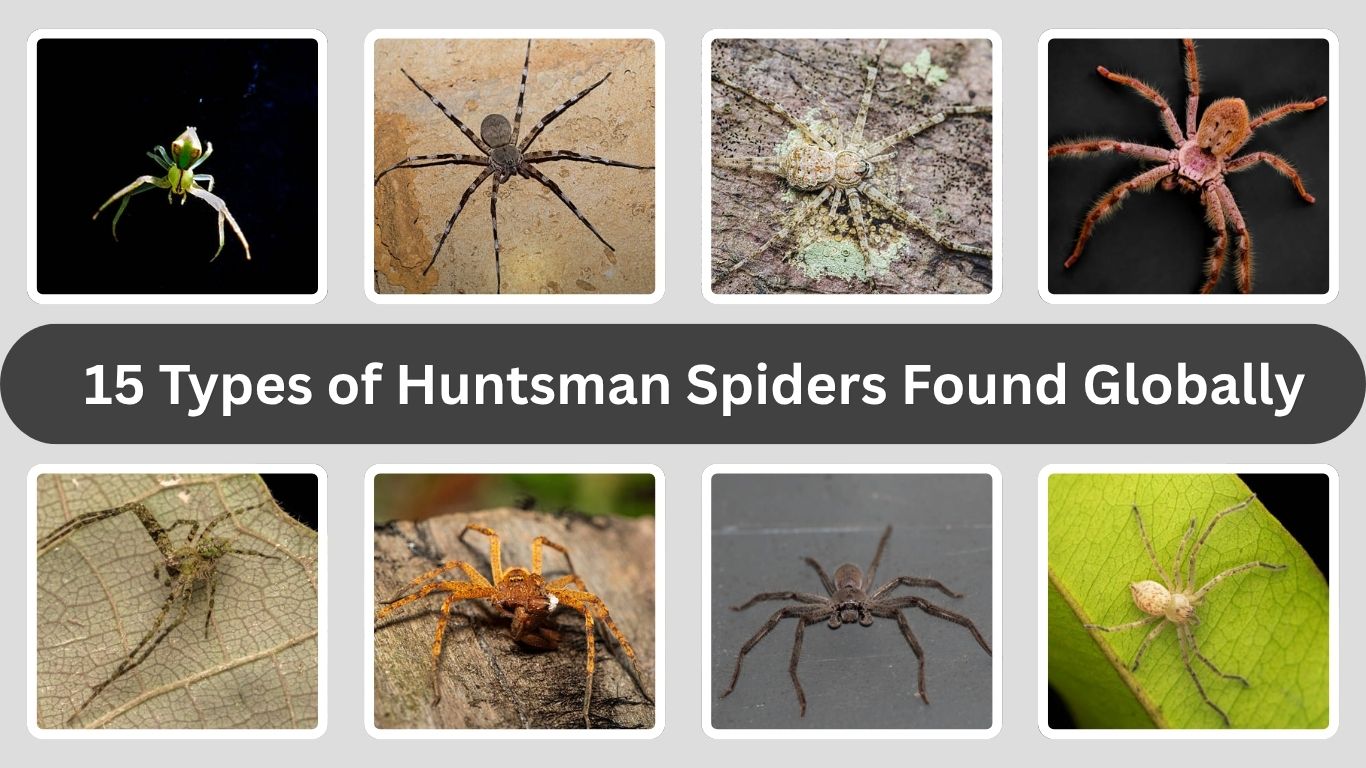
Huntsman spiders are a fascinating group of large, fast-moving spiders known for their crab-like appearance and active hunting behavior. Unlike web-building spiders, they rely on speed, agility, and sharp senses to catch prey. Found mostly in warm and tropical regions, these spiders often live in homes, forests, and gardens. Despite their intimidating size, most huntsman spiders are harmless to humans and play an important role in controlling insect populations.
1. Giant Huntsman Spider

The Giant Huntsman Spider is one of the largest spiders in the world by leg span, known for its impressive size and speed. It belongs to the huntsman family and is commonly found in warm regions, where it actively hunts rather than relying on webs.
Characteristics
- Extremely large leg span, sometimes over 25 cm
- Flattened body adapted for hiding in narrow spaces
- Brown or gray coloration for camouflage
- Long, powerful legs with a crab-like stance
- Fast-moving and agile hunter
Habitat and Distribution
This spider is typically found in caves, forests, and rocky areas. It prefers warm, tropical environments and often hides under rocks, bark, or within crevices during the day to avoid predators and heat.
Behavior and Diet
The Giant Huntsman Spider is a nocturnal hunter that does not build webs. It actively hunts insects, small lizards, and other arthropods, using speed and strong legs to capture prey quickly.
Interaction with Humans
Despite its intimidating size, this spider is not aggressive toward humans. Bites are rare and usually harmless, causing only mild symptoms. It plays a useful role in controlling pest populations.
2. Brown Huntsman Spider

The Brown Huntsman Spider is a common and widely distributed species known for its flat body and swift movements. It is often found both indoors and outdoors, especially in warm climates. Unlike web-building spiders, it actively hunts for prey, making it an efficient natural pest controller. Despite its large size and intimidating look, it is generally harmless to humans and prefers to avoid contact.
Characteristics
- Medium to large size with long leg span
- Brown coloration with darker patterns for camouflage
- Flattened body that allows it to squeeze into tight spaces
- Long, laterally spread legs giving a crab-like appearance
- Excellent speed and strong grip for catching prey
Habitat and Distribution
The Brown Huntsman Spider thrives in warm and temperate regions. It is commonly found under tree bark, rocks, and inside buildings such as houses, sheds, and garages. Indoors, it prefers quiet places like behind furniture, curtains, and wall crevices. Its adaptability allows it to survive in both natural and urban environments, making it one of the most frequently encountered huntsman species.
Behavior and Diet
This spider is a nocturnal hunter that does not rely on webs. Instead, it actively searches for prey using its speed and keen sensitivity to movement. Its diet mainly includes insects such as cockroaches, crickets, moths, and other small invertebrates. The spider quickly ambushes its prey, using venom to immobilize it before feeding. During the day, it remains hidden in sheltered spots to avoid predators and conserve energy.
Interaction with Humans
The Brown Huntsman Spider is not aggressive and usually runs away when disturbed. Bites are rare and typically occur only when the spider is handled or threatened. While its bite may cause mild pain, swelling, or redness, it is not considered dangerous. Many people tolerate its presence because it helps control household pests naturally without causing harm.
3. Green Huntsman Spider

The Green Huntsman Spider is a visually striking species known for its bright green coloration, which helps it blend into foliage. It is mainly found in tropical and forested environments, where it lives among leaves and vegetation. Like other huntsman spiders, it is a fast-moving hunter that does not build webs, relying instead on stealth and speed to capture prey.
Characteristics
- Bright green body providing excellent camouflage in plants
- Medium size with a flattened shape
- Long legs adapted for quick movement across surfaces
- Smooth body texture with minimal markings
- Strong vision and sensitivity to motion
Habitat and Distribution
This spider is typically found in tropical forests, gardens, and dense vegetation. It prefers areas with abundant plant life where it can easily hide among leaves. The Green Huntsman Spider is most commonly seen in warm, humid regions and is well adapted to life in trees and shrubs rather than on the ground.
Behavior and Diet
The Green Huntsman Spider is an active hunter, especially during the night. It feeds on a variety of insects such as flies, moths, and grasshoppers. Using its camouflage, it ambushes prey by blending into its surroundings before striking quickly. It does not spin webs to catch food but may use silk for shelter or egg protection.
Interaction with Humans
This species is not aggressive and rarely comes into contact with humans due to its preference for natural habitats. Bites are uncommon and generally harmless, causing only mild irritation. Its presence is beneficial as it helps maintain ecological balance by controlling insect populations.
4. Banded Huntsman Spider

The Banded Huntsman Spider is recognized for the distinct bands on its legs, giving it a striking appearance. It is a fast and agile hunter commonly found in warm regions. Like other huntsman spiders, it does not build webs and instead relies on speed and stealth to capture prey efficiently.
Characteristics
- Medium to large size with long leg span
- Noticeable banded patterns on legs
- Flattened body for hiding in narrow spaces
- Brown or gray coloration with markings
- Long, sideways-oriented legs for quick movement
Habitat and Distribution
This spider is commonly found in forests, gardens, and human dwellings. It prefers warm climates and often hides under bark, stones, or inside homes behind furniture and walls. Its adaptability allows it to thrive in both natural and urban environments.
Behavior and Diet
The Banded Huntsman Spider is a nocturnal hunter that actively searches for prey. It feeds on insects such as cockroaches, moths, and crickets. Using its speed, it ambushes prey and immobilizes it with venom before feeding.
Interaction with Humans
This spider is not aggressive and typically avoids people. Bites are rare and usually mild, causing only slight discomfort. It is beneficial as it helps control insect populations in homes and gardens.
5. Tropical Huntsman Spider

The Tropical Huntsman Spider is a large and active species commonly found in warm, humid environments. It is known for its speed and adaptability, often living close to human settlements. This spider is an effective predator that helps reduce insect populations in its surroundings.
Characteristics
- Large body with an impressive leg span
- Light brown or gray coloration
- Flattened shape for hiding in tight spaces
- Long legs with strong grip
- Quick reflexes and high agility
Habitat and Distribution
This species is widely distributed across tropical and subtropical regions. It is often found in forests, plantations, and buildings such as houses and warehouses. It prefers warm, humid conditions and sheltered locations during the day.
Behavior and Diet
The Tropical Huntsman Spider is a nocturnal hunter that does not rely on webs. It feeds on insects like cockroaches, beetles, and moths. It actively chases or ambushes prey, using venom to subdue it quickly.
Interaction with Humans
Although large and intimidating, this spider is generally harmless. It avoids human contact and will only bite if threatened. Its presence is useful for natural pest control, especially in tropical households.
6. Flat Huntsman Spider

The Flat Huntsman Spider is known for its extremely flattened body, which allows it to hide in very narrow spaces. It is a fast-moving predator commonly found in warm regions. Like other huntsman spiders, it does not build webs and instead hunts actively for prey.
Characteristics
- Very flat body adapted for tight crevices
- Medium to large size with long leg span
- Brown or gray coloration for camouflage
- Long, sideways legs with strong grip
- Quick and agile movement
Habitat and Distribution
This spider is commonly found under tree bark, rocks, and inside buildings. It prefers warm climates and often hides in cracks, walls, and narrow gaps where it can remain undisturbed during the day.
Behavior and Diet
The Flat Huntsman Spider is a nocturnal hunter that searches for prey rather than using webs. It feeds on insects such as cockroaches, moths, and beetles, capturing them with speed and subduing them with venom.
Interaction with Humans
This species is not aggressive and usually avoids humans. Bites are rare and generally harmless, causing only mild irritation. It is beneficial for controlling indoor and outdoor pests.
7. Rainforest Huntsman Spider

The Rainforest Huntsman Spider is a species adapted to dense, humid forest environments. It is known for its excellent camouflage and ability to move quickly through vegetation. This spider plays an important role in maintaining ecological balance in rainforest ecosystems.
Characteristics
- Medium to large size with long legs
- Brown or greenish coloration for blending with foliage
- Flattened body for hiding under leaves and bark
- Strong legs for climbing and rapid movement
- Sharp vision for detecting prey
Habitat and Distribution
This spider is primarily found in tropical rainforests. It lives among trees, leaves, and dense vegetation, where it can hide easily and hunt effectively. It prefers humid environments with plenty of shelter.
Behavior and Diet
The Rainforest Huntsman Spider is an active nocturnal hunter. It feeds on insects such as flies, beetles, and grasshoppers. It uses stealth and speed to ambush prey rather than relying on webs.
Interaction with Humans
Encounters with humans are rare due to its forest habitat. It is not aggressive and poses little threat. Its presence is beneficial in controlling insect populations in natural ecosystems.
8. Golden Huntsman Spider

The Golden Huntsman Spider is known for its warm golden or yellowish coloration, which helps it blend into dry vegetation and tree bark. It is a fast and agile hunter, commonly found in warm regions, where it actively searches for prey instead of building webs.
Characteristics
- Golden or yellow-brown body coloration
- Medium to large size with long leg span
- Flattened body for hiding in narrow spaces
- Long, laterally spread legs
- Fast movement and strong hunting ability
Habitat and Distribution
This spider is typically found in forests, grasslands, and gardens. It prefers warm climates and often hides under bark, rocks, or within dry vegetation. It can also be found in human structures where suitable shelter is available.
Behavior and Diet
The Golden Huntsman Spider is a nocturnal hunter that actively searches for prey. It feeds on insects such as moths, beetles, and grasshoppers, using speed and venom to capture and subdue them.
Interaction with Humans
This spider is not aggressive and usually avoids contact with people. Bites are rare and mild. It is beneficial for reducing insect populations in both natural and domestic environments.
9. Gray Huntsman Spider

The Gray Huntsman Spider is a common species recognized for its dull gray coloration, which provides excellent camouflage against tree bark and walls. It is widely distributed and often found in both natural habitats and human dwellings.
Characteristics
- Gray or dusty-colored body with faint markings
- Medium to large size with long legs
- Flattened body adapted for tight spaces
- Long, sideways legs for quick movement
- Blends well into surroundings
Habitat and Distribution
This spider is found in forests, gardens, and buildings. It prefers sheltered areas such as under bark, rocks, and inside homes where it can remain hidden during the day. It is widely distributed in warm and temperate regions.
Behavior and Diet
The Gray Huntsman Spider is a nocturnal predator that actively hunts prey. It feeds on insects like cockroaches, flies, and beetles, capturing them quickly without using webs.
Interaction with Humans
This species is harmless and not aggressive. Bites are uncommon and usually cause only mild effects. It is useful in controlling pest insects in homes and outdoor spaces.
10. Crab-like Huntsman Spider

The Crab-like Huntsman Spider gets its name from the sideways movement of its legs, resembling a crab. It is a fast and flexible hunter that can move in multiple directions with ease. This species is commonly found in warm regions and is known for its agility and camouflage.
Characteristics
- Legs extend sideways, giving a crab-like stance
- Flattened body for hiding in narrow spaces
- Brown or gray coloration for blending in
- Medium to large size with long leg span
- Highly flexible and quick-moving
Habitat and Distribution
This spider is widely distributed in forests, gardens, and human dwellings. It prefers sheltered areas such as under bark, rocks, and inside homes where it can stay hidden during the day.
Behavior and Diet
The Crab-like Huntsman Spider is an active nocturnal hunter. It feeds on insects such as cockroaches, flies, and moths, capturing them with speed and subduing them with venom.
Interaction with Humans
This species is not aggressive and usually avoids people. Bites are rare and mild. It is beneficial as it helps control insect populations in homes and outdoor environments.
11. Red Huntsman Spider

The Red Huntsman Spider is notable for its reddish or rust-colored body, making it stand out among other huntsman species. It is a fast-moving predator commonly found in warm climates, where it actively hunts insects instead of building webs.
Characteristics
- Reddish or rust-colored body
- Medium to large size with long legs
- Flattened shape for hiding in crevices
- Strong legs adapted for fast movement
- Good camouflage in dry environments
Habitat and Distribution
This spider is typically found in forests, dry woodlands, and gardens. It prefers warm regions and often hides under bark, rocks, and within cracks during the day.
Behavior and Diet
The Red Huntsman Spider is a nocturnal hunter that actively searches for prey. It feeds on insects such as beetles, moths, and grasshoppers, using speed and venom to capture them.
Interaction with Humans
This spider is not aggressive and rarely bites. Any bite is usually mild and not dangerous. It is helpful in controlling insect populations in natural and residential areas.
12. Asian Huntsman Spider

The Asian Huntsman Spider is one of the most widespread huntsman species, commonly found in tropical and subtropical regions. It is well known for its large size, speed, and ability to live close to human environments. This spider is an efficient predator and helps control household pests.
Characteristics
- Large body with long leg span
- Light brown or gray coloration
- Flattened body for hiding in tight spaces
- Long, powerful legs with a wide spread
- Fast and highly agile
Habitat and Distribution
This spider is widely distributed across Asia and other warm regions. It is often found in homes, warehouses, gardens, and forests. It prefers sheltered areas such as walls, ceilings, and under objects where it can stay hidden during the day.
Behavior and Diet
The Asian Huntsman Spider is a nocturnal hunter that actively searches for prey. It feeds on insects such as cockroaches, flies, and moths. It relies on speed and strength rather than webs to capture and subdue prey.
Interaction with Humans
This species is not aggressive and usually avoids people. Bites are rare and typically mild. It is considered beneficial because it helps reduce pest populations in homes and buildings.
13. Desert Huntsman Spider

The Desert Huntsman Spider is adapted to dry, arid environments where it survives extreme temperatures. It is a fast-moving predator that hunts at night and hides during the day. Its coloration helps it blend into sandy surroundings for effective camouflage.
Characteristics
- Sandy or light brown body color
- Medium to large size with long legs
- Flattened body for hiding in cracks
- Strong legs adapted for rapid movement
- Excellent camouflage in desert environments
Habitat and Distribution
This spider is found in deserts and dry regions. It lives under rocks, in burrows, and within cracks in the ground where it can escape heat during the day. It is well adapted to harsh climates.
Behavior and Diet
The Desert Huntsman Spider is a nocturnal hunter. It feeds on insects such as beetles, ants, and other small arthropods. It relies on speed and ambush tactics to capture prey without using webs.
Interaction with Humans
This species rarely comes into contact with humans due to its remote habitat. It is not aggressive, and bites are uncommon and mild. It plays an important role in controlling insect populations in desert ecosystems.
14. Cave Huntsman Spider

The Cave Huntsman Spider is a specialized species adapted to life in dark, humid cave environments. It is known for its ability to navigate low-light conditions and often has reduced pigmentation. This spider is an active hunter and plays an important role in cave ecosystems.
Characteristics
- Pale or light-colored body due to low-light habitat
- Medium to large size with long legs
- Flattened body for moving through narrow rock spaces
- Long sensory legs for detecting movement
- Adapted to low visibility environments
Habitat and Distribution
This spider is primarily found in caves, tunnels, and underground spaces. It prefers cool, damp environments where it can hide in crevices and rocky surfaces. Its distribution is limited to areas with suitable cave systems.
Behavior and Diet
The Cave Huntsman Spider is a nocturnal hunter that relies on touch and vibration rather than sight. It feeds on insects and small cave-dwelling organisms, capturing them quickly with its speed and strong legs.
Interaction with Humans
Encounters with humans are rare due to its underground habitat. It is not aggressive and poses little threat. Bites are uncommon and typically harmless. It contributes to maintaining balance in cave ecosystems.
15. Sydney Huntsman Spider

The Sydney Huntsman Spider is a well-known species found in urban and natural environments. It is often seen in homes, where it hunts insects. Despite its large size and fast movement, it is harmless and beneficial for pest control.
Characteristics
- Large body with long, widely spread legs
- Brown or gray coloration with subtle patterns
- Flattened body suited for hiding in tight spaces
- Strong, fast-moving legs
- Excellent climbing ability
Habitat and Distribution
This spider is commonly found in and around homes, gardens, and forests. It prefers sheltered areas such as walls, tree bark, and under rocks. It is widely distributed in warm regions, especially in urban settings.
Behavior and Diet
The Sydney Huntsman Spider is an active hunter that does not use webs. It feeds on insects like cockroaches, flies, and moths. It relies on speed and ambush techniques to capture prey efficiently.
Interaction with Humans
This species is not aggressive and usually avoids people. Bites are rare and cause only mild effects. It is considered helpful as it reduces household pests naturally.
FAQs
Are huntsman spiders dangerous to humans?
Huntsman spiders are generally not dangerous to humans. Although they can bite if threatened, their venom is mild and usually causes only minor pain, redness, or swelling. They are not aggressive and prefer to escape rather than confront people.
Do huntsman spiders build webs?
No, huntsman spiders do not build webs to catch prey. They are active hunters that rely on speed and agility to chase or ambush insects. However, they may use silk for egg sacs or temporary shelters.
Where are huntsman spiders commonly found?
Huntsman spiders are mostly found in warm and tropical regions. They live in forests, gardens, and human homes, often hiding under bark, rocks, or inside wall crevices during the day.
What do huntsman spiders eat?
They mainly feed on insects such as cockroaches, flies, moths, and beetles. Their hunting ability makes them effective natural pest controllers, especially in homes and buildings.
Why do huntsman spiders enter houses?
Huntsman spiders enter houses in search of food and shelter. Indoor environments provide a steady supply of insects and safe hiding spots, making homes an attractive place for them to live temporarily.
