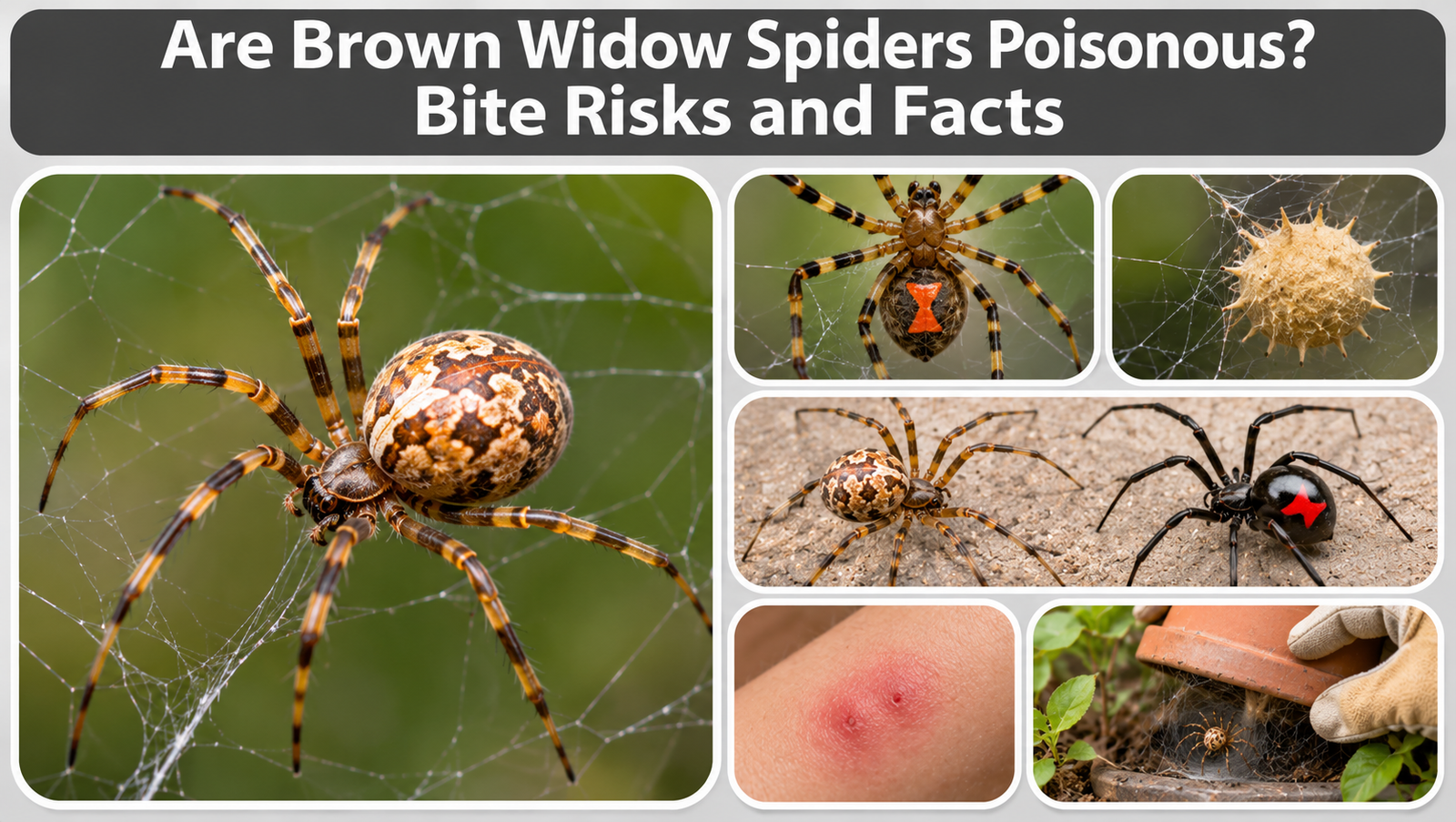
Brown widow spiders often attract attention because of their rounded abdomens, striped legs, and resemblance to black widows. Their appearance raises an important question: are brown widow spiders poisonous to humans? The short answer is that they are venomous, but their bites usually cause milder symptoms than black widow bites. Still, an occasional bite can produce a more serious reaction. Understanding the difference between venom strength and actual bite risk can help you stay safe. This guide explains brown widow venom, bite symptoms, male spiders, and comparisons with black widows and brown recluses.
Are Brown Widow Spiders Poisonous to Humans?
Brown widow spiders (Latrodectus geometricus) inject venom through their fangs to subdue prey. They are shy, so bites are uncommon. Effects usually involve local pain and redness, although severe reactions are possible.
Poisonous vs. Venomous: What’s the Difference?
The correct term is venomous, not poisonous. Venom enters through a bite or sting; poison harms through ingestion, touch, or absorption. Seeing a spider or touching its web does not cause envenomation, but handling one risks a defensive bite.
How Dangerous Is a Brown Widow Bite?
Brown widow bites are usually less severe than black widow bites, according to a clinical series. Still, moderate and severe reactions have been documented. Severity depends on venom delivered and individual response. Seek medical advice for a suspected widow bite, especially when pain spreads.
How to Identify a Brown Widow Spider
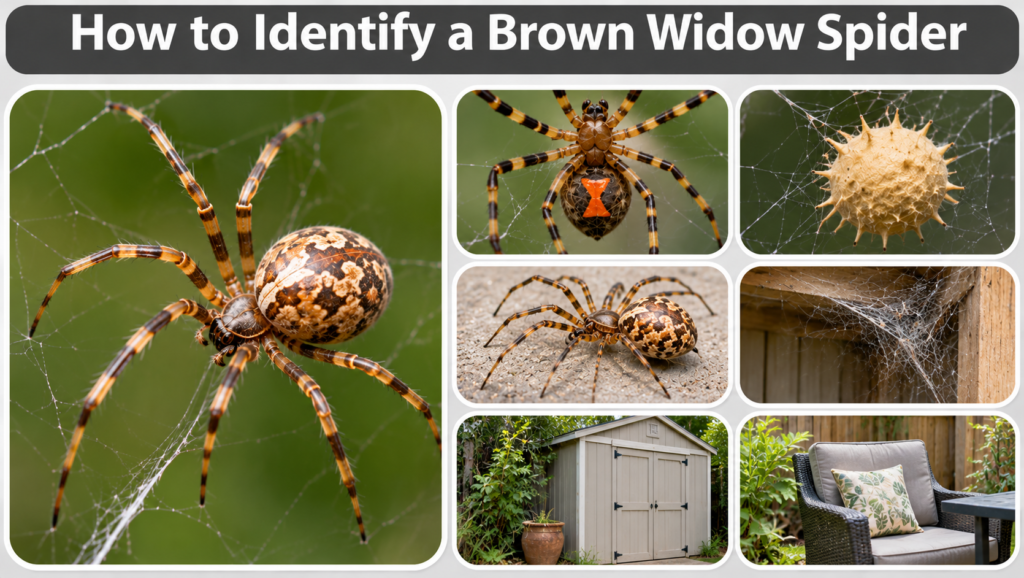
Brown widows occur in warm areas, including Texas and other southern states. They build irregular webs in sheltered spaces. Juvenile black widows and ordinary cobweb spiders can look similar, so examine several features, particularly the egg sac and underside markings.
Brown Widow Identification Features
- Body color: Usually mottled tan, brown, or gray, sometimes much darker.
- Abdomen: Rounded, often with pale spots or geometric markings.
- Legs: Long and typically banded with lighter and darker segments.
- Hourglass: Orange, yellow-orange, or reddish marking underneath the abdomen.
- Egg sacs: Round, tan sacs with distinctive spiky or tufted projections.
- Web: Irregular, tangled silk in protected corners and crevices.
Do not handle a live spider to inspect its hourglass; photograph it safely instead.
Where Do Brown Widows Live?
Brown widows occupy furniture, fences, sheds, garages, and planters. They often hide beneath movable objects. Bites usually occur when a spider is accidentally squeezed against skin. Gloves and careful inspections reduce contact.
Are Brown Widows More Poisonous Than Black Widows?
Laboratory venom potency does not predict an actual bite’s severity. Brown widow venom is potent, but these spiders typically deliver less and bite less readily than black widows. Consequently, black widow bites usually cause more severe symptoms.
Brown Widow vs. Black Widow Bite Severity
| Feature | Brown widow | Black widow |
| Typical adult female color | Mottled brown or tan | Usually glossy black |
| Underside marking | Orange to reddish hourglass | Usually red hourglass |
| Egg sac appearance | Spiky or tufted | Generally smooth |
| Typical bite effects | Local pain and redness | More likely severe pain and muscle cramps |
| Severe reactions | Possible but uncommon | More likely than with brown widows |
These are typical outcomes, not guarantees; either bite may need evaluation.
Are Brown Recluses More Poisonous Than Black Widows?
Brown recluses and black widows cannot be ranked simply as “more poisonous.” Recluse venom can damage tissue and create slow-healing wounds. Black widow venom affects the nervous system, potentially causing cramps, sweating, and widespread pain. Both warrant caution.
Are Male Brown Widow Spiders Venomous?
Male brown widows have venom but pose very little medical risk. Small fangs and limited venom make serious effects extremely unlikely. One published case confirmed a mild male bite, disproving claims that males can never bite.
Male vs. Female Brown Widow Spiders
Females are larger with rounded abdomens and cause most recognized bites. Males are slender and inconspicuous. The documented male bite caused brief burning and redness. Do not handle either sex.
Brown Widow Spider Bite Symptoms
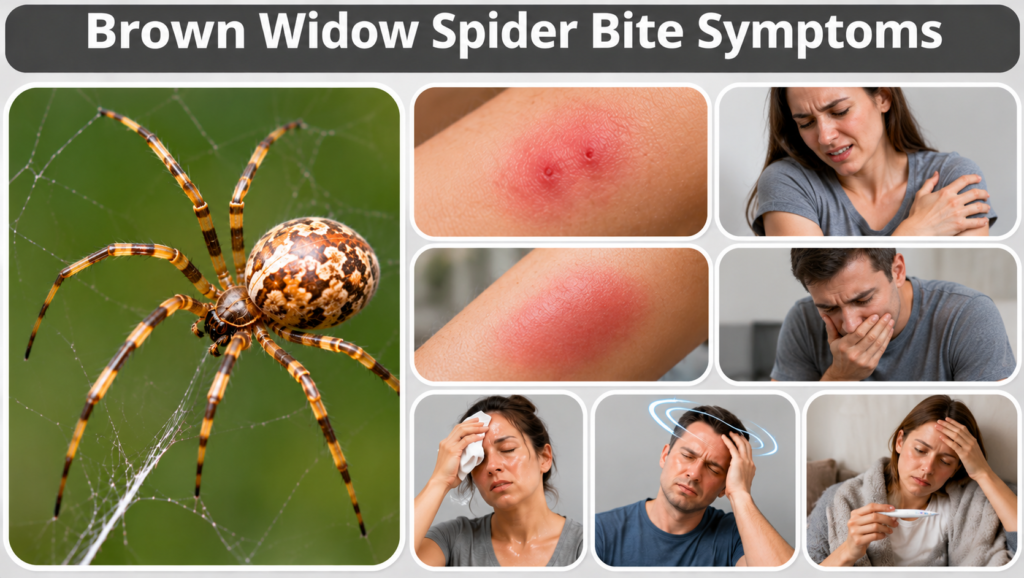
Symptoms vary, and many suspected spider bites remain unconfirmed. A person may notice a prick or burning followed by redness. Documented brown widow bites usually cause local symptoms, but occasional cases resemble more serious black widow envenomation.
Common Symptoms
- Immediate sharp pain or burning at the bite site.
- Redness and localized tenderness.
- Mild swelling or itching.
- Discomfort that may spread beyond the puncture.
- Occasionally nausea or feeling unwell.
Symptoms That Need Urgent Assessment
- Severe or spreading pain and muscle cramping.
- Chest tightness, trouble breathing, or weakness.
- Repeated vomiting, heavy sweating, or dizziness.
- Fainting, confusion, or rapidly worsening symptoms.
Call emergency services for breathing difficulties, collapse, or other severe symptoms. Do not assume a bite is harmless simply because the spider is brown instead of black.
What to Do After a Brown Widow Spider Bite
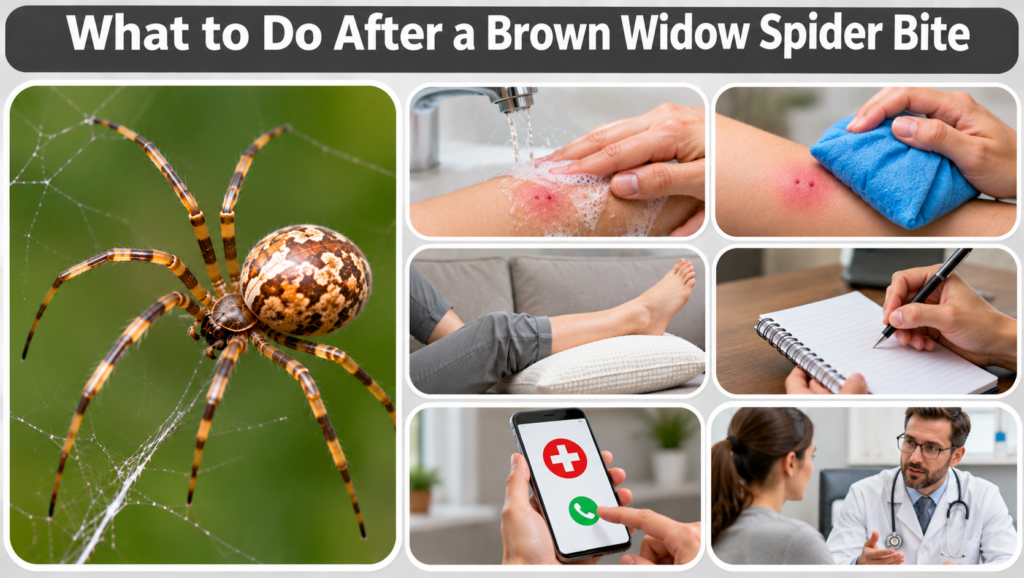
If bitten, move away and seek medical advice, particularly if symptoms develop. Most people recover, but first aid and medical assessment can help identify complications. Never attempt to extract venom.
Basic First Aid
- Wash the site gently with soap and water.
- Apply cold using an ice pack wrapped in cloth for 10–20 minutes.
- Rest the affected area and elevate a swollen limb if comfortable.
- Record symptoms and when the bite occurred.
- Seek medical guidance for a suspected widow bite, particularly if pain spreads or symptoms become systemic.
Do not cut, use a tourniquet, or suck the wound. Photograph the spider without touching it.
How to Prevent Brown Widow Bites Around Your Home
Brown widows eat insects but can create risks near busy areas. Inspect patio furniture, toys, bins, flowerpots, and garage corners. Wear gloves when moving stored objects. Remove clutter and unused webs safely, and call a professional if many widows occupy frequently used spaces.
FAQs
1. Can a brown widow spider kill a human?
Fatal outcomes from brown widow bites appear exceptionally rare, and most documented cases are mild. Nevertheless, severe envenomation is possible. Seek immediate medical help for breathing difficulty, severe muscle cramps, collapse, or other serious symptoms rather than assuming every brown widow bite is safe.
2. Are brown widow spiders more poisonous than black widows?
Their venom can be potent in laboratory comparisons, but real-world brown widow bites are usually less severe. Brown widows tend to inject less venom and are reluctant to bite. Black widow bites are more likely to cause widespread pain, cramps, and other significant symptoms.
3. Are male brown widow spiders poisonous?
Male brown widows are venomous but pose very little medical danger. Their small size makes significant venom delivery unlikely. A confirmed male bite has been reported, producing temporary local discomfort. Therefore, it is inaccurate to claim that males can never bite, but serious reactions are highly unusual.
4. Are brown widow spiders aggressive toward people?
No. Brown widows usually remain in their webs or retreat when disturbed. Most bites happen when a spider is accidentally trapped against skin, such as while handling stored objects. Avoid reaching blindly into dark crevices and do not attempt to pick up unfamiliar spiders.
5. Should I see a doctor after a brown widow bite?
Seeking medical advice is prudent when a brown widow bite is suspected, particularly in children or anyone with worsening symptoms. Urgent care is needed for severe pain, spreading cramps, vomiting, dizziness, or breathing trouble. Accurate spider identification can help clinicians evaluate the risk.
