
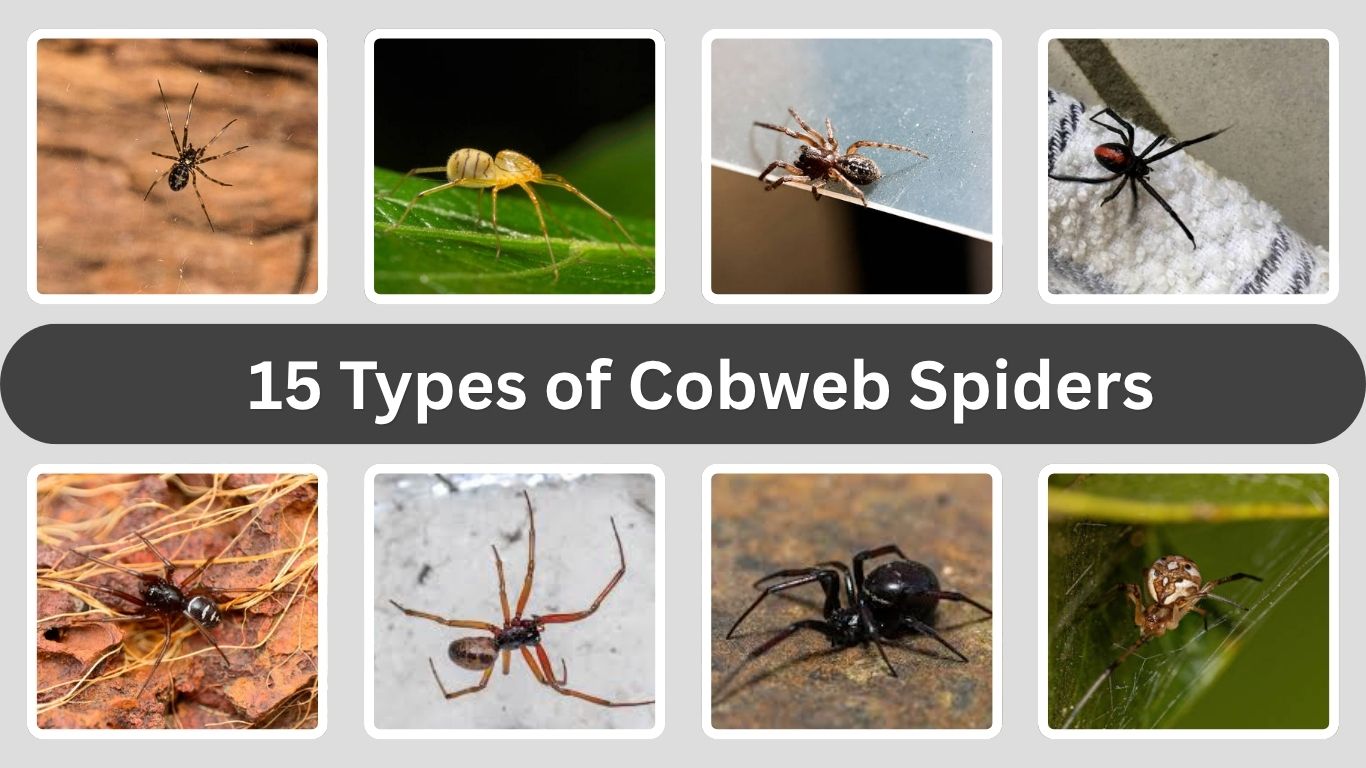
Cobweb spiders are a diverse group of spiders known for their irregular, tangled webs and ability to thrive in various environments, especially around human homes. Belonging mainly to the Theridiidae family, these spiders play an important role in controlling insect populations. While some species are venomous, most cobweb spiders are harmless and beneficial. This list highlights 15 common types, showcasing their unique features, habitats, and behaviors.
1. Common House Spider

The Common House Spider is one of the most widespread cobweb spiders found indoors. It belongs to the comb-footed spider family and is commonly seen in corners of homes, basements, and ceilings where it builds tangled, irregular webs. This species is harmless to humans and plays a helpful role by controlling insect populations.
Characteristics
- Small to medium size, usually around 5–8 mm in body length
- Brown or gray coloration with subtle patterns on the abdomen
- Long, thin legs adapted for web movement
- Builds messy, tangled cobwebs rather than neat circular webs
- Possesses comb-like hairs on the hind legs for handling silk
Habitat and Distribution
The Common House Spider thrives in human-made structures. It prefers quiet, undisturbed areas such as attics, garages, and wall corners. This species is found worldwide, especially in temperate regions, and adapts easily to indoor environments where food sources like small insects are available year-round.
Behavior and Diet
This spider is not aggressive and typically stays within its web. It feeds on flies, mosquitoes, and other small insects that get trapped in its sticky silk. When prey is caught, it quickly immobilizes it with venom and wraps it in silk for later consumption.
2. Black Widow Spider

The Black Widow Spider is a well-known cobweb spider recognized for its glossy black body and potent venom. It is commonly found in dark, sheltered spaces and is known for its distinctive appearance and behavior.
Characteristics
- Shiny black body with a red hourglass marking on the abdomen
- Females are larger than males, reaching up to 10–13 mm
- Long, slender legs with a smooth texture
- Builds irregular, tangled cobwebs close to the ground
- Venom is strong, but bites are rare and usually defensive
Habitat and Distribution
Black Widow Spiders prefer warm climates and are often found in garages, woodpiles, sheds, and outdoor corners. They thrive in quiet, undisturbed environments and are widely distributed across many regions of the world, especially in temperate and subtropical areas.
Behavior and Diet
These spiders are shy and avoid human contact. They feed on insects such as beetles, flies, and caterpillars that become trapped in their webs. After capturing prey, they inject venom and wrap it in silk before feeding.
3. Brown Widow Spider

The Brown Widow Spider is a close relative of the Black Widow, known for its lighter color and similar web-building habits. It is less dangerous but still uses venom to capture prey.
Characteristics
- Light brown to tan body with darker patterns
- Orange or yellowish hourglass marking underneath
- Smaller and less glossy than Black Widow
- Long legs with faint banding
- Distinctive spiky egg sacs
Habitat and Distribution
Brown Widow Spiders prefer warm climates and are often found around homes, gardens, fences, and outdoor furniture. They adapt well to urban areas and are widely distributed across tropical and subtropical regions.
Behavior and Diet
These spiders are shy and usually hide when disturbed. They build messy cobwebs to trap insects such as ants, flies, and beetles. Once prey is caught, they inject venom and wrap it in silk before feeding.
Interaction with Humans
Brown Widow Spiders are not aggressive and bites are uncommon. Their venom is milder than that of Black Widows, and most encounters result in no harm. They are generally considered beneficial for controlling insect populations.
4. Red Widow Spider

The Red Widow Spider is a rare and striking species known for its reddish body and dark abdomen. It is mostly found in limited regions and is recognized for its unique appearance among widow spiders.
Characteristics
- Reddish-orange head and legs with a dark abdomen
- Red or orange spots on the back instead of an hourglass below
- Medium-sized body with long, slender legs
- Builds irregular cobwebs in low vegetation
- Venomous but rarely encounters humans
Habitat and Distribution
This spider is primarily found in specific sandy habitats such as scrublands and dunes. It prefers outdoor environments with natural vegetation and is limited to certain geographic regions, making it less commonly seen than other widow species.
Behavior and Diet
The Red Widow Spider is reclusive and spends most of its time in its web. It feeds on insects like beetles and grasshoppers that become trapped in its silk, using venom to immobilize them before consumption.
Interaction with Humans
Encounters with humans are rare due to its limited habitat. While it is venomous, it is not aggressive and will only bite if threatened. Its ecological role helps maintain insect balance in its environment.
5. False Widow Spider

The False Widow Spider resembles true widow spiders but is generally less harmful. It is commonly found in homes and gardens and is known for its adaptability and widespread presence.
Characteristics
- Dark brown or purplish body with a bulbous abdomen
- Cream or light-colored markings on the back
- Medium size with smooth, glossy appearance
- Builds tangled cobwebs in sheltered areas
- Often mistaken for more dangerous widow spiders
Habitat and Distribution
False Widow Spiders are widely distributed across many regions and thrive in both indoor and outdoor environments. They are often found in wall corners, sheds, and under furniture where they can build undisturbed webs.
Behavior and Diet
These spiders are shy and prefer to stay hidden. They catch insects such as flies, ants, and small beetles in their webs. After capturing prey, they use venom and silk wrapping before feeding.
Interaction with Humans
False Widow Spiders are not aggressive, and bites are uncommon. While their bite may cause mild discomfort, they are generally harmless and beneficial in reducing household pests.
6. Triangulate Cobweb Spider

The Triangulate Cobweb Spider is a small indoor species recognized for the triangular patterns on its abdomen. It is commonly found in homes and buildings where it creates messy, irregular webs. This spider is harmless and plays an important role in controlling indoor insect populations.
Characteristics
- Small body with distinctive triangular markings
- Light brown or tan coloration
- Slender legs suited for web movement
- Builds tangled, irregular cobwebs
- Belongs to the comb-footed spider family
Habitat and Distribution
This species is widely distributed and commonly found indoors. It prefers quiet areas such as ceilings, corners, and behind furniture. It thrives in human environments where insects are easily available throughout the year.
Behavior and Diet
The Triangulate Cobweb Spider is non-aggressive and remains in its web most of the time. It feeds on small insects like ants, flies, and beetles that become trapped in its sticky silk threads.
Interaction with Humans
This spider poses no threat to humans. Bites are extremely rare and harmless. It is considered beneficial because it helps reduce common household pests naturally.
7. Cupboard Spider

The Cupboard Spider is a common cobweb spider often found inside homes, especially in storage areas. It is closely related to house spiders and is known for building messy webs in dark corners. Despite its appearance, it is harmless and useful for pest control.
Characteristics
- Small to medium size with a rounded abdomen
- Brown or gray coloration with subtle markings
- Long, thin legs adapted for web life
- Creates tangled cobwebs in enclosed spaces
- Often confused with other house spiders
Habitat and Distribution
Cupboard Spiders prefer dark, undisturbed indoor locations such as cupboards, closets, and basements. They are widely distributed and thrive in human habitats where they can easily find food and shelter.
Behavior and Diet
These spiders are shy and remain hidden in their webs. They capture small insects like flies, moths, and ants. After trapping prey, they inject venom and wrap it in silk before feeding.
Interaction with Humans
Cupboard Spiders are not dangerous and rarely come into contact with people. Their bites are uncommon and harmless. They are beneficial as they help control indoor insect populations.
8. American House Spider

The American House Spider is a very common indoor cobweb spider known for its adaptability to human environments. It builds messy webs in corners and ceilings, helping reduce insect populations. This species is harmless and often goes unnoticed despite being widely present in homes.
Characteristics
- Small body, typically 5–6 mm in length
- Yellowish-brown color with darker markings
- Long, thin legs with fine hairs
- Rounded abdomen with subtle patterns
- Creates irregular, tangled cobwebs
Habitat and Distribution
This spider is found throughout North America and in many other regions. It prefers indoor spaces such as basements, attics, and wall corners, where it can remain undisturbed and access a steady supply of insects.
Behavior and Diet
The American House Spider stays within its web and waits for prey. It feeds on flies, mosquitoes, and small insects that get trapped in its sticky silk. Once caught, prey is quickly immobilized and wrapped.
Interaction with Humans
This species is completely harmless to humans. Bites are extremely rare and cause no serious effects. It is considered beneficial for natural pest control inside homes.
9. Comb-footed Spider

The Comb-footed Spider refers to a group of spiders in the Theridiidae family, known for their specialized hind legs. These spiders build irregular cobwebs and are commonly found in both indoor and outdoor environments, playing an important ecological role in controlling insect populations.
Characteristics
- Small to medium size with a rounded abdomen
- Brown, gray, or black coloration depending on species
- Possesses comb-like hairs on hind legs
- Long, slender legs for web navigation
- Builds tangled, sticky cobwebs
Habitat and Distribution
Comb-footed Spiders are found worldwide in a variety of habitats. They live in homes, gardens, forests, and other sheltered areas where they can build webs and find prey easily.
Behavior and Diet
These spiders rely on their webs to capture prey such as flies, ants, and beetles. They use their combed hind legs to throw silk over captured insects, immobilizing them before feeding.
Interaction with Humans
Most Comb-footed Spiders are harmless and avoid human contact. While a few species are venomous, the majority pose little to no threat and are helpful in reducing insect populations.
10. Noble False Widow

The Noble False Widow is a well-known cobweb spider often mistaken for more dangerous species. It has gained attention due to its spread in urban areas. Despite its reputation, it is generally not aggressive and plays a role in controlling insect populations.
Characteristics
- Dark brown or purplish body with cream markings
- Bulbous abdomen with a glossy appearance
- Medium size, larger than many house spiders
- Long, slender legs
- Builds irregular, tangled cobwebs
Habitat and Distribution
This species is commonly found in urban and suburban environments. It prefers sheltered outdoor spots like walls, fences, and window frames but may also enter homes. It has spread widely across several regions due to adaptability.
Behavior and Diet
The Noble False Widow is a nocturnal hunter that relies on its web to catch prey. It feeds on insects such as flies, moths, and even other spiders, using venom to subdue them before feeding.
Interaction with Humans
Although often feared, this spider is not aggressive. Bites are rare and usually mild. It is considered beneficial as it helps control pest populations in both indoor and outdoor environments.
11. Mediterranean False Widow

The Mediterranean False Widow is a small cobweb spider commonly found in warm regions. It resembles other false widows but is generally smaller and less noticeable. This species thrives in human environments and is harmless, contributing to natural pest control in homes and gardens.
Characteristics
- Small, dark-colored body with subtle markings
- Rounded abdomen with a smooth texture
- Slender legs adapted for web living
- Less glossy than larger false widow species
- Builds messy, irregular cobwebs
Habitat and Distribution
This spider is widely distributed in warm and temperate climates. It is often found in homes, gardens, and sheltered outdoor areas such as under stones, fences, and walls where it can build undisturbed webs.
Behavior and Diet
The Mediterranean False Widow stays hidden in its web and waits for prey. It feeds on small insects like ants, flies, and beetles, capturing them with sticky silk and immobilizing them with venom.
Interaction with Humans
This species is not dangerous to humans. Bites are extremely rare and typically harmless. It is considered useful for keeping insect populations under control naturally.
12. Redback Spider

The Redback Spider is a well-known cobweb spider recognized for its black body and distinctive red stripe on the back. It is closely related to widow spiders and is commonly found in warm regions, often living near human structures where it can easily find shelter and prey.
Characteristics
- Glossy black body with a bright red stripe on the abdomen
- Females are larger than males
- Rounded abdomen with long, slender legs
- Builds strong, tangled cobwebs
- Venomous, mainly used for subduing prey
Habitat and Distribution
Redback Spiders are commonly found in warm climates, especially around buildings, sheds, and outdoor furniture. They prefer dry, sheltered places and are widely distributed in regions with suitable temperatures.
Behavior and Diet
These spiders are mostly inactive during the day and become active at night. They feed on insects like beetles, flies, and small arthropods that get caught in their webs, using venom to immobilize them.
Interaction with Humans
Redback Spiders are not aggressive but will bite if disturbed. Their venom can cause noticeable symptoms, so caution is advised. However, they generally avoid human contact.
13. Gray House Spider

The Gray House Spider is a common cobweb spider often found in and around homes. It is known for its dull gray coloration and ability to blend into its surroundings. This species is harmless and helps control insect populations in domestic environments.
Characteristics
- Gray or dusty-colored body with faint markings
- Medium size with a rounded abdomen
- Long legs adapted for web movement
- Builds irregular, messy cobwebs
- Camouflages well in indoor settings
Habitat and Distribution
This spider is widely distributed and prefers indoor areas such as ceilings, corners, and basements. It can also be found outdoors in sheltered spaces where it can build its web undisturbed.
Behavior and Diet
The Gray House Spider remains in its web and waits for prey. It feeds on small insects like flies, mosquitoes, and ants that become trapped in its sticky silk threads.
Interaction with Humans
This species is harmless and rarely noticed by people. Bites are extremely uncommon and pose no risk. It is beneficial as it helps reduce indoor insect pests naturally.
14. Theridion Spider

The Theridion Spider belongs to a large group of cobweb spiders known for their small size and delicate appearance. Many species fall under this category, commonly found in homes and natural habitats. They are harmless and contribute to controlling small insect populations effectively.
Characteristics
- Very small body with a rounded abdomen
- Light brown, gray, or translucent coloration
- Thin, delicate legs
- Builds fine, irregular cobwebs
- Subtle or faint body patterns
Habitat and Distribution
Theridion spiders are found worldwide in both indoor and outdoor environments. They prefer quiet areas such as corners, under leaves, and sheltered spaces where they can spin their webs without disturbance.
Behavior and Diet
These spiders are passive hunters that rely on their webs to catch prey. They feed on tiny insects such as gnats, ants, and small flies, quickly wrapping them in silk after capture.
Interaction with Humans
Theridion spiders are completely harmless to humans. They rarely come into contact with people, and their presence is beneficial for reducing small insect populations naturally.
15. Steatoda Grossa

Steatoda grossa, often called the False Black Widow, is a common cobweb spider known for its dark, smooth body. It resembles more dangerous widow spiders but is much less harmful. This species is widely found in homes and buildings.
Characteristics
- Dark brown to black glossy body
- Rounded abdomen with minimal markings
- Medium size, females larger than males
- Long, slender legs
- Builds strong, tangled cobwebs
Habitat and Distribution
This spider is widely distributed across many regions and thrives in indoor environments. It prefers basements, garages, and wall corners where it can remain undisturbed and find prey easily.
Behavior and Diet
Steatoda grossa is a nocturnal hunter that stays in its web. It feeds on insects such as flies, beetles, and even other spiders, using venom to immobilize them before feeding.
Interaction with Humans
This species is not aggressive and bites are rare. While its bite may cause mild discomfort, it is not considered dangerous. It is beneficial for controlling pest populations indoors.
FAQs
Are cobweb spiders dangerous to humans?
Most cobweb spiders are harmless and pose little to no risk to humans. While a few species, such as widow spiders, have stronger venom, they are not aggressive and rarely bite unless provoked. In general, these spiders are more beneficial than harmful.
Why do cobweb spiders build messy webs?
Cobweb spiders create irregular, tangled webs because their design is effective for trapping crawling and flying insects. Unlike symmetrical webs, these messy structures increase the chances of catching prey in multiple directions.
Where are cobweb spiders commonly found?
They are often found in quiet, undisturbed places such as corners of rooms, ceilings, basements, garages, and outdoor structures. They prefer areas where insects are abundant and human activity is minimal.
What do cobweb spiders eat?
Cobweb spiders mainly feed on small insects like flies, ants, mosquitoes, and beetles. They use their sticky webs to trap prey, then immobilize it with venom before consuming it.
How can I prevent cobweb spiders in my home?
Regular cleaning, removing webs, sealing cracks, and reducing insect presence can help prevent cobweb spiders. Keeping areas well-lit and less cluttered also makes your home less attractive to them.
