
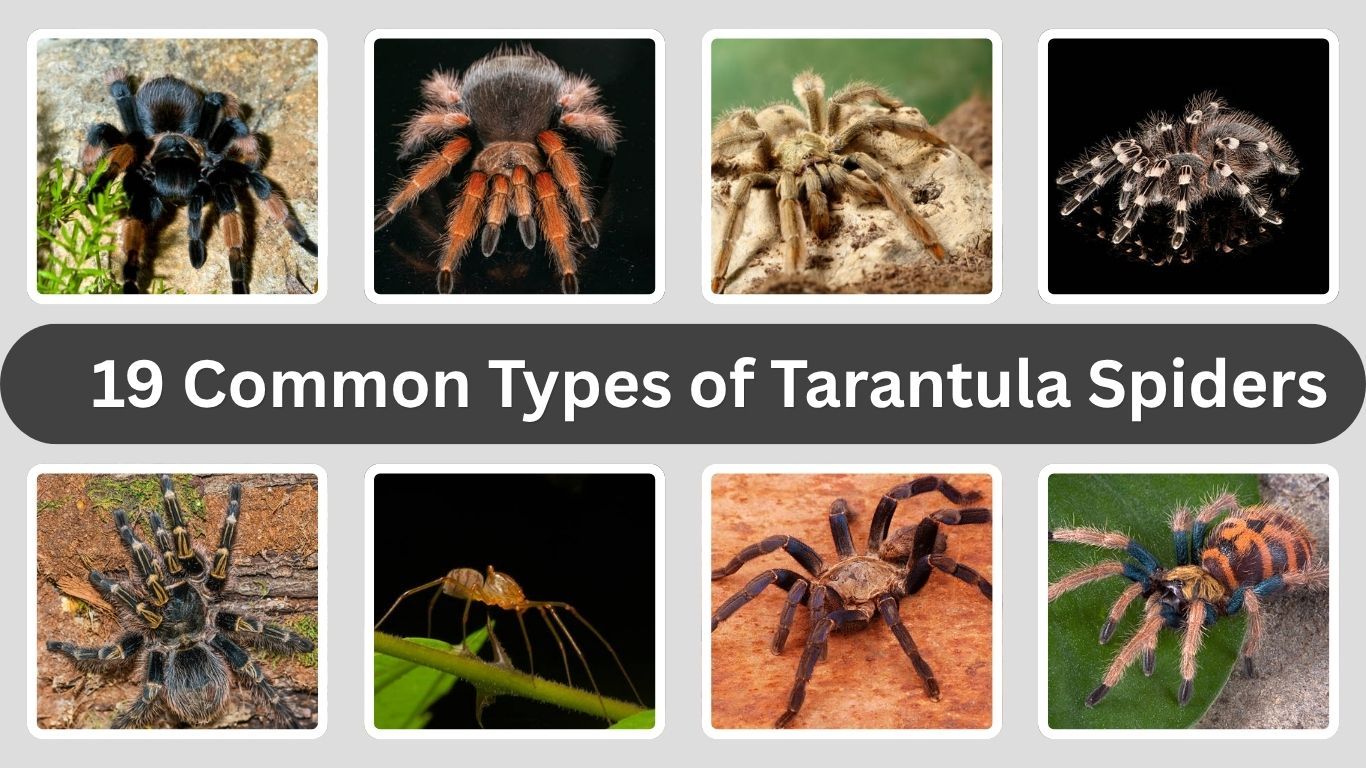
Tarantulas are large, hairy spiders known for their impressive size, unique appearance, and fascinating behaviors. Found in warm regions around the world, they live in a variety of habitats ranging from deserts to tropical forests. While some species can appear intimidating, most tarantulas are calm and non-aggressive. They play an important role in controlling insect populations and are also popular among enthusiasts as exotic pets due to their diverse colors, patterns, and temperaments.
1. Mexican Red Knee Tarantula

The Mexican Red Knee Tarantula is one of the most popular and recognizable tarantula species, known for its striking black body with bright red-orange markings on its legs. It is commonly kept as a pet due to its calm nature and impressive appearance.
Characteristics
- Black body with vivid red or orange knee markings
- Medium to large size with a leg span up to 15 cm
- Thick, hairy body typical of tarantulas
- Slow-moving and generally docile
- Possesses urticating hairs for defense
Habitat and Distribution
This species is native to Mexico, particularly in dry scrublands and desert regions. It lives in burrows or hides under rocks and logs, where it can stay protected from predators and extreme temperatures.
Behavior and Diet
The Mexican Red Knee Tarantula is a nocturnal hunter. It feeds on insects such as crickets, grasshoppers, and beetles. It waits patiently near its burrow and ambushes prey rather than actively chasing it.
Interaction with Humans
This tarantula is known for its calm temperament and rarely shows aggression. Bites are uncommon and usually mild, but it may release irritating hairs if threatened. It is widely kept as a beginner-friendly pet.
2. Chilean Rose Tarantula

The Chilean Rose Tarantula is a popular and widely kept species known for its calm temperament and attractive pinkish hue. It is often recommended for beginners due to its hardy nature and relatively low maintenance requirements.
Characteristics
- Brown to gray body with a subtle pink or rose sheen
- Medium size with a leg span around 12–15 cm
- Thick, hairy body typical of tarantulas
- Slow-moving and generally docile
- Can flick urticating hairs as a defense
Habitat and Distribution
This species is native to Chile, commonly found in dry grasslands and scrub areas. It lives in burrows or hides under rocks and logs, where it can avoid predators and extreme weather conditions.
Behavior and Diet
The Chilean Rose Tarantula is a nocturnal ambush predator. It feeds on insects such as crickets, beetles, and small invertebrates. It prefers to wait near its hiding spot and capture prey rather than actively hunting.
Interaction with Humans
This tarantula is known for its calm nature and is rarely aggressive. Bites are uncommon and mild, but it may flick irritating hairs if disturbed. It is one of the most common pet tarantulas.
3. Brazilian Black Tarantula

The Brazilian Black Tarantula is admired for its deep, velvety black coloration and calm behavior. It is considered one of the most beautiful tarantula species and is popular among enthusiasts for its gentle temperament and striking appearance.
Characteristics
- Solid jet-black body with a velvety texture
- Medium to large size with a leg span up to 18 cm
- Thick, dense hair covering the body
- Slow-moving and generally docile
- Strong legs with a sturdy build
Habitat and Distribution
This species is native to Brazil and is typically found in forests and grasslands. It lives in burrows or sheltered ground areas where it can stay hidden during the day and avoid predators.
Behavior and Diet
The Brazilian Black Tarantula is a nocturnal hunter that feeds on insects like crickets, cockroaches, and beetles. It uses an ambush strategy, waiting patiently before striking prey with precision.
Interaction with Humans
This tarantula is calm and not aggressive, making it suitable for handling with care. Bites are rare and usually harmless, though it may flick hairs when threatened. It is highly valued as a pet species.
4. Pink Toe Tarantula

The Pink Toe Tarantula is a popular arboreal species known for its dark body and bright pink tips on its feet. It is active, agile, and often seen climbing trees, making it quite different from ground-dwelling tarantulas.
Characteristics
- Dark body with distinctive pink or orange toe tips
- Medium size with a leg span around 10–13 cm
- Slender body compared to other tarantulas
- Covered in fine hairs
- Adapted for climbing with strong grip
Habitat and Distribution
This species is native to South America, especially in tropical forests. It lives in trees and plants, building silk retreats in leaves or tree hollows where it stays protected.
Behavior and Diet
The Pink Toe Tarantula is an active nocturnal hunter. It feeds on insects such as flies, crickets, and moths. Being arboreal, it prefers to hunt above ground and uses speed and agility to catch prey.
Interaction with Humans
This tarantula is generally calm but can be quick and jumpy. It is not aggressive, and bites are rare and mild. It is commonly kept as a pet, though it requires careful handling due to its speed.
5. Goliath Birdeater Tarantula

The Goliath Birdeater Tarantula is the largest tarantula in the world by mass and one of the heaviest spiders overall. It is known for its impressive size and strength, making it one of the most fascinating tarantula species.
Characteristics
- Extremely large body with a leg span up to 28 cm
- Brown body covered in thick hairs
- Heavy and bulky build
- Strong fangs capable of subduing large prey
- Produces a hissing sound by rubbing body parts
Habitat and Distribution
This species is native to the rainforests of South America. It lives in burrows in humid environments, often near swamps or marshy areas where it can find shelter and prey.
Behavior and Diet
The Goliath Birdeater is a nocturnal ambush predator. It feeds on insects, frogs, small rodents, and occasionally birds. It waits near its burrow and strikes quickly when prey comes close.
Interaction with Humans
Despite its size, this tarantula is not aggressive. It may defend itself by flicking irritating hairs or making a hissing sound. Bites are rare but can be painful, though not considered dangerous.
6. Curly Hair Tarantula

The Curly Hair Tarantula is a well-known species recognized for its unique curly hairs covering its body. It is popular among pet owners due to its calm temperament and hardy nature. This tarantula is slow-moving and generally easy to care for.
Characteristics
- Dark brown to black body with distinctive curly hairs
- Medium size with a leg span around 12–15 cm
- Thick, fuzzy appearance
- Slow-moving and docile behavior
- Possesses urticating hairs for defense
Habitat and Distribution
This species is native to Central America, especially Honduras and Nicaragua. It lives in dry forests and scrublands, often creating burrows or hiding under logs and rocks for protection.
Behavior and Diet
The Curly Hair Tarantula is a nocturnal ambush predator. It feeds on insects like crickets, beetles, and cockroaches. It prefers to wait near its burrow and strike when prey comes close.
Interaction with Humans
This tarantula is calm and rarely aggressive, making it suitable for beginners. Bites are uncommon and mild, but it may flick irritating hairs when threatened. It is widely kept as a pet.
7. Green Bottle Blue Tarantula

The Green Bottle Blue Tarantula is one of the most colorful tarantula species, known for its vibrant blue legs, green carapace, and orange abdomen. It is active and fast, making it a favorite among enthusiasts who appreciate its striking appearance.
Characteristics
- Bright blue legs with a green body and orange abdomen
- Medium size with a leg span around 12–14 cm
- Slender build compared to other tarantulas
- Covered in fine hairs
- Fast-moving and highly active
Habitat and Distribution
This species is native to northern South America, particularly dry scrublands. It lives in burrows and creates extensive silk webbing around its habitat for protection and movement.
Behavior and Diet
The Green Bottle Blue Tarantula is an active hunter that also uses webbing to trap prey. It feeds on insects such as crickets, flies, and beetles, combining ambush and web-based hunting strategies.
Interaction with Humans
This tarantula is not aggressive but can be quick and defensive. Bites are rare and usually mild. It may flick hairs when disturbed. It is popular in the pet trade due to its vivid colors.
8. Costa Rican Zebra Tarantula

The Costa Rican Zebra Tarantula is known for its striking black body with white striped legs, giving it a zebra-like appearance. It is a fast and active species that is commonly kept by experienced hobbyists due to its speed and alert nature.
Characteristics
- Black body with bold white stripes on legs
- Medium size with a leg span around 10–13 cm
- Slender build compared to heavier tarantulas
- Covered in fine hairs
- Fast-moving and highly alert
Habitat and Distribution
This species is native to Central America, particularly Costa Rica. It lives in dry forests and grasslands, often hiding in burrows or under rocks and logs during the day to stay protected.
Behavior and Diet
The Costa Rican Zebra Tarantula is a nocturnal hunter. It feeds on insects such as crickets, grasshoppers, and beetles. It relies on speed and quick reflexes to capture prey rather than heavy ambush tactics.
Interaction with Humans
This tarantula is not aggressive but can be very fast and skittish. Bites are rare and usually mild, though it may flick hairs if threatened. It is better suited for observation rather than handling.
9. Salmon Pink Birdeater Tarantula

The Salmon Pink Birdeater Tarantula is one of the largest tarantula species, known for its impressive size and soft pinkish hairs covering its body. It is a ground-dwelling species admired for its size and calm but defensive nature.
Characteristics
- Large body with a leg span up to 20–25 cm
- Brown body covered with pinkish or salmon-colored hairs
- Thick, heavy build
- Strong legs and large fangs
- Possesses urticating hairs for defense
Habitat and Distribution
This species is native to South America, especially Brazil. It lives in burrows in forests and grasslands, preferring warm and humid environments where it can remain hidden during the day.
Behavior and Diet
The Salmon Pink Birdeater is a nocturnal ambush predator. It feeds on insects, small animals, and other invertebrates. It waits near its burrow and strikes quickly when prey comes within reach.
Interaction with Humans
This tarantula is generally calm but can become defensive if disturbed. It may flick irritating hairs or raise its front legs as a warning. Bites are rare but can be painful, though not dangerous.
10. Cobalt Blue Tarantula

The Cobalt Blue Tarantula is a striking species known for its vivid blue coloration and fast, defensive nature. It is a burrowing tarantula that spends most of its time underground, making it less visible but highly fascinating for experienced keepers.
Characteristics
- Bright metallic blue legs
- Dark body with a glossy appearance
- Medium size with a leg span around 13–15 cm
- Strong, robust build
- Fast and defensive behavior
Habitat and Distribution
This species is native to Southeast Asia, especially in countries like Thailand and Myanmar. It prefers tropical forests where it can dig deep burrows in moist soil and remain hidden during the day.
Behavior and Diet
The Cobalt Blue Tarantula is a nocturnal ambush predator. It feeds on insects such as crickets, cockroaches, and beetles. It waits inside its burrow and quickly strikes when prey comes near the entrance.
Interaction with Humans
This tarantula is defensive and not suitable for handling. Bites are rare but can be more painful than many other species. It is best observed rather than handled and is recommended for experienced keepers.
11. Indian Ornamental Tarantula

The Indian Ornamental Tarantula is a beautifully patterned arboreal species known for its speed and striking markings. It is highly valued for its appearance but requires careful handling due to its quick movements and defensive nature.
Characteristics
- Black and white intricate patterns on the body
- Long legs with bold markings
- Medium to large size with a leg span up to 18 cm
- Slender body adapted for climbing
- Very fast and agile
Habitat and Distribution
This species is native to India and Sri Lanka. It lives in trees within forests, often hiding in tree holes or bark crevices where it builds silk retreats for shelter.
Behavior and Diet
The Indian Ornamental Tarantula is a nocturnal hunter. It feeds on insects such as moths, crickets, and other small invertebrates. It relies on speed and precision to capture prey in its arboreal environment.
Interaction with Humans
This tarantula is not aggressive but highly defensive and fast. Bites are rare but can cause more noticeable symptoms compared to other species. It is not recommended for beginners due to its speed and temperament.
12. Venezuelan Sun Tiger Tarantula

The Venezuelan Sun Tiger Tarantula is a visually striking species known for its bold orange and black pattern. It is fast, energetic, and creates heavy webbing around its habitat, making it a fascinating species for observation.
Characteristics
- Bright orange abdomen with black contrasting patterns
- Medium size with a leg span around 12–14 cm
- Slender body with long legs
- Heavy web builder compared to many tarantulas
- Fast and highly active
Habitat and Distribution
This species is native to Venezuela and nearby regions. It prefers dry scrublands and forest edges, where it lives in burrows lined with silk and surrounded by dense webbing.
Behavior and Diet
The Venezuelan Sun Tiger is an active hunter that also uses its webbing to trap prey. It feeds on insects such as crickets, beetles, and moths. It combines ambush and web-assisted hunting techniques.
Interaction with Humans
This tarantula is not aggressive but can be very quick and defensive. Bites are rare and mild, though it may flick hairs when threatened. It is better suited for experienced keepers.
13. Brazilian White Knee Tarantula

The Brazilian White Knee Tarantula is a popular species known for its bold black body and bright white leg markings. It is large, hardy, and often kept as a pet due to its impressive appearance and relatively manageable temperament.
Characteristics
- Black body with bright white bands on the legs
- Large size with a leg span up to 20 cm
- Thick, hairy body
- Strong and sturdy build
- Possesses urticating hairs for defense
Habitat and Distribution
This species is native to Brazil, where it lives in tropical forests. It prefers burrows in moist soil or sheltered ground areas, often near tree roots or under logs.
Behavior and Diet
The Brazilian White Knee Tarantula is a nocturnal ambush predator. It feeds on insects such as crickets, cockroaches, and beetles, waiting near its burrow before striking quickly.
Interaction with Humans
This tarantula is generally calm but can become defensive if disturbed. It may flick irritating hairs as a warning. Bites are rare and not dangerous, making it a popular choice among hobbyists.
14. Arizona Blonde Tarantula

The Arizona Blonde Tarantula is a well-known North American species recognized for its light tan coloration and calm nature. It is often seen in desert regions and is admired for its hardy behavior and ability to survive in dry environments.
Characteristics
- Light tan or blonde body coloration
- Medium to large size with a leg span around 10–13 cm
- Thick, hairy body
- Slow-moving and generally docile
- Possesses urticating hairs for defense
Habitat and Distribution
This species is native to the southwestern United States and northern Mexico. It lives in deserts and dry scrublands, often creating deep burrows in the ground to escape heat and predators.
Behavior and Diet
The Arizona Blonde Tarantula is a nocturnal hunter. It feeds on insects such as beetles, crickets, and other small invertebrates. It waits near its burrow entrance and ambushes prey that comes close.
Interaction with Humans
This tarantula is calm and rarely aggressive. Bites are uncommon and mild, though it may flick hairs when disturbed. It is sometimes kept as a pet due to its manageable temperament.
15. Colombian Giant Redleg Tarantula

The Colombian Giant Redleg Tarantula is a large and impressive species known for its dark body and reddish leg hairs. It is a ground-dwelling tarantula that is active and sometimes defensive, making it more suitable for experienced keepers.
Characteristics
- Dark brown or black body with red hairs on legs
- Large size with a leg span up to 18–20 cm
- Thick, hairy body
- Strong legs and sturdy build
- Can flick urticating hairs when threatened
Habitat and Distribution
This species is native to Colombia and surrounding regions. It lives in tropical forests and grasslands, often hiding in burrows or under logs and rocks during the day.
Behavior and Diet
The Colombian Giant Redleg Tarantula is a nocturnal predator. It feeds on insects, small vertebrates, and other invertebrates. It uses ambush tactics, waiting near its hiding spot before striking quickly.
Interaction with Humans
This tarantula can be defensive if disturbed and may flick irritating hairs as a warning. Bites are rare but can cause discomfort. It is not typically recommended for beginners due to its temperament.
16. Trinidad Chevron Tarantula

The Trinidad Chevron Tarantula is a fast and agile species known for its bold chevron-shaped markings on the abdomen. It is an arboreal tarantula that spends much of its time in trees, making it an interesting species for observation due to its active behavior.
Characteristics
- Brown body with distinct chevron patterns
- Medium size with a leg span around 12–14 cm
- Slender body adapted for climbing
- Long legs with strong grip
- Very fast and alert
Habitat and Distribution
This species is native to Trinidad and parts of South America. It lives in trees within tropical forests, often hiding in bark crevices or tree hollows where it builds silk retreats.
Behavior and Diet
The Trinidad Chevron Tarantula is a nocturnal hunter. It feeds on insects such as moths, flies, and crickets. It uses speed and precision to capture prey in its arboreal environment.
Interaction with Humans
This tarantula is not aggressive but can be very quick and defensive. Bites are rare and usually mild. It is best suited for experienced keepers due to its speed and agility.
17. Mexican Red Rump Tarantula

The Mexican Red Rump Tarantula is a popular species recognized for its dark body and bright reddish hairs on the abdomen. It is commonly kept as a pet due to its hardy nature and relatively calm temperament.
Characteristics
- Black body with reddish hairs on the abdomen
- Medium size with a leg span around 12–14 cm
- Thick, hairy appearance
- Slow-moving and generally docile
- Possesses urticating hairs for defense
Habitat and Distribution
This species is native to Mexico and Central America. It lives in dry forests and scrublands, often hiding in burrows or under rocks and logs during the day.
Behavior and Diet
The Mexican Red Rump Tarantula is a nocturnal ambush predator. It feeds on insects such as crickets, beetles, and cockroaches, waiting near its hiding spot before striking prey.
Interaction with Humans
This tarantula is generally calm but may flick irritating hairs when threatened. Bites are rare and not dangerous. It is widely kept as a beginner-friendly pet due to its manageable behavior.
18. King Baboon Tarantula

The King Baboon Tarantula is a large and powerful species known for its striking reddish-brown color and defensive nature. It is a ground-dwelling tarantula that spends most of its time in burrows and is best suited for experienced keepers.
Characteristics
- Reddish-brown body with a robust build
- Large size with a leg span up to 20 cm
- Thick, hairy body
- Strong legs adapted for digging
- Can produce a hissing sound (stridulation)
Habitat and Distribution
This species is native to East Africa, particularly Kenya and Tanzania. It lives in dry savannas and scrublands, creating deep burrows where it remains hidden during the day.
Behavior and Diet
The King Baboon Tarantula is a nocturnal ambush predator. It feeds on insects and small invertebrates, waiting inside its burrow to strike quickly when prey comes near.
Interaction with Humans
This tarantula is highly defensive and not suitable for handling. Bites are rare but can be painful. It is recommended only for experienced enthusiasts due to its temperament.
19. Socotra Island Blue Baboon Tarantula

The Socotra Island Blue Baboon Tarantula is a rare and visually striking species known for its blue coloration. It is fast, defensive, and highly active, making it more suitable for experienced keepers who can manage its behavior.
Characteristics
- Blue or bluish-gray body coloration
- Medium to large size with long legs
- Slender but strong build
- Fast-moving and highly alert
- Capable of producing defensive displays
Habitat and Distribution
This species is native to Socotra Island. It lives in dry, rocky environments where it creates burrows or hides in crevices to stay protected from heat and predators.
Behavior and Diet
The Socotra Island Blue Baboon Tarantula is a nocturnal hunter. It feeds on insects and small invertebrates, using speed and ambush tactics to capture prey without relying on webs.
Interaction with Humans
This tarantula is defensive and not recommended for handling. Bites are rare but can be more painful than many other species. It is best observed rather than handled and is suited for experienced keepers.
FAQs
Are tarantulas dangerous to humans?
Most tarantulas are not dangerous to humans. Their bites are rare and usually no worse than a bee sting, causing mild pain or swelling. Some species may flick irritating hairs, but serious reactions are uncommon in healthy individuals.
Do tarantulas bite often?
Tarantulas do not bite unless they feel threatened or are handled roughly. They prefer to escape or use defensive behaviors like raising their legs or flicking hairs. Bites are a last resort and are generally uncommon.
What do tarantulas eat?
Tarantulas mainly feed on insects such as crickets, beetles, and cockroaches. Larger species may also eat small animals like frogs or mice. They are ambush predators, waiting for prey before striking quickly.
Where do tarantulas live?
Tarantulas are found in warm regions across the world, including the Americas, Africa, Asia, and Australia. They live in burrows, trees, or hidden ground shelters depending on the species and habitat.
Can tarantulas be kept as pets?
Yes, many tarantula species are kept as pets due to their calm nature and low maintenance. Popular species like the Mexican Red Knee and Chilean Rose are beginner-friendly, but proper care and handling are important for safety.
