
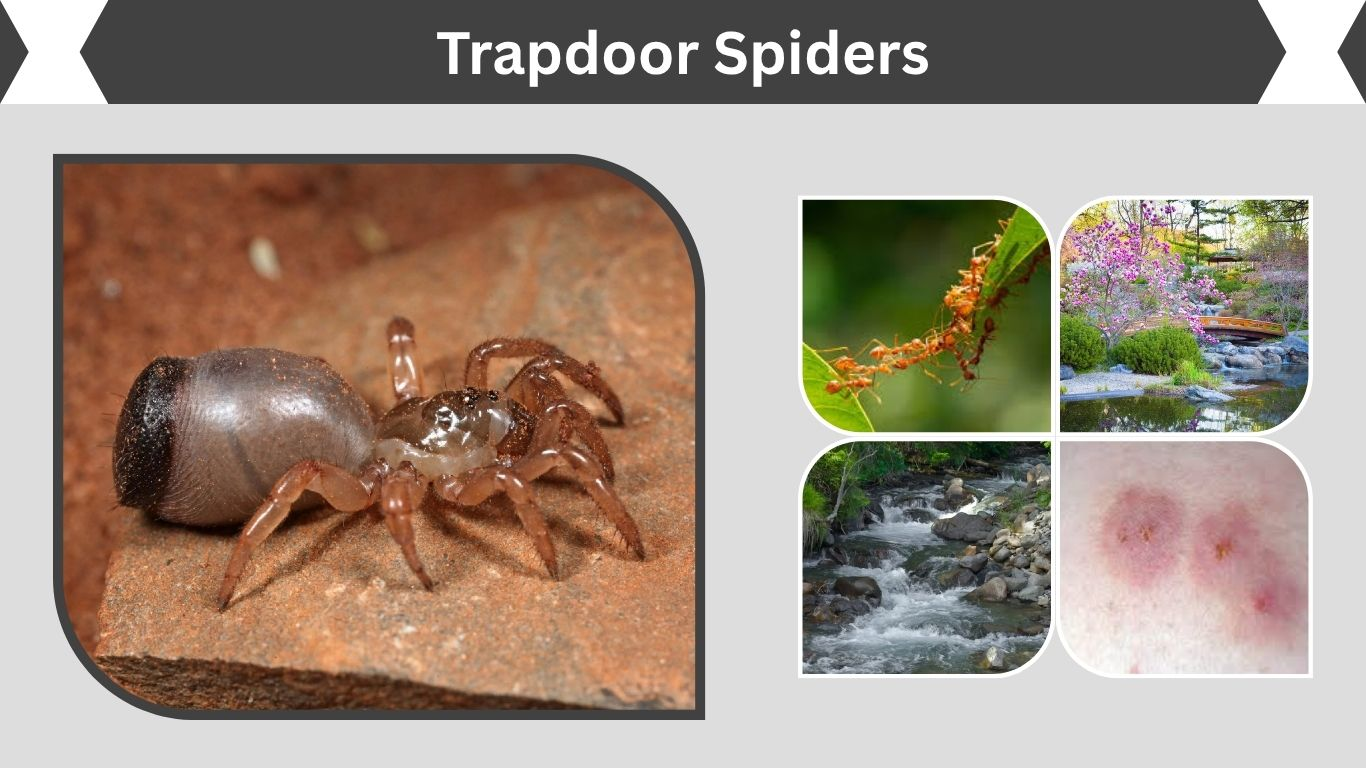
Trapdoor spiders are fascinating arachnids known for their secretive burrows and ambush hunting style. They are found worldwide, from North America to Australia, Asia, and Africa. These spiders construct camouflaged “trapdoors” over their burrows, allowing them to lie in wait for prey. Some species are tiny and “cute,” while others are large and armored. Their diversity in size, color, and behavior makes them a captivating subject for arachnid enthusiasts and researchers alike.
Trapdoor spiders play an important ecological role by controlling insect populations, yet most remain hidden from humans due to their subterranean lifestyle.
What Are Trapdoor Spiders?
Trapdoor spiders are ground-dwelling spiders that create silk-lined burrows with camouflaged doors. They ambush prey from these concealed entrances and rarely leave their burrows. Size, color, and physical traits vary widely depending on species. While some are small and harmless, others are large, robust, and capable of defending themselves with powerful bites.
Physical Characteristics
- Body size: ranges from tiny “cute” species under 1 inch to giant armored species over 3 inches.
- Distinctive features: thick legs, strong chelicerae, and heavily camouflaged bodies.
- Color variations: black, brown, blue, or earthy tones depending on habitat.
The Trapdoor Mechanism
- Burrow doors are constructed from soil, silk, and debris.
- Function: concealment from predators and a hidden vantage point for ambushing prey.
- Some species create folding or wafer-style trapdoors adapted to their environment.
Types of Trapdoor Spiders
Trapdoor spiders are categorized based on geography, burrow type, and unique physical traits. Notable types include folding trapdoor spiders, hourglass-shaped species, and armored varieties. Many are named after the region where they are found, such as California, Texas, or Australia. Others are named for distinctive features like coloration (blue, black) or size (giant armour).
Regional Species
- North America: California trapdoor spider, Georgia trapdoor spider, Texas trapdoor spider, North Carolina trapdoor spider, Florida trapdoor spider.
- Australia: Sydney brown trapdoor spider, armored trapdoor spider, oreo trapdoor spider.
- Asia: Chinese hourglass trapdoor spider, Thai hourglass trapdoor spider.
- South America & Africa: African trapdoor spider, Brazilian trapdoor spider.
Notable Varieties
- Folding trapdoor spider: can adjust burrow doors for quick ambushes.
- Armored trapdoor spider: heavily sclerotized body for protection.
- Blue trapdoor spider: rare coloration found in specific habitats.
- Giant armored trapdoor spider: largest species, with powerful jaws.
- Red folding trapdoor spider: distinguished by reddish hues and flexible burrow doors.
Trapdoor Spiders Habitat and Burrow Construction
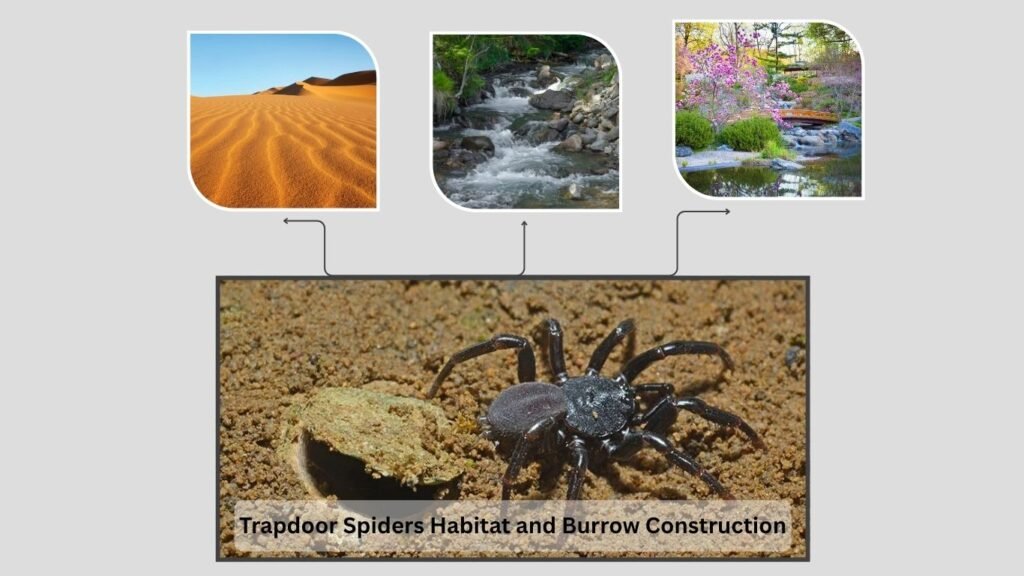
Trapdoor spiders prefer soil-rich environments where they can dig stable burrows. Habitats include forests, deserts, rocky ravines, and gardens. Burrow location and construction are essential for survival, providing protection from predators and a strategic hunting base. Each species selects soil type and moisture levels suited to its needs.
Burrow Structure
- Depth and diameter vary by species. Some burrows reach several inches underground.
- Trapdoors are camouflaged with soil, leaves, and silk.
- Some species line burrows with silk to strengthen walls and improve moisture retention.
Environmental Preferences
- Forest species favor shaded areas with loose soil.
- Desert species adapt to dry, rocky environments.
- Ravine-dwelling spiders choose locations with stable soil and minimal flooding risk.
Prey and Hunting Behavior
- Primarily ambush predators: wait behind the trapdoor for insects or small arthropods.
- Detect prey using sensory hairs that sense vibrations.
- Some larger species capture small lizards or other vertebrates.
Trapdoor Spiders Behavior and Diet
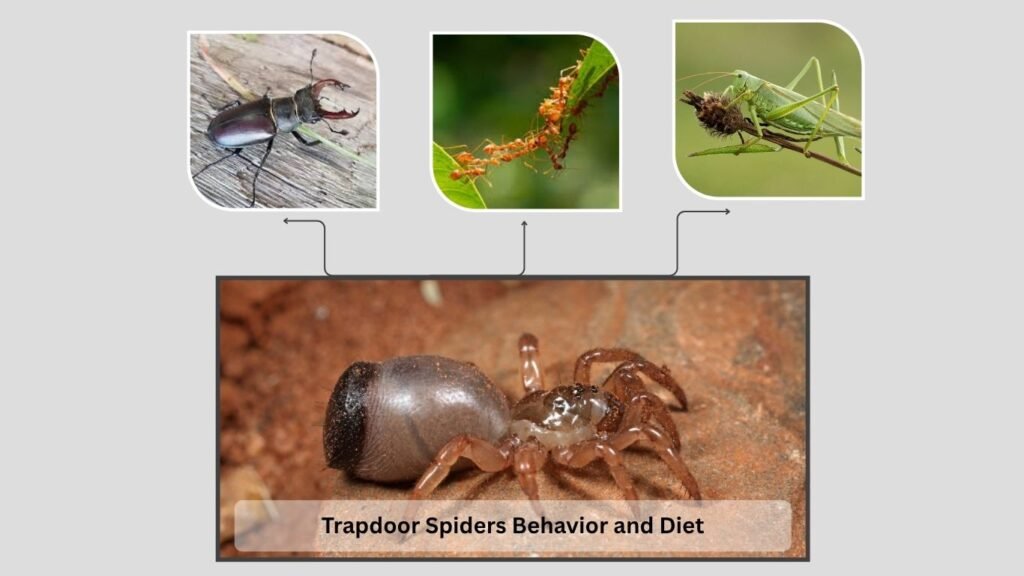
Trapdoor spiders are mostly nocturnal ambush predators, relying on stealth rather than speed. They spend the majority of their life in their burrows, emerging only to hunt or mate. Their diet primarily consists of insects, but larger species may consume small arthropods or even tiny vertebrates. Sensory hairs and silk threads help them detect prey vibrations outside their burrow.
Hunting Techniques
- Ambush from behind the trapdoor using rapid strikes.
- Sense prey through vibrations transmitted along the soil and silk threads.
- Rarely leave the burrow, conserving energy for hunting and survival.
Typical Diet
- Insects: beetles, ants, grasshoppers, and crickets.
- Larger species: small spiders, scorpions, or lizards.
- Opportunistic: prey depends on size and availability.
Predators and Threats
- Birds, reptiles, and small mammals may prey on them.
- Parasitic wasps sometimes invade burrows to lay eggs on juveniles.
- Habitat destruction and human activity pose indirect threats.
Trapdoor Spiders Reproduction and Lifespan
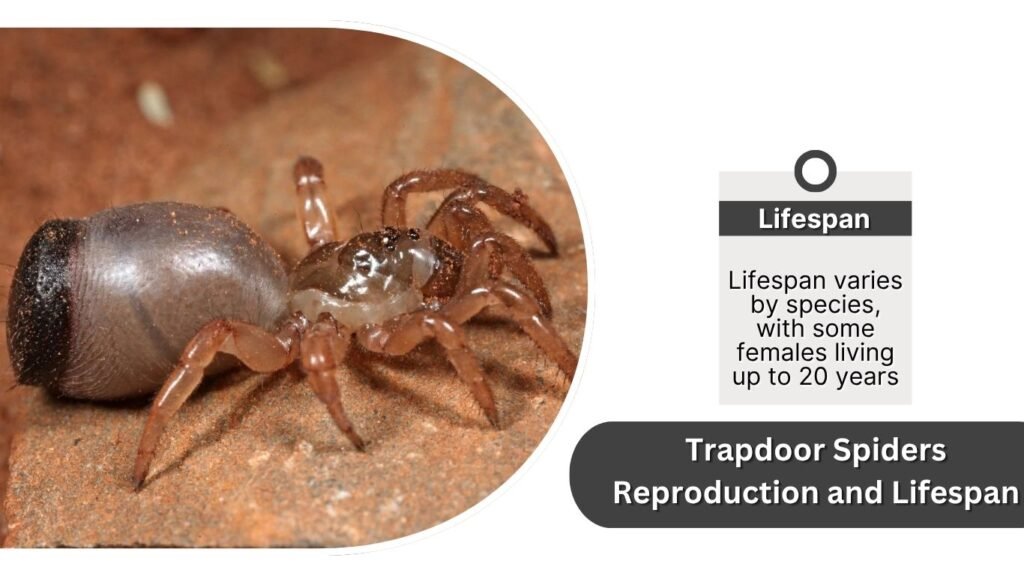
Female trapdoor spiders often remain in their burrows for many years, while males wander in search of mates. Mating involves careful courtship at the burrow entrance. Lifespan varies by species, with some females living up to 20 years. Juveniles gradually expand burrows and refine their hunting skills as they grow.
Mating Behavior
- Males travel to locate female burrows during mating season.
- Courtship involves tapping and vibrations to signal presence.
- After mating, males often die shortly thereafter, while females remain in their burrows.
Lifespan and Growth
- Females: 10–20 years depending on species.
- Males: shorter lives due to roaming and predation.
- Juveniles mature over several years, gradually learning to construct burrows and hunt effectively.
Trapdoor Spiders Human Interaction and Safety
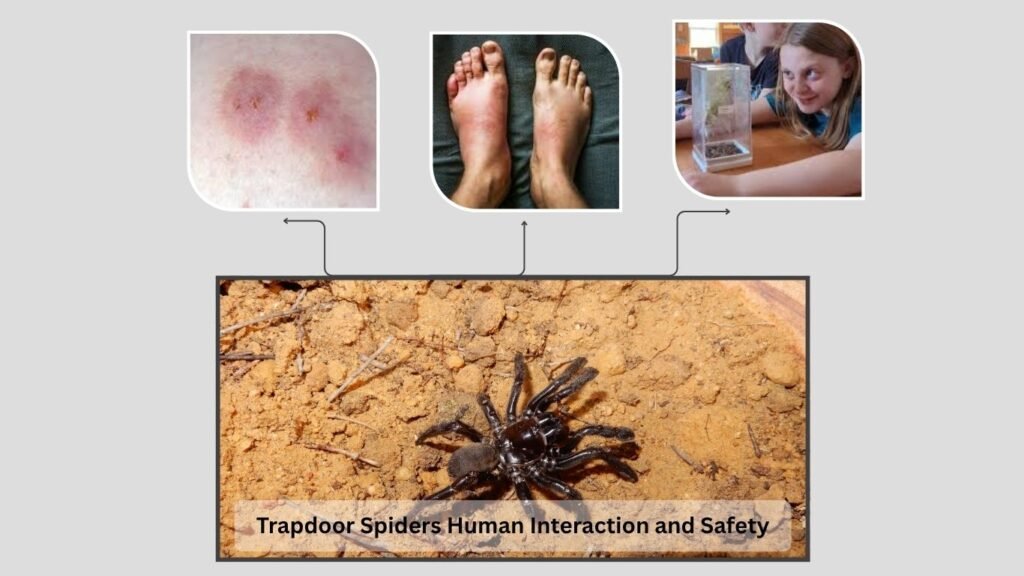
Trapdoor spiders are generally not dangerous to humans. While their bite may cause mild pain or irritation, most species are not venomous enough to cause serious harm. Awareness of local species and burrow locations reduces accidental encounters. They are more interested in ambushing prey than attacking humans.
Venom and Bite Effects
- Venom is primarily used for subduing prey.
- Effects on humans: localized pain, redness, or mild swelling.
- Serious reactions are extremely rare.
Precautions for Observers
- Avoid disturbing burrows to prevent bites.
- Observe spiders for educational purposes using safe distance or video.
- Educate children and pets to respect spider habitats.
Fascinating Facts About Trapdoor Spiders
- Some species live up to 20 years, making them long-lived among spiders.
- Folding trapdoor spiders can adjust their burrow doors for faster ambush.
- Rare blue-colored or small “cute” species exist.
- Certain species can regenerate lost legs over time.
- Trapdoor spiders help control insect populations, making them ecologically valuable.
FAQs
What does a trapdoor spider eat?
Primarily insects like beetles, ants, and grasshoppers. Larger species may occasionally prey on small arthropods or lizards. They capture prey using their hidden burrow trapdoor for ambush.
Where do trapdoor spiders live?
They inhabit soil-rich forests, deserts, rocky terrains, and even gardens, depending on species. Burrows are camouflaged and located in areas that provide stable soil and protection from predators.
Are trapdoor spiders dangerous to humans?
Most trapdoor spiders are not dangerous. Bites can cause mild pain or irritation but rarely require medical attention. Only large species might bite if provoked.
How big do trapdoor spiders grow?
Size varies widely: small species under 1 inch are considered “cute,” while giant armored trapdoor spiders can exceed 3 inches in body length.
How long do trapdoor spiders live?
Female trapdoor spiders may live up to 20 years in stable habitats. Males usually live shorter lives due to roaming for mates. Juveniles mature gradually within burrows.
