
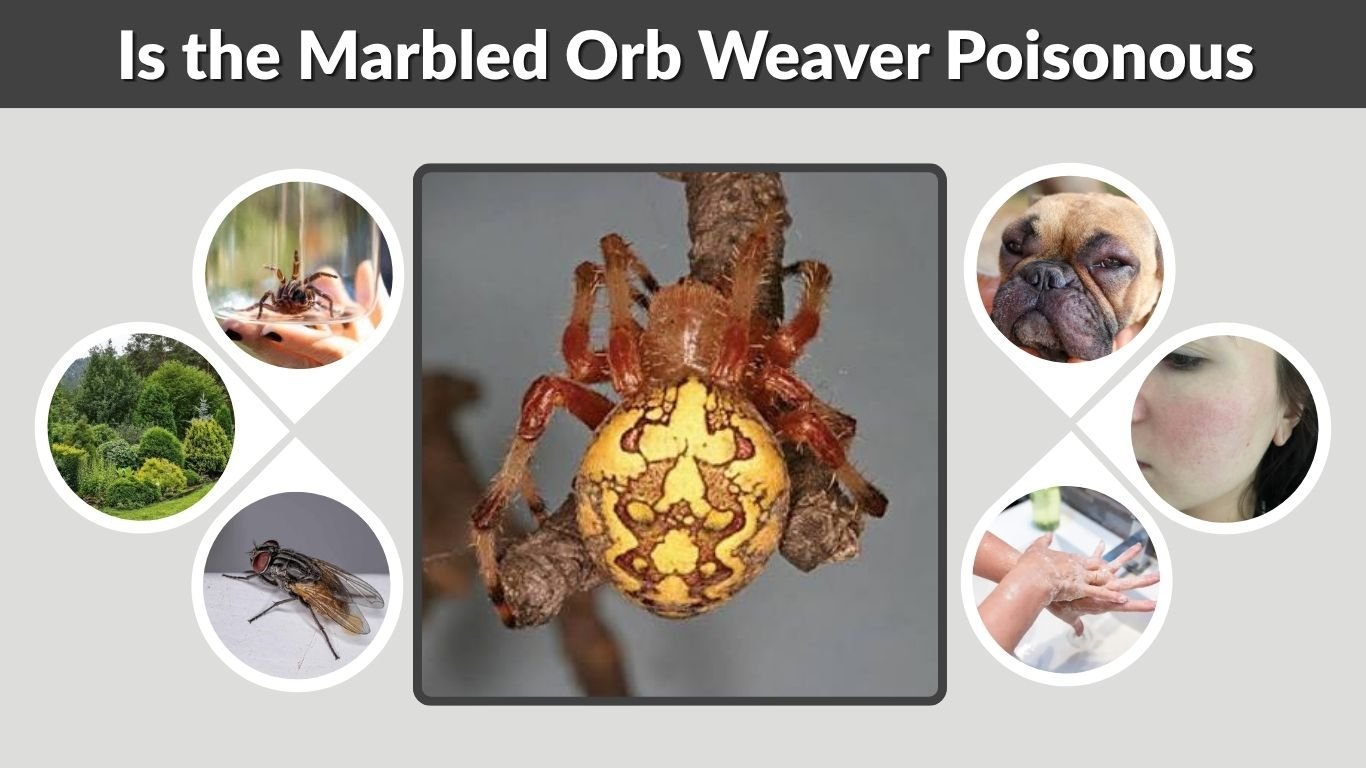
The marbled orb weaver may look alarming because of its large, rounded abdomen and bright orange, yellow, or black markings. However, this colorful spider is not poisonous and is not considered dangerous to humans. Like most web-building spiders, it possesses venom for immobilizing small insects, but its venom is not regarded as medically significant. Bites are uncommon and generally happen only when the spider is trapped, squeezed, or handled.
Is a Marbled Orb Weaver Poisonous?
No, a marbled orb weaver is not poisonous. “Poisonous” describes an organism that causes harm when eaten, touched, or absorbed. A spider that injects a substance through its fangs is more accurately described as venomous.
The marbled orb weaver, scientifically called Araneus marmoreus, uses venom to overpower insects caught in its circular web. Although this venom works effectively on small prey, Penn State Extension reports that the species is not medically important to humans.
| Safety question | Answer |
| Is it poisonous? | No |
| Is it venomous? | Yes, for capturing insects |
| Is its venom dangerous to humans? | Not considered medically significant |
| Does it commonly bite? | No |
| Is the orange form more dangerous? | No |
| Should it be killed? | Usually not necessary |
Are Marbled Orb Weaver Spiders Dangerous?
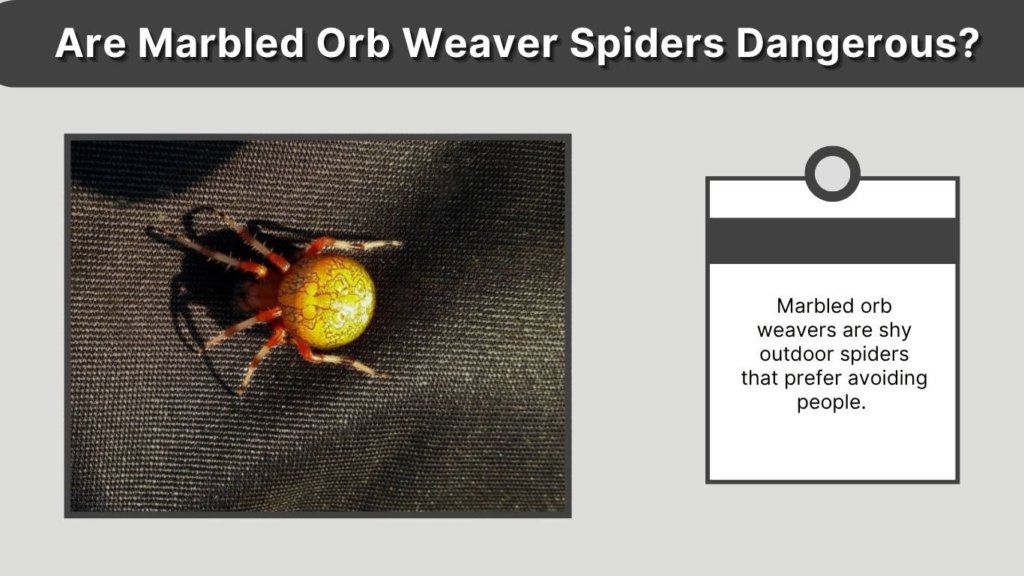
Marbled orb weavers are shy outdoor spiders that prefer avoiding people. They normally spend the day inside a retreat made from leaves and silk near their vertical web. A signal thread alerts the spider when an insect becomes trapped. This behavior keeps it occupied with prey rather than actively wandering toward people.
Why Their Appearance Causes Concern
A mature female can have an extremely round abdomen covered with contrasting marbled patterns. Common colors include:
- Bright orange
- Yellow and brown
- Cream or white
- Red and black
- Dark brown
- Nearly black and white
These bold colors do not indicate dangerous venom. They are natural variations within the species. The orange variety is often nicknamed the “pumpkin spider” because its swollen abdomen resembles a small autumn pumpkin.
Orange Marbled Orb Weaver Safety
An orange marbled orb weaver is no more poisonous or venomous than a yellow, brown, white, or red individual. Color variation does not change the spider’s medical importance.
The orange spiders commonly photographed during autumn are often adult females. Females measure approximately 9–18 millimeters long, while males are usually about 6–9 millimeters. Their rounded bodies can make them appear much larger than their actual measurements.
Do Marbled Orb Weavers Bite?
Marbled orb weavers can physically bite, but verified encounters are rare. Penn State Extension notes that a bite would be unlikely unless someone handled a female associated with an egg sac. The spider’s normal response is to remain hidden, retreat, or escape rather than bite defensively.
Situations that could increase the chance of a bite include:
- Squeezing the spider against the skin
- Picking it up with bare hands
- Reaching blindly into its retreat
- Trapping it inside clothing or gloves
- Disturbing a female near an egg sac
Finding one in a garden or accidentally walking through its web does not mean it will attack. It cannot chase a person, jump deliberately at someone, or sting.
What Does a Marbled Orb Weaver Bite Feel Like?
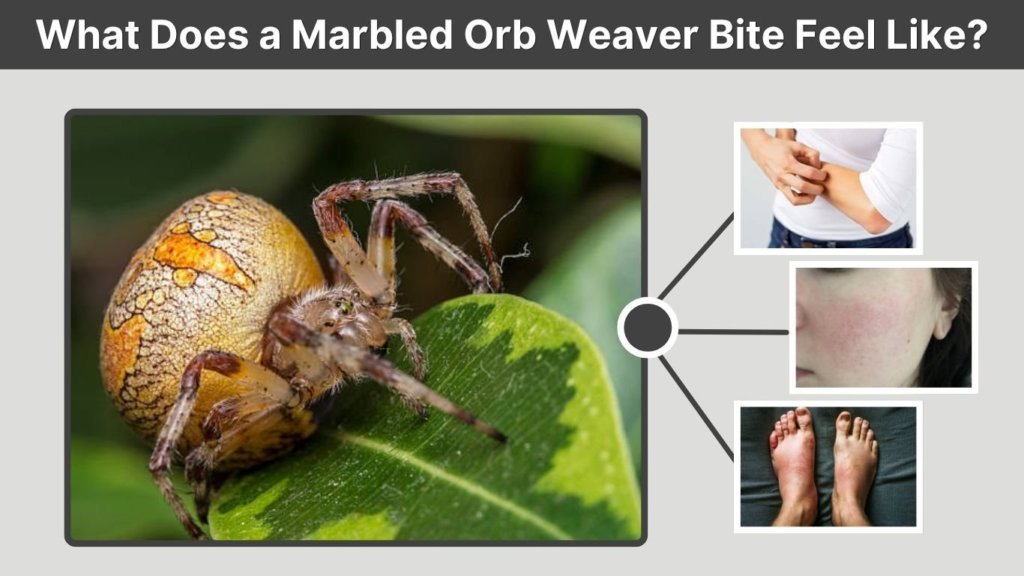
Because bites are unusual, there is limited species-specific clinical information. A bite from a small, medically insignificant spider could potentially cause temporary local effects rather than severe poisoning.
Possible localized effects may include:
| Possible effect | Typical response |
| Brief pain or pinching | Usually limited to the bite area |
| Mild redness | Monitor for changes |
| Minor swelling | A cold compress may help |
| Itching or irritation | Avoid scratching |
| Tenderness | Often improves with time |
Skin irritation alone does not prove that a spider caused it. Numerous insect bites, infections, allergic reactions, and skin conditions can resemble suspected spider bites.
What to Do After a Suspected Bite
For a mild suspected bite:
- Wash the area carefully with soap and water.
- Apply a wrapped cold compress for short intervals.
- Avoid squeezing or scratching the affected skin.
- Monitor the area for increasing redness, pain, or swelling.
- Photograph the spider from a safe distance when identification is possible.
Seek prompt medical attention if the person experiences trouble breathing, widespread hives, facial swelling, intense pain, vomiting, dizziness, rapidly spreading redness, or signs of infection. These symptoms are unusual for a marbled orb weaver encounter and may indicate an allergic reaction, infection, or incorrect spider identification.
Is a Marbled Orb Weaver Poisonous to Dogs?
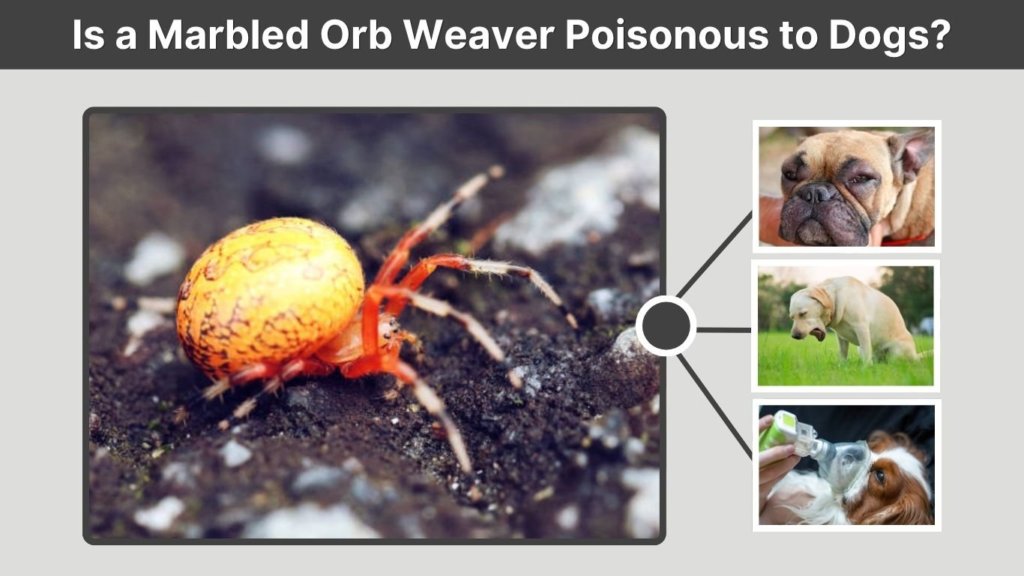
Marbled orb weavers are not known as a significant threat to dogs or cats. Their venom is intended for small insect prey, and the spider is unlikely to bite unless a pet presses, chews, or traps it.
Simply touching the web or sniffing near the spider is unlikely to cause poisoning. However, species-specific research on bites involving pets is limited. Contact a veterinarian when a pet develops concerning symptoms after interacting with any spider, particularly:
- Facial or mouth swelling
- Breathing difficulty
- Repeated vomiting
- Excessive drooling
- Severe tenderness
- Weakness or unusual behavior
Do not encourage a pet to play with the spider, even though serious effects are not expected.
How to Identify the Marbled Orb Weaver
Correct identification is important because “orange spider” can describe several unrelated species. The marbled orb weaver belongs to the orb-weaver family Araneidae and has the scientific name Araneus marmoreus.
Identification Features
- Large, oval or almost spherical abdomen
- Complicated marbled markings across the back
- Orange, yellow, cream, brown, red, or dark coloration
- Orange or light-brown legs with dark and pale bands
- Eight eyes arranged in two rows
- Female much larger and rounder than the male
- Vertical, circular web attached to vegetation
The spider often hides in a shelter formed from leaves held together with silk. It maintains contact with the web through a signal line and emerges when vibrations suggest that prey has been captured.
Why Marbled Orb Weavers Are Beneficial
Marbled orb weavers are insect predators. Their webs contain sticky spiral threads that restrain insects, allowing the spider to locate and subdue them. Recorded prey includes small members of insect groups containing flies, mosquitoes, wasps, bees, crickets, and grasshoppers.
They commonly live in:
- Forests and woodland edges
- Shrubs and trees
- Meadows and tall grass
- Gardens and orchards
- Agricultural fields
- Streamside vegetation
- Rural and suburban properties
Because they capture insects without damaging plants, leaving an undisturbed marbled orb weaver outdoors is normally preferable to killing it.
How to Remove One Safely
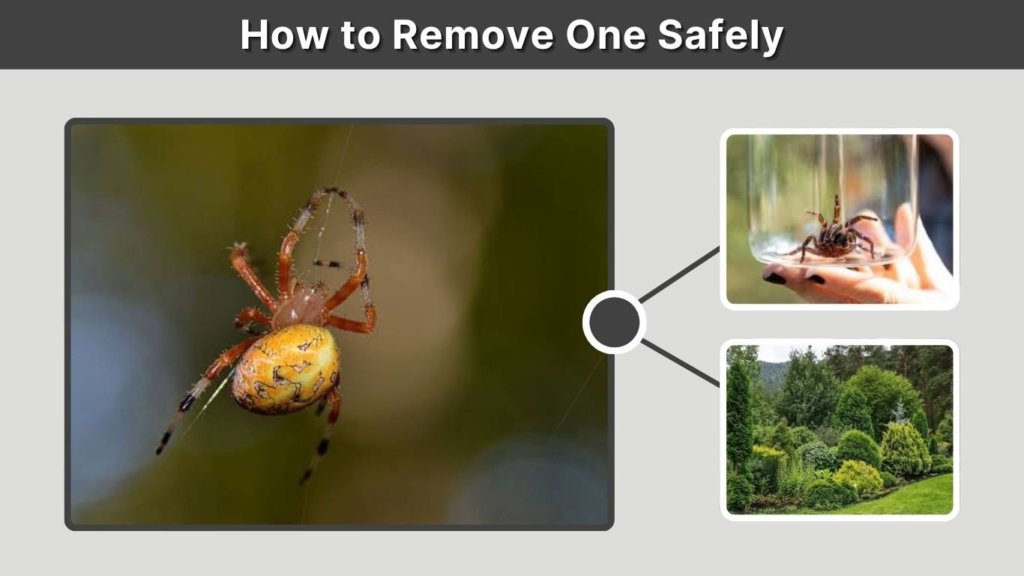
Removal is unnecessary when the spider and web are away from doors, paths, play areas, and frequently used spaces. When relocation is needed, avoid touching the spider directly.
Place a container over the spider, slide a piece of stiff paper beneath it, and release it near shrubs or woodland vegetation. Wear gloves and work slowly. For a web blocking a walkway, gently detach the outer support threads with a long tool. The spider will usually find another location.
FAQs
Is the marbled orb weaver venomous to humans?
The marbled orb weaver produces venom for immobilizing insect prey, but it is not considered medically important to humans. Bites are rare and most likely to happen when a spider is squeezed or handled. Its bright coloration should not be interpreted as evidence of dangerous venom.
Is the pumpkin spider poisonous?
The pumpkin spider is an orange color form of the marbled orb weaver. It is not poisonous, and its venom is not considered dangerous to people. The nickname refers to the female’s bright orange, rounded abdomen, which becomes especially noticeable during late summer and fall.
Can a marbled orb weaver bite through skin?
Its fangs may penetrate skin under defensive circumstances, but bites are uncommon. The spider is most likely to bite when trapped against the body or deliberately handled. It normally stays in its web retreat and attempts to avoid contact with humans.
Should I kill an orange marbled orb weaver?
Killing it is generally unnecessary. Marbled orb weavers are beneficial predators that capture small insects and pose little risk to people. Leave the spider outdoors when possible. Relocate it carefully when its web blocks an entrance, walkway, or another regularly used space.
Are female marbled orb weavers poisonous?
Female marbled orb weavers are not poisonous. They possess venom for hunting insects, but they are not regarded as medically dangerous. Females appear more intimidating because they are larger than males and have swollen, strongly patterned abdomens, particularly as egg production approaches.
