
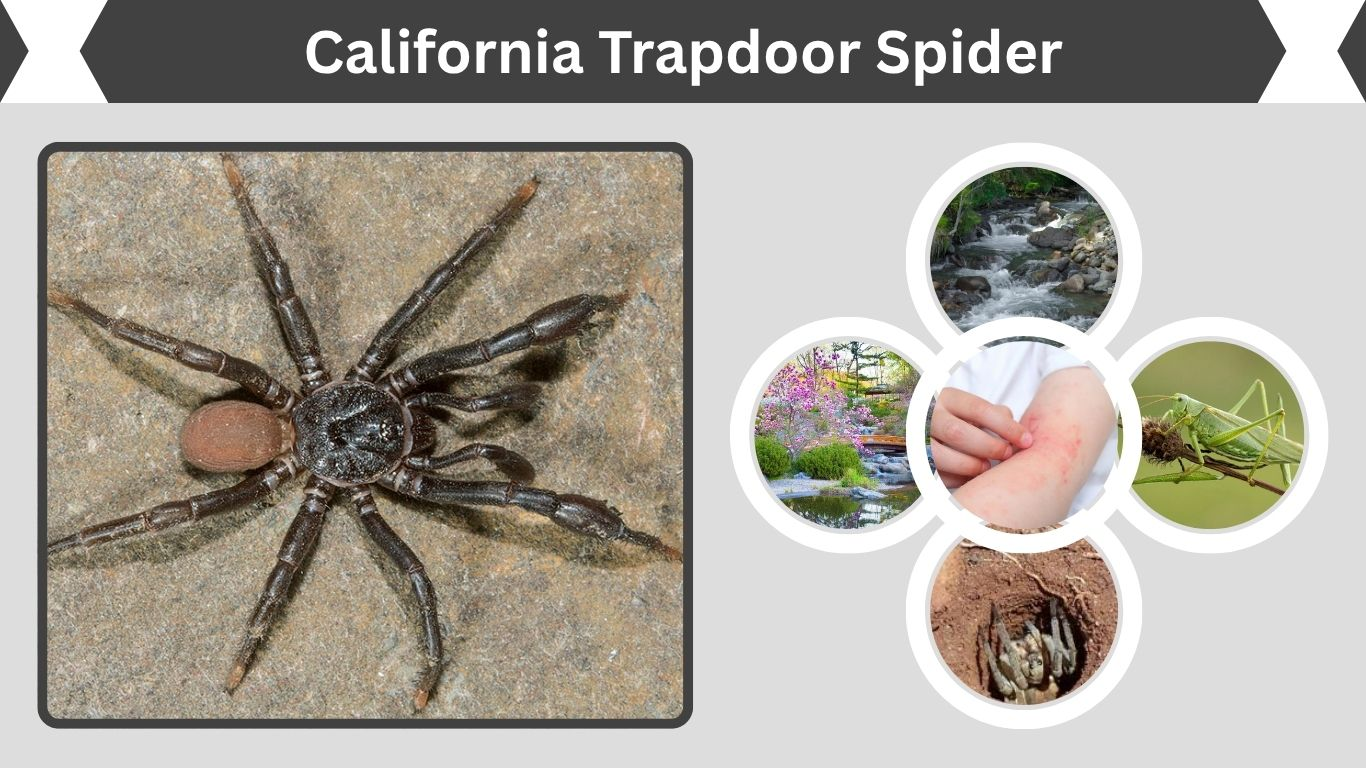
The California trapdoor spider is a fascinating ground-dwelling arachnid endemic to California. Known for its camouflaged burrows and ambush hunting techniques, this spider plays an important ecological role in controlling insect populations. Found in Southern California, the Santa Cruz Mountains, Ventura County, and even desert areas, it has evolved unique adaptations for survival. While most of its life is spent hidden underground, videos and educational exhibits have helped shed light on this secretive species, making it a subject of curiosity for researchers and hobbyists alike.
Overview of California Trapdoor Spiders
California trapdoor spiders are burrowing spiders that build silk-lined trapdoor burrows to ambush prey. Females are larger and mostly sedentary, remaining in their burrows, while males wander to locate mates. Their venom is effective against insects but generally mild for humans. With size, coloration, and burrow adaptations varying by habitat, they are uniquely suited to California’s diverse ecosystems.
Physical Characteristics
- Size: ranges from 1–3 inches; females are larger.
- Coloration: earthy browns and blacks, occasionally reddish.
- Jaw spines: help with digging and subduing prey.
Sexual Dimorphism
- Females: larger, stay in burrows for life.
- Males: smaller, roam to find mates.
Trapdoor Burrow Features
- Burrows are lined with silk for moisture retention.
- Trapdoors made from soil, silk, and debris for camouflage.
- Depth and width vary by habitat.
California Trapdoor Spiders Habitat and Distribution
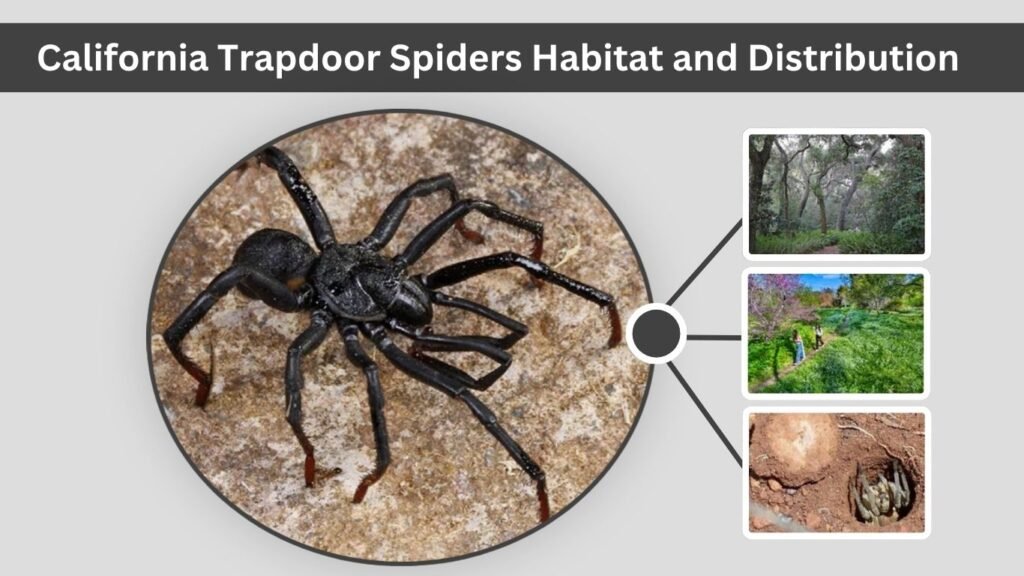
The California trapdoor spider prefers loose soil and sheltered areas to construct burrows. It inhabits forests, deserts, and rocky terrains across Southern California, Santa Cruz Mountains, Ventura County, and select desert regions. Burrow placement ensures protection from predators, temperature extremes, and environmental disturbances, which is essential for survival in its diverse habitats.
Regional Locations
- Southern California forests and gardens.
- Santa Cruz Mountains.
- Ventura County and adjacent areas.
Environmental Adaptations
- Burrows in shaded areas maintain humidity and temperature.
- Desert populations dig deeper to access moisture.
- Mountain populations build thicker trapdoors for camouflage.
Burrow Structure and Function
- Depth: several inches underground, depending on soil type.
- Tube-like burrows lined with silk for structural support.
- Trapdoor allows ambush hunting and predator avoidance.
Types and Varieties
California trapdoor spiders include multiple varieties distinguished by burrow type, size, or jaw features. Tube trapdoor spiders, folding trapdoor spiders, and jaw-spined spiders are some notable examples. Their adaptations vary depending on regional habitat, allowing them to survive in forests, mountains, deserts, and suburban areas. Some are rare, with unique colors or jaw adaptations.
Notable Varieties
- Tube trapdoor spider: specialized tube-shaped burrow.
- Folding trapdoor spider: adjustable burrow door.
- Jaw-spined trapdoor spider: stronger chelicerae for digging and prey.
Regional Adaptations
- Desert populations: deep burrows for moisture retention.
- Mountain populations: thicker, camouflaged doors.
- Suburban populations: burrows near gardens or rocks.
California Trapdoor Spiders Behavior and Diet
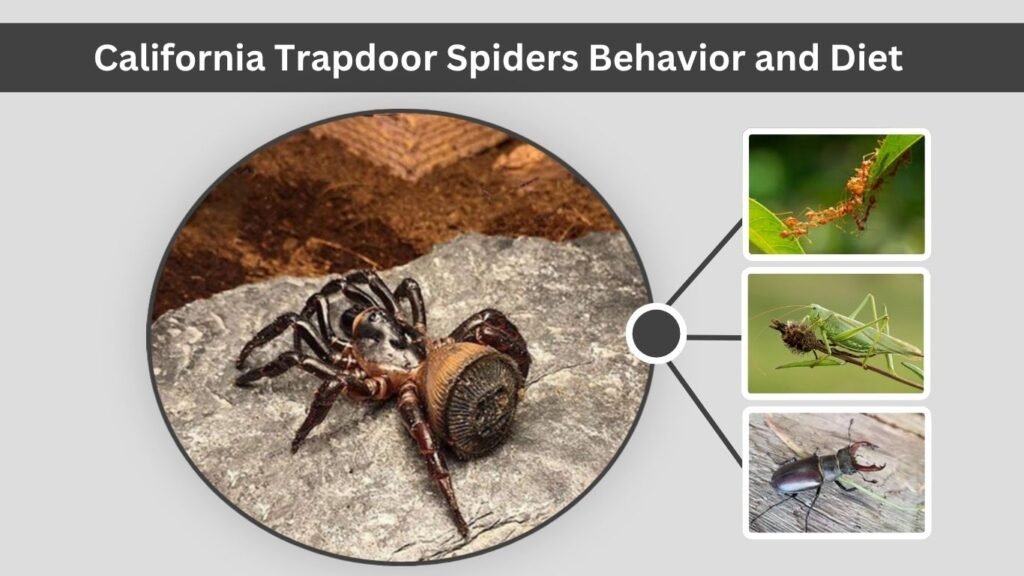
These spiders are nocturnal ambush predators. They rarely leave their burrows except to hunt or for males to locate mates. Their diet primarily consists of insects, but larger spiders may occasionally capture small arthropods. Sensory hairs detect vibrations, alerting them to passing prey. Females remain within their burrows for most of their lives, while males are mobile during mating season.
Hunting Techniques
- Ambush prey from hidden trapdoor.
- Detect prey using soil and silk vibrations.
- Use venom to immobilize insects.
Typical Diet
- Crickets, beetles, ants, and grasshoppers.
- Larger individuals may capture small spiders or lizards.
Predator Awareness (non-list)
Trapdoor spiders rely on camouflage and burrow concealment to avoid birds, reptiles, and small mammals. Parasitic wasps can invade burrows, posing threats to juveniles. Their secretive lifestyle and trapdoor mechanism make predation rare, highlighting the evolutionary success of their ambush strategy.
California Trapdoor Spiders Reproduction and Life Cycle
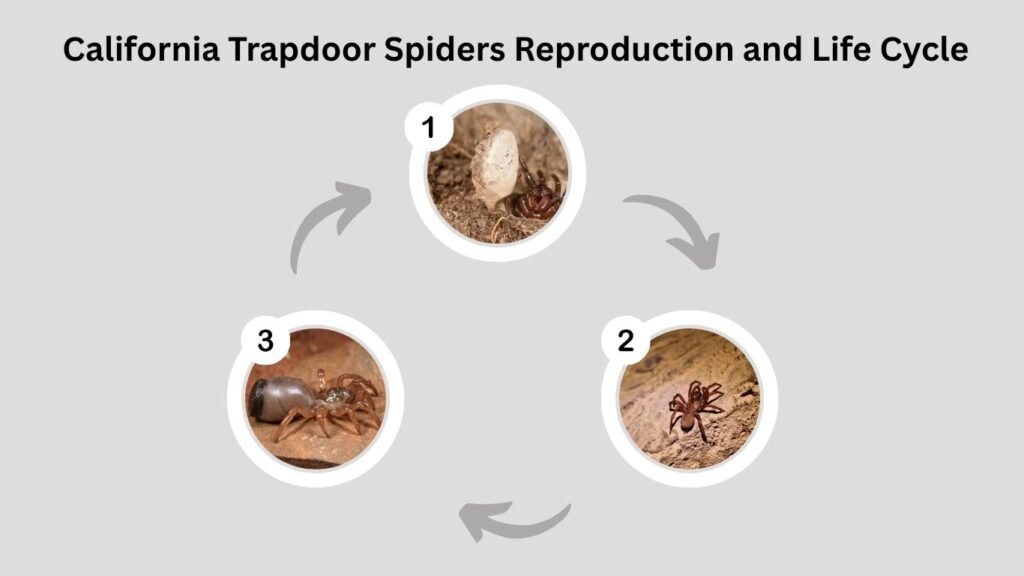
California trapdoor spiders have a unique reproductive cycle. Females typically remain in their burrows, guarding egg sacs and juveniles, while males roam to find mates. Courtship involves tapping or vibrating at the burrow entrance. Juveniles spend years in burrows, gradually growing and developing hunting skills. Lifespan varies; females can live over a decade, whereas males often have shorter lives due to roaming and predation.
Mating Behavior
- Males leave their burrows during mating season to locate females.
- Courtship involves vibrations and tapping on the trapdoor.
- Post-mating, males often die shortly after mating.
Juvenile Development
- Young spiders develop within burrows, expanding them gradually.
- Learning to hunt and ambush prey is a gradual process.
- Burrows may be reused for years, providing long-term protection.
Lifespan
- Females: 10–15+ years in stable habitats.
- Males: typically shorter, due to roaming and predation.
- Burrow longevity allows the species to survive across generations.
California Trapdoor Spiders Venom, Bites, and Human Safety
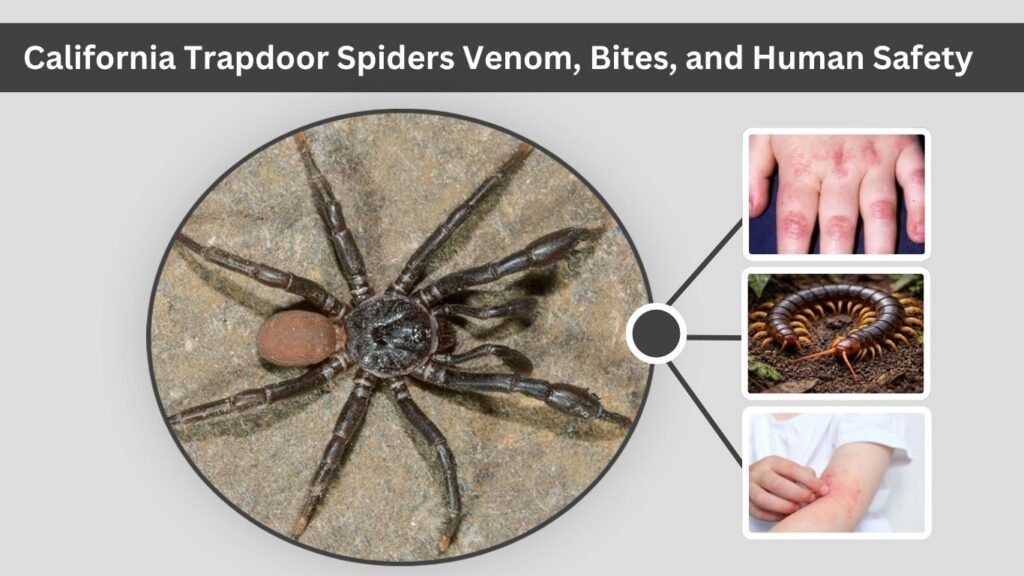
California trapdoor spiders are generally not dangerous to humans. Their venom is potent for prey but mild for people, causing only localized pain or irritation. Accidental bites are rare due to their secretive burrowing behavior. Awareness of burrows, particularly in gardens, forests, and hiking areas, minimizes encounters.
Venom Effects
- Mild pain and redness in humans.
- Primarily used to subdue prey.
- Rare allergic reactions may occur.
Safety Precautions
- Avoid disturbing burrows or handling spiders.
- Observe for educational purposes from a safe distance.
- Educate children and pets to respect spider habitats.
Medical Concerns (non-list)
Most bites are minor and do not require medical attention. Serious complications are extremely rare, making these spiders more of a curiosity than a threat. Knowledge of local species and burrow locations helps prevent accidental contact.
Care and Observation (for Research or Hobbyists)
California trapdoor spiders can be observed or maintained for educational purposes. Proper care involves mimicking natural burrow conditions, including deep soil, humidity, and temperature control. Live prey such as crickets or beetles should be provided. Observation, photography, and video recording help study their secretive behaviors, such as trapdoor hunting and burrow construction.
Housing Requirements
- Deep soil sufficient for burrow construction.
- Maintain moderate humidity and temperature.
- Provide live prey regularly.
Observation Tips
- Night-time observation captures hunting activity.
- Video recording can showcase trapdoor ambush strategies.
- Avoid disturbing the spider to prevent stress or defensive behavior.
Educational Uses (non-list)
Museums, schools, and research facilities often feature California trapdoor spiders to teach about arachnid behavior, adaptation, and biodiversity. Videos of their burrow ambushes help illustrate their unique hunting techniques and ecological role.
Interesting Facts
- Females remain in their burrows for most of their lives.
- Males are mobile and roam to locate females.
- Trapdoor construction is camouflaged and highly effective.
- Spines on jaws assist with digging and capturing prey.
- Rare color morphs exist, including reddish or darker-hued individuals.
- They contribute significantly to controlling insect populations.
FAQs
Where does the California trapdoor spider live?
California trapdoor spiders are native to Southern California, including the Santa Cruz Mountains, Ventura County, and some desert regions. They prefer loose soil near rocks, roots, or shaded forest areas, which provide ideal conditions for digging camouflaged burrows and protection from predators and extreme weather.
Is the California trapdoor spider venomous?
While the California trapdoor spider produces venom to subdue prey, it is generally harmless to humans. Bites may cause mild pain, redness, or irritation but are rarely medically significant. Precautionary measures, such as avoiding burrows, minimize the risk of accidental bites.
What does the California trapdoor spider eat?
These spiders primarily hunt insects such as crickets, beetles, ants, and grasshoppers. Larger individuals may occasionally capture small spiders or lizards. They ambush prey from their camouflaged trapdoor, relying on sensory hairs and vibrations to detect passing prey.
How big does the California trapdoor spider grow?
Adult California trapdoor spiders range from 1 to 3 inches in body length. Females are generally larger than males and spend most of their life in the burrow. Males are smaller and more mobile, primarily wandering during mating season.
Can California trapdoor spiders be kept in captivity?
Yes, they can be kept for educational or research purposes. Successful care involves providing deep soil for burrow construction, maintaining moderate humidity and temperature, and supplying live prey such as crickets. Observing them at night or via video can reveal their natural hunting behavior.
