
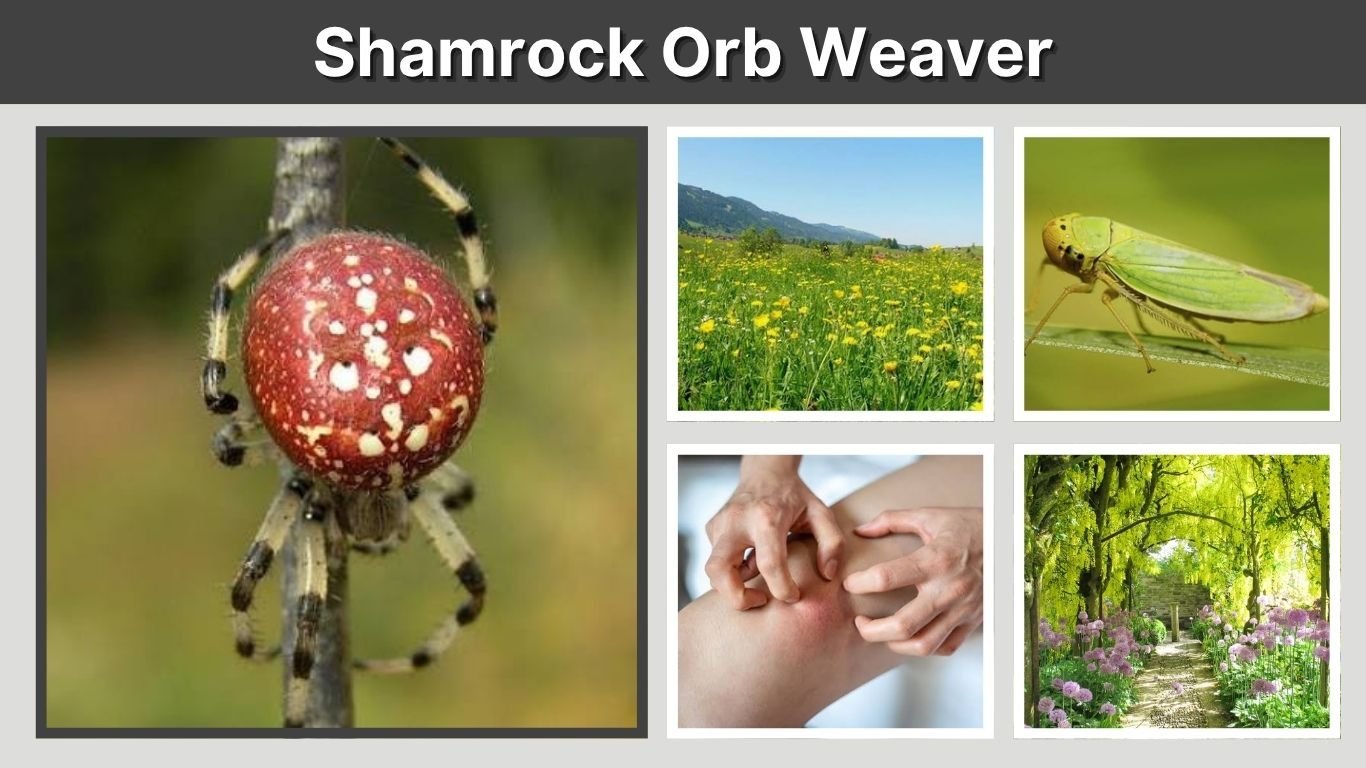
The shamrock orb weaver is a colorful, round-bodied spider commonly found in gardens, meadows, fields, and woodland edges across North America. Its large abdomen may be red, orange, brown, cream, or pale green, usually with several white spots across the back. Although its appearance can seem intimidating, the shamrock orb weaver is shy, beneficial, and not considered dangerous to humans. It spends most of its life building circular webs and catching insects.
What Is a Shamrock Orb Weaver?
The shamrock orb weaver is an orb-weaving spider with the scientific name Araneus trifolium. It belongs to the family Araneidae, which includes many spiders known for building large, wheel-shaped webs.
The name “shamrock” likely refers to the pale markings on the spider’s rounded abdomen. These white or cream-colored spots sometimes form patterns that resemble leaves, crosses, or small shamrocks.
Quick Facts
| Feature | Description |
| Scientific name | Araneus trifolium |
| Family | Araneidae |
| Common name | Shamrock orb weaver |
| Body shape | Large, rounded abdomen |
| Common colors | Red, orange, brown, cream and greenish |
| Diet | Flying insects and other small arthropods |
| Web type | Circular orb web |
| Bite risk | Low |
| Danger to humans | Not medically significant |
Shamrock Orb Weaver Identification
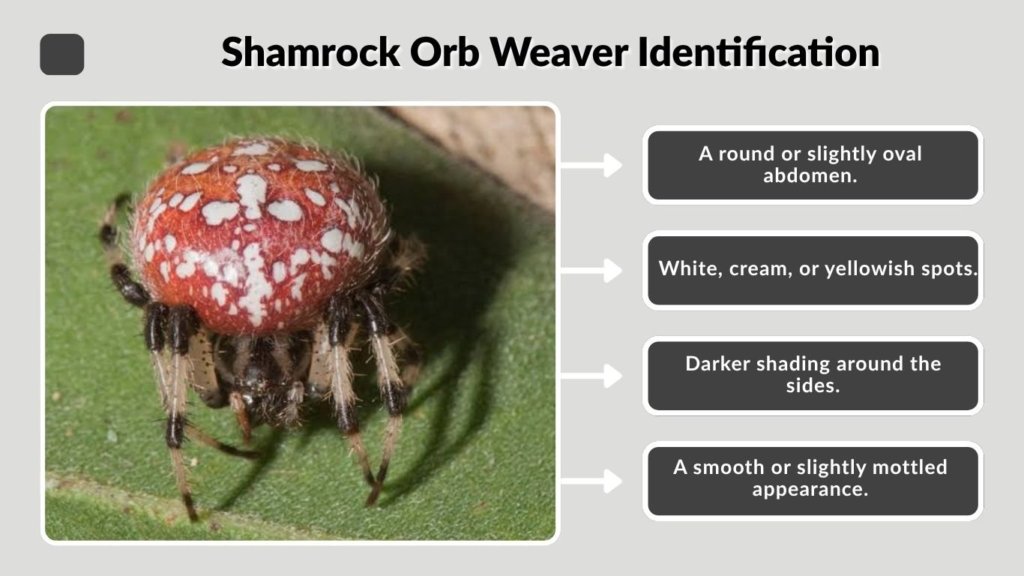
The shamrock orb weaver is best identified by its large, bulbous abdomen, variable coloring, pale dorsal spots, and banded legs. Females are much larger and more noticeable than males.
Color alone is not always reliable because different individuals may look surprisingly different. Some are bright red or orange, while others are tan, brown, cream, grayish, or pale green.
Abdomen and Markings
The abdomen is broad, rounded, and often wider than the front part of the body. Its upper surface normally has several pale spots arranged in a loose pattern.
Common identifying features include:
- A round or slightly oval abdomen
- White, cream, or yellowish spots
- Darker shading around the sides
- A smooth or slightly mottled appearance
- Variable red, orange, brown, or pale coloring
The pale markings may be distinct on some spiders and faint on others.
Legs
The legs are usually tan, reddish brown, orange, or dark brown. Many individuals have darker bands around the leg segments.
Small hairs and spines cover the legs, helping the spider sense vibrations and move across its web.
Eyes and Fangs
Like most spiders, the shamrock orb weaver has eight eyes. However, eyesight is not its strongest sense. It relies mainly on web vibrations to detect prey, predators, and potential mates.
Its fangs are used to inject venom into insects. They are not designed for attacking people.
Shamrock Orb Weaver Size
Female shamrock orb weavers are considerably larger than males. The female’s body is commonly around 9 to 20 millimeters long, although particularly well-fed individuals may appear larger because of their swollen abdomens.
The leg span can make a mature female look much bigger than her actual body length.
| Spider | Approximate body size | General appearance |
| Adult female | 9–20 mm | Large, round abdomen |
| Adult male | 5–10 mm | Smaller and more slender |
| Juvenile | Under 9 mm | Pale or less boldly marked |
Size varies with age, sex, food availability, and reproductive condition. A female carrying eggs may have an especially large abdomen.
Male Shamrock Orb Weaver
The male shamrock orb weaver is smaller, thinner, and less colorful than the female. His abdomen is not as large or spherical, making him more difficult to identify.
Adult males spend much of their time searching for females rather than maintaining large webs. They may approach a female’s web carefully and produce specific vibrations to avoid being mistaken for prey.
Male features generally include:
- A narrow abdomen
- Longer-looking legs relative to body size
- Enlarged pedipalps near the mouth
- Less dramatic coloration
- A smaller overall body
The enlarged pedipalps resemble small boxing gloves and are used during mating.
Red and Orange Shamrock Orb Weavers
Red and orange are common color forms of Araneus trifolium. A red shamrock orb weaver may have a deep brick-red, burgundy, or reddish-brown abdomen with pale spots.
An orange shamrock orb weaver can range from pumpkin orange to yellow-orange. These bright individuals are especially noticeable during late summer and autumn.
Color does not indicate sex, toxicity, or aggression. A bright red individual is not more dangerous than a brown or cream-colored one.
Shamrock Orb Weaver Web
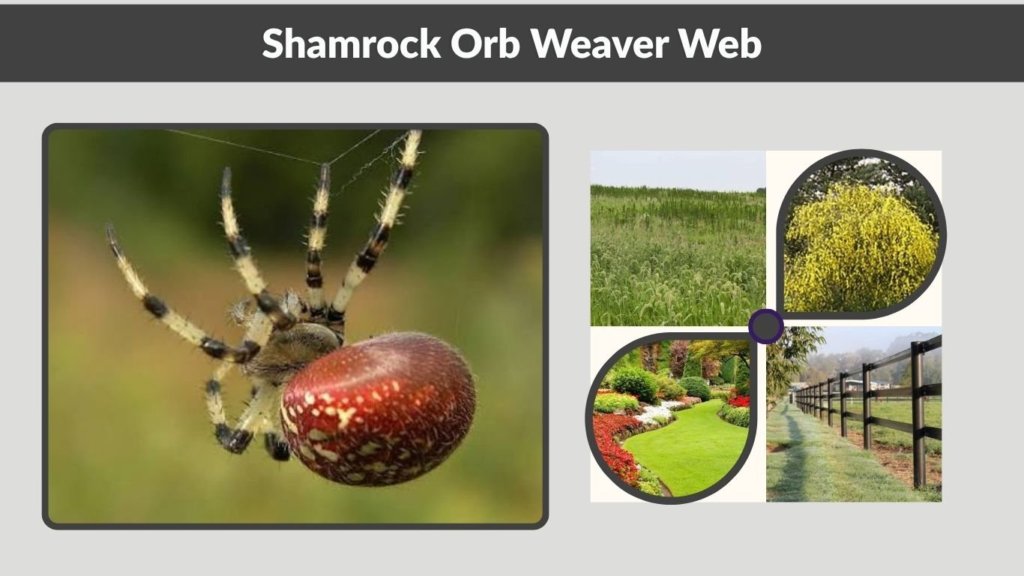
This spider creates a classic orb web consisting of radiating support lines connected by a sticky spiral. The structure functions like a net for capturing insects.
Webs are often built between:
- Tall weeds
- Garden plants
- Shrubs
- Fence posts
- Low tree branches
- Meadow grasses
- Porch railings
The spider may rebuild all or part of the web regularly, especially after wind, rain, or prey damage.
Day and Night Behavior
Shamrock orb weavers are frequently more active during the evening and at night. A spider may sit in the center of its web after dark, waiting for prey.
During the day, it may remain near the web or hide in a curled leaf, under vegetation, or in another sheltered retreat. A silk signal line allows it to detect movement in the web while concealed.
Shamrock Orb Weaver Diet and Hunting Behavior
The shamrock orb weaver eats insects and other small arthropods caught in its web. Common prey includes moths, mosquitoes, flies, beetles, leafhoppers, and small wasps.
When an insect becomes trapped, the spider detects its movements through vibrations. It approaches carefully, bites the prey, and may wrap it in silk.
Benefits in Gardens
Shamrock orb weavers are beneficial predators because they help control insects without harming plants.
They do not:
- Eat garden vegetables
- Bore into wood
- Damage lawns
- Infest stored food
- Build colonies inside homes
Leaving one in a garden can reduce the number of flying insects around flowers and outdoor living spaces.
Is the Shamrock Orb Weaver Poisonous?
The shamrock orb weaver is not poisonous. The term “poisonous” refers to an organism that causes harm when touched or eaten.
The spider is technically venomous because it injects venom through its fangs. However, the venom is primarily used to immobilize small prey and is not considered medically significant to humans.
Therefore, the most accurate description is:
- Not poisonous
- Technically venomous
- Not dangerously venomous to humans
- Unlikely to bite without direct pressure or handling
Its bright coloring should not be interpreted as a warning that it is highly toxic.
Shamrock Orb Weaver Bite
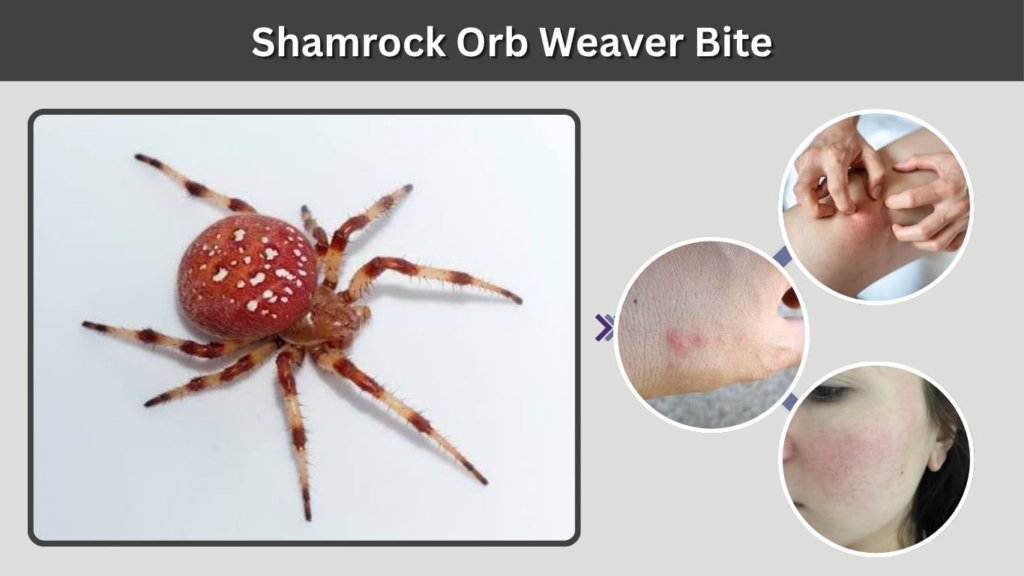
A shamrock orb weaver bite is possible but uncommon. These spiders are not aggressive and normally prefer to escape, hide, or drop from the web when disturbed.
A bite is most likely when the spider is:
- Picked up with bare hands
- Trapped against the skin
- Crushed inside clothing
- Handled while guarding an egg sac
- Disturbed without an escape route
Bite Symptoms
Possible symptoms may include:
- Mild pain
- Redness
- Local swelling
- Itching
- Tenderness
- A small raised bump
Symptoms are generally limited to the bite area and often improve without medical treatment.
What to Do After a Bite
Wash the affected area with soap and water. Apply a cold pack wrapped in cloth for short intervals to reduce swelling and discomfort.
Avoid scratching the area because broken skin can become infected. Seek medical care if there is severe swelling, worsening pain, difficulty breathing, dizziness, widespread hives, or other signs of an allergic reaction.
Shamrock Orb Weaver Habitat and Range
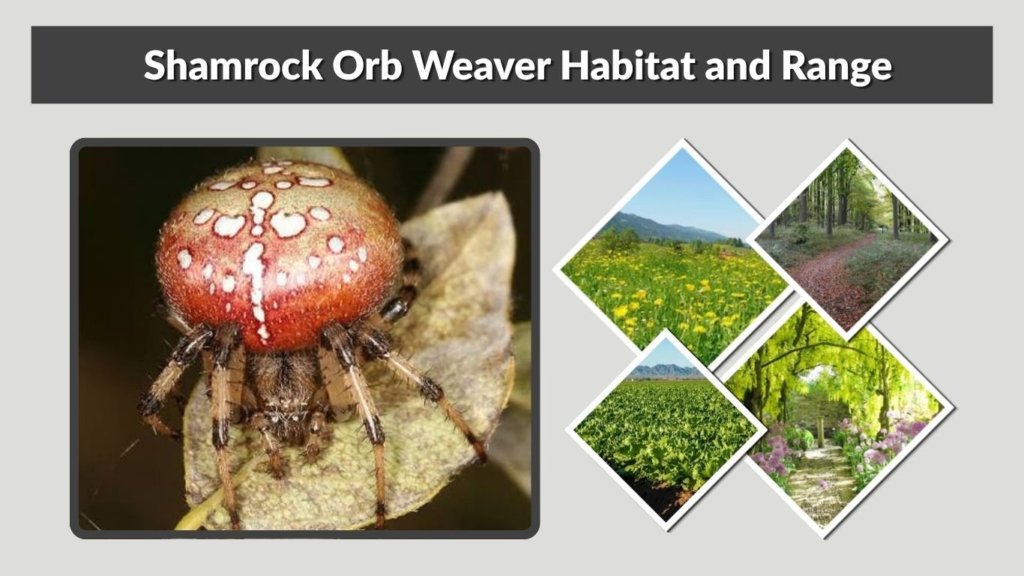
The shamrock orb weaver occurs widely across North America. It is found in Canada and much of the United States, especially in areas with grasses, shrubs, trees, and abundant insect activity.
Typical habitats include:
- Meadows
- Open woodlands
- Gardens
- Farms
- Fields
- Forest edges
- Wetland borders
- Suburban yards
These spiders are usually most visible from summer into autumn.
Shamrock Orb Weaver in Minnesota and Alaska
The shamrock orb weaver can be found in northern regions, including Minnesota and parts of Alaska. It is well adapted to seasonal climates and completes its active development during the warmer months.
In Minnesota, mature spiders are often noticed in gardens, prairies, fields, and woodland edges during late summer.
In Alaska, suitable populations may occur in vegetated areas where summer temperatures and insect numbers provide enough time for growth and reproduction.
Adults generally do not survive prolonged winter conditions. The next generation commonly overwinters in protected egg sacs.
Does the Shamrock Orb Weaver Live in the UK?
The shamrock orb weaver is primarily a North American species and is not considered a common native spider in the United Kingdom.
People in the UK may confuse it with other orb-weaving spiders, particularly the European garden spider, also called the cross orb weaver. That species often has a rounded abdomen and pale markings but usually displays a more obvious cross-shaped pattern.
Photographs, location, markings, and body shape should all be considered before identifying an orb-weaving spider.
Life Cycle and Reproduction
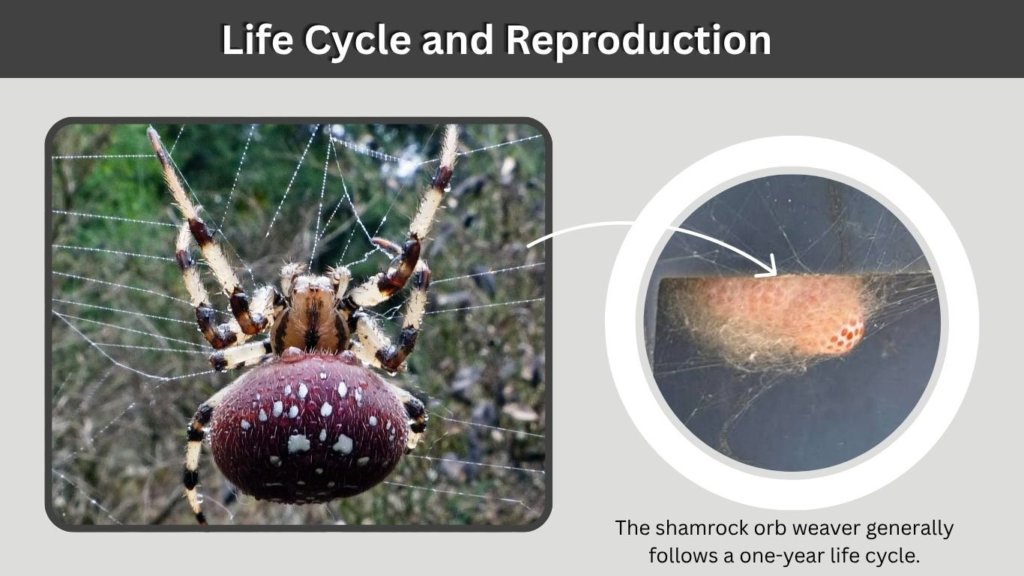
The shamrock orb weaver generally follows a one-year life cycle. Spiderlings emerge from egg sacs and begin growing during spring or early summer.
They pass through several molts before becoming adults. Mature females become especially noticeable during late summer and fall.
After mating, the female produces an egg sac in a protected location. The sac may be attached to vegetation, bark, or another sheltered surface.
The adult spiders usually die as temperatures fall, while the eggs remain protected until conditions improve.
Shamrock Orb Weaver vs. Similar Spiders
Several orb-weaving species can be mistaken for the shamrock orb weaver.
| Spider | Main identification features |
| Shamrock orb weaver | Round abdomen with scattered pale spots |
| Marbled orb weaver | Strong marbled or vein-like abdominal pattern |
| Cross orb weaver | Distinct pale cross on the abdomen |
| Spotted orb weaver | Brownish abdomen with spots and wavy markings |
| Cat-faced spider | Two raised projections resembling ears |
| Yellow garden spider | Long black-and-yellow abdomen with zigzag silk in web |
The arrangement of the pale spots is one of the most useful identification clues for a shamrock orb weaver.
Should You Remove a Shamrock Orb Weaver?
Removal is rarely necessary. Shamrock orb weavers do not create indoor infestations and are beneficial outdoors.
Leave the spider undisturbed when its web is in a garden, field, shrub, or low-traffic corner of a property.
If the web blocks a doorway or walkway, relocate the spider carefully. Place a container over it, slide cardboard beneath the container, and release it in dense vegetation away from foot traffic.
Avoid handling the spider directly or using pesticides. Destroying a web may only cause the spider to rebuild nearby.
FAQs
Are shamrock orb weaver spiders dangerous?
Shamrock orb weavers are not considered dangerous to humans. They are shy spiders that prefer to escape rather than bite. Their venom helps immobilize insects but is not medically significant under normal circumstances. A bite may cause temporary pain, redness, or swelling.
How big does a shamrock orb weaver get?
Adult females usually measure approximately 9 to 20 millimeters in body length. Their long legs and swollen abdomens can make them appear larger. Males are smaller and more slender, often measuring about 5 to 10 millimeters.
Why is my shamrock orb weaver red or orange?
Red and orange are natural color variations within the species. Individuals may also be cream, brown, tan, greenish, or yellow. The color does not reveal whether the spider is dangerous and may be influenced by genetics, age, and development.
What does a shamrock orb weaver eat?
Shamrock orb weavers eat insects trapped in their circular webs. Their diet may include moths, flies, mosquitoes, beetles, leafhoppers, and small wasps. This feeding behavior makes them useful natural predators in gardens and other outdoor environments.
Can shamrock orb weavers live inside a house?
They may accidentally enter garages, porches, sheds, or homes, but they normally live outdoors. Indoor spaces usually lack suitable web locations and sufficient prey. A spider found inside can be captured in a container and released outdoors.
