
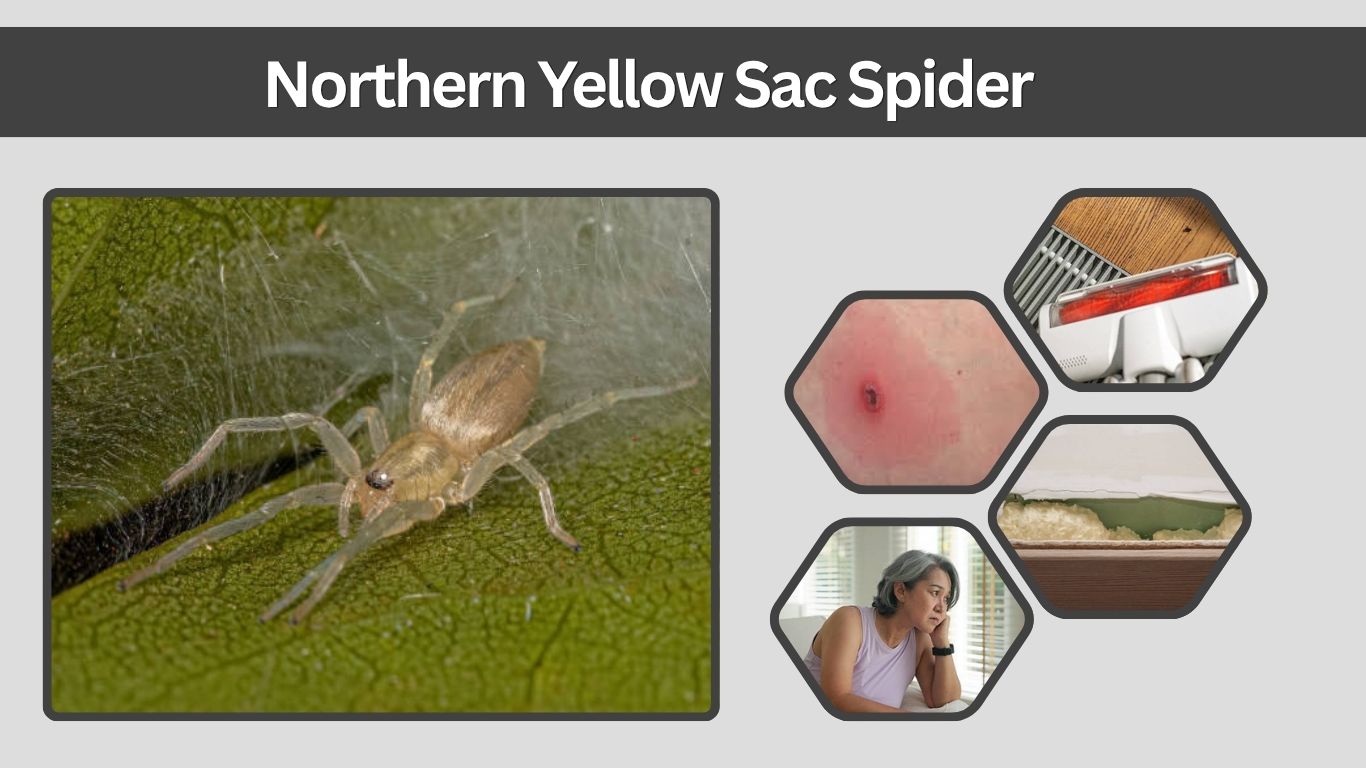
Northern yellow sac spiders are small, fast-moving spiders commonly found in homes and gardens across North America. Known scientifically as Cheiracanthium mildei, they often raise concern due to their bite and pale appearance. Many people confuse them with more dangerous species, which leads to unnecessary fear. In reality, these spiders are not considered highly dangerous. Understanding how to identify them, where they live, and what their bite involves can help you respond calmly and manage their presence effectively.
What Is a Northern Yellow Sac Spider?
The northern yellow sac spider is an active hunting spider that does not rely on webs to catch prey. Instead, it roams at night searching for insects. It belongs to a group known for creating small silk sacs used for resting. These spiders are commonly found indoors, especially on walls and ceilings.
Scientific Name and Classification
- Scientific name: Cheiracanthium mildei
- Belongs to the Cheiracanthiidae family
- Common across North America
Northern vs Yellow Sac Spider
- “Yellow sac spider” refers to multiple species
- Northern species is one of the most common indoors
- Differences are mostly regional and subtle
Northern Yellow Sac Spider Identification and Appearance
Correct identification is important because these spiders are often mistaken for more harmful species. They have a delicate, pale appearance with long legs and a slightly translucent body, which makes them look more intimidating than they actually are.
Size and Physical Features
- Typically 5–10 mm in body length
- Long, slender legs
- Smooth, soft-looking body
Color and Markings
- Pale yellow to light green color
- Slight darker tint on head area
- Semi-transparent appearance
Baby (Juvenile) Spiders
- Smaller and lighter in color
- Less visible markings
- Often harder to identify
Northern Yellow Sac Spider Habitat and Distribution

Northern yellow sac spiders are highly adaptable and can thrive both indoors and outdoors. They prefer quiet areas where they can hunt without disturbance. Their presence in homes is common, especially in warmer seasons when insect activity increases.
Where They Are Found
- Indoors on walls and ceilings
- Around windows and corners
- Outdoors in plants and gardens
Geographic Range
- Widely found across the United States
- Common in regions like Tennessee and Northern California
- Adapt well to urban environments
Behavior and Lifestyle
Unlike web-building spiders, northern yellow sac spiders actively hunt their prey. They are nocturnal and spend most of their time moving around rather than staying in one place. During the day, they rest inside small silk sacs that they create in hidden corners. These sacs are not used to trap prey but serve as shelter. They are generally shy and avoid human interaction, only biting when they feel threatened.
Northern Yellow Sac Spider Bite

Many concerns about this spider come from its bite. While bites do occur, they are relatively uncommon and usually happen when the spider is accidentally pressed against the skin. Understanding the symptoms and response helps reduce unnecessary worry.
Do They Bite Humans?
- Bites are rare and defensive
- Occur when the spider feels threatened
- Not aggressive toward humans
Bite Symptoms
- Mild stinging or burning sensation
- Redness and slight swelling
- Occasional itching or irritation
Bite Severity
- Usually mild and short-lived
- Symptoms fade within a few days
- Serious reactions are very rare
Are Northern Yellow Sac Spiders Dangerous?
Northern yellow sac spiders are often labeled as dangerous, but this reputation is exaggerated. While they are venomous, their venom is mild and not considered medically significant for most people. Bites may cause discomfort, but serious complications are extremely uncommon.
Venomous vs Poisonous
- Venomous: injects venom through a bite
- Poisonous: harmful if touched or consumed
- Northern yellow sac spiders are venomous, not poisonous
Risk to Humans
- Mild, localized symptoms
- Rare allergic reactions
- Generally low health risk
Northern Yellow Sac Spider vs Other Spiders

This species is frequently confused with other spiders, especially those considered dangerous. Understanding the differences helps avoid unnecessary fear and ensures proper identification.
Vs Brown Recluse
- Brown recluse has a violin-shaped marking
- Recluse bites can be severe and damaging
- Yellow sac spider bites are much milder
Vs Yellow Sac Spider (General)
- “Yellow sac spider” includes multiple species
- Northern species is more common indoors
- Differences are mostly geographic and subtle
Northern Yellow Sac Spider in the Home
Seeing these spiders indoors is common and usually not a cause for concern. They enter homes in search of food or shelter and tend to move around rather than stay in one place. Their presence often indicates other insects are available as prey. They do not build large webs or colonies, so they are unlikely to create infestations. Most encounters are occasional and harmless.
Signs of Presence
- Spotted moving at night
- Found on walls or ceilings
- Seen near windows or light sources
Prevention and Control

Keeping northern yellow sac spiders out of your home is simple with basic maintenance. Since they are attracted by food and shelter, reducing these factors can significantly limit their presence.
Prevention Tips
- Seal cracks and gaps around doors and windows
- Reduce indoor insect populations
- Keep rooms clean and uncluttered
Removal Methods
- Use a vacuum to remove spiders safely
- Relocate them outdoors if possible
- Avoid direct contact
When to Call Pest Control
- Frequent sightings in multiple areas
- Signs of other pest infestations
- Difficulty managing the problem
Northern Yellow Sac Spider Life Cycle and Reproduction
The life cycle of the northern yellow sac spider includes egg, juvenile, and adult stages. Females create small silk sacs where they lay eggs, often hidden in corners or protected areas. After hatching, the young spiders disperse and begin hunting independently. Their lifespan is relatively short, usually around one year, depending on environmental conditions and food availability.
Egg Sac and Development
- Eggs stored in silk sacs
- Hidden in sheltered locations
- Hatch into small, active spiderlings
FAQs
Is a northern yellow sac spider poisonous?
No, it is not poisonous. It is venomous, meaning it injects venom through a bite. However, the venom is mild and not dangerous to most people.
What does a northern yellow sac spider bite feel like?
A bite may feel like a mild sting or burning sensation, followed by redness and slight swelling. Symptoms usually improve within a few days without serious complications.
How big is a northern yellow sac spider?
They are small spiders, typically about 5–10 mm in body length. Their long legs can make them appear larger than they actually are.
Are northern yellow sac spiders aggressive?
They are not aggressive and prefer to avoid humans. Bites usually happen only when the spider feels threatened or is accidentally pressed against the skin.
How do I get rid of northern yellow sac spiders?
You can reduce their presence by sealing entry points, keeping your home clean, and removing insects they feed on. Occasional spiders can be removed with simple methods like vacuuming.
