
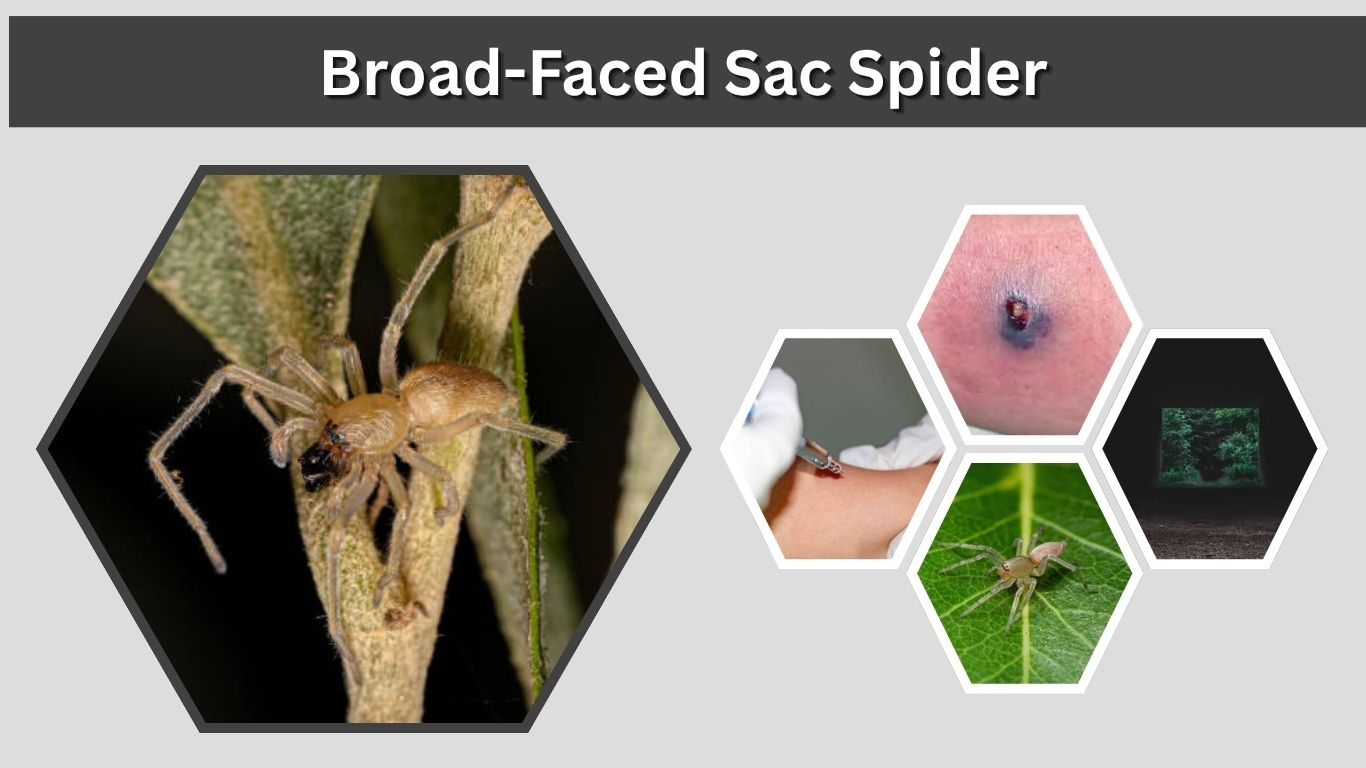
Broad-faced sac spiders often cause concern because of their intimidating look and painful bite reports. Scientifically known as Trachelas tranquillus, these spiders are commonly found in North America and sometimes inside homes. Despite their reputation, they are not considered highly dangerous. Understanding how to identify them, where they live, and what happens if they bite can help reduce unnecessary fear and ensure a calm, informed response.
What Is a Broad-Faced Sac Spider?
Broad-faced sac spiders are active hunting spiders that do not rely on webs to catch prey. Instead, they roam at night searching for insects. Their name comes from the noticeably wide front part of their body. They are often mistaken for more dangerous spiders, which is why proper identification is important.
Scientific Name and Classification
- Scientific name: Trachelas tranquillus
- Belongs to the Trachelidae family
- Common across North America
Why They Are Called “Broad-Faced”
- Wide, flat cephalothorax (head region)
- Strong jaws compared to similar spiders
- Distinct shape makes them easy to identify
Broad-Faced Sac Spider Identification and Appearance
Recognizing a broad-faced sac spider is key to avoiding confusion with harmful species. These spiders have a smooth, somewhat shiny body and a compact, muscular look. Their appearance can vary slightly depending on age and sex, but some core features remain consistent across all individuals.
Size and Physical Features
- Typically about 6–10 mm in body length
- Broad front body with powerful fangs
- Oval abdomen with a smooth texture
Color Variations
- Dark reddish-brown or black cephalothorax
- Lighter gray or tan abdomen
- Legs often appear slightly paler than the body
Male vs Female Differences
- Females are usually slightly larger
- Males may appear slimmer
- Differences are subtle and hard to notice
Broad-Faced Sac Spider Habitat and Distribution

Broad-faced sac spiders are adaptable and can live both outdoors and indoors. They prefer quiet, sheltered spaces where they can hunt undisturbed. Their presence in homes is usually accidental, often triggered by changes in weather or the search for food.
Natural Habitat
- Found under bark, stones, and leaf litter
- Common in gardens and wooded areas
- Prefer dark, hidden environments
Geographic Range
- Widely found across the United States
- Common in states like Ohio, Michigan, and Texas
- Rare or misidentified in regions like the UK or Australia
Why They Enter Homes
- Searching for insects to prey on
- Seeking warmth or shelter
- Enter through cracks, windows, or doors
Broad-Faced Sac Spider Behavior and Lifestyle
Unlike web-building spiders, broad-faced sac spiders actively hunt their prey at night. They move quickly and rely on their strong jaws to capture insects. During the day, they hide in small silk sacs, which they create in corners or protected spaces. These sacs are not webs for trapping prey but resting shelters. They are generally shy and avoid human interaction unless disturbed.
Broad-Faced Sac Spider Bite
Many people search for this spider because of its bite. While bites do occur, they are not common and usually happen when the spider is accidentally pressed against the skin. Understanding the symptoms and proper response can help reduce anxiety and ensure appropriate care.
Do They Bite Humans?
- Bites are rare and defensive
- Occur when trapped or threatened
- Not actively aggressive toward humans
Bite Symptoms
- Sharp, immediate pain
- Redness and swelling around the bite
- Occasional blister formation
Bite Treatment
- Clean the area with soap and water
- Apply ice to reduce swelling
- Seek medical help if symptoms worsen
Are Broad-Faced Sac Spiders Dangerous?

Many people worry about whether this spider is harmful. While it is true that the broad-faced sac spider is venomous, its venom is not considered medically significant for most humans. Bites can be painful, but serious reactions are rare, making it a low-risk species overall.
Venomous vs Poisonous
- Venomous: injects venom through a bite
- Poisonous: harmful if touched or eaten
- Broad-faced sac spiders are venomous, not poisonous
Risk to Humans
- Mild to moderate bite effects
- Symptoms usually stay localized
- Serious complications are extremely rare
Broad-Faced Sac Spider vs Other Spiders

This spider is often confused with more dangerous species, leading to unnecessary fear. Comparing it with similar-looking spiders helps in proper identification and reduces the risk of misjudgment.
Vs Brown Recluse
- Brown recluse has a violin-shaped marking
- Recluse bites can cause severe tissue damage
- Broad-faced sac spider bites are much milder
Vs Woodlouse Spider
- Woodlouse spiders have larger, forward-facing jaws
- Typically orange-red with pale abdomen
- Both have strong bites, but neither is highly dangerous
Broad-Faced Sac Spider in the House
Finding a spider indoors can be alarming, but in most cases, it is not a sign of a serious problem. These spiders usually wander inside while hunting or seeking shelter and do not establish large infestations like some other pests.
Signs of Presence
- Seen moving at night on walls or floors
- Found in quiet, undisturbed corners
- Occasionally spotted near windows or doors
Is It an Infestation?
Broad-faced sac spiders are solitary hunters and do not live in large groups. Seeing one or two spiders occasionally is normal and not considered an infestation. However, repeated sightings may indicate an abundance of insects inside the home, which attracts them.
Prevention and Control
Keeping these spiders out of your home is usually simple with basic maintenance and cleanliness. Since they enter in search of food and shelter, reducing those factors can significantly lower the chances of encountering them indoors.
Natural Prevention Tips
- Seal cracks and gaps around doors and windows
- Reduce indoor insect populations
- Keep storage areas clean and uncluttered
Removal Methods
- Use a vacuum to remove spiders safely
- Relocate them outdoors if possible
- Avoid direct handling
When to Call an Exterminator
- Frequent sightings in multiple rooms
- Signs of other pest infestations
- Difficulty controlling the issue
Are They Dangerous to Pets?
Pet owners often worry about spider bites affecting their animals. Fortunately, broad-faced sac spiders pose minimal risk to cats and dogs. While a bite may cause mild irritation or swelling, serious health issues are uncommon.
Effects on Cats and Dogs
- Mild swelling or redness
- Temporary discomfort
- Rarely any severe reaction
When to Contact a Vet
- Persistent swelling or unusual behavior
- Signs of allergic reaction
- If symptoms do not improve within a day or two
Broad-Faced Sac Spider Life Cycle and Reproduction

The life cycle of the broad-faced sac spider is relatively simple and follows a typical spider development pattern. Females produce egg sacs, which they often guard in hidden areas. After hatching, the young spiders disperse and begin hunting independently.
Egg Sacs and Development
- Eggs are enclosed in silk sacs
- Usually hidden in protected spaces
- Hatch into small, active juveniles
Lifespan
- Typically live for about one year
- Growth depends on food availability
- Reach maturity within months
FAQs
What does a broad-faced sac spider bite look like?
A bite usually appears as a small, red, swollen area that may be painful. In some cases, a blister can develop. The symptoms are typically localized and improve within a few days without causing serious health problems.
Is a broad-faced sac spider poisonous?
No, it is not poisonous. It is venomous, meaning it delivers venom through a bite. However, the venom is mild and not considered dangerous to humans in most situations.
Are broad-faced sac spiders aggressive?
These spiders are not aggressive and prefer to avoid humans. Bites typically happen only when the spider feels threatened or is accidentally pressed against the skin.
Can broad-faced sac spiders infest a home?
They do not usually infest homes because they are solitary hunters. Seeing one occasionally is normal, but frequent sightings may indicate the presence of other insects attracting them.
How do I get rid of broad-faced sac spiders?
You can reduce their presence by sealing entry points, keeping your home clean, and eliminating insects they feed on. Simple removal methods like vacuuming are often enough to control them.
