
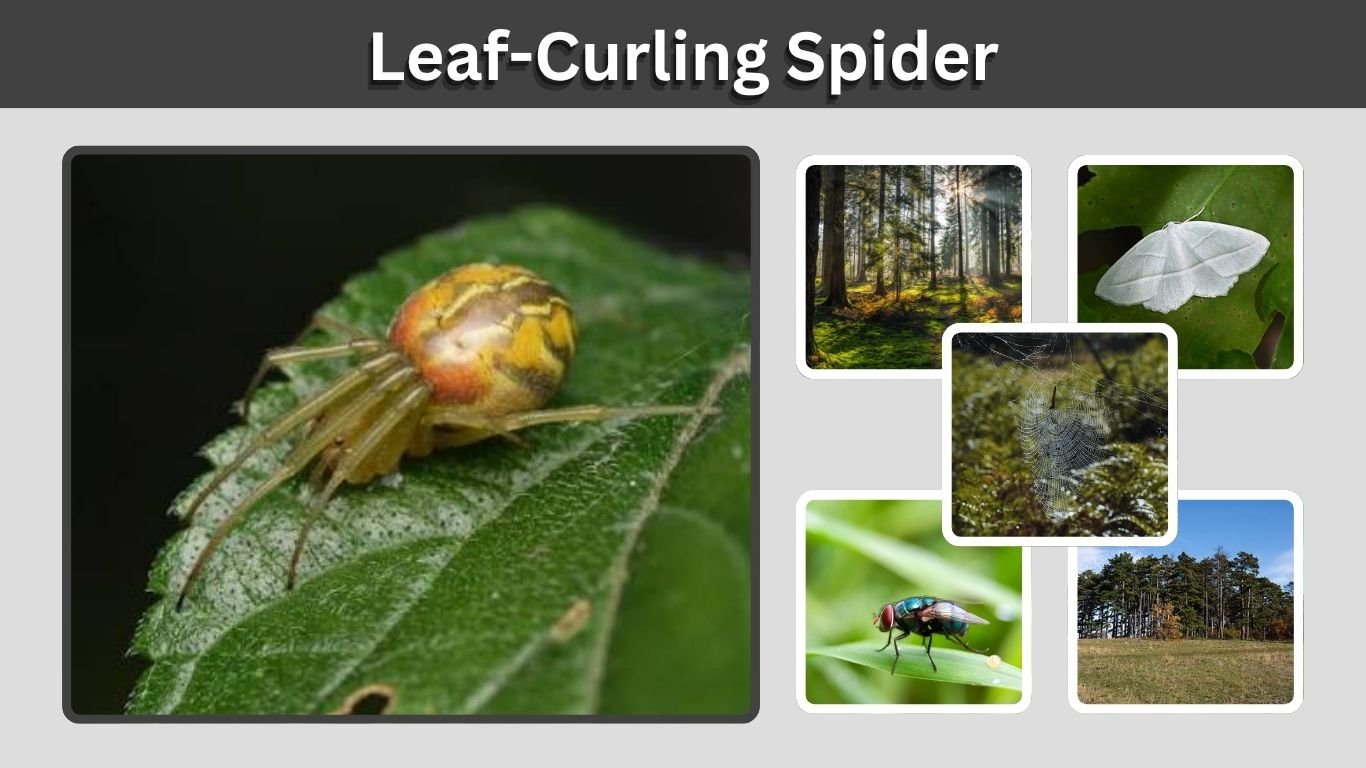
The leaf-curling spider is a distinctive Australian orb-weaving spider best known for creating a protective shelter from a curled leaf. Instead of sitting openly in the middle of its web, the spider hides inside the leaf and keeps its legs in contact with the silk to detect trapped insects. The best-known species, Phonognatha graeffei, occurs in eastern and southern Australia. Although its unusual retreat attracts attention, this spider is shy, and bites to humans are considered uncommon.
What Is a Leaf-Curling Spider?
The leaf-curling spider belongs to the orb-weaver family Araneidae. Its unusual name comes from its habit of pulling a dead or partly curled leaf into its web, folding it into a tube, and securing it with silk. The shelter protects the spider from predators while allowing it to remain close to its capture web.
Scientific Classification
- Common name: Leaf-curling spider
- Scientific name: Phonognatha graeffei
- Family: Araneidae
- Genus: Phonognatha
- Order: Araneae
- Class: Arachnida
- Diet: Mainly insects
The term “leaf-curling spider” can also be used more broadly for related spiders that build similar retreats, but P. graeffei is one of the best-known Australian examples.
Appearance and Identification
The leaf-curling spider has a stout, oval abdomen with relatively long, slender legs. Its body and legs are typically reddish-brown, while the upper abdomen carries an irregular cream or yellowish pattern. This coloration helps it blend with dry leaves and vegetation.
Adults are small compared with many other orb weavers. Museums Victoria reports males reaching about 5 mm in body length and females around 8 mm.
Male vs. Female
Females are generally larger than males, but both sexes have a similar overall body shape and coloration.
Males may eventually enter or remain near the female’s retreat during reproductive periods. Females are responsible for producing egg sacs and constructing protective leaf shelters for their developing eggs.
Leaf-Curling Spider Web
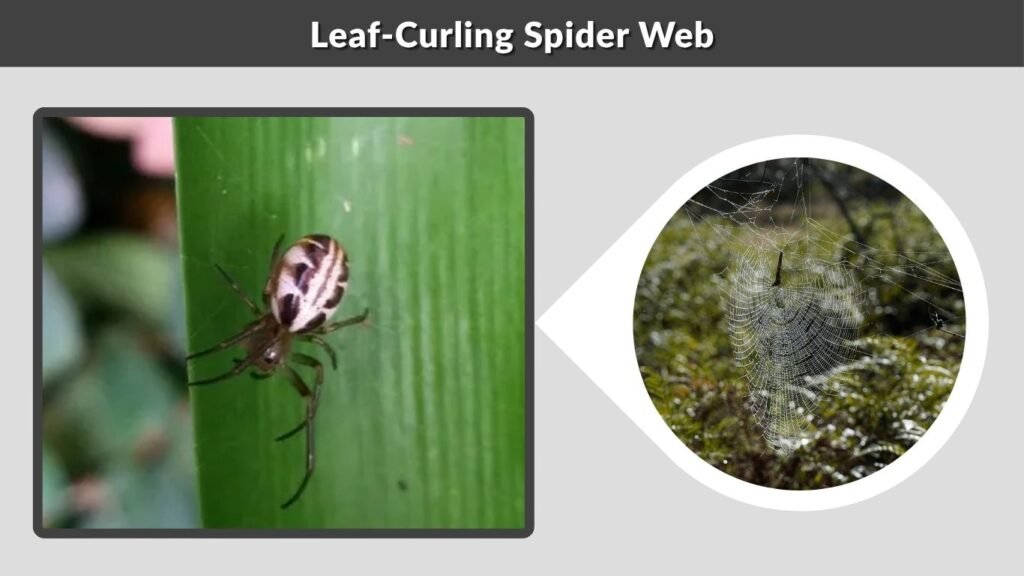
The web is what makes this spider especially recognizable. It constructs an orb web but modifies the central area by suspending a leaf within it. The spider pulls the leaf upward using silk, bends it into a protective tube, and hides inside. Only part of its legs may remain visible while it monitors vibrations traveling through the web.
How the Curled Leaf Is Made
The spider’s shelter-building process generally involves:
- Finding or lifting a suitable leaf.
- Pulling the leaf into the web with silk.
- Bending or curling the leaf into a tube.
- Fastening the edges together with silk.
- Positioning the retreat near the web’s center.
- Hiding inside while keeping contact with web threads.
The finished shelter functions almost like a small protective tunnel.
Why Does It Curl a Leaf?
The curled leaf provides camouflage and physical protection. Birds and other predators may have difficulty seeing or reaching the spider while it remains inside the retreat.
Interestingly, these spiders do not always use leaves. Museums Victoria notes that individuals have occasionally used other lightweight objects, including snail shells and even pieces of discarded paper.
How It Detects Prey
While hiding, the spider keeps part of its legs in contact with the silk. When an insect flies into the web, movement creates vibrations that travel toward the retreat.
The spider quickly emerges, approaches the trapped prey, subdues it, and then feeds. Once hunting or web repair is finished, it can return to the safety of the curled leaf.
Is the Leaf-Curling Spider Dangerous?
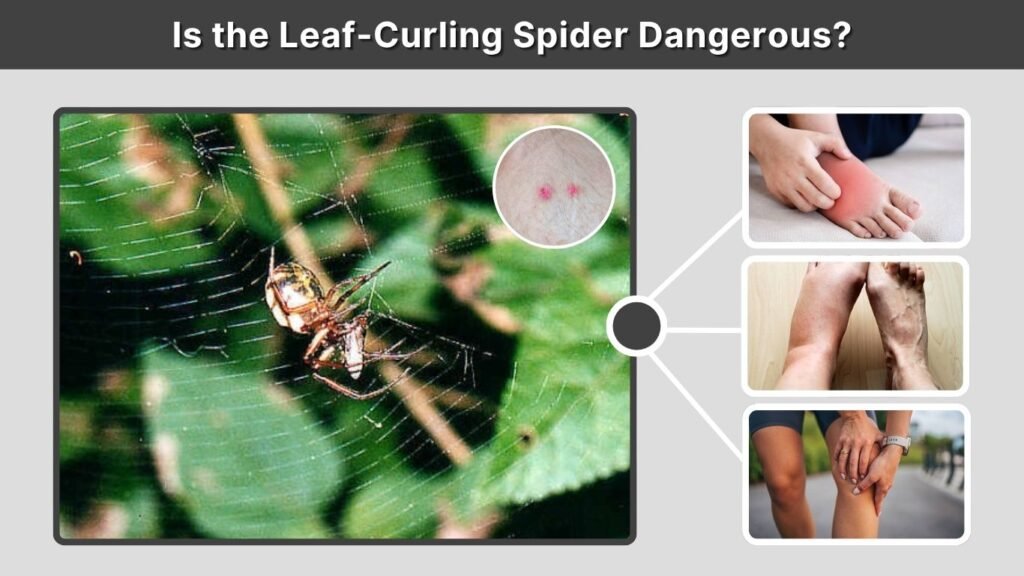
Despite its unusual behavior, the leaf-curling spider is not considered a major danger to humans. It is a timid spider that normally remains inside its retreat or moves away when disturbed. Museums Victoria reports that bites are rare and may cause localized pain and swelling around the bite site.
Leaf-Curling Spider Bite
Possible localized reactions may include:
- Mild pain
- Redness
- Local swelling
- Tenderness
- Temporary irritation
These symptoms are not unique to this species, so a skin mark alone cannot reliably identify a leaf-curling spider bite.
Is the Leaf-Curling Spider Poisonous?
No spider is accurately described as poisonous simply because it possesses venom. Like other spiders, leaf-curling spiders use venom to immobilize prey.
However, P. graeffei is not regarded as a dangerous spider to humans, and bites are uncommon.
What Should You Do After a Bite?
If a suspected bite causes only mild discomfort, gently clean the area and monitor it. Avoid scratching or unnecessarily disturbing the skin.
Seek medical advice if pain or swelling becomes severe, symptoms spread beyond the bite area, or there are signs of an allergic or unusual reaction.
Leaf-Curling Spider Habitat and Distribution
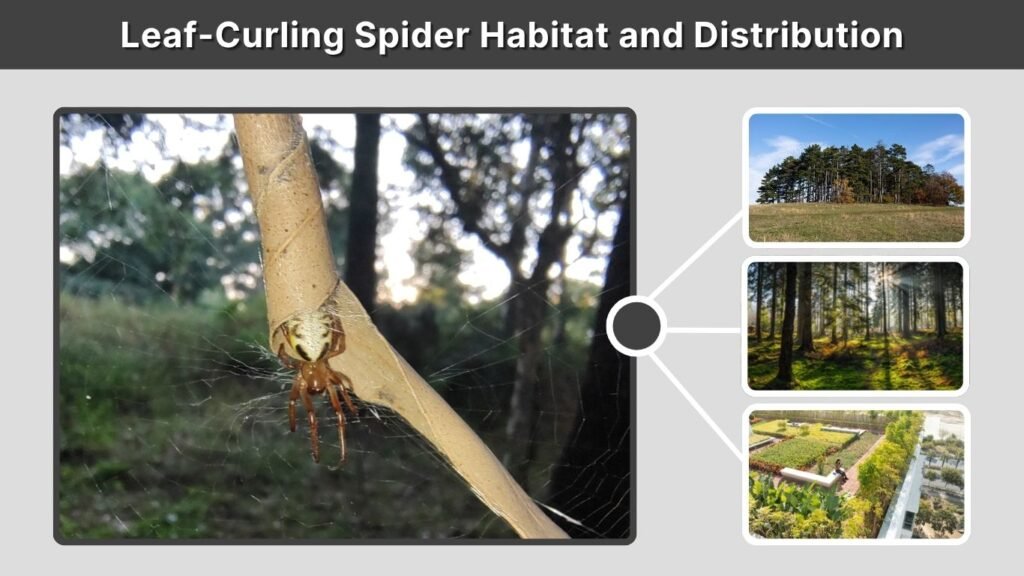
Leaf-curling spiders thrive in environments containing shrubs, trees, flying insects, and suitable leaves for shelters. They can live in both natural and human-modified environments. Their characteristic leaf retreats may be spotted suspended among garden vegetation, woodland plants, or forest edges.
Where Are Leaf-Curling Spiders Found?
Phonognatha graeffei is native to Australia. Recorded habitats and regions include:
- Eastern mainland Australia
- Tasmania
- Open woodland
- Forest habitats
- Urban gardens
- Shrubby garden vegetation
They can sometimes occur in relatively large numbers within a suitable local area, although each spider normally occupies its own individual web.
Leaf-Curling Spiders in Australian Gardens
Gardens can provide ideal habitat because shrubs and small trees offer web supports while flying insects provide food.
A curled brown leaf hanging unexpectedly within a spider web can be the easiest clue that a leaf-curling spider is present. The spider itself may remain almost completely concealed inside.
Why They Live Near Vegetation
Vegetation provides three things these spiders need: strong attachment points for their webs, material for constructing retreats, and access to insects.
Leaves also provide excellent camouflage, allowing the spider to remain hidden during periods when predators are active.
What Do Leaf-Curling Spiders Eat?
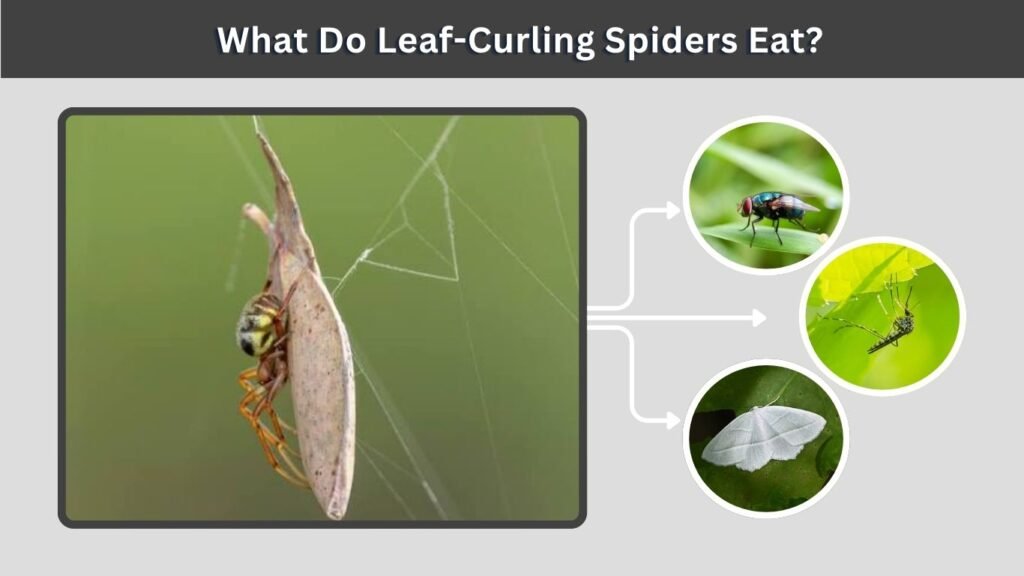
Leaf-curling spiders are predators that rely on their webs to capture insects. They normally remain inside their shelters until vibrations reveal that prey has become caught. Museums Victoria describes their food as consisting mainly of flying insects.
Common Prey
Their diet may include:
- Flies
- Mosquitoes
- Small moths
- Small beetles
- Winged insects
- Other insects caught in the web
The exact diet changes depending on location and which insects are available.
How They Hunt
The leaf-curling spider does not normally chase insects through vegetation. Instead, it allows its web to intercept passing prey.
Once an insect becomes entangled, vibrations alert the spider. It emerges from the retreat, approaches the prey, restrains it, and uses venom as part of the feeding process.
Are They Beneficial?
Yes. Because they naturally capture flying insects, leaf-curling spiders can contribute to controlling insect populations in gardens and woodland environments.
They generally require no control when found outdoors and can simply be left undisturbed.
Leaf-Curling Spider Egg Sac and Life Cycle
Female leaf-curling spiders use their shelter-building ability during reproduction as well. Rather than leaving eggs exposed in the main web, females place egg sacs inside specially folded leaves positioned away from the primary capture web. This provides developing offspring with additional protection from weather and predators.
Egg Sac
The reproductive shelter typically includes:
- A folded or curled leaf
- Protective silk
- Eggs enclosed within the retreat
- Placement away from the main web
- Suspension among surrounding vegetation
Young Spiderlings
After developing inside the egg sac, young spiderlings eventually emerge and disperse.
Juveniles begin constructing smaller shelters appropriate to their size. As they grow through successive molts, they can use progressively larger leaves and construct more substantial webs.
Adult Life
Mature spiders spend much of their time maintaining webs, catching prey, avoiding predators, and reproducing.
Their reliance on a portable natural object—a leaf—as a permanent retreat is one of the most distinctive behaviors among Australian orb-weaving spiders.
Leaf-Curling Spider vs. Leaf-Curling Sac Spider
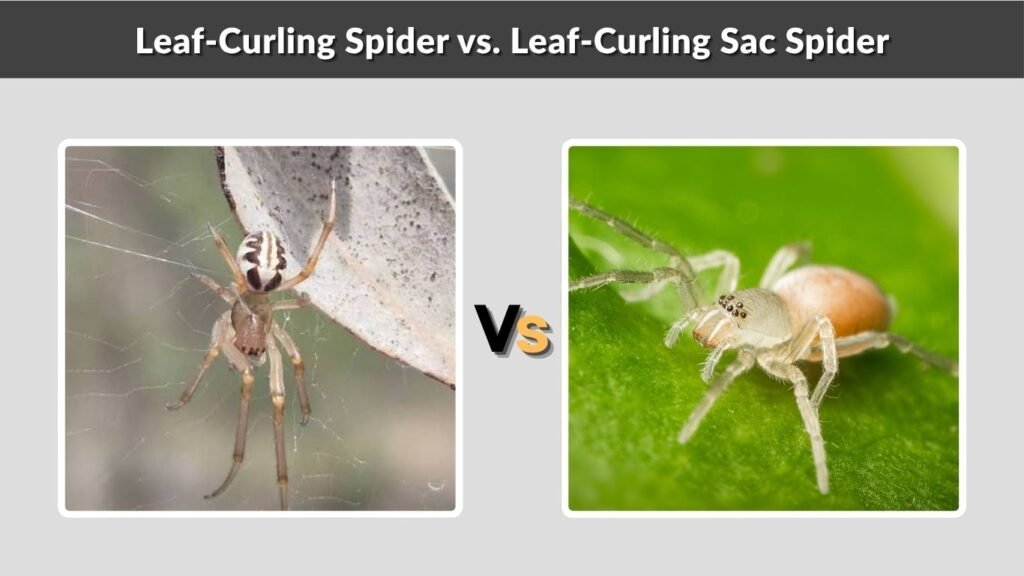
The similar names can create confusion. A true leaf-curling spider such as Phonognatha graeffei is an orb-weaver that places a curled leaf within a capture web. “Leaf-curling sac spider” can refer to spiders such as members of Clubiona, which create silken retreats in curled leaves but do not use the same characteristic orb-web hunting strategy.
Main Differences
- Leaf-curling spider: Builds an orb web.
- Leaf-curling sac spider: Uses a silk retreat but is not recognized by a large orb web.
- Leaf-curling spider: Often suspends a curled leaf around the web’s center.
- Sac spider: Commonly shelters directly within folded vegetation.
- Leaf-curling spider: Mainly catches flying insects in its web.
Checking the surrounding web is therefore one of the easiest ways to distinguish the two.
FAQs
1. Is a leaf-curling spider dangerous?
No. Phonognatha graeffei is not considered dangerous to humans. Bites are rare and may cause localized pain and swelling.
2. Why does a leaf-curling spider curl leaves?
It uses the curled leaf as a protective retreat that hides it from predators while allowing it to remain connected to its hunting web.
3. Where do leaf-curling spiders live?
They are found in eastern and southern Australia and Tasmania, particularly in forests, woodlands, gardens, and other vegetated areas.
4. What do leaf-curling spiders eat?
They primarily eat flying insects that become trapped in their orb webs.
5. Is a leaf-curling spider the same as a leaf-curling sac spider?
No. Although both may use curled leaves for shelter, leaf-curling spiders such as Phonognatha graeffei are orb-weaving spiders, while leaf-curling sac spiders belong to different groups and use different hunting strategies.
