
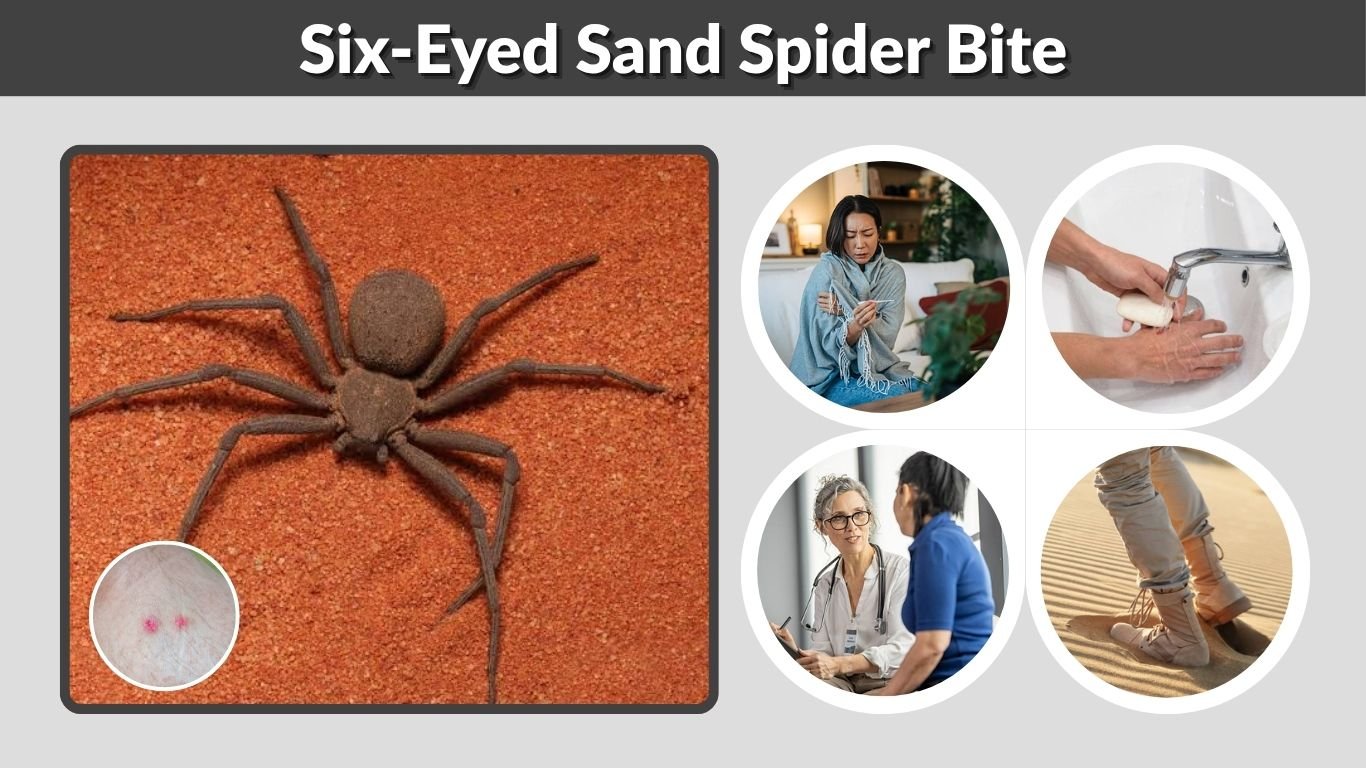
A six-eyed sand spider bite is considered potentially medically significant because spiders in the Sicariidae family produce venom containing tissue-damaging enzymes. However, confirmed human bites are extremely rare, so the exact progression of symptoms is not as well documented as bites from related recluse spiders. Laboratory research shows that venom from several Sicarius species can damage tissue, which is why a suspected bite should be treated seriously. Understanding possible symptoms and appropriate first aid can help reduce unnecessary risks.
How Dangerous Is a Six-Eyed Sand Spider Bite?
Six-eyed sand spiders include species belonging to Sicarius in the Americas and Hexophthalma in southern Africa. They are relatives of recluse spiders and possess biologically active venom. Despite their reputation, encounters with humans are uncommon because these spiders spend much of their time buried in sand and generally avoid confrontation.
Why the Venom Is Concerning
Research on several Sicarius species has identified phospholipase D, historically called sphingomyelinase D, among important venom components. Similar toxins occur in Loxosceles recluse spiders and are associated with inflammation and tissue damage.
Laboratory studies have demonstrated dermonecrotic potential in some six-eyed sand spider venoms. However, laboratory toxicity does not automatically tell us exactly what every human bite would look like.
Are Human Bites Common?
No. Confirmed human bites are exceptionally uncommon. A published study discussing Brazilian Sicarius reported a known case involving a 17-year-old who developed a necrotic lesion resembling a recluse-spider bite. The limited number of documented cases means that claims describing a precise universal symptom sequence should be treated cautiously.
Can the Bite Be Fatal?
Six-eyed sand spiders are sometimes described online as extraordinarily lethal, but reliable human clinical evidence is too limited to support precise claims about fatality risk.
Their venom has demonstrated significant biological activity in experimental research, so a confirmed or strongly suspected bite deserves medical evaluation rather than being ignored.
Six-Eyed Sand Spider Bite Symptoms
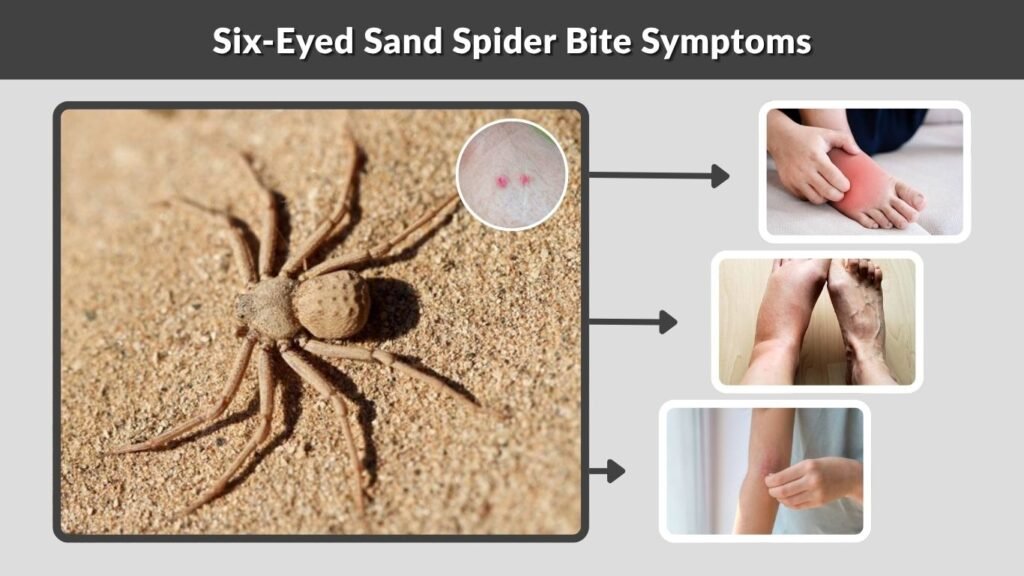
Because so few confirmed human bites have been described, there is no well-established symptom timeline specific to six-eyed sand spiders. Possible effects are instead inferred partly from documented Sicarius cases, venom studies, and knowledge of related sicariid spiders. Symptoms could range from localized irritation to more serious tissue injury.
Possible Early Symptoms
A suspected bite may potentially produce:
- Pain or burning around the bite
- Redness
- Local swelling
- Tenderness
- Itching or irritation
- Increasing discomfort around the affected area
These signs are not unique to six-eyed sand spiders and can occur after many arthropod bites or other skin injuries.
Possible Later Skin Changes
Because sicariid venom can have dermonecrotic effects, more concerning changes could include:
- Increasing redness around the wound
- Darkening or discoloration of skin
- Blister formation
- Increasing tenderness
- Breakdown of damaged skin
- Development of an ulcer or necrotic lesion
A reported Brazilian Sicarius bite produced a necrotic lesion similar to that associated with Loxosceles bites.
Systemic Symptoms
There are too few confirmed cases to define characteristic whole-body symptoms specifically for six-eyed sand spider bites. However, medically significant sicariid envenomation can potentially involve effects beyond the bite area.
Symptoms such as fever, weakness, nausea, widespread rash, dark urine, dizziness, or worsening illness after a suspected bite should prompt urgent medical assessment rather than home diagnosis.
What to Do After a Suspected Bite
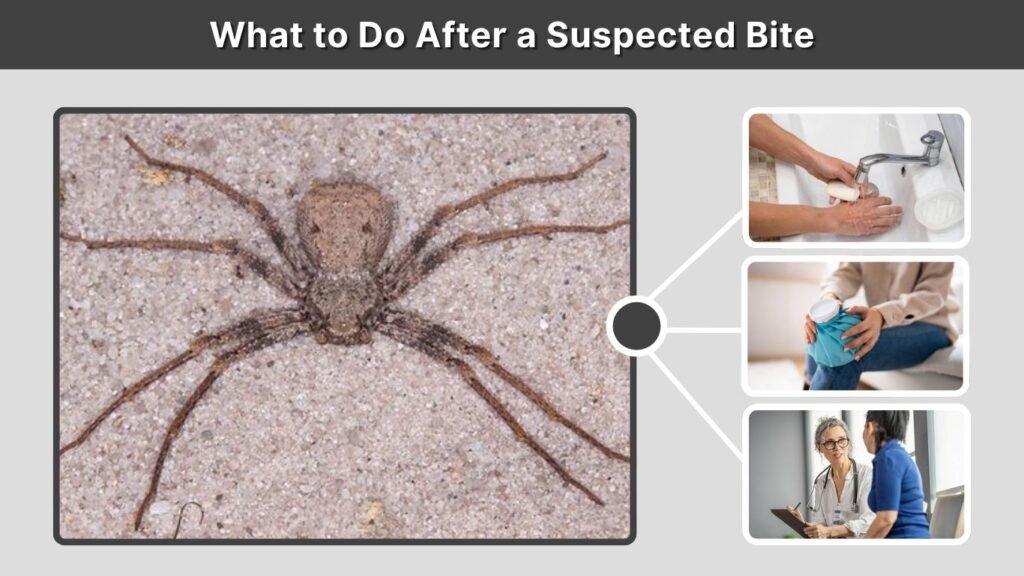
Someone who believes they were bitten by a six-eyed sand spider should not wait for severe skin damage before seeking advice. Because reliable human data are limited and the spider belongs to a medically important venom family, early professional evaluation is sensible, particularly when the spider was confidently identified.
Immediate First Aid
Basic spider-bite first aid includes:
- Move safely away from the spider.
- Wash the bite gently with soap and water.
- Apply a cool compress or wrapped ice pack.
- Keep the affected area clean.
- Elevate the bitten limb when practical.
- Monitor the area for increasing pain, swelling, or discoloration.
- Seek medical advice if the spider may be a medically significant species.
MedlinePlus recommends cleaning spider bites thoroughly and using a cold or wet compress to reduce discomfort and swelling.
Should You Capture the Spider?
Do not risk receiving another bite while trying to capture it.
If the spider can be photographed safely from a distance, an image may help with identification. Accurate identification is valuable because many skin lesions blamed on spiders are actually caused by other bites, infections, or medical conditions.
What Not to Do
Avoid:
- Cutting the wound
- Attempting to squeeze out venom
- Applying extreme heat
- Handling the spider with bare hands
- Ignoring rapidly worsening symptoms
Professional medical assessment is more useful than attempting aggressive home treatments.
When Should You Seek Medical Care?
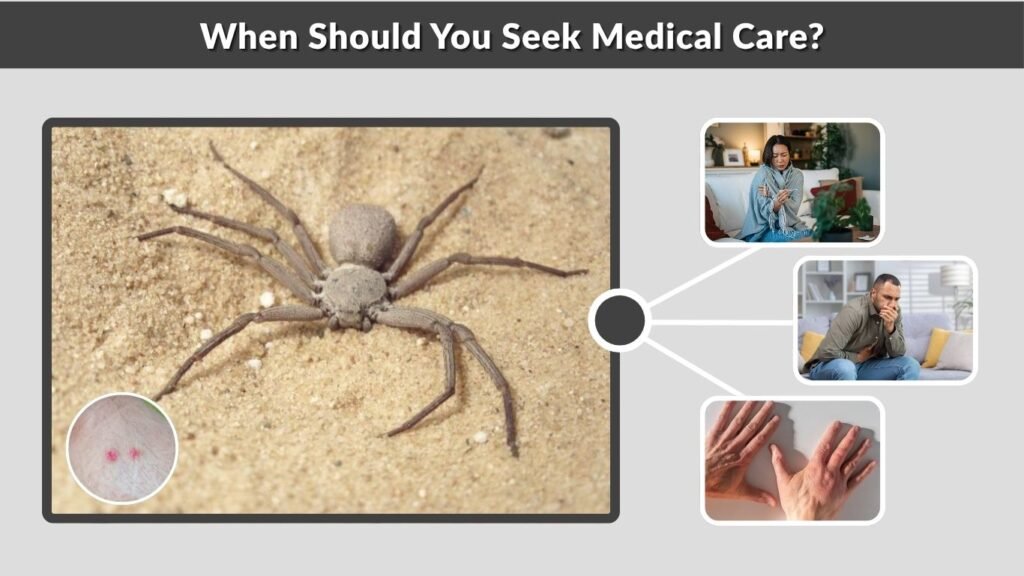
A suspected bite from a six-eyed sand spider deserves particular caution because of the venom chemistry documented within the group. Even though confirmed bites are rare, progressive skin injury or systemic illness should be evaluated promptly. Serious skin damage can also have causes other than spider venom, making professional diagnosis important.
Seek Prompt Medical Attention If You Notice
- Rapidly increasing pain
- Expanding redness or swelling
- Blistering
- Blue, purple, or black skin discoloration
- An enlarging open wound
- Fever or chills
- Severe weakness or dizziness
- Vomiting or significant nausea
- Dark-colored urine
- Difficulty breathing
- Widespread rash or swelling
Difficulty breathing, collapse, confusion, or other severe symptoms should be treated as a medical emergency.
Can Doctors Identify the Bite From the Wound?
Usually not with certainty. Spider-bite diagnosis can be difficult when the spider was not seen and correctly identified.
Bacterial infections, other arthropod bites, circulation problems, and various skin conditions can resemble necrotic spider bites. A skin lesion alone therefore cannot prove that a six-eyed sand spider caused it.
Why Six-Eyed Sand Spiders Rarely Bite Humans
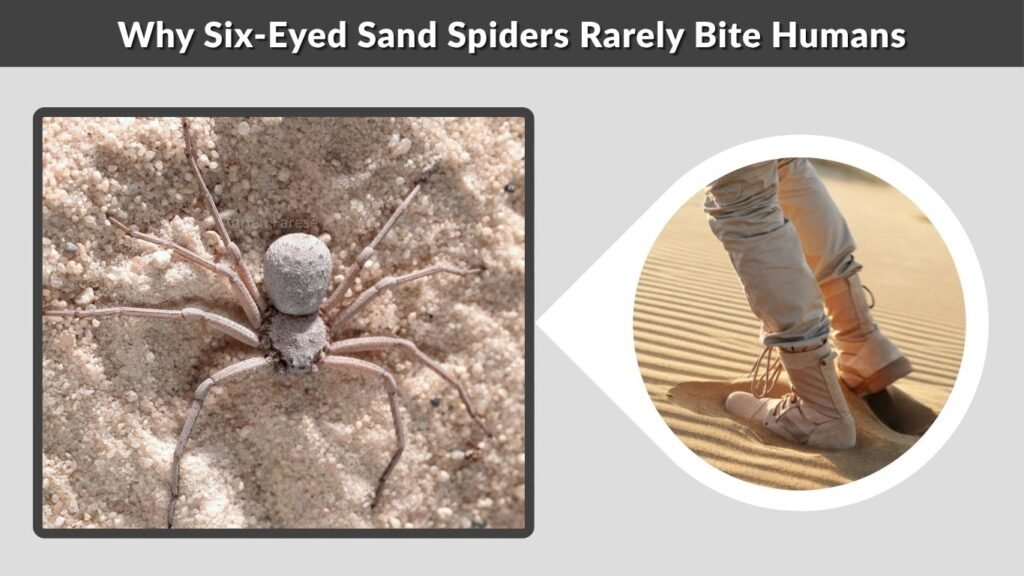
Despite their potent-looking reputation, these spiders are specialized ambush predators rather than aggressive animals. They typically bury themselves beneath loose sand, exposing only enough of their body to detect passing prey. Their camouflage reduces their need to confront threats directly.
Defensive Behavior
When disturbed, a six-eyed sand spider generally relies on concealment rather than pursuing a person. Bites are most likely to occur during direct handling or when the spider becomes trapped against the skin.
Its venom evolved primarily for capturing prey rather than hunting humans.
Avoiding Accidental Bites
Simple precautions include:
- Never handling an unidentified sand spider
- Wearing shoes in suitable desert or sandy habitat
- Checking equipment stored on the ground
- Using gloves when moving rocks or debris
- Avoiding placing bare hands into concealed spaces
People keeping unusual spiders in captivity should use secure enclosures and avoid direct handling.
FAQs
1. What happens if a six-eyed sand spider bites you?
Human evidence is limited because confirmed bites are extremely rare. Potential effects include pain, redness, swelling, and possibly tissue damage. A suspected confirmed bite should receive medical evaluation.
2. Does a six-eyed sand spider bite cause necrosis?
Some Sicarius venoms show dermonecrotic activity, and at least one reported human case involved a necrotic lesion. However, not enough confirmed bites exist to say that every bite causes necrosis.
3. Is the six-eyed sand spider venomous?
Yes. Six-eyed sand spiders are venomous, and studies have identified phospholipase D and other toxin components in venom from multiple Sicarius species.
4. How quickly do bite symptoms appear?
There is no reliable six-eyed sand spider-specific timeline because documented human bites are too uncommon. Any worsening pain, swelling, discoloration, or systemic symptoms after a suspected bite warrants medical attention.
5. Are six-eyed sand spiders aggressive toward humans?
Generally, no. They are secretive ambush predators that spend considerable time concealed in sand. Bites are considered uncommon and are more likely during accidental contact or handling than through deliberate aggression.
