
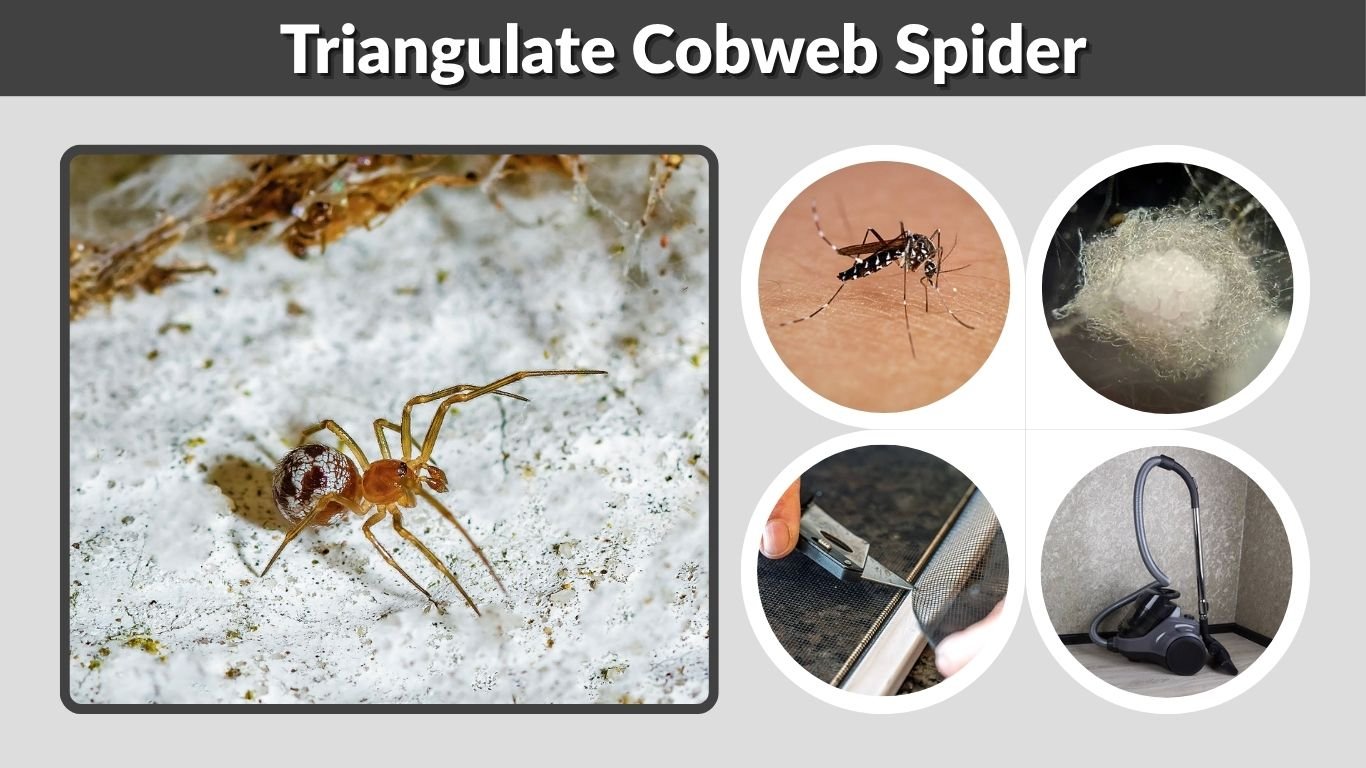
The triangulate cobweb spider (Steatoda triangulosa) is a small household spider recognized by the distinctive triangular markings covering its abdomen. It belongs to the same family as widow spiders but is generally considered far less dangerous to people. These spiders often live quietly in basements, garages, sheds, and other sheltered locations where they build irregular webs. Although their appearance sometimes causes concern, triangulate cobweb spiders are usually shy and prefer capturing insects rather than interacting with humans.
What Is a Triangulate Cobweb Spider?
The triangulate cobweb spider is a member of the Theridiidae family, commonly known as cobweb or comb-footed spiders. Its scientific name is Steatoda triangulosa, placing it in a genus whose members are sometimes called false widow spiders.
Identification
Common characteristics include:
- Small, rounded or oval abdomen
- Yellowish-brown to dark brown body
- Cream-colored or pale abdomen
- Distinct brown or reddish triangular patterns
- Thin, relatively long legs
- Irregular, tangled cobweb
- Adult body generally only a few millimeters long
The connected triangular markings across the abdomen are usually the easiest feature to recognize.
Triangulate Cobweb Spider Size
Adult females are usually larger than males, but both are relatively small spiders. An adult female may reach roughly 3–6 mm in body length, excluding the legs.
Their long legs can make them appear larger when resting in a web. Juveniles are much smaller and may be difficult to identify without examining their abdominal markings.
Triangulate Cobweb Spider Underside
The underside is generally darker and less distinctively patterned than the upper surface. Because coloration can vary among individuals, identification should primarily rely on overall body shape and the characteristic triangular markings on the abdomen rather than underside coloration alone.
Triangulate Cobweb Spider Web and Habitat
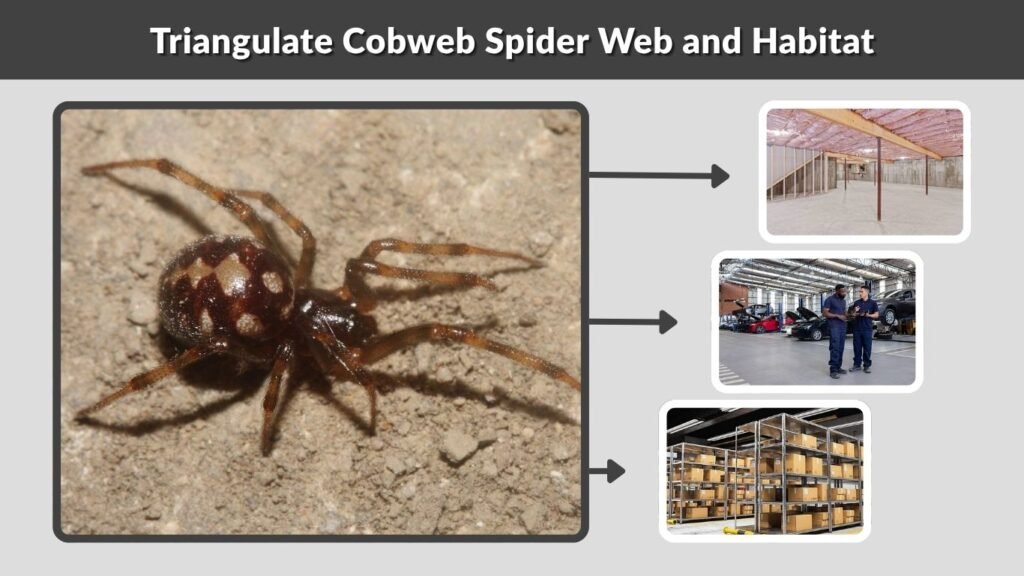
Triangulate cobweb spiders do not create neat circular webs like orb-weaver spiders. Instead, they construct tangled three-dimensional webs designed to trap crawling and flying insects.
What Does the Web Look Like?
Their webs usually consist of:
- Irregular strands of silk
- Tangled three-dimensional construction
- Sticky trapping threads
- A retreat or hiding location near the web
- Webbing close to walls, furniture, or the ground
These webs may look messy, which is why spiders in this family are commonly called cobweb spiders.
Where Do They Live?
Inside buildings, triangulate cobweb spiders frequently occupy quiet areas with relatively little disturbance. Typical locations include basements, garages, storage rooms, sheds, closets, corners, and areas behind furniture.
Outdoors, they may occur under rocks, inside protected structures, beneath objects, or anywhere providing shelter and access to small prey.
What Do Triangulate Cobweb Spiders Eat?
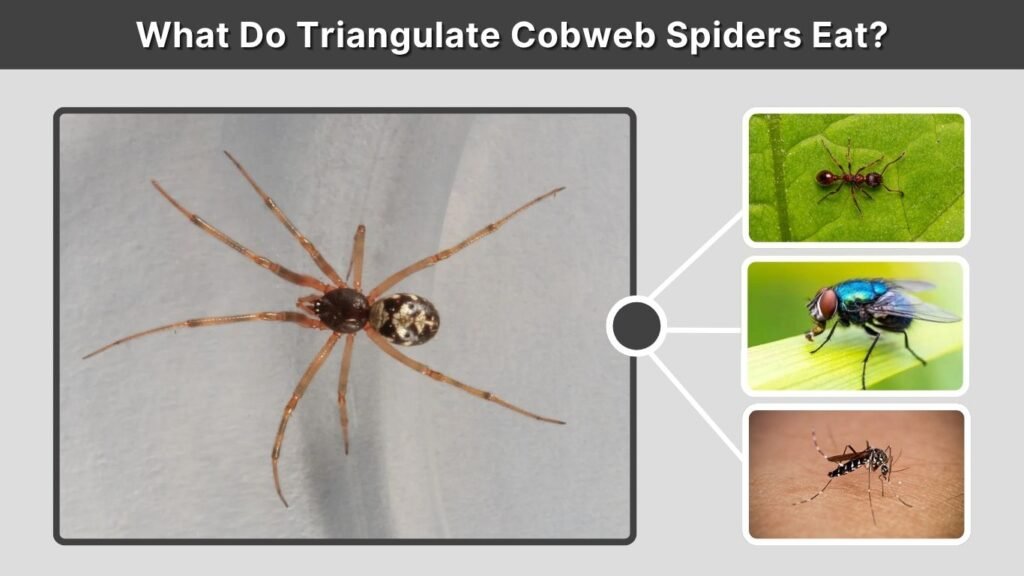
Triangulate cobweb spiders are predators that capture small arthropods in their sticky webs. Their feeding habits can actually make them useful around buildings because they consume numerous household pests.
Common prey can include:
- Ants
- Flies
- Mosquitoes
- Small beetles
- Other spiders
- Small crawling insects
After prey becomes trapped, the spider approaches and uses silk to help restrain it before feeding.
Interestingly, triangulate cobweb spiders may sometimes prey upon spiders that people consider more troublesome. Their ability to capture other spiders contributes to their effectiveness as indoor predators.
Triangulate Cobweb Spider Bite
Despite belonging to the same spider family as black widows, the triangulate cobweb spider is not normally considered medically significant to humans. Bites are uncommon because these spiders are secretive and usually avoid confrontation.
Do Triangulate Cobweb Spiders Bite Humans?
They can bite if trapped against the skin, squeezed, or handled, but biting is defensive rather than aggressive behavior.
Most encounters inside homes never involve direct contact. A spider typically remains in or near its web and retreats when disturbed.
Triangulate Cobweb Spider Bite Symptoms
If a bite occurs, possible localized symptoms may include:
- Mild pain or irritation
- Redness
- Minor swelling
- Itching
- Tenderness around the bite
Responses can vary between individuals. Many skin conditions and insect bites can also resemble spider bites, so seeing a spider nearby does not necessarily prove that it caused the skin reaction.
Seek medical attention if symptoms become severe, rapidly worsen, or involve significant swelling, breathing difficulty, widespread reactions, or other concerning symptoms.
Is the Triangulate Cobweb Spider Poisonous or Venomous?
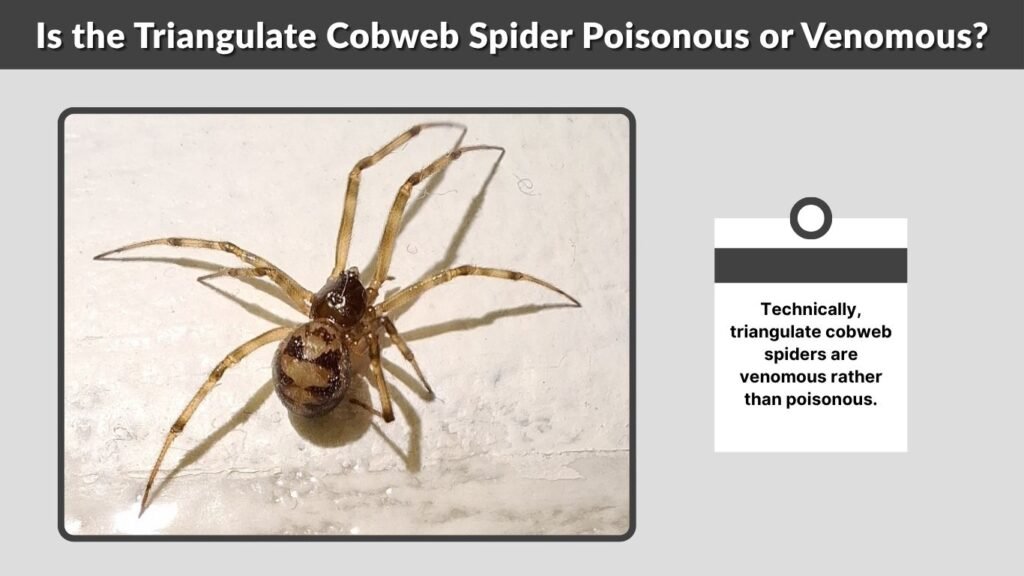
Technically, triangulate cobweb spiders are venomous rather than poisonous. Venom is injected through fangs to subdue prey, whereas poison generally causes harm when swallowed, touched, or absorbed.
Like most spiders, Steatoda triangulosa uses venom primarily for hunting.
Is It Dangerous to Humans?
For most people, triangulate cobweb spiders are not considered dangerous. They are far less medically concerning than black widow spiders.
Their small size, shy behavior, and relatively mild bites mean they generally pose little risk in normal household situations.
Are They Dangerous to Dogs and Cats?
There is limited evidence suggesting triangulate cobweb spiders represent a significant threat to healthy dogs or cats. Pets should still be prevented from playing with or eating unidentified spiders.
Contact a veterinarian if a pet develops unusual swelling, weakness, vomiting, excessive drooling, breathing difficulties, or other concerning symptoms following possible contact with a spider.
Male vs Female Triangulate Cobweb Spider
Male and female triangulate cobweb spiders share similar characteristics, although their body proportions differ.
Female Triangulate Cobweb Spider
Females generally have larger and more rounded abdomens. They often remain close to their web, particularly when producing or guarding egg sacs.
Females may also appear more robust than males because the abdomen contains much of the reproductive system.
Male Triangulate Cobweb Spider
Adult males are usually smaller and more slender, with proportionally longer legs. Once mature, males may leave established webs and wander while searching for females.
Because wandering males are more likely to cross floors or walls, homeowners sometimes notice them more frequently.
Eggs, Babies, and Life Cycle
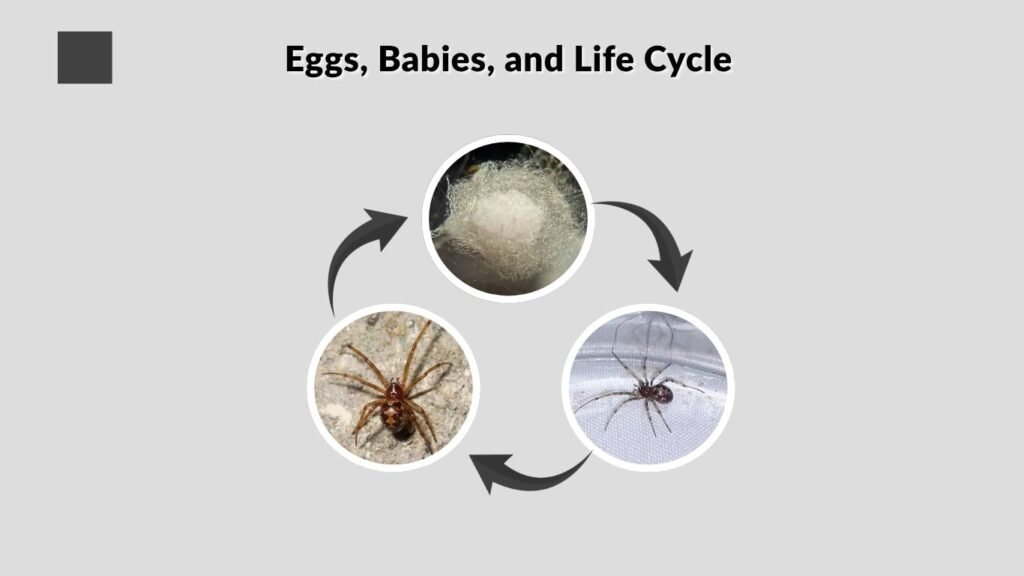
Triangulate cobweb spiders reproduce by laying eggs inside protective silk sacs. Their development follows the basic spider life cycle of egg, spiderling, juvenile, and adult.
Triangulate Cobweb Spider Egg Sac
Female spiders create silk egg sacs containing multiple eggs. The sacs are placed in protected locations close to the female’s web where environmental conditions are relatively stable.
The silk covering protects developing eggs from physical damage and some environmental threats.
Baby Triangulate Cobweb Spiders
Newly hatched spiders are called spiderlings. They resemble miniature spiders but lack the full size and coloration of adults.
As spiderlings grow, they repeatedly shed their exoskeleton through a process called molting. Their markings and body proportions become increasingly recognizable after successive molts.
Lifespan
Lifespan varies according to temperature, food availability, predators, and other environmental conditions. Females generally survive longer than males and may reproduce multiple times under favorable conditions.
Triangulate Cobweb Spider vs Brown Widow
Triangulate cobweb spiders can occasionally be confused with brown widows because both have rounded abdomens and belong to the Theridiidae family.
The triangulate cobweb spider usually has distinctive triangular or zigzag-like markings across the upper abdomen. Brown widows generally have different dorsal patterns and possess the characteristic widow-type hourglass marking on the underside.
Brown widows are also typically larger and have different egg sacs. Brown widow egg sacs are particularly recognizable because their surfaces often have numerous pointed projections.
When identification is uncertain, avoid handling the spider directly.
How to Get Rid of Triangulate Cobweb Spiders
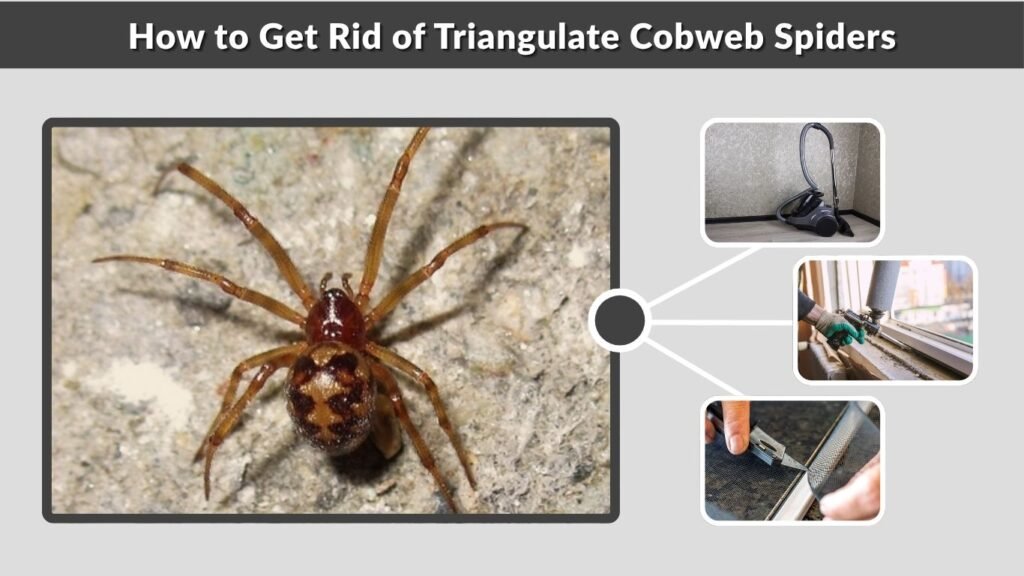
A few triangulate cobweb spiders may actually help control household insects. However, frequent spiders and webs can indicate that plenty of prey and suitable hiding locations are available.
Reduce Spider Activity
To make your home less attractive:
- Vacuum spiders, webs, and egg sacs
- Seal cracks around windows and doors
- Repair damaged screens
- Reduce clutter in storage areas
- Keep garages and basements organized
- Remove insects that serve as prey
- Clean undisturbed corners regularly
- Install weather stripping around entry points
Reducing insect populations is particularly important because spiders are unlikely to remain where food is scarce.
FAQs
Are triangulate cobweb spiders dangerous?
No. They are generally considered low-risk spiders and normally avoid people. Bites are uncommon and are usually associated with accidental trapping or handling.
Is a triangulate cobweb spider poisonous?
It is venomous, not poisonous. The spider uses venom to immobilize prey, but it is not normally considered medically significant to humans.
What does a triangulate cobweb spider bite look like?
A bite may cause minor redness, swelling, tenderness, or irritation. However, many insect bites and skin conditions can look similar, making visual identification unreliable.
Where are triangulate cobweb spiders found?
They commonly live in sheltered indoor environments such as basements, garages, closets, sheds, and storage areas. They may also occur outdoors beneath protected objects and inside structures.
Should I kill a triangulate cobweb spider?
Usually, it is unnecessary. These spiders can help control ants, flies, mosquitoes, and other small pests. If one is in an unwanted location, it can generally be removed carefully without direct handling.
